Emergency & Safety Lighting Compliance Guide
Power cuts, fires, and system faults can happen without warning. To guide people to safety, you need clear lighting. And that's where emergency and safety lighting come in!
Learn what emergency lighting is, where it's required, and how to stay compliant below. You'll also learn about testing, maintenance, and common mistakes. If you manage or own a building, this will definitely help you.
Contents
What Is Emergency and Safety Lighting?
Emergency lighting activates when the mains power fails. It allows people to leave a building safely, reducing panic during emergencies.
Meanwhile, safety lighting covers all lighting used to protect people from danger. Emergency lighting is part of this wider system.
Most systems include light fittings, batteries, control gear, and clear exit signs. These must work automatically during failure.
You rely on emergency lighting when visibility is poor. Without it, escape routes become unsafe. This makes emergency lighting essential in public and commercial buildings.
Where Emergency Lighting Is Required
Emergency lighting is required in most non-domestic buildings. As long as people enter your building, it should have safety lighting.
Emergency lighting is commonly required in:
- Offices, warehouses, factories, and workshops
- Shops, shopping centres, and retail units
- Schools, colleges, and childcare buildings
- Hospitals, care homes, and medical centres
- Hotels, hostels, and shared accommodation
- Restaurants, pubs, cinemas, and venues open to the public
You'll also need emergency lighting in these areas:
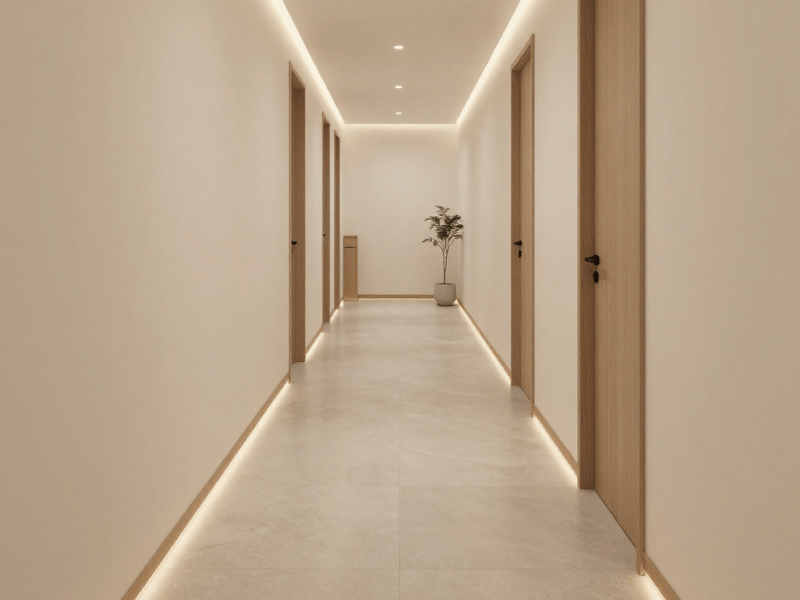
- Escape routes such as corridors, stairways, and final exits
- Changes in floor level, steps, and ramps
- Fire exits and exit doors
- Windowless rooms and internal spaces
- High-risk task areas with dangerous equipment
Key UK Regulations and Standards
Additionally, emergency lighting must meet UK legal and safety standards. These rules help protect people and guide safe building use.
The main regulations you need to follow include:
- BS 5266-1:2025. The primary standard for emergency lighting systems. It covers design, installation, testing, and maintenance.
- Regulatory Reform (Fire Safety) Order 2005. Requires safe escape routes and places responsibility on the person in charge of the building.
- Health and Safety at Work etc. Act 1974. Requires employers to protect staff and visitors from risk.
- Building Regulations 2010. Support emergency lighting where safe evacuation is required.
You're responsible for compliance if you control the building. This includes installation, testing, and records. Failure or negligence to meet these standards can lead to fines, enforcement notices, or increased safety risks.
Types of Emergency and Safety Lighting
Specific emergency lighting types suit different buildings and risks. You must choose the right system for each area.
The main system types include:
Maintained lighting
- Stays on during everyday use
- Switches to battery power during failure
- Common in public areas and venues
Non-maintained lighting
- Remains off during regular use
- Turns on only when power fails
- Often used in workplaces and storage areas
Common emergency lighting fittings include:
- Exit signs showing escape routes
- Bulkhead lights for general emergency lighting
- Downlights for corridors and stairways
- High-risk task lighting near dangerous equipment
Each of these plays a role in safe evacuation and risk reduction.
Testing, Maintenance, and Record Keeping
Emergency lighting can only protect people as long as it works. Regular testing is thus essential.
At the very least, do the following:
- Monthly function tests
- Confirm that the lights switch on during a power loss
- Check indicators and visible faults
- Annual full duration tests
- Test lights for their full battery runtime
- Confirm continued illumination
You must also:
- Record all tests in an emergency lighting logbook
- Repair faults as soon as possible
- Replace failed batteries or fittings
Good records prove compliance. Poor maintenance increases risk and liability.
Common Compliance Mistakes to Avoid
Many buildings fail compliance due to simple errors. These mistakes are easy to avoid.
Common issues include:
- Skipping monthly or annual tests
- Missing or incomplete logbook records
- Poor coverage of escape routes
- Incorrect light placement or spacing
- Using the wrong system type
Other frequent problems include:
- Ignoring building layout changes
- Failing to upgrade old systems
- Delaying repairs after faults
Avoiding these mistakes helps keep people safe. It also protects you from penalties and inspections.
Frequently Asked Questions
Is emergency lighting a legal requirement in the UK?
Yes. Most non-domestic buildings must have emergency lighting by law.
How often should emergency lighting be tested?
You need monthly function tests and one full annual duration test.
Who is responsible for emergency lighting compliance?
The responsible person (usually the owner or manager) is legally liable.
When Power Fails, Safety Should Not
Emergency lighting should never be delayed. Small gaps create serious safety risks. Review your system, including test records, fittings, and escape route coverage. If you're unsure, seek expert help to avoid costly mistakes.
And if you need compliant products, clear guidance, and good customer support, find them at Simple Lighting.