
Kitchen Lighting
Kitchen lighting needs to handle two jobs: bright, focused task lighting over worktops where food preparation happens, and softer ambient lighting for the rest of the space. Getting both right means the kitchen works for cooking, eating, and spending time in throughout the day.
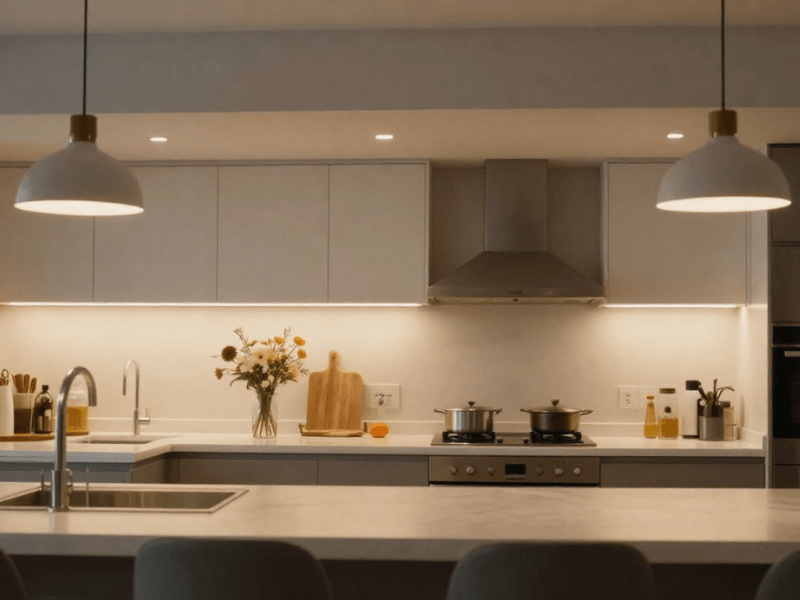
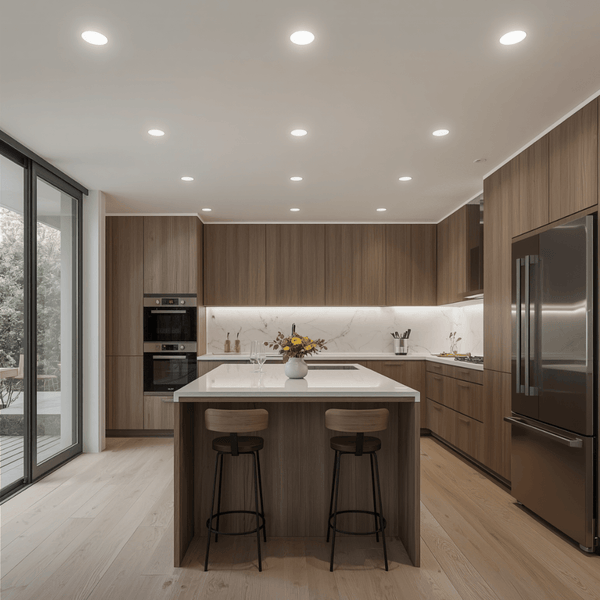
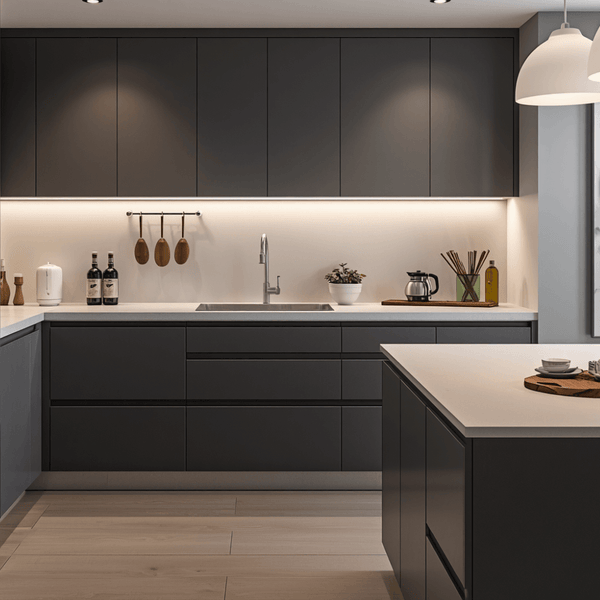
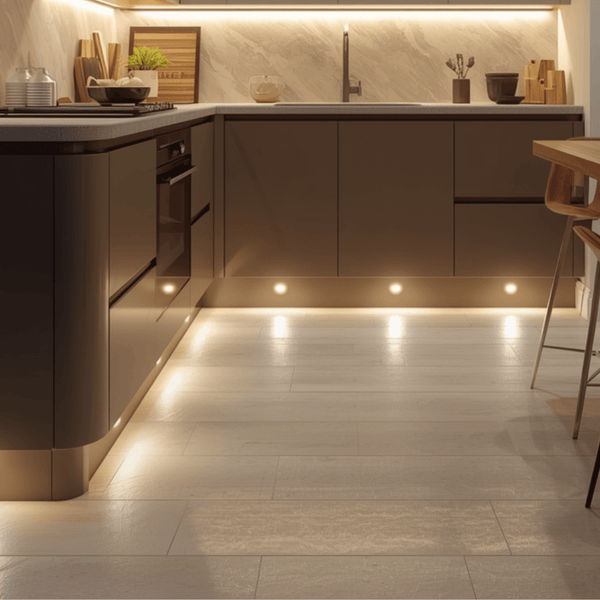
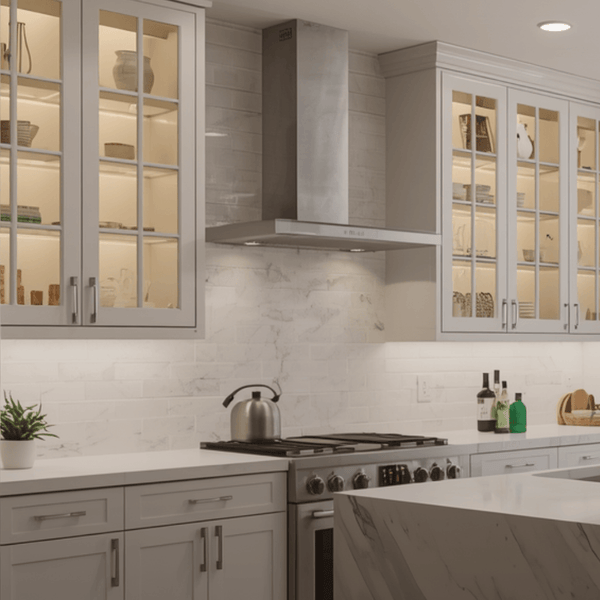
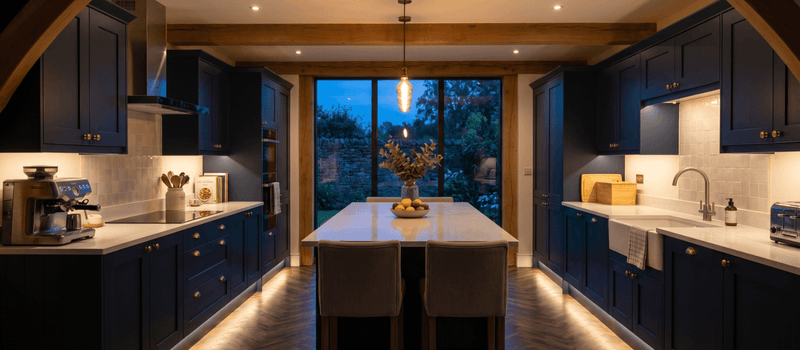
Under cabinet lighting delivers direct task light onto the worktop and eliminates the shadows created by overhead fittings. Fire rated LED downlights provide even ceiling coverage and are required in kitchens where the fitting penetrates the ceiling into the floor void above. LED strip lights, plinth lights, and LED Light Sheets add accent layers that bring depth to the room.
We stock a full range of kitchen lighting, from under cabinet lights and fire rated downlights to LED strip lights, plinth lights, and pendant lights. Browse by product type below to find the right fittings for your kitchen.

Kitchen Lighting That Works as Hard as You Do
From under cabinet task lighting and fire rated ceiling downlights to accent strip lights and plinth lighting, we have everything you need to light your kitchen properly.
Popular Kitchen Lighting Choices
Featured Products


Popular Kitchen Lighting Options
From LED strip lights for accent and task lighting to fire rated downlights for safe ceiling installations and under cabinet lights for worktop visibility, these are the most popular products for kitchen lighting.
Accent and task lighting. Easy install.
LED Strip Lighting
Shop Now
Ceiling-safe. Multiple finishes.
Fire Rated Downlights
Shop Now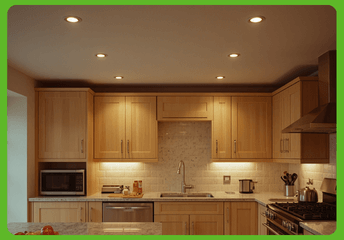
Direct worktop task lighting.
Under-Cabinet Lights
Shop Now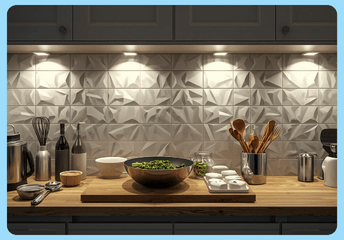
Choosing the Right Kitchen Lighting
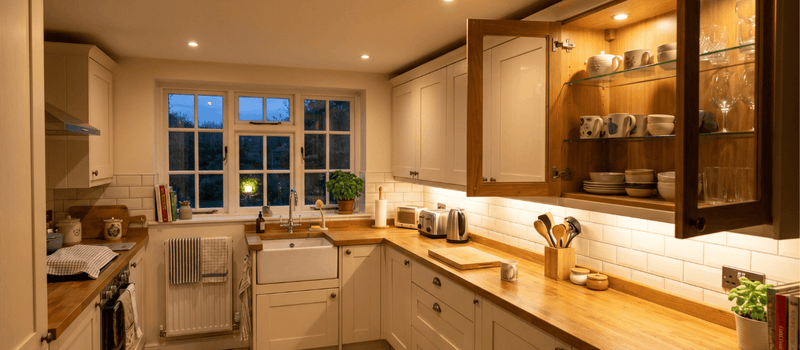
Kitchens need more thought than most rooms because the lighting has to work at two levels. Ceiling downlights handle general visibility across the room, but they create shadows on the worktop when you stand between the light and the surface. That is why under cabinet lighting matters - it puts light directly where you are chopping, preparing, and cooking.
For ceiling lighting, fire rated downlights are the standard choice in kitchens. Building regulations require fire rated fittings where the downlight penetrates the ceiling into the floor void above, which applies to most kitchen ceilings with rooms or loft space overhead. Choose 4000K natural white for the most accurate colour rendering over food preparation areas.
Under cabinet lighting comes in two main types: LED light bars for a fixed, even spread, and LED strip lights for a more flexible installation that can follow the shape of the cabinet run. Both work well - light bars are simpler to install, strip lights give you more control over positioning and length.
For accent lighting, plinth lights along the kickboard or LED strip lights above wall units add depth to the room and create a softer feel for evenings when you do not need full task lighting. A separate switch or dimmer for these means you can run them independently.
Why Buy Kitchen Lighting from Simple Lighting
We have been helping homeowners and kitchen fitters choose the right lighting since 2009. Our under cabinet lighting range is one of the largest in the UK, and every product page includes wiring diagrams, lumen output, and colour temperature so you know exactly what you are getting.
If you are not sure which products suit your layout, get in touch - our UK-based team can talk you through the options. We are a real team of people who know lighting, not a chatbot.
Frequently Asked Questions
What type of lighting is best for kitchen tasks?
Task lighting is essential for kitchen work areas, with LED under-cabinet lights being the most popular choice for food preparation. Pendant lights over islands or breakfast bars provide excellent focused lighting for cooking and dining. For the best results, combine task lighting with ambient ceiling lights to create a well-balanced kitchen lighting scheme.
How bright should kitchen lighting be?
Kitchen lighting should typically range from 300-500 lux (lumens per square metre) for general areas, with task areas requiring 500-750 lux for safe food preparation. This usually translates to around 150-300 lumens per square foot of kitchen space. LED lights make it easy to achieve these levels whilst remaining energy efficient.
What colour temperature works best in kitchens?
A colour temperature between 3000K-4000K works best for most kitchens, providing a bright white light that's neither too warm nor too cool. This range offers excellent colour rendering for food preparation whilst maintaining a welcoming atmosphere. Many homeowners opt for 3000K for a slightly warmer feel or 4000K for a more modern, crisp appearance.
Do I need an electrician to install kitchen lighting?
Yes, most kitchen lighting installations require a qualified electrician, especially for ceiling lights, pendant lights, and under-cabinet lighting that connects to mains power. However, some plug-in LED strip lights and battery-operated options can be fitted as DIY projects. Always check local building regulations and consider professional installation for safety and warranty purposes.
How do I choose the right pendant lights for my kitchen island?
Choose pendant lights that are roughly one-third the width of your island, and hang them 75-85cm above the surface for optimal lighting and headroom. For islands longer than 1.5 metres, consider using 2-3 pendants spaced evenly apart. Simple Lighting offers a wide range of pendant styles to complement both traditional and contemporary kitchen designs.
Are LED strip lights suitable for kitchen use?
Yes, LED strip lights are excellent for kitchens, particularly under-cabinet installations where they provide shadow-free task lighting. Look for IP65-rated strips for areas near sinks or where moisture might be present. LED strips are energy-efficient, long-lasting, and available in various colour temperatures to suit your kitchen's style and functional needs.
What's the difference between warm white and cool white kitchen lighting?
Warm white (2700K-3000K) creates a cosy, traditional atmosphere similar to incandescent bulbs, whilst cool white (4000K-5000K) provides crisp, bright illumination that enhances focus and productivity. Warm white suits traditional kitchen styles, whereas cool white complements modern, minimalist designs. Many people prefer a middle ground around 3000K-3500K for the perfect balance.