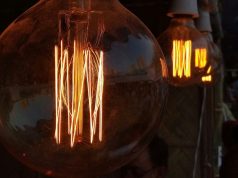

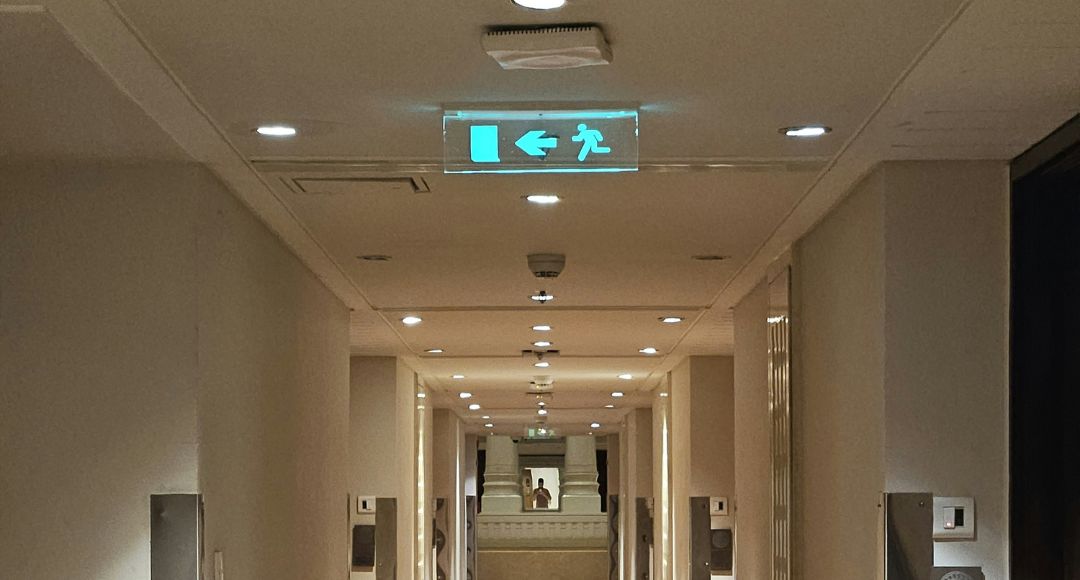
We’ve all seen emergency lighting. It’s one of those building features that nobody really bats an eye at, until they’re needed. When it works, it fades politely into the background. When it doesn’t, the consequences are immediate, stressful, and sometimes serious.
And if you’re a property/building owner or a landlord, then you know the pain of selecting between the different kinds of emergency lighting that work best for your building.
That’s exactly what this post is all about. We’re here to discuss one of the most common points of confusion we see: maintained vs non-maintained emergency lights.
The answer is surprisingly quite basic. The terms may sound technical, even interchangeable, yet many buyers assume the choice is minor. We’ll tell you now: It isn’t.
Choosing the wrong type can affect safety, compliance, inspection outcomes, and long-term costs. The solution is simple. Learn what each type does and where it belongs. Let’s dig deeper.
Why Choosing the Right Emergency Light Type Matters
Emergency lighting is not for decoration. It is a life-safety system, meaning that literal lives are at stake when it fails. The choice between maintained and non-maintained fittings directly affects how people exit a building during an emergency.
Choosing incorrectly can mean:
- Exit routes that disappear into darkness.
- Confused occupants hesitate instead of moving.
- Fire risk assessments flagging unsuitable lighting.
- Failed inspections that require costly changes after installation.
This is where problems often begin. Building owners and property managers receive mixed guidance: some treat non-maintained emergency lights as the default, and some install maintained fittings “just to be safe.”
Without a clear understanding of how the space is used, emergency lighting choices can become inconsistent across escape routes, which is a red flag during inspections.
Put simply, this decision sits at the crossroads of safety, compliance, and cost. Getting it right early avoids retrofitting later, when ceilings are closed, budgets are tight, and deadlines loom.
What Is a Maintained Emergency Light?
There’s no simpler way to say this: a maintained emergency light is always on.
It operates as part of the normal lighting system and continues to provide illumination if the power supply fails. To the unaware occupant, it appears to be a standard light fitting until it quietly switches to battery power during an emergency.
Remember the phrase: Hiding in plain sight? That’s exactly it.
How Maintained Emergency Lighting Works
Maintained emergency works in an always-on operation with two modes:
- Normal operation, where the light runs on mains power.
- Emergency mode, in which a battery takes over during a power cut (backup power).
Because the light is already illuminated before an emergency, there is no sudden change in brightness or appearance (AKA visual consistency). This matters because in times of emergencies, people tend to look for familiar cues.
In a power failure, the backup battery ensures the light remains on for the required duration, typically three hours, illuminating escape routes, exits, and key safety areas.
Where Maintained Emergency Lights Are Typically Used
Maintained emergency lighting is most suitable where ambient lighting levels are normally low, or where people may struggle to orient themselves quickly.
Common examples:
- Cinemas and theatres, especially during performances.
- Bars and nightclubs, where lighting is deliberately subdued.
- Public venues with mood lighting or dramatic effects.
- Areas where occupants are unfamiliar with exit locations.
Notice how the emergency lights in cinemas are always on, even during the film? That’s right. Maintained lighting ensures exit routes are already visible, reducing hesitation and panic.
What Is a Non-Maintained Emergency Light?
The exact opposite of a maintained emergency light, a non-maintained emergency light stays off during normal operation. It activates only when the mains power supply fails.
This is what many people picture emergency lighting to be by default: a fixture that “comes on when the power goes out”.
How Non-Maintained Emergency Lighting Works
Under normal conditions, non-maintained emergency lights are inactive. They monitor the mains supply while charging their internal batteries in the background.
When a power failure occurs:
- The fixture detects the loss of mains power.
- The battery engages automatically.
- The light illuminates escape routes and safety areas.
Because these lights are normally off, they have minimal visual impact during everyday use and consume less energy overall.
Where Non-Maintained Emergency Lights Are Most Suitable
Non-maintained emergency lighting works best in spaces that are:
- Well-lit during normal operation.
- Occupied by people familiar with the layout.
These are typically found in:
- Offices and meeting rooms.
- Warehouses and storage facilities.
- Industrial units and workshops.
- Schools, corridors, and back-of-house areas.
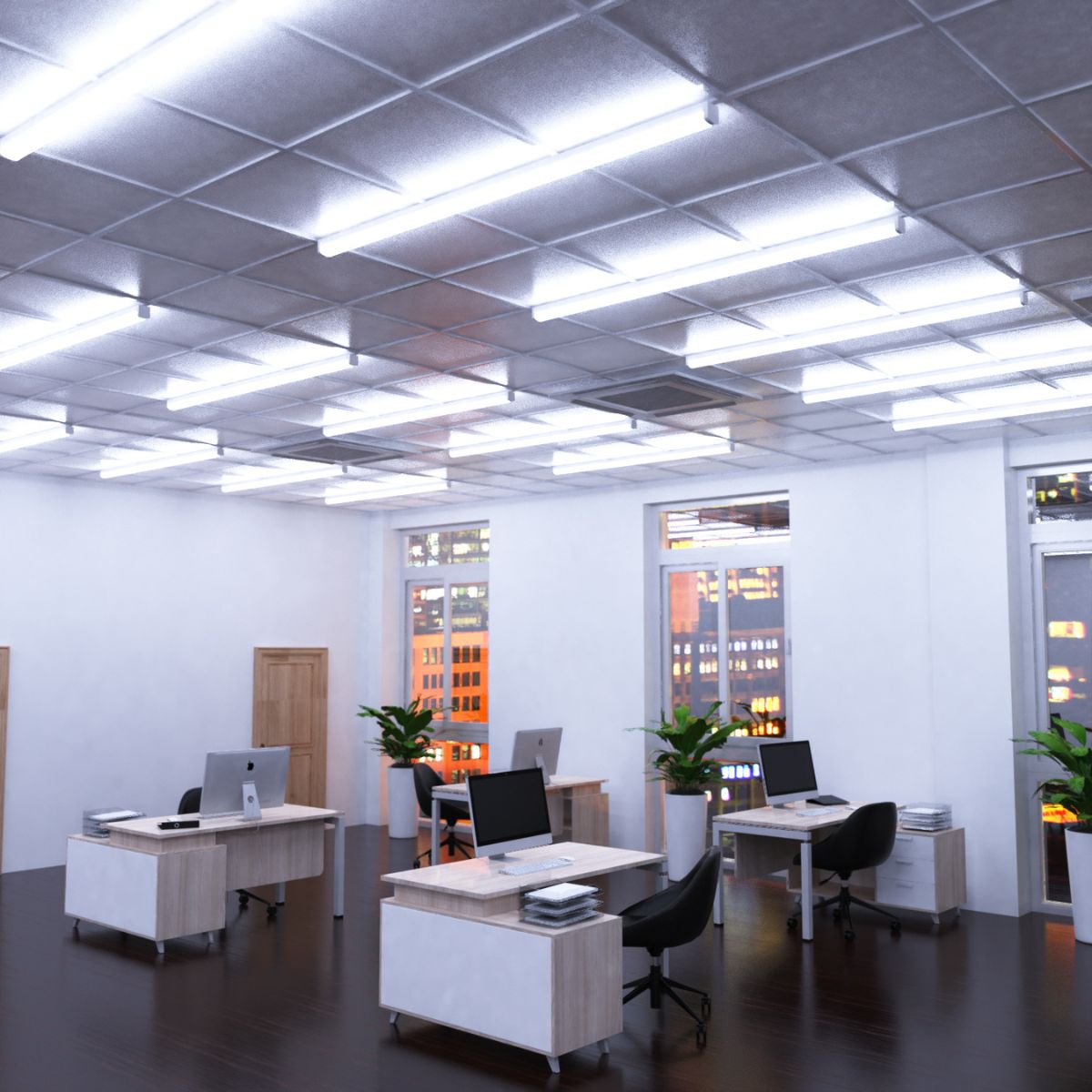
In an office, for example, when the power fails, a different set of lights will come on (non-maintained emergency lighting) to provide sufficient illumination for safe evacuation.
Maintained vs Non-Maintained Emergency Lights: Key Differences
Now, let’s put each type of emergency light side-by-side for comparison. While both types serve the same core purpose, their operation and suitability differ in important ways.
Operation mode:
- Maintained lights stay on at all times and switch to battery power during outages.
- Non-maintained lights remain off and activate only during a power failure.
Energy consumption:
- Maintained fittings consume more energy due to continuous operation (serving as normal lighting outside emergencies).
- Non-maintained fittings are more energy-efficient day-to-day.
Visual impact:
- Maintained lights are always visible, which can be reassuring or distracting depending on the space and layout.
- Non-maintained lights are discreet and visually minimal during normal use.
Typical environments:
- Maintained: cinemas, theatres, bars, public venues, unfamiliar spaces.
- Non-maintained: offices, warehouses, schools, industrial settings.
Installation considerations:
- Maintained lights may require more careful placement to balance aesthetics and coverage.
- Non-maintained lights are often simpler to integrate into functional spaces.
Ongoing maintenance expectations:
- Both types require regular testing in accordance with BS 5266-1.
- Maintained lights may wear more quickly due to constant use.
- Non-maintained lights rely heavily on battery condition, making testing crucial.
This comparison is why many projects use both types, rather than treating the decision as all-or-nothing.
What Do UK Emergency Lighting Regulations Actually Require?
One of the most persistent myths is that UK regulations mandate only one type of emergency lighting (either maintained or non-maintained) across all buildings. They do not.
The primary standard governing emergency lighting is BS 5266-1, which sets out how UK emergency lighting should be designed, installed, and maintained. What it does not do is prescribe one universal type of emergency light for every situation.
Instead, the regulations focus on:
- Ensuring escape routes and corridors are adequately illuminated during emergencies.
- Matching emergency lighting provision to the building’s use.
- Supporting safe evacuation for occupants.
This is where the fire risk assessment plays a central role:
- Identifies hazards – pinpoints areas with low or poor visibility
- Needs Assessment – determines the illumination levels
- Ensure legal compliance – document the effectiveness of the emergency lights
- Design and placement guides – direct where lights should be placed and the type of lighting.
Based on these factors, the assessor may recommend maintained lighting, non-maintained lighting, or a combination of both. This is also where inspections often fail. Not because emergency lighting is missing, but because the type installed is not suitable for the space.
Common Mistakes When Choosing Emergency Lighting
If you’re new to or still unfamiliar with emergency lighting, heed this list and avoid them at all costs unless you want costly errors to creep in.
1. One common mistake is assuming non-maintained lights are always acceptable. While suitable in many spaces, they can be inappropriate in low-light or public environments, where exits must remain visible at all times.
2. The opposite mistake is using maintained lighting everywhere. This can lead to higher energy bills, unnecessary visual clutter, and fittings that feel intrusive in offices or workspaces.
3. Another overlooked issue is exit signage visibility. Exit signs are typically maintained, but if surrounding emergency lighting is non-maintained in a dark space, signage alone may not provide enough guidance.
4. Inconsistent mixing of maintained and non-maintained lights across a single escape route is another frequent problem. It’s not inherently “bad,” but from a design perspective, it’s not ideal. Careful design for consistency must be met and should not be random.
5. Finally, aesthetics are often ignored in customer-facing spaces. Emergency lighting does not have to look industrial, but choosing the wrong type can undermine the carefully designed interior’s atmosphere.
Maintained or Non-Maintained: How to Decide
So, how do you determine which type of emergency lighting is best for your space/building? You just need to ask (and answer) the right questions.
Questions to Ask Before Choosing
Start with these:
- Is the area normally occupied in low light?
- Are occupants familiar with the building layout?
- Is the space customer-facing or public?
- What does the fire risk assessment recommend?
✅ If a space is dark, unfamiliar, or designed for public use maintained emergency lighting fixture often makes sense.
☑️ If it is bright, functional, and used by regular occupants, non-maintained lighting is usually sufficient.
Can You Use Both Types in the Same Building?
Yes, and in many cases, you should.
Modern buildings are rarely uniform. A retail unit might have a brightly lit stockroom, customer-facing sales floor, and atmospheric fitting rooms. Using the same emergency lighting type across the entire facility would be inefficient.
A common approach is zoning by function:
- For customer areas and low-light zones, use maintained emergency lighting.
- For back-of-house, offices, and storage areas, non-maintained lighting is ideal to keep these areas well-illuminated during emergencies.
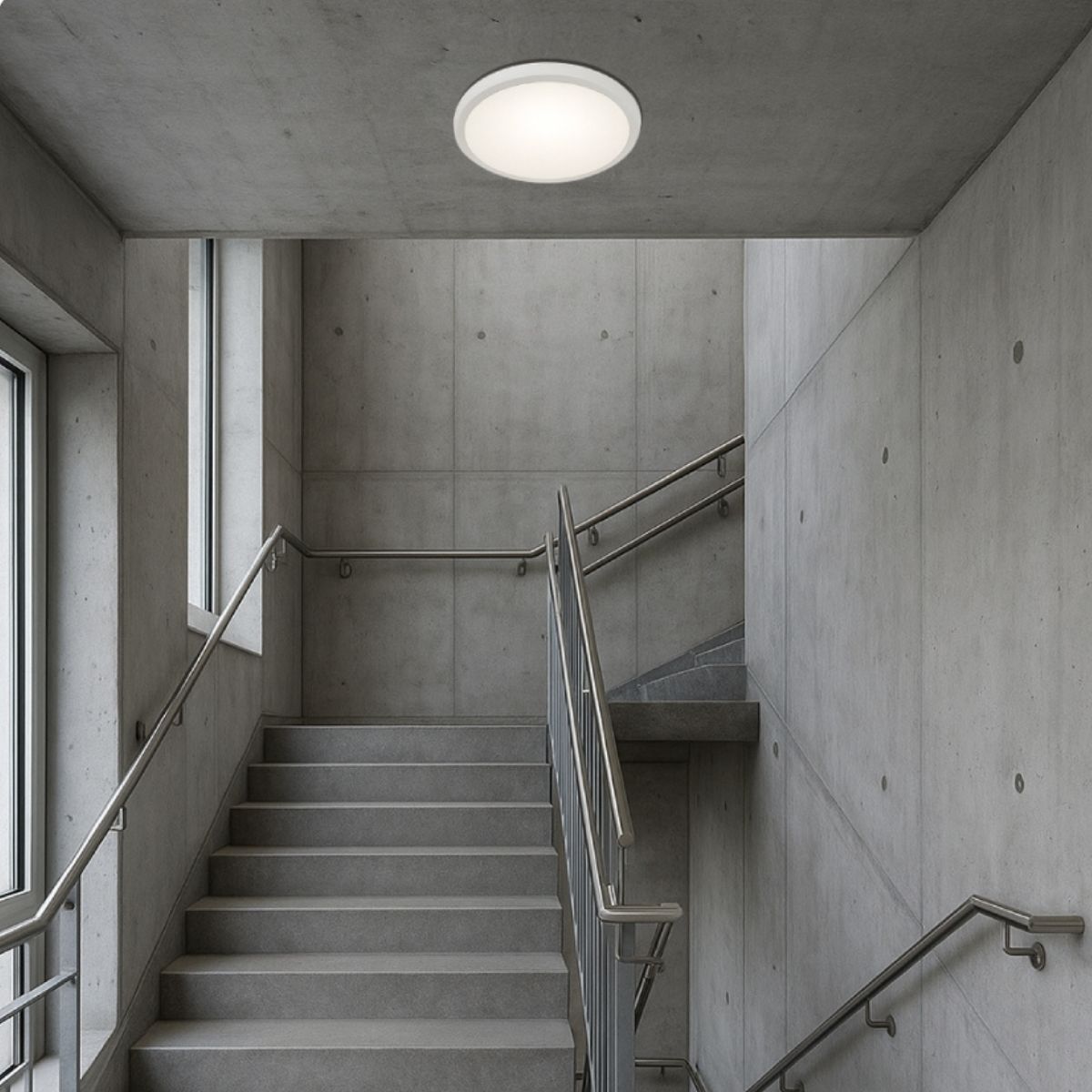
Corridors, stairwells, and escape routes should always be considered as a whole to ensure consistency and clarity during evacuation.
Modern Emergency Lighting Options That Simplify Compliance
Emergency lighting has come a long way from bulky, conspicuous fittings. LED technology has dramatically reduced energy consumption while improving reliability and lifespan.
Many modern emergency lights even offer self-test functionality that automatically checks battery health and operation, reducing the need for manual checks, saving you time and resources.
There are also combined fittings that operate as maintained lights while providing emergency backup, simplifying installation in mixed-use areas.
These advancements reduce maintenance burden, improve compliance confidence, and make emergency lighting easier to manage day-to-day.
Quick Buyer’s Checklist
Here’s a summary you can easily get back to:
Choose maintained emergency lighting when:
- The area is normally dimly lit.
- Occupants may be unfamiliar with exits.
- The space is public or customer-facing.
- Visual continuity during evacuation is important.
Choose non-maintained emergency lighting when:
- The area is well-lit during normal use.
- Occupants are familiar with the building.
- Energy efficiency and minimal visual impact are priorities.
- The space is functional rather than decorative.
Remember:
- UK regulations focus on suitability, not a one-size-fits-all rule.
- Fire risk assessments guide the final decision.
- Mixing both types is often the most practical solution.
Your Emergency Lighting Verdict
Choosing between maintained and non-maintained emergency lights is less about technical definitions and more about understanding how people move through a space when emergencies occur.
By approaching the decision thoughtfully, you reduce compliance anxiety, avoid costly mistakes, and create safer buildings that work quietly in the background until they are truly needed.
Explore compliant emergency lighting options for your building on the Simple Lighting website today, or contact us with any inquiries.
And also check out more Emergency & Safety Lighting Compliance Guide by clicking on this link.