
Understanding LED Lighting Controls: An Overview
When asked about lighting controls, what comes to mind are the typical wall light switches. You expect it to be seen in households, shops, establishments, factories, facilities and properties; when you don't, you find it unusual. Throughout the years, as lighting fixtures evolved, lighting controls changed with it. Now, you'll find a variety of them, including dimmers, sensors, timers, and smart systems. But why do you need to upgrade to these controls? Wouldn't a regular light switch be enough? Well, if you find out that these lighting controls can enhance the efficiency of your lighting system and boost your energy savings, wouldn’t you be intrigued and want to try them?Dimmers: Tailoring Lighting Intensity for Efficiency
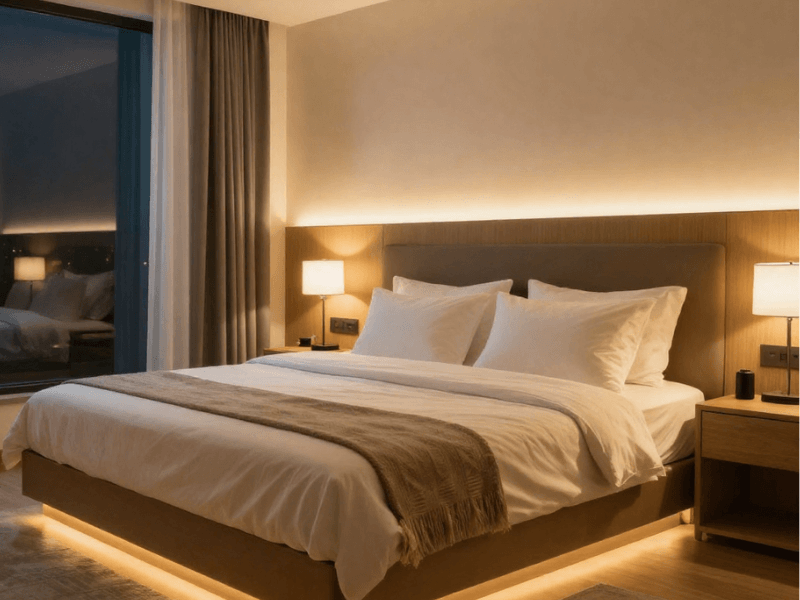
When you decide to go a level higher than regular light switches, the first that you'll encounter are dimmers. Dimmer switches can adjust the intensity of your lights based on your requirements. You'll notice there are times when you don't need your lights to be 100% bright. Dimmers can help you regulate the intensity of your fittings to suit your mood or lighting requirements. As a result of lowering the brightness of your lights, your energy consumption decreases. Since the lumens count is reduced, the wattage consumption will naturally be lessened. So, in a way, it's like killing two birds with one stone: having a flexible ambience to suit your preference and an even more efficient lighting fixture!
Motion Sensor and Occupancy Sensor: Smart Lighting Management
Sensors are another lighting control that can improve your lighting management. How do they work? There are two types of sensors that you can utilise in your home or business: motion sensors and occupancy sensors. A motion sensor will activate your lights when it senses movement within a specific radius. On the other hand, an occupancy sensor triggers your fittings when it detects a person. Occupancy and motion sensors make lighting management more effective. Your fittings will not work unless needed, so you'll never forget to switch them off when not in use. Because you're decreasing the times when you accidentally leave your fixtures unattended, you won't waste as much energy.Timers and Scheduling: Precision in Lighting Automation
Timers and scheduling are other lighting controls that can increase the efficiency of your lighting system. As their name mentions, they will enable you to set a specific period when your fixtures will operate. Using time timers and scheduling is ideal for residential and commercial properties as it can lessen unnecessary illumination, improving energy savings. Besides avoiding needless usage, timer and scheduling controls will make lighting management more convenient since everything is automated once the parameters are set.Daylight Harvesting: Integrating Natural Light for Efficiency
When designing your lighting system, you'll have a prescribed lumens count per room. With a daylight harvesting system, the recommended brightness level will be supplemented by balancing the available natural light and artificial lighting. The sensors detect daylight levels, enabling automatic dimming and switching off fixtures when natural light is sufficient. If you have a daylight harvesting system, you can maximise natural light and minimise unnecessary energy use. Plus, you will always have a well-lit space without manually managing your lighting system. The only downside to this is the intricacy of its setup. Other advanced lighting controls have simpler mounting processes, but a daylight harvesting system requires more work and is more expensive. Nevertheless, if none of these is an issue, daylight harvesting is an excellent lighting control!Smart Lighting Systems: Integration and Customisation
Smart lighting is one of the most sought-after lighting systems today. With its many variations, finding one that will suit your requirements is easy. Smart controls vary in price range, features, compatibility and application. So, there's one for every need! But do you need to integrate this lighting control? Smart lighting systems have centralised control, remote access, and customisation. You can manage your home lights using your smartphone, even if you're in your office or a different country. Also, this lighting management system can be a combination of other advanced lighting controls like dimmer switches and timers.


0 comments