





LED Modules for Signs and Light Boxes

LED modules provide reliable, even illumination for illuminated shop signs, light boxes, channel letters, and commercial display signage.

Skip to results list

Filters

0 items
Column grid
Column grid

Filter

No products found in this collection.

LED Sign Module Range

Selecting the right LED sign module comes down to three things: sign depth, required brightness, and module spacing.

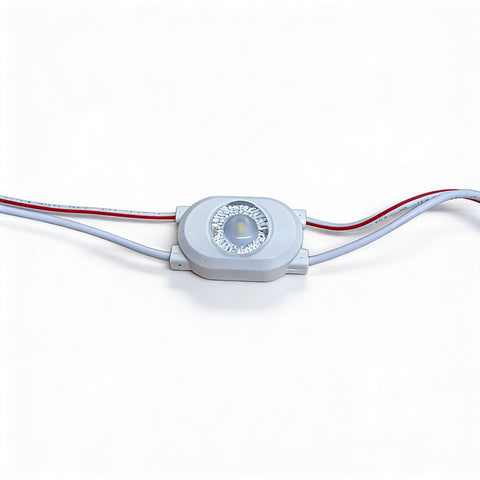
Single Lens (0.5W) - for Small Signs and Shallow Light Boxes

The single lens LED module is designed for shallow light boxes, slim fascia signs, and smaller illuminated displays where installation space is limited. Their tighter beam angle allows closer module spacing and more controlled illumination in compact sign trays.

Twin Lens (1W) - for Medium Light Boxes and Channel Letters

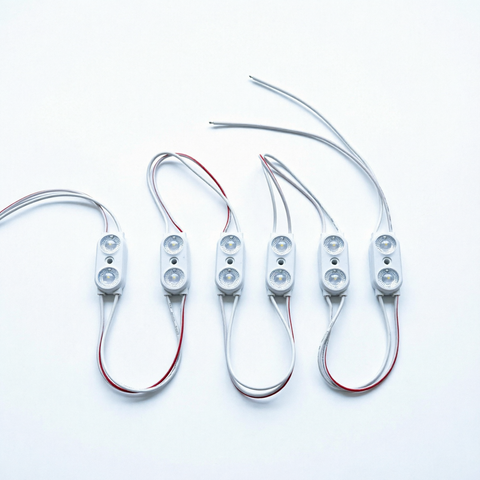
The twin lens LED module offers a balanced combination of brightness, spread, and efficiency. They're commonly used for medium-depth light boxes, channel letters, retail signage, and general-purpose illuminated displays where even light distribution is important.

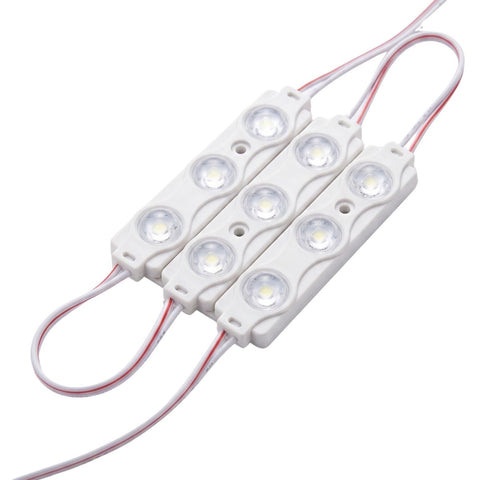
Triple Lens (1.5W) - for Deep Light Boxes and Large Illuminated Signs

Triple lens modules provide higher lumen output and wider beam coverage for larger signage projects. They're ideal for deep-fabricated light boxes, large-format illuminated signs, and installations that require greater spacing between modules without visible hotspots.

All three ranges operate on 24V constant voltage systems and are compatible with suitable LED drivers. Every chain is IP65-rated and compliant with CE and UKCA requirements for indoor and outdoor signage applications.

Where to Use LED Modules

Compared to LED strips (which are great for decorative or residential lighting projects), LED modules for signs have plenty of commercial applications.

Illuminated Shop Signs and Fascia

LED modules are widely used in illuminated sign fascia panels for retail units, restaurants, salons, and commercial premises. Single lens modules suit shallow sign trays, while twin lens modules provide stronger coverage for larger fascia panels and wider sign layouts.

Light Boxes and Backlit Displays

A lightbox LED module is designed to deliver even illumination across acrylic faces, fabric graphics, and backlit panels. Twin lens modules are commonly used for standard-depth displays. On the other hand, triple lens modules work better in deeper cabinets requiring higher-output LED backlight module coverage.

Channel Letters and 3D Signage

Channel letter LED modules are built for compact spaces where consistent illumination and clean letter coverage are essential. Single lens modules are ideal for smaller fabricated letters and shallow returns. Twin lens modules suit larger built-up lettering and wider stroke widths.

Monument and Projecting Signs

Monument signs and projecting signs often require higher lumen output and wider beam coverage due to larger cabinet depths. Triple lens LED modules for signs are typically the preferred choice for these installations, particularly for roadside branding, totems, and large externally mounted displays.

How to Choose the Right LED Module

To choose the correct LED module, consider light box depth, required brightness, driver compatibility, and module spacing.

Matching Module Size to Light Box Depth

As a general rule:

  • Shallow light boxes between 30mm and 50mm deep work best with single lens modules due to their tighter beam spread and closer LED module spacing
  • Medium-depth cabinets between 50mm and 100mm typically suit twin lens modules
  • Deeper light boxes above 100mm usually benefit from Triple Lens modules with wider beam coverage

Note that these measurements are starting points rather than fixed rules. Face material, sign size, internal finish, and brightness requirements can all affect the final layout.

Calculating Total Wattage and Driver Requirements

Calculating total LED module wattage helps you size the correct driver and avoid overloading circuits. Here's the basic formula

(Number of modules per chain) × (number of chains) × (wattage per module)

For example, a sign using four twin lens chains with 20 modules per chain at 1W per module would require:

20 × 4 × 1W = 80W total load

A suitable 24V LED module driver should then be selected with additional headroom above the calculated load. While some installers search for a 12V LED module, this range operates on 24V systems for improved efficiency and reduced voltage drop across longer runs.

Module Spacing and Coverage

Correct LED module spacing helps prevent hotspots and uneven illumination. Typical spacing starts at around:

  • 140mm pitch for shallow boxes
  • 200mm for medium-depth cabinets
  • Up to 300mm for deeper light boxes (where light has more room to diffuse evenly)

Wiring and Driver Compatibility for LED Sign Modules

Correct LED module wiring is essential for reliable performance, consistent brightness, and safe driver loading across illuminated signage installations.

24V Driver Requirements

All modules in the range operate on 24V DC systems and should be paired with a compatible 24V LED module driver. For best performance, it is recommended to run no more than 40 modules (or two full chains) in series.

For larger illuminated signs and light boxes, parallel wiring is recommended to reduce voltage drop and maintain even brightness across the installation.

Cable and Polarity Information

Each module chain uses AWG 22 cable with bare tinned wire ends for straightforward installation and connection.

  • Red cable = Positive (+)
  • White cable = Negative (-)

Clear polarity markings help simplify LED module wiring and reduce on-site installation errors.

Dimming and Driver Compatibility

The range is compatible with:

This allows each dimmable LED module to be used across retail signage, commercial displays, and fit-out projects requiring adjustable brightness control.

Cuttable and Rewireable Chains

Chains can be cut between any two modules and rewired as needed for custom layouts and fabricated signage. This is particularly useful for odd-shaped signs, channel letters, and bespoke light boxes where standard chain lengths may not fit cleanly.

Installing LED Modules in Signs and Light Boxes

Correct LED module installation helps maintain even illumination, secure fixing, and long-term reliability across illuminated signs and light boxes.

Fixing Options

Each module includes:

  • 3M adhesive backing for quick positioning and installation
  • A screw mount hole for permanent fixing

Before fitting LED modules with adhesive backing, the mounting surface should be cleaned with isopropyl alcohol to remove dust, grease, and residue. For outdoor signage and high-vibration environments, screw fixing is recommended as the primary installation method.

Installation Guidance

Modules can be cut and rewired between sections to suit custom sign layouts, fabricated letters, and irregular cabinet shapes.

All installation work should be carried out by a professional familiar with low-voltage signage systems. Any mains-side wiring (including driver connection and power supply installation) should be completed by a qualified electrician in accordance with current UK wiring regulations.

Why Buy LED Modules from Simple Lighting

Simple Lighting has supplied LED solutions to trade customers for more than 15 years, supporting sign makers, shopfitters, electricians, and display manufacturers across the UK. With over 14,000 5-star reviews across Google, Trustpilot, and Reviews.io, you can rely on us for quality products, fast delivery, and knowledgeable support.

All LED sign modules are CE- and UKCA-marked and backed by a 3-year warranty, providing added peace of mind for commercial installations. We also stock a matching range of 24V LED drivers for straightforward compatibility across signage projects.

Trade pricing is available through registered accounts for larger and repeat orders.