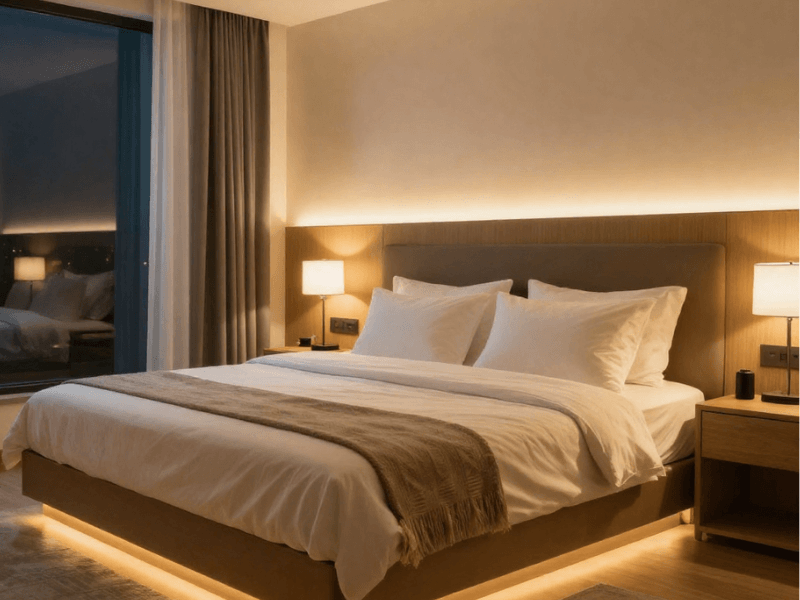
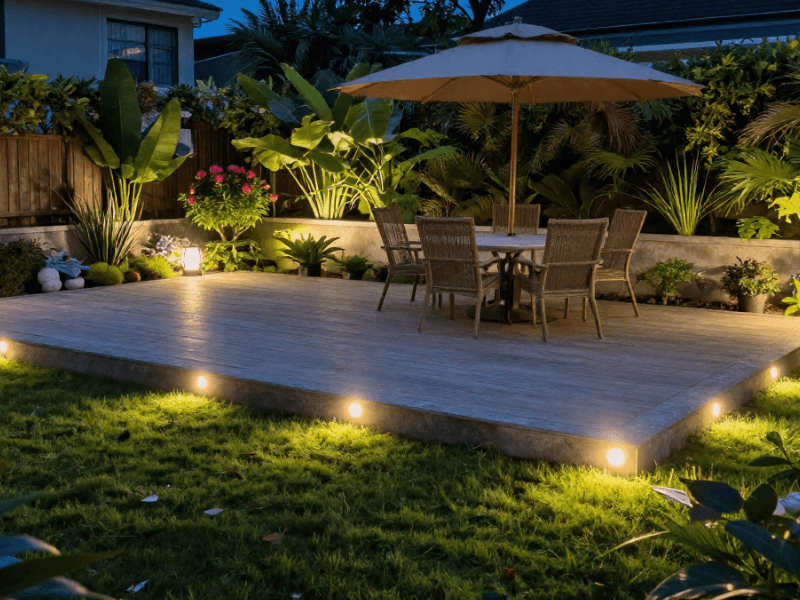

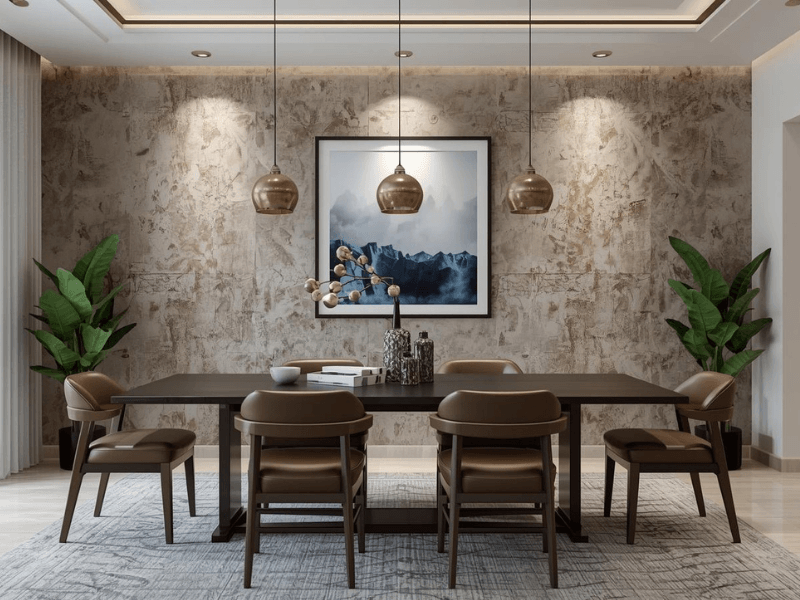
Hallway Lights
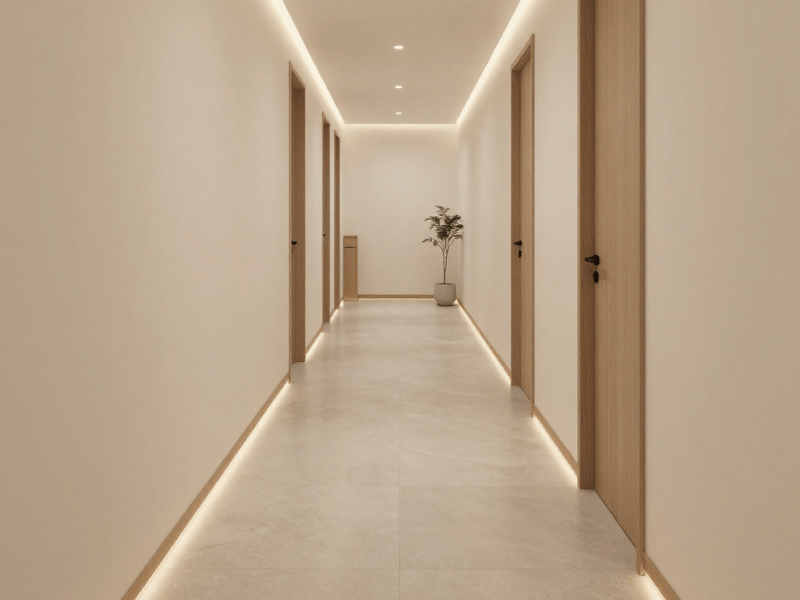
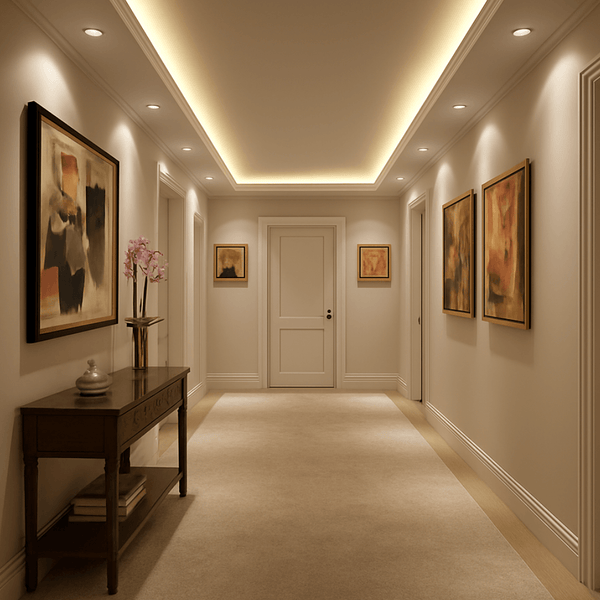
Hallway lighting needs to cover a narrow space evenly without taking up headroom. LED downlights are the most popular choice - they sit flush with the ceiling, spread light evenly along the length of the hallway, and work well with dimmers for flexibility between daytime and evening.
For hallways with stairs, LED stair lights add both safety and a clean, modern look. Plinth lights along a skirting line or LED strip lights under a handrail provide low-level orientation lighting that works well overnight without needing the main ceiling lights on.
We stock a full range of hallway lights, from dimmable LED downlights and pendant lights to LED stair lights, plinth lights, and LED strip lights. Browse by product type below to find the right fittings for your hallway.

Hallway Lighting That Fits the Space
From flush-fitting LED downlights for even ceiling coverage to LED stair lights and low-level plinth lighting, we have everything you need to light your hallway properly.
Popular Hallway Lighting Choices
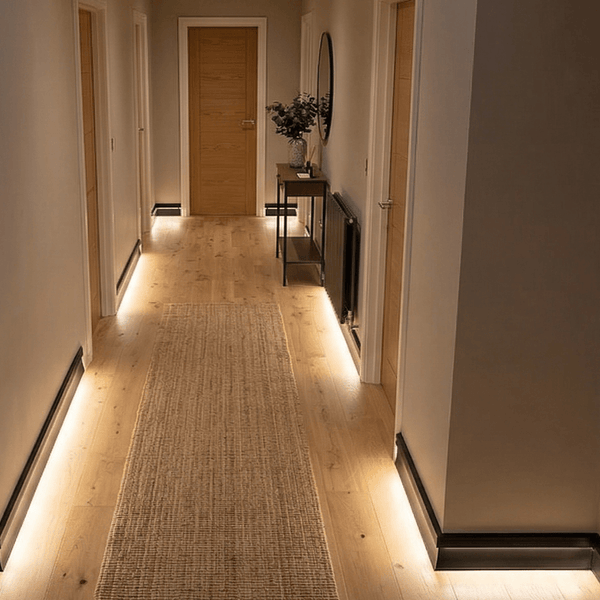
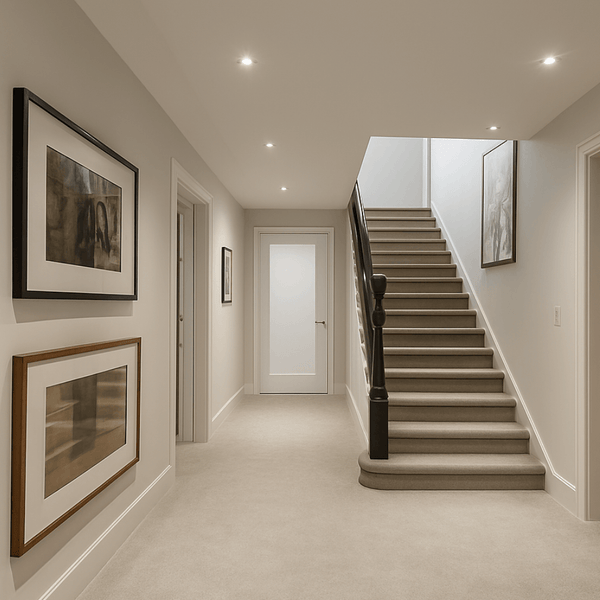
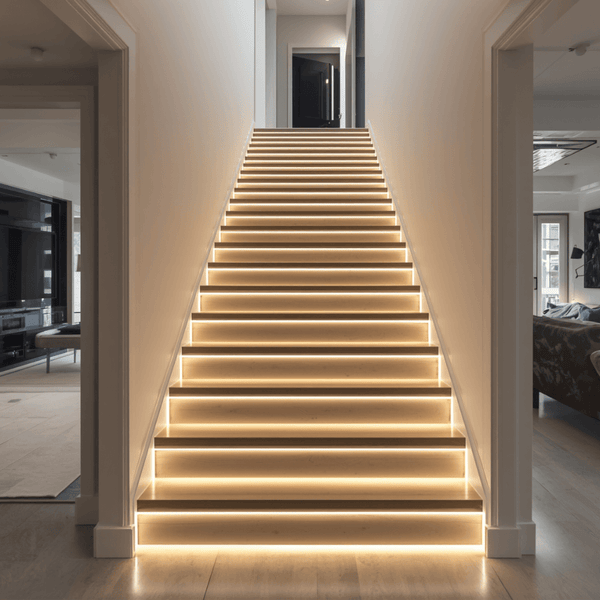
For Your Hallway


Digital, Pixel LED Strip Light, Chasing Effect - WS2811, 14.4w

12w Dotless, COB IP67 Waterproof LED Strip - Colour Adjustable / Tunable


Popular Hallway Lighting Options
From aluminium profiles for a clean strip light finish to LED strip lights for accent lighting and flush-fitting LED downlights for even ceiling coverage, these are the most popular products for hallway lighting
Clean, diffused strip light finish.
Aluminium Profiles
Shop Now
Accent lighting for stairs and skirting.
LED Strip Lights
Shop Now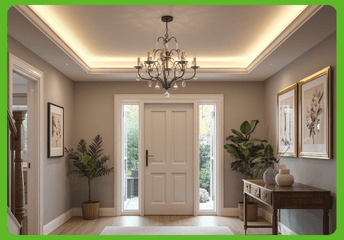
Flush-fitting. Dimmable. Low profile.
LED Downlights
Shop Now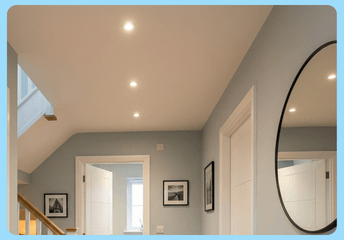
Choosing the Right Hallway Lighting
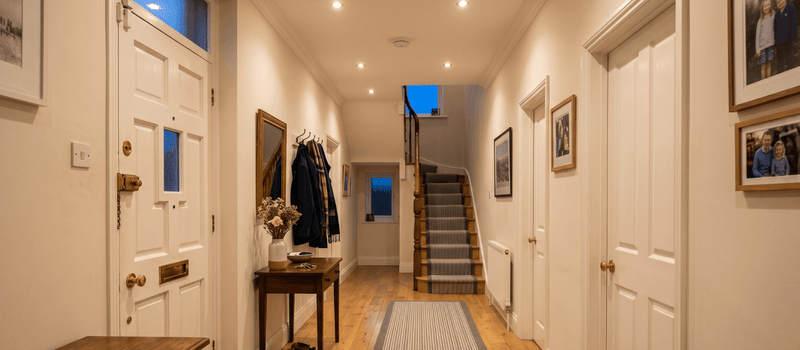
Hallways are typically narrow and often have low ceilings, so the fitting type matters. LED downlights are the most common choice because they sit flush with the ceiling and take up no headroom. Space them evenly along the length of the hallway - as a rough guide, one downlight every 1.2 to 1.5 metres gives even coverage without dark spots.
For colour temperature, 3000K warm white works well in most hallways. It gives a clean, welcoming light without the harshness of cooler whites. If your hallway connects to a kitchen or bathroom lit at 4000K, matching the colour temperature keeps the transition between rooms consistent.
If your hallway includes stairs, LED stair lights recessed into the wall or skirting board add safety and a modern finish. They work well on a sensor or separate switch so they can run independently from the main ceiling lights - useful for overnight orientation without switching on full brightness.
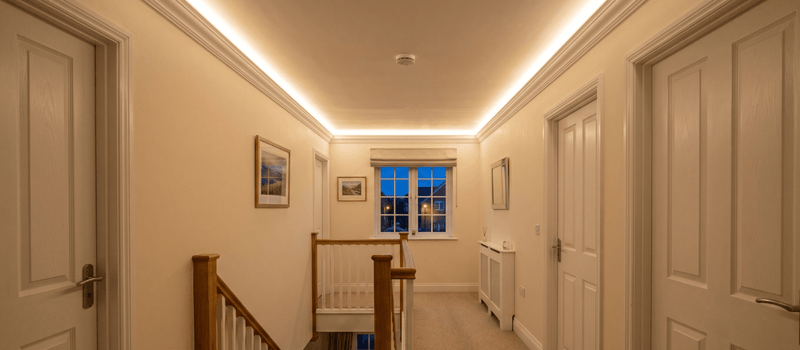
LED strip lights fitted inside an aluminium profile along a skirting line, under a handrail, or along a ceiling coving give a continuous accent line that adds depth to a narrow space. The aluminium profile diffuses the light evenly and hides the individual LED dots for a cleaner look.
Why Buy Hallway Lighting from Simple Lighting
We stock everything you need to light a hallway properly, from LED downlights and stair lights to LED strip lights and aluminium profiles. Every product includes full specifications covering dimensions, lumen output, and colour temperature, so you can plan your layout before you order.
With over 14,000 five-star reviews across Google, Trustpilot, and Reviews.io, free UK delivery on every order, and hassle-free returns, you can buy with confidenc
Frequently Asked Questions
What types of hallway lights are best for narrow corridors?
For narrow hallways, wall-mounted lights like sconces or LED strip lighting work brilliantly as they don't protrude much into the space. Flush ceiling lights are also ideal as they provide good illumination without taking up headroom. Avoid large pendant lights or chandeliers in tight spaces as they can make the area feel cramped and create obstacles.
How bright should hallway lighting be?
Hallway lighting should provide around 100-200 lux for safe navigation, which typically means 10-15 watts per square metre for LED lights. You want enough brightness to move safely through the space and see clearly, but not so bright that it's harsh or creates glare. Consider dimmable options so you can adjust the lighting for different times of day.
Should I use warm or cool white light in my hallway?
Warm white (2700K-3000K) is generally best for hallways as it creates a welcoming atmosphere and feels more homely. Cool white can feel clinical and unwelcoming in residential hallways. However, if your hallway lacks natural light or you prefer a more modern aesthetic, neutral white (4000K) can work well too.
Do I need multiple lights for a long hallway?
Yes, long hallways typically need multiple light sources to avoid dark spots and shadows. Space ceiling lights about 1.5-2 metres apart, or use a combination of ceiling lights and wall sconces. This creates even light distribution and prevents the tunnel effect that a single light source can create in long corridors.
Are motion sensor lights worth installing in hallways?
Motion sensor lights are excellent for hallways, especially for nighttime navigation and energy savings. They automatically illuminate when you enter and switch off when the space is empty, which is perfect for a transitional space like a hallway. Many of Simple Lighting's hallway options come with motion sensor compatibility or built-in sensors.
What's the difference between flush and semi-flush ceiling lights for hallways?
Flush lights sit directly against the ceiling with no gap, making them ideal for low-ceiling hallways or areas where headroom is important. Semi-flush lights hang slightly below the ceiling, typically 10-20cm, and can provide better light distribution but need adequate ceiling height. Choose flush for practicality and semi-flush for slightly better ambient lighting.
Can I install hallway lights myself or do I need an electrician?
Simple replacements of existing light fittings can often be done yourself if you're comfortable with basic electrical work, but any new wiring or ceiling modifications require a qualified electrician. Always turn off the power at the consumer unit before attempting any electrical work. If you're unsure about any aspect of the installation, it's safer to hire a professional electrician.
What IP rating do hallway lights need?
Standard hallway lights typically need IP20 rating, which protects against objects larger than 12mm but provides no moisture protection. This is sufficient for most indoor hallways. However, if your hallway is near a bathroom or external door where moisture might be present, consider IP44 rated lights for better protection against water splashes.