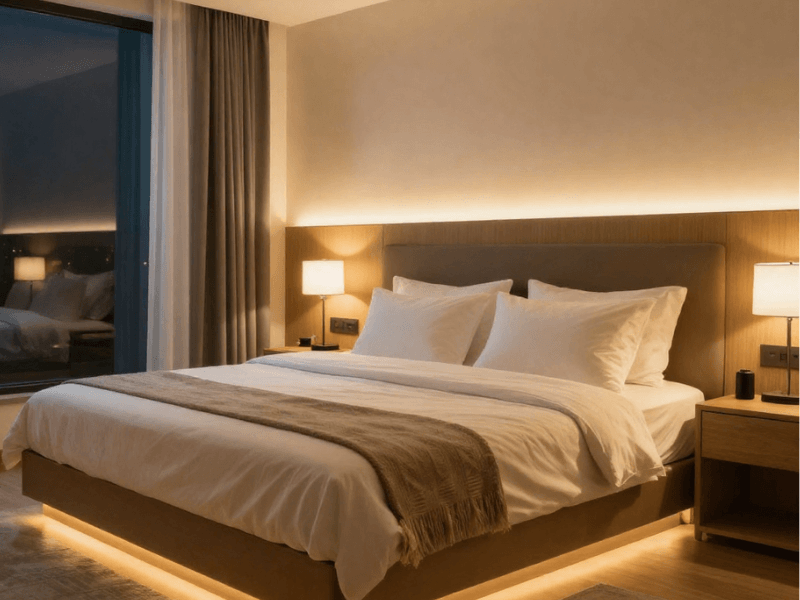
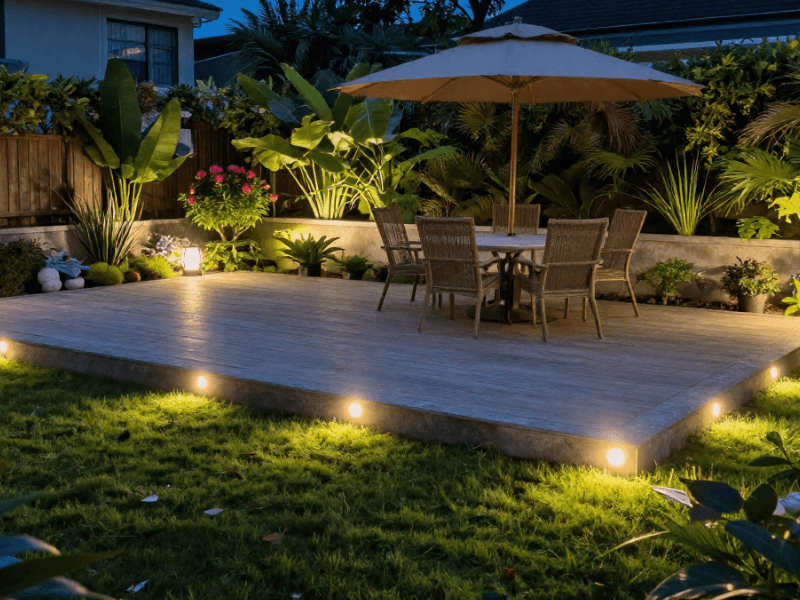
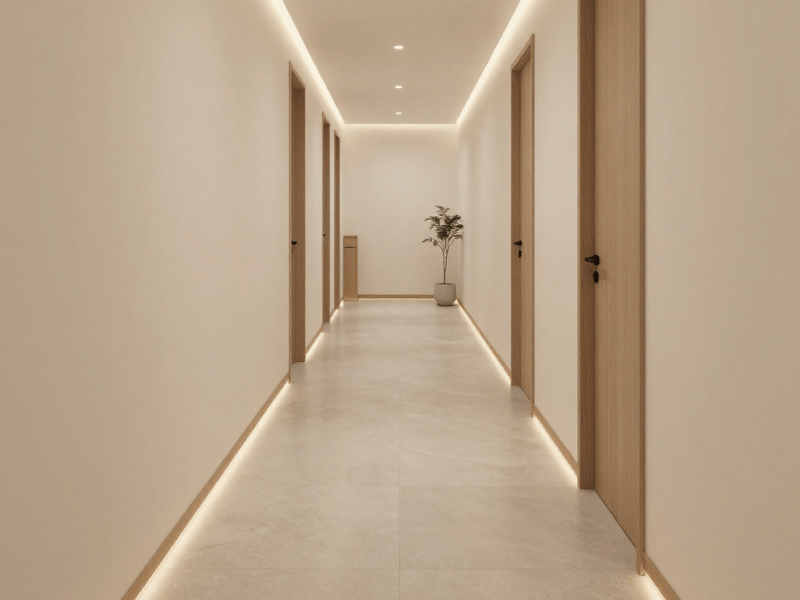


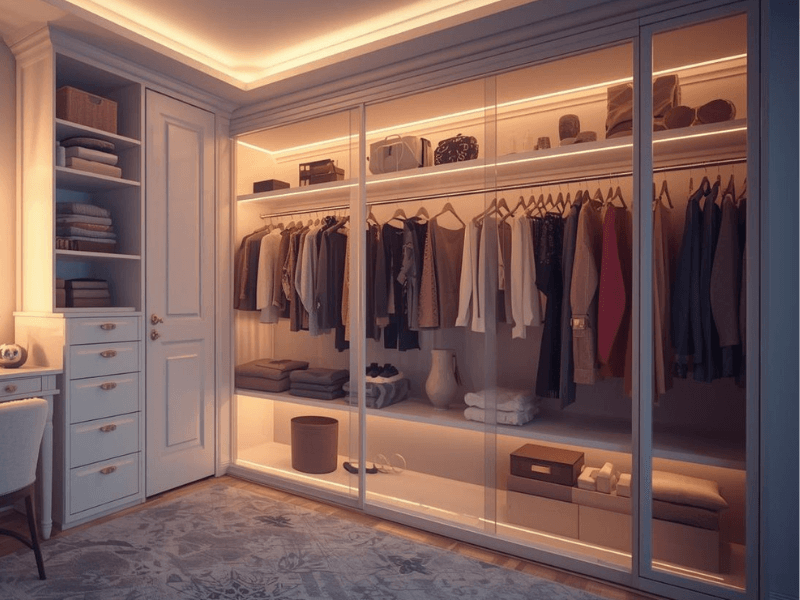

If you Googled “the quickest way to get smart lights”, chances are, one of the first suggestions is to add motion sensors to your lighting.
It’s one of the easiest ways to make your home or workplace feel smarter, safer, and more energy-efficient. Standard light switches are old-fashioned. They still rely on someone to stand up, walk to the switches, and flip them on or off.
Motion sensor lights do all the work for you. Walk into a room, and the lights automatically spring to life.
Yet despite being so common, many people still aren't sure how motion detector lights actually work, especially since a quick search leaves you asking:
-
What's the difference between PIR sensor lights and microwave sensors?
-
Why do some lights switch on when a cat walks past while others don't?
-
Which type is best for my home or business?
Those are the questions that we’re going to answer in this guide.
What Is Motion Sensor Lighting? | Motion Sensor Lighting Explained
Motion sensor lighting is pretty self-explanatory. There’s really no gimmick in the name. It’s lighting that automatically turns on when movement is detected within a specific area.
Instead of a manual switch, a built-in or added sensor continuously monitors the surroundings for movement. When someone enters its detection zone, the sensor triggers the light to switch on.
But how does it turn off?
After no movement has been detected for a set period, the light automatically turns off again.
It’s a pretty straightforward automation, but it makes everyday life much more convenient. You don't have to fumble for a light switch when your hands are full or worry about accidentally leaving lights on overnight.
Is motion sensing the same as daylight sensing? No.
Motion detection activates lighting when movement is detected.
Daylight sensing only allows the light to operate when ambient light falls below a set threshold.
But many modern LED sensor lights combine both features.
Here are several advantages of motion sensor lights:
-
Improved convenience (of course)
-
Better home and workplace safety (no more walking in dark hallways)
-
Enhanced security (they’re great deterrents)
-
Lower electricity consumption (only operate when needed)
-
Less unnecessary lighting
-
Longer-lasting LED fittings
If you’ve been wondering why you’ve been seeing more motion sensor lights lately, this is why.
And if you, yourself, have been meaning to add motion sensor lights, these are the most common applications:
-
Driveways
-
Gardens
-
Storage areas
-
Side entrances
That’s right. Motion sensor lighting can be used indoors or outdoors, so it fits many lighting needs.
How Does Motion Sensor Lighting Work?
If you look at the technology inside a motion sensor, everything might sound technical and complicated. But the process itself is surprisingly simple and easy to understand; even a fifth grader could get it. (That sounds like a good premise for a TV show.)
Picture this: You arrive home after dark.
As you walk up the driveway, you step into the sensor's detection zone. Within a fraction of a second, the sensor recognises movement and switches the light on. Now you have enough bright light to search for your keys and unlock the front door.
After you've gone inside and no further movement is detected, the timer counts down before automatically switching the light back off.
Every motion sensor follows this same basic sequence.
Detecting Movement
The sensor's first job is to monitor a specific detection zone. It’s like a sentry, always on the lookout. As long as nothing changes within that space, the light stays off.
Say a movement is detected. What does the sensor do?
-
It identifies activity.
-
It sends an electrical signal.
-
The LED light switches on almost instantly.
-
A built-in timer starts counting.
The exact way movement is detected depends on the type of sensor, which we'll explore shortly.
Detection zones vary between fittings. Some indoor sensors cover only a few metres, while outdoor units can monitor much greater distances.
The shape of the detection area can also differ. Some provide wide-angle zones that are perfect for entrances and wide areas, while others focus on longer, narrower corridors.
Turning Lights Off Again
The beauty of motion-sensor lights is that the light doesn't stay on forever. Each sensor has a time delay that resets every time movement is detected.
Once no more movement is detected, the countdown begins. After the selected delay has passed, the light switches off automatically.
Modern motion sensor lights allow you to adjust this timer to your preference. You may want a shorter time for hallways and several minutes for a garage.
In other words, the lights stay on only when someone is actually using the space.

The Different Types of Motion Sensors Explained
Although they all perform the same basic job, not all motion sensors work in the same way.
What I mean by that is the technology behind them. The sensor used dictates how movement is detected, how sensitive it is, and where it performs best.
PIR (Passive Infrared) Sensors
If you've ever owned PIR sensor lights, you've already used the most popular type of motion sensor.
Rather than detecting movement itself, a PIR sensor detects changes in infrared energy, which is the heat naturally given off by people and animals.
When someone walks across the detection area, the sensor notices the sudden change in heat and activates the light.
They’re simple, reliable, and affordable. That’s why they’re the first choice in many residential lighting applications.
You can commonly find them in:
-
Front door security lights
-
Hallways
-
Bathrooms
-
Garages
-
Utility rooms
-
Side entrances
For most homes, they're an excellent balance of performance, reliability, and value.
Microwave Sensors
This takes a completely different approach from the PIR sensor… and uses a different technology, hence a different name.
Instead of detecting heat, these sensors continuously emit low-power microwave signals into the surrounding area.
And before you scare yourself, no, these aren’t harmful microwaves.
When those signals bounce back differently because something has moved, the sensor detects the change and switches on the light.
This makes microwave sensors considerably more sensitive than PIR sensors.
Another big difference is that, unlike infrared sensors, microwave signals can detect movement through certain non-metallic materials, such as thin plastic panels, glass, or wood.
Some fittings take advantage of this and conceal the sensor for a cleaner look without compromising performance.
Because of their longer range and increased sensitivity, microwave sensors are commonly used in:
-
Offices
-
Warehouses
-
Corridors
-
Stairwells
-
Car parks
-
Industrial premises
The caveat is that they can sometimes detect movement outside of your intended area if not configured correctly. This makes proper positioning a critical part of the installation process.
Dual Technology Sensors
What do you do if you have two sensors that each have advantages and disadvantages? You combine them, of course!
That’s what these sensors are all about. Dual technology sensors combine the strengths of both PIR and microwave sensing.
Because why rely on a single detection method when you can use both for a more accurate motion detection?
For example, the PIR sensor may first detect body heat, while the microwave sensor confirms movement. Only when both conditions are met does the light switch on.
This dramatically reduces false triggers caused by environmental conditions.
Best use cases include:
-
Busy commercial entrances
-
Heated warehouses
-
Loading bays
-
Industrial facilities
-
Areas with changing temperatures
-
Spaces affected by airflow or mechanical equipment
The only downside is that they typically cost more than the other two options, but the improved accuracy often makes them worthwhile, especially in spaces that need dependable lighting.
Here’s a side-by-side comparison:

Where Should You Install Motion Sensor Lighting?
One of the biggest advantages of motion-sensor lighting is that you can install it virtually anywhere. And the best location depends on how the space is used and what you want the lighting to achieve.
Around the Home
Most homes have several areas where motion detector lights can make everyday life easier.
Front doors
Motion sensor lights at your entrance, boom: instant visibility when arriving home after dark. Great for unlocking the door, greeting visitors, or accepting a late delivery. Lights are turned on without fumbling for a switch.
Side access
Another door. Side passages are often dark and overlooked. Install outdoor motion lighting to improve security while making it easier to move bins, bikes, or garden equipment after sunset.
Gardens
Ever stumbled in the garden because you missed a stepping stone? Probably cos you didn’t see it in the dark. Garden paths, patios, and decking become much safer with automatic lighting.
Plus, it creates a welcoming first impression for guests visiting in the evening.
Hallways
One of the most common places for automatic lighting. Instead of walking through a dark corridor, the lights switch on as you enter and turn off again shortly after you leave.
Utility rooms
Laundry rooms, pantries, and storage spaces are often visited with full hands. With motion sensor lighting, there’s no need to reach for the switch for lights.
Stairs
Safety is the number one priority when it comes to stair lighting. Motion-sensor lighting ensures the stairs are lit before you even take the first step.
Commercial Premises
Businesses also benefit significantly from sensor lighting, especially in areas where people come and go.
Offices
Meeting rooms and breakout areas don't always need constant lighting. Motion sensors help reduce unnecessary electricity use while ensuring rooms are illuminated when used.
Warehouses
Staff frequently move between aisles, loading bays, and storage areas. Motion-activated lighting improves visibility while avoiding the cost of continuously illuminating the entire building.
Car parks
You can use motion-sensor lights as security lighting to improve visibility for employees and visitors while deterring unwanted activity.
Corridors
No one likes to stay long in office corridors. You can keep them safely lit only when they're actually being used.
Toilets
When was the last time you confidently pressed a light switch in your office toilet? Automatic lighting improves hygiene by removing the need to touch switches.
Storage rooms
These rooms are typically occupied only for short periods. Motion sensors provide convenient lighting without wasting energy between visits.

Motion Sensors vs Presence Sensors: What's the Difference?
You might often hear motion sensor and presence sensor used interchangeably, but they aren't quite the same.
Both automate lighting, sure, but they behave differently.
A motion sensor reacts when it detects noticeable movement. Once movement stops, the timer begins counting down, then automatically switches off.
This works perfectly in areas where people regularly enter and leave.
A presence sensor, however, is much more sensitive.
It can detect very small movements, such as someone typing at a desk, turning the pages of a book, or moving a computer mouse. Rather than simply switching lights on after movement, it continually checks whether someone is still occupying the room.
As long as a person remains present, even with minimal movement, the lights stay on.
Here's when each option makes the most sense:

Common Motion Sensor Settings You Can Adjust
It is common to assume that motion sensor lights are supplied with fixed settings. But in reality, most quality fittings let you customise their behaviour.
A few simple adjustments:
Detection Range
Detection range controls how far away movement can be detected. It might seem logical to set this to the maximum distance, but bigger isn't always better.
A sensor that detects movement beyond the intended space is prone to false triggers. It could detect a pedestrian, a passing car, or children playing in the neighbour’s yard.
This causes your lights to activate more often than necessary.
Time Delay
The time delay determines how long the light remains on after movement stops.
You can set this to:
-
10 seconds for quick pass-through areas
-
30 seconds for hallways
-
2 minutes for entrances
-
5 minutes for garages
-
10 minutes for larger workspaces or storage areas
I won’t tell you these are the universal “correct” settings for every application, but it’s a good start. You’d still have to consider how long people actually spend in each location.
Lux Level
This is mostly for the lights with daylight sensing. The lux setting tells the sensor how dark it needs to be before the light activates.
-
A higher lux setting allows operation even during gloomy daytime conditions.
-
A lower lux setting limits activation to evening or nighttime.
But generally, this setting prevents outdoor lights from switching on unnecessarily during bright daylight.
Common Reasons Motion Sensor Lights Don't Work Properly
Here are some of the most common issues and how to fix them.
1. Incorrect positioning
If the sensor faces the wrong direction, it may miss approaching people or detect movement outside the intended area.
Fix: Reposition the fitting so the detection zone covers the area you want to monitor.
2. Sensitivity set too high
An overly sensitive sensor may activate at the slightest movement of leaves, traffic, or wildlife.
Fix: Reduce the detection range or sensitivity until only genuine movement triggers the light.
3. Nearby heat sources
Heating vents, boiler flues, or hot exhausts are the bane of PIR sensor lights.
Fix: Install the sensor away from strong heat sources wherever possible.
4. Pets activating the sensor
Cats, dogs, and other animals may trigger outdoor lighting.
Fix: Adjust the sensor angle or reduce its sensitivity. You can also get fittings with pet-friendly detection modes.
5. Obstructed sensor
Dirt, cobwebs, plants, or decorative items can interfere with detection.
Fix: Clean the sensor regularly and remove any obstructions.
6. Incorrect lux settings
Set the lux threshold too low, and the light may never activate until it's almost completely dark.
Fix: Increase the lux setting until the light operates when required.
7. Wiring issues
Loose connections or incorrect wiring can prevent the sensor from operating properly.
Fix: Check the installation instructions carefully or contact a qualified electrician if you're unsure.
8. Outdoor weather conditions
Heavy rain, snow, fog, or rapidly changing temperatures can occasionally affect sensor performance.
Fix: Choose a weather-resistant fitting with an appropriate IP rating.

How Motion Sensor Lighting Helps Reduce Energy Bills
This one’s probably not obvious for many people. But the principle is simple: Lights only switch on when they're actually needed.
With a traditional switch, it's easy for someone to leave the light on for hours after walking through. A motion sensor eliminates that possibility by automatically switching the light off after the room becomes empty.
This applies to both indoor and outdoor lighting. With motion sensor lights, you don’t need to leave lights on the whole night.
The savings might be small when you look at the individual instance. But when you look at it from a bird’s-eye view, everything changes:
-
Reduced electricity usage
-
Extended LED lifespan
-
Lower maintenance and replacement costs
-
Reduced carbon footprint
-
Minimised light pollution
Combine that with modern LED technology, and automatic lighting becomes one of the most efficient lighting solutions you’ll find.
How to Choose the Right Motion Sensor Lighting
Here’s the dilemma. There are so many options available. The solution? Focus on how the light will actually be used.
Indoor or Outdoor?
Where will the lights be installed? For outdoor installation, lights should have an appropriate IP rating to protect against rain, dust, and moisture.
Typical IP ratings you’ll find:
-
IP44 - suitable for sheltered outdoor areas.
-
IP65 - offers greater protection against weather exposure and is commonly used for outdoor lighting.
You’ll usually need a high IP rating indoors only for bathrooms or other damp spaces.
Detection Distance
Not all sensor ranges are the same. Choose one that matches the size of your area.
A short hallway doesn't require a sensor capable of detecting movement 15 metres away, while a large warehouse won’t benefit from a sensor with a small detection zone.
Beam Angle
A wide beam is ideal for illuminating entrances, patios, or open gardens, while a narrower beam works well for pathways, side access, and focused security lighting.
Choosing the right beam angle helps provide even coverage without wasting light where it isn't needed.
Brightness
When comparing products, it’s important to know the lumens your lightbulbs produce. You also need to focus on lumens rather than watts. Lumens measure how much light is actually produced.
You can have:
-
Lower lumen outputs for hallways and cupboards.
-
Medium outputs for gardens and entrances.
-
Higher lumen outputs for driveways, commercial areas, and larger outdoor spaces.
Colour Temperature
The colour of the light impacts how a space feels.
2700K creates a warm, cosy atmosphere that's ideal for living rooms, bedrooms, and decorative garden spaces.
3000K offers a slightly “cleaner” warm white (less yellow), making it a popular choice for entrances, hallways, and residential outdoor lighting.
4000K produces natural white that's well suited to kitchens, garages, offices, and utility rooms that need good visibility.
6000K delivers a crisp, bright daylight effect, making it ideal for warehouses, commercial premises, security lighting, and other task-focused environments that need maximum clarity.

Why Buy Motion Sensor Lighting from Simple Lighting?
Knowing which motion sensor lights to get is one thing. Getting it from a trusted LED supplier is another story.
With Simple Lighting, you get the whole package: quality products, expert advice, and dependable after-sales support. With us, you’ll find a wide range of motion sensor lights for both indoor and outdoor applications.
Check out our collection for energy-efficient LED solutions designed to provide dependable performance. Many of our products are also backed by manufacturer warranties, so you can feel confident in your purchase.
With competitive pricing, fast UK delivery, and expert customer support, it's easy to find a lighting solution that suits your space and your budget.
If you're ready to upgrade your home or business, browse the motion sensor lighting collection at Simple Lighting today!


0 comments