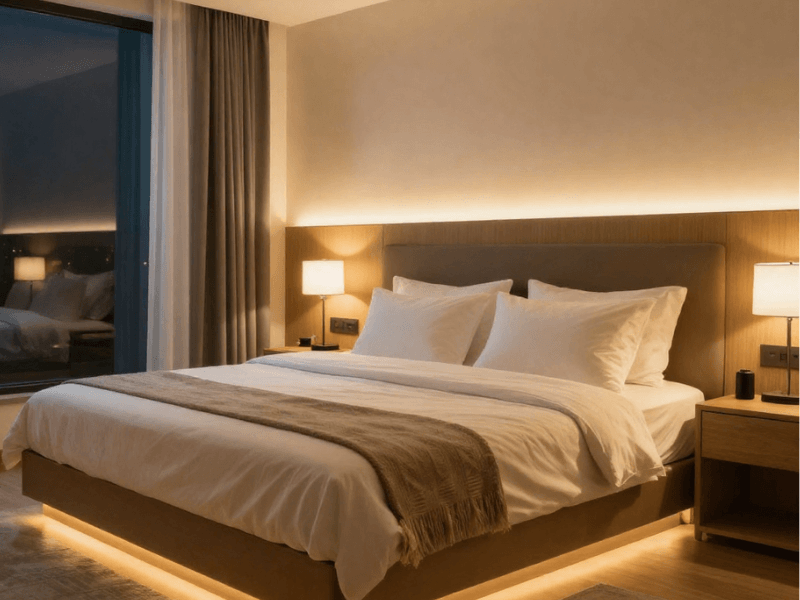



It used to be that when one talked about motion sensor lights, they meant outdoor security lighting. And that still holds true. However, these days, motion sensor lighting goes beyond just being a security light.
It's one of the easiest ways to make your home or workplace more convenient, safer, and more energy-efficient. Motion sensor lighting has become synonymous with effortless lighting:
Walk towards your front door or the stairs and the lights turn on immediately.
Of course, many UK homeowners still get motion sensor lighting for security. But now it’s just become one piece of the puzzle. Modern PIR sensor lights, indoor motion sensor lights, and outdoor motion sensor lights are now designed to improve everyday living.
In this guide, we'll explore the best places to use motion sensor lights, explain why each location works so well, and help you choose the right type of sensor light for every space around your home or business.
Why Motion Sensor Lights Are Worth Installing
So you understand the principle behind motion sensor lights, but the question remains: Why is it so popular?
Their biggest advantage is convenience. Lights turn on automatically when movement is detected, meaning there's no need to fumble for switches in dark rooms or bump your elbows on the walls while your hands are full.
Then, of course, the improved security. Sensor lights illuminate anyone approaching your property. This makes otherwise dark spaces outdoors more visible. This also makes for a good deterrent for those with bad intentions toward your home or business.
They're also incredibly energy efficient. Ever accidentally left a halogen or incandescent lamp switched on the whole night when you were a kid? You probably have gotten an earful from your parents.
But with motion sensors, the lights are automatically switched off after a set time when no more movement is detected.
Safety is another reason many people invest in motion detector lights. Staircases, hallways, gardens, and side paths can quickly become hazards when it gets dark. When lights turn on automatically, it can greatly reduce the risk of accidents by making sure every step you take is visible.
But wait! There’s a bonus benefit many people tend to overlook. For LED lights, not being left switched on for long periods means fewer operating hours, which means slower wear and tear. Down the line, this results in fewer replacements and reduced maintenance costs.
For a busy household, the combination of these features can mean a significant improvement in their daily lives.
Now you don’t have to remember whether you switched lights off before leaving a room or fumble for the switch in the dark for your late-night kitchen runs. (We’re not judging.)
Outdoor Areas That Benefit Most from Motion Sensor Lighting
Outdoor spaces often see the greatest improvements because they combine convenience with security.
Front Doors and Porches
Probably the most obvious location for a motion sensor light? Your front entrance. You (and guests) use it often. When visibility is instant every time you arrive home after dark, it makes it easier to find doorbells, house numbers, and locks.
If your normal routine is struggling to unlock the front door while balancing shopping bags or carrying a sleeping child, then automatic lighting will be life-changing.
If we’re talking security, wouldn’t it be more reassuring to have lights turn on where someone could otherwise remain unnoticed?
Driveways
Driveways are another excellent location.
Picture this: You arrive home, and as your car rolls into the driveway, the lights switch on. Parking is easier, and getting out of the vehicle is not a hassle, especially if you have a lot to carry.
For larger driveways, choose motion detector lights with wide beam angles and longer detection distances to ensure complete coverage instead of creating isolated bright spots.
Side Paths and Walkways
It’s not just the front and back that need proper lighting. Install motion sensor lights along side pathways to provide clear visibility whenever someone walks beside the property.
Adding light here could also help prevent trips and falls, which are more common than you think in locations with little to no lighting.
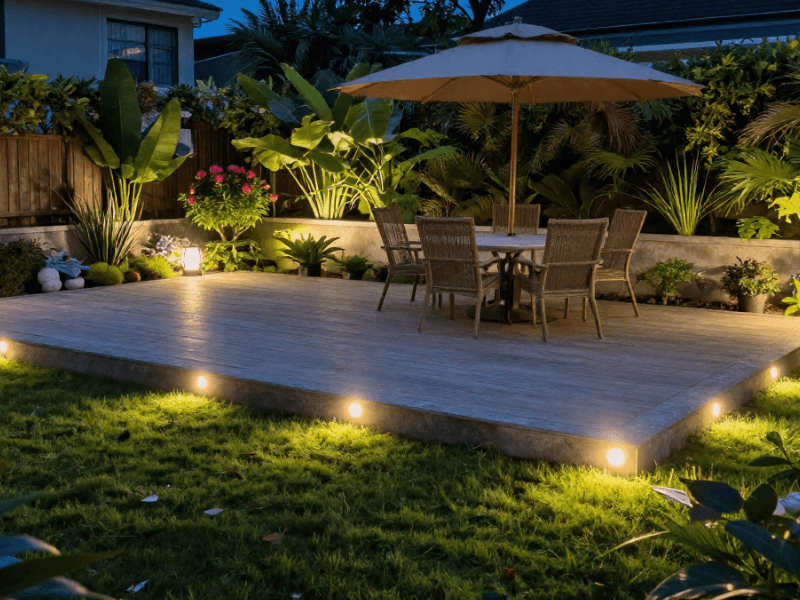
Gardens and Patios
If you’re only appreciating your garden during the day, then you’re missing out a lot.
You could be hosting a barbecue, relaxing outdoors on summer evenings, or letting pets outside before bed. Instead of getting garden lights that run all night, sensor lighting can provide illumination exactly when it's required.
This approach balances ambience, practicality, and energy efficiency while also helping improve security around your property.
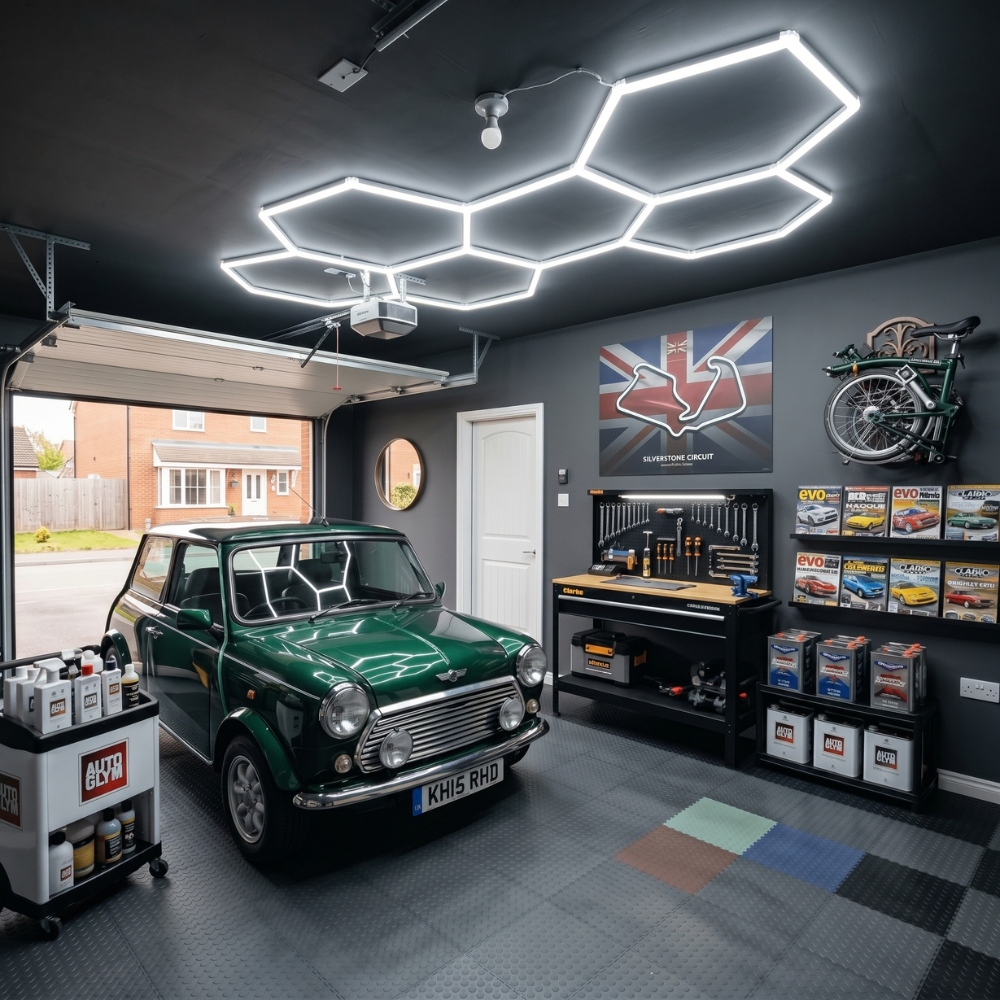
Garages and Sheds
Garages and sheds are often entered with full hands.
Automatic lighting makes going to and from these areas quick and easy. It doesn’t matter whether you’re carrying tools, gardening equipment, bicycles, or storage boxes.
They also help protect valuable equipment by discouraging unwanted visitors after dark.

Indoor Spaces Where Motion Sensor Lights Make Everyday Life Easier
While outdoor lighting might be the first to come to mind when you think about motion sensor lights, indoor motion sensor lights can have just as much impact on daily life.
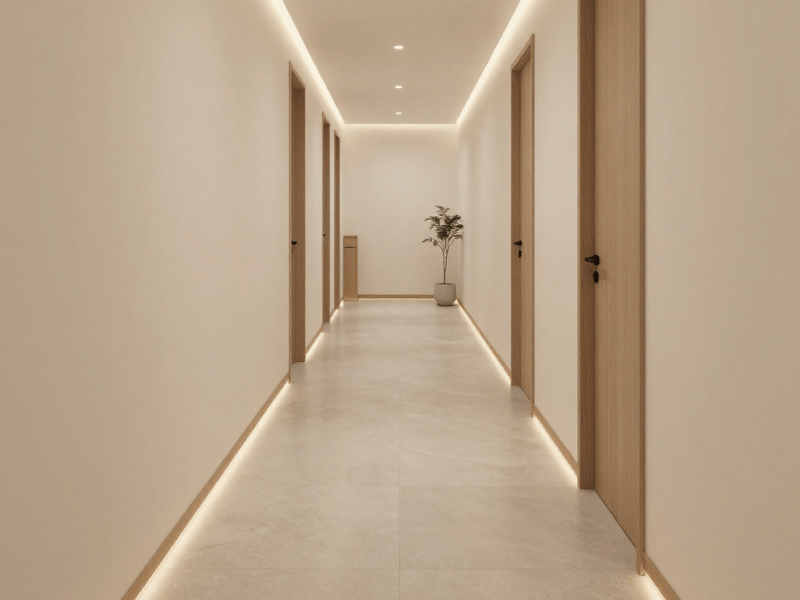
Hallways
This may be one of the busiest areas in any home, yet people rarely stay too long in this space. This makes them an ideal place for motion sensor lighting.
Instead of reaching for a switch every time you move between rooms, the lights automatically come on as you pass through.
It also solves one of the most common household habits we’re all guilty of: forgetting to switch hallway lights off. Since the lighting automatically turns off after a set period, you avoid wasting electricity.
Staircases
Safety is the priority in this space. That’s why motion sensor lights make a lot of sense here.
You might say, “Hey, we’re used to it,” but navigating stairs in low light significantly increases the risk of slips and falls. This is especially true for children, older family members, or anyone carrying items upstairs.
Pairing LED stair lighting with motion sensors creates a practical solution that only activates when someone approaches. These lights don’t flood the entire staircase with bright light as ceiling lights would do. Instead, subtle LED strip lighting or recessed stair lights provide just enough light to safely guide each step.
No blinding or glaring lights. That’s why this is perfect for late-night trips downstairs.
Bathrooms
Another excellent candidate for automatic lighting.
Some of us don’t like touching things in the bathroom. Some of us go out with hands still wet. And some of us always forget to turn off the lights.
Adding motion sensors to your bathroom lighting solves all of these.
Many homeowners choose softer, warmer lighting, creating enough visibility without being harsh on sleepy eyes.
Utility Rooms
Most of the time you’re going into a utility room, you might be carrying a basket full of washing, cleaning supplies, or armfuls of freshly dried clothes. Having the light switch on automatically means you don't need to put everything down before entering.
These rooms are also typically occupied for short periods only, so motion sensor lighting can help reduce electricity use by keeping the lights on only when you’re inside.
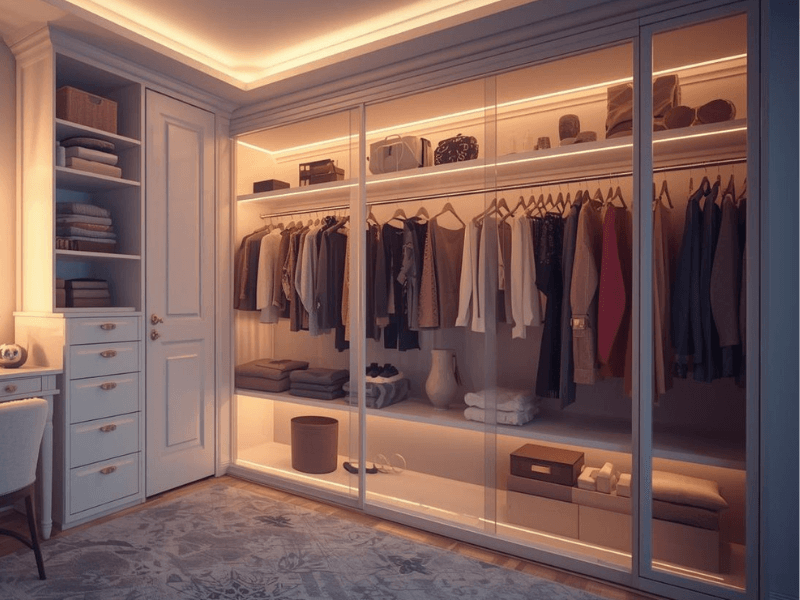
Cupboards and Storage Areas
Storage spaces often don't need permanent lighting, but they do need good visibility whenever they're being used.
With motion sensor lighting, you can instantly illuminate wardrobes, airing cupboards, under-stair storage, loft access points, and walk-in wardrobes.
Battery-powered sensor lights are particularly popular here because they don't always require hardwiring.

Motion Sensor Lights for Commercial Buildings
Motion sensor lighting can also improve employee safety and customer experience in commercial spaces.
Offices
Meeting rooms, storage areas, kitchens, and archive rooms aren't occupied all day. Installing motion sensor lighting ensures lights only operate when someone is actually using the room.
Not only does this reduce electricity bills, but it also eliminates the problem of lights being left on overnight after meetings have finished. There finally won’t be a note taped to the glass door that says, “Don’t forget to turn off the lights!”
Low-traffic corridors and breakout areas can benefit too.
Warehouses
Warehouses equal large storage aisles where workers move throughout the day. This means that keeping the whole place lit throughout the day (or night) can be costly.
Enter: Motion sensor lights. They provide visibility exactly where employees are working, helping reduce accidents while making stock easier to locate. This lowers energy consumption by avoiding unnecessary illumination in empty areas.
Combine warehouse lighting with high-output LED fittings, and you’re reducing both operating and maintenance costs!
Car Parks
Tell me you don’t feel safer walking through well-lit parking areas, particularly during darker mornings or evenings. You can’t.
But instead of running powerful floodlights continuously overnight, motion sensor lighting activates only when vehicles or pedestrians enter the area. This creates a balance between security and energy efficiency.
Toilets and Corridors
These areas are often used only briefly throughout the day, making manual switching inefficient. Installing motion sensor lights not only improves efficiency but also hygiene by reducing the need to touch light switches.
Fewer operating hours also translate into longer-lasting LEDs and reduced maintenance requirements.
Choosing the Right Motion Sensor Light for Each Location
There’s no one-size-fits-all motion sensor light, which means you need to choose the correct one for each environment you’re illuminating.
Indoor vs Outdoor Models
This is the first thing you need to consider.
If you’re installing outdoors, the lights must withstand changing weather conditions, including rain, wind, dust, and fluctuating temperatures. This means you need one with a high IP, preferably at least IP65.
Indoor models generally don't need the same level of weather protection, so an IP20 rating is enough.
One thing to note is that outdoor models tend to be bulkier than indoor ones due to the added protection layers.
Detection Range
Detection range is just as important as brightness.
Check whether your lights’ detection range is enough or too much for the space… which is neither ideal. Too little range and you don’t get effective sensing. Too much and you run the risk of getting frequent false triggers.
Thinking about how people move through an area will help you choose the right detection angle and range from the start.
Common Motion Sensor Placement Mistakes to Avoid
It won’t matter how expensive your motion sensor light is if you don’t install it properly.
1. Mounting the sensor too high. While it may seem like higher positioning provides better coverage, it can actually reduce sensitivity in nearby areas. Manufacturers typically give a recommended mounting height for the best results. Follow it.
2. Pointing the sensor directly towards busy roads or pavements. This is especially important for outdoor lighting. Passing cars and pedestrians may trigger the light repeatedly, causing unnecessary activations. Instead, angle the sensor towards your own property.
3. Plants. These are commonly overlooked obstacles. Trees, hedges, and climbing plants can gradually grow into the detection zone, which, you guessed it, can reduce the sensor's effectiveness. The solution is to regularly trim vegetation to maintain a clear field of view.
4. Not choosing the correct detection angle. Wide spaces benefit from broader coverage, while narrow pathways often work better with more focused detection.
5. Not maximising available controls. Many modern PIR sensor lights include adjustable daylight, or lux, settings. Ignoring these controls can result in lights switching on during daylight hours when they're not needed.
6. Overlapping detection zones too heavily. You can have overlapping detection zones to avoid gaps, but keep it minimal. Multiple sensors triggering one another can create unnecessary lighting cycles and reduce overall efficiency.
7. Overlooking the timer settings. If the timer is too short, lights may switch off while someone is still present. If it's too long, you'll lose some of the energy-saving benefits. If you’re unsure, a good start is setting it to three minutes, then adjust from there. Busier commercial areas may require longer delays.

How Motion Sensor Lights Can Lower Your Energy Bills
We’ve been glazing over this in the previous sections, but how do motion sensor lights really reduce electricity usage?
Here’s the common scenario: Lights often stay on until morning (or a few days) because someone forgets to switch them off. Hallways, utility rooms, garages, meeting rooms, and storage areas are all common examples.
The impact on your electricity bill is significant if these were traditional lights like incandescent or halogen.
Motion sensor lights remove this problem entirely by operating only when movement is detected.
Take a hallway, for example. Instead of remaining illuminated throughout the evening, the light only activates whenever someone passes through, then automatically switches off again.
No more “Did I leave the lights on?” moment.
In offices, meeting rooms frequently remain lit long after everyone has left. Motion sensor lighting prevents this unnecessary energy use while reducing operating costs across the building.
Also, LEDs’ lifespan is measured in hours they’re switched on. Fewer operating hours means they last significantly longer. This reduces replacement frequency, lowers maintenance costs, and provides better long-term value for you.
These might seem like small savings when you look at them on a daily basis, but combined over months and years, these can add up to massive savings.
Motion Sensor Lighting Ideas for Different Types of Homes
Every property is different, which means they also need to be illuminated differently. Consider the size and layout of your home before getting motion sensor lights.
Flats and Apartments
In smaller homes, sensor lighting is all about convenience.
Install automatic lights in hallways to make moving between rooms after dark easier. Bathrooms also become much easier to use late at night when lights automatically switch on.
Cupboards and wardrobes are also excellent places for battery-powered sensor lights, giving you instant visibility whenever you open the door.
And for properties with shared entrances, motion sensor lighting can improve safety and give residents better peace of mind.
Semi-Detached and Detached Homes
Larger family homes usually have more outdoor areas that benefit from motion sensor lighting.
Install automatic lights on driveways for safer parking, front entrances for a more welcoming vibe, and side access routes for better visibility at night.
Also, don’t forget your gardens and patios, as motion sensor lights can provide illumination whenever family members or guests head outside.
If you have a garage, then tools, storage, and vehicles can automatically be illuminated as soon as someone enters.
Larger Properties
These often require a more strategic approach.
When you have long driveways, extensive gardens, and multiple access points, then you’ll need several motion sensor lights. One powerful fitting will not benefit you.
You want to create multiple detection zones so your lights activate only where movement occurs, not illuminate the whole property when you only need the corner lights.
This reduces unnecessary energy use while maintaining excellent security across the property.

Find the Right Motion Sensor Lighting at Simple Lighting
Finding the best places to use motion sensor lights is only half the equation. The other half? It’s choosing the right lights.
At Simple Lighting, you'll find an extensive range of indoor and outdoor motion sensor lights suitable for homes, gardens, offices, warehouses, and commercial premises alike.
With us, you’ll get expert advice, quality products backed by warranties, and fast UK delivery.
Browse the Simple Lighting motion sensor lighting collection today to find lighting that suits your needs.


0 comments