


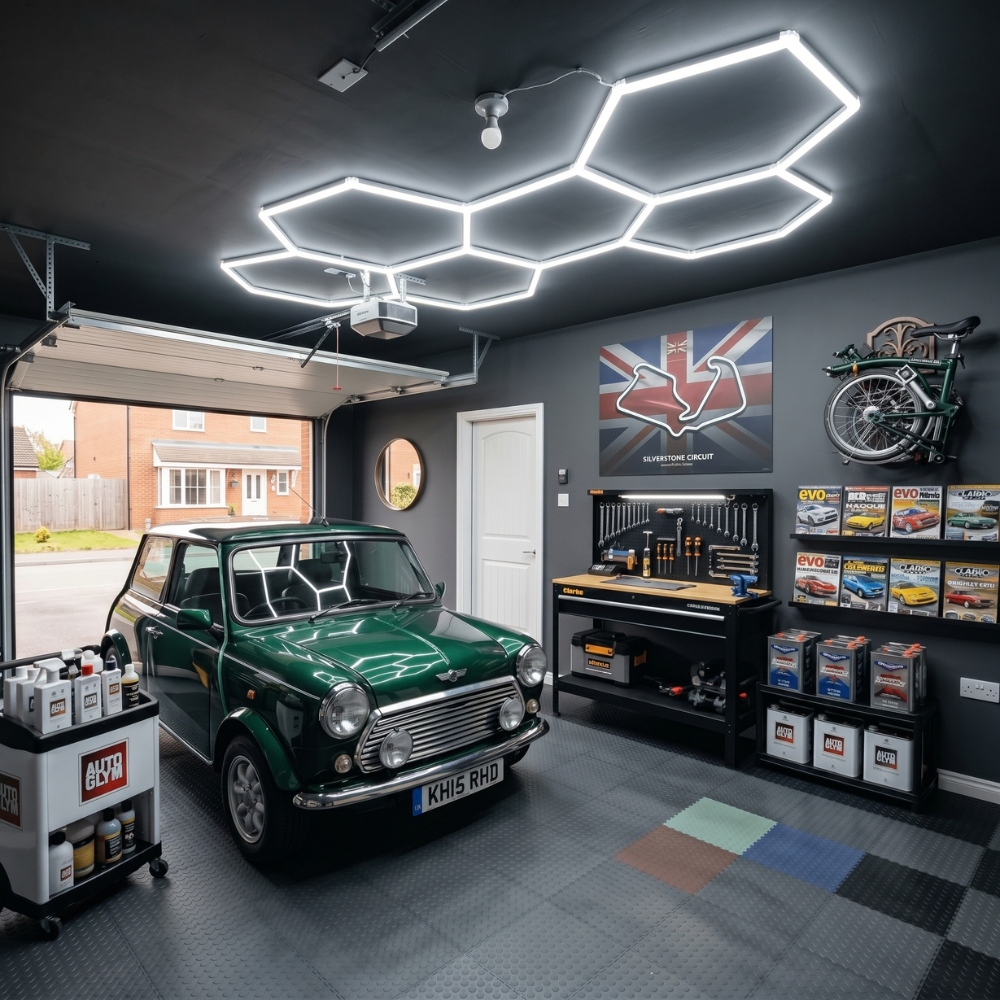

Raise your hand if you’re guilty of this: You went to grab something from the garage for a few seconds, only to realise hours later that you left the lights on.
If not the garage, then it’s some other parts of the house, like hallways, pantries, or utility rooms.
We’re all guilty of this.
It might not seem like a big deal, especially with modern energy-efficient LED lighting, but unnecessary operating hours still mean unnecessary energy use.
That's where motion sensor lights, PIR sensor lights, and other forms of LED sensor lighting make a real difference. Instead of relying on someone to flick a switch every time they enter or leave a room, sensor lighting automates the entire process.
And in this guide, we'll explain how sensor lighting saves energy, where you'll notice the biggest savings, and how both homeowners and businesses can get the most from intelligent automatic lighting systems.
Let’s get right to it!
Why Traditional Lighting Wastes Energy
If there’s one thing that hasn’t changed much in the past few decades, it’s that people forget to switch lights off. We can blame habit (or the lack thereof) all we want, but it’s something that’s going to repeat over and over again.
Outdoor lighting is a common example. Security lights or garden lights are sometimes left running throughout the night, even when no one is outside. While this may provide peace of mind, the continuous illumination also means electricity is being used for hours every night.
In commercial buildings, the problem becomes even larger. Meeting rooms, corridors, break rooms, staff toilets, and warehouses often have lights operating despite being empty for long periods.
All these small habits add up, especially if you’re still using older incandescent or halogen bulbs. But even if you’re using LEDs, you’re still wasting energy if they’re illuminating an empty space.
The first solution you might think of is: “Let’s reduce wattage.” That could help, but what if I told you there was a simpler solution?
Reducing the number of hours your lights are operating.
How Sensor Lighting Works
Sensor lighting sounds clever, but the concept is actually very straightforward.
You remove the manual light switch from the equation, then add a motion sensor that automatically decides when lighting should switch on and off.
The result is lighting that's only used when someone actually needs it.
Detecting Movement
Different sensor lights detect movement in different ways.
The most common (and the ones you probably hear most often) are PIR sensors, short for Passive Infrared sensors. And, as the name implies, these detect changes in infrared energy.
In other words, the sensor recognises the body heat of people and animals moving through its detection area.
They're highly popular in homes because they're reliable, energy efficient, and ideal for areas where movement follows a predictable path, such as hallways, driveways, and entrances.
Another popular sensor is a microwave sensor, and they work differently. Rather than detecting heat, they constantly emit microwave signals and monitor how those signals bounce back. If movement changes the reflected signal, the light activates.
Their advantage? They can detect movement through certain non-metallic materials and often have a wider detection area. That’s why they’re frequently used in larger commercial spaces.
Automatic Switch-Off
This might already be obvious, but the detection and automatic switch-on of the lights are more for convenience than energy-saving. The second half of the process is where things get interesting (when it comes to saving).
All motion sensor lights are built with an internal countdown timer that begins counting once no movement is detected.
Modern fittings allow you to adjust this timer anywhere from a few seconds to several minutes.
Here’s how it works: If movement is detected again before the time expires, the countdown resets. If the area remains empty, the light switches itself off automatically.
This dramatically reduces unnecessary operating hours without sacrificing lighting performance when it’s actually needed.
Imagine a hallway without a sensor. Someone walks upstairs, leaves the light on, and nobody notices until morning.
Now picture the same hallway fitted with a motion sensor. The light turns on as someone enters, stays on while they're moving through the area, then switches itself off a minute later once the hallway is empty.
Same amount of useful lighting. Far less wasted electricity.
The Five Ways Sensor Lighting Reduces Energy Consumption
1. Lights Only Turn On When Needed
The easiest way to save lights? Of course, it’s avoiding using them when not needed.
Think about it. There's no reason to illuminate an empty hallway, staircase, cupboard, or garage. Sensor lighting ensures electricity is only used when someone is actually in the area.
So, for low-traffic areas, it's especially effective.
2. Prevents Lights Being Left On
Human beings are forgetful. Children rush upstairs. Someone leaves the bathroom in a hurry. An employee finishes using a meeting room and walks away.
These little moments happen more frequently than you realise. And without automation, it all adds up.
With motion detector lights, however, the lights switch themselves off after inactivity.
Even outdoor lighting doesn’t need to be on all night. Sensor-controlled lights activate only when movement is detected around the property.

3. Makes Better Use of LED Technology
If you haven’t switched to LEDs yet, then you’re missing out, and maybe already a decade or so behind.
LEDs are today's most energy-efficient lighting options. Adding intelligent sensor controls makes that efficiency skyrocket even more. Instead of simply using less electricity while running, LED sensor lighting also operates for fewer hours overall.
It's this efficiency combo that delivers the greatest long-term savings.
So, the already-efficient light is used less than your current “normal,” which in the long run results in even lower operating costs and more savings.
4. Reduces Peak Energy Usage
Large properties or warehouses often have dozens or even hundreds of lights operating simultaneously. Without sensors, most of these lights remain switched on despite being unnecessary.
By activating lights only where people are present, sensor lights reduce the number of fittings operating at any given time.
This is especially helpful for commercial buildings where occupancy changes throughout the day. Corridors, storage rooms, stairwells and staff facilities… these spaces don't need continuous illumination when nobody is using them.
Reducing unnecessary operation helps lower overall electricity demand while improving efficiency across the building.
5. Encourages Smarter Lighting Habits
A bit surprising, isn’t it? One unexpected advantage of sensor lighting is behavioural.
Once people become accustomed to automatic lighting, they're more aware of unnecessary electricity use throughout the property. Rather than relying on memory or discipline, automation creates a system where efficient lighting simply happens in the background.
It's one less thing to think about while still reducing waste every day.
Where Sensor Lighting Delivers the Biggest Energy Savings
Now you might be wondering: If sensor lighting is great, then does that mean it’s ideal to use them in all the spaces of the home?
Not really. Some locations benefit far more than others. These are the areas where sensors usually deliver the quickest return.
Hallways
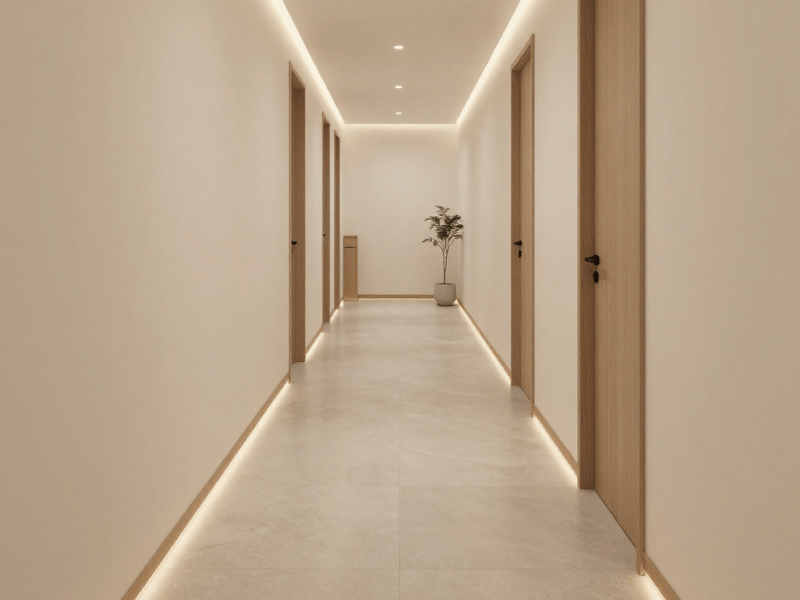
No one really likes spending a lot of time in hallways and corridors. But these spaces get constant short visits throughout the day. This makes them ideal for automatic lighting.
Hallway lights activate as you enter and turn themselves off shortly afterwards.
Staircases
Safety is just as important as efficiency.
Sensor lighting ensures stair lights turn on whenever someone approaches, reducing the chance of trips and falls while avoiding unnecessary operation during quiet periods.
If you frequently sneak down to the kitchen at night, or simply need to get a glass of water, then motion sensor lighting is your best friend.
Bathrooms
Yes, even bathrooms benefit from automatic lighting. Nighttime bathroom visits are much easier when lights are automated.
There’s no need to fumble for the switch in the dark. The light activates automatically before switching itself off shortly after you leave.
Since bathroom visits are usually brief, especially late in the night, sensor lighting keeps your bathroom lights’ operating hours low.
Utility Rooms
Another example of spaces that only get quick visits throughout the day are laundry rooms and cupboards, with each visit only lasting a minute or two.
Sensor lighting removes the need to juggle baskets while finding the switch. You simply walk in, and voila! Throw your laundry in the washer, get out, and you’re done.
Garages
Garages are among the best candidates for sensor lighting. They're used irregularly throughout the day, often with hands full of tools, shopping, or groceries.
The garage lights are on even before you get out of your car. And instead of leaving lights on accidentally, the system automatically switches them off after use.
Driveways and Outdoor Areas
Proper outdoor lighting does not mean the lights need to always be on. Still, many outdoor lights remain illuminated throughout the night despite very little activity.
Sensor lighting changes that completely.
When someone approaches, the area lights up, providing good illumination so you can see who’s there even before they get close.
The result is improved visibility, enhanced security, and considerably lower electricity usage.

Residential vs Commercial Energy Savings
The principles remain the same, but the scale differs.
Homes
For homeowners, the benefits are evident:
-
Lower electricity bills
-
Less fumbling for switches
-
Longer-lasting LED fittings
-
Greater convenience throughout the property
Because families move constantly between rooms, sensors quietly prevent wasted lighting throughout the day.
Offices
Office buildings contain many areas that aren't occupied continuously. Examples include:
-
Meeting rooms
-
Kitchens
-
Toilets
-
Corridors
-
Break rooms
Installing occupancy sensors in these areas ensures lighting only operates when employees are actually using those spaces.
For a large commercial building, those small savings accumulate over time.
Warehouses
These locations often mean wide spaces and huge floor areas. Yet not every aisle requires continuous illumination.
Occupancy-based lighting allows specific zones to activate only when workers are nearby. This setup can significantly lower energy costs over the lifetime of the installation.
Retail Premises
Retail floors usually remain lit throughout opening hours, but stockrooms and staff-only areas don't need to be.
Consider installing sensors in:
-
Stockrooms
-
Staff kitchens
-
Offices
-
Delivery areas
-
Storage rooms
This helps reduce unnecessary operating time without affecting customers.
Sensor Lighting vs Leaving Lights On: A Practical Comparison

Additional Benefits Beyond Energy Savings
Lower electricity use is one of the biggest flexes of motion sensor light, but it’s only part of the story. It offers several other advantages.
Longer LED Lifespan
LEDs already last for thousands of hours. And since sensor controls reduce operating time, those hours are used much more slowly, which means a prolonged lifespan for your lights.
Less time switched on also generally means:
-
Slower component wear
-
Longer replacement intervals
-
Reduced maintenance costs
For commercial buildings where replacing lighting can involve downtime and equipment and labour costs, this is particularly valuable.
Improved Home Security
This is one of the main reasons why people get motion sensor lights. That’s because they’re an excellent security feature, especially when paired with outdoor lighting.
Sudden bright lighting can discourage unwanted visitors while making entrances, pathways, and driveways easier to see for the people inside the property.
Also, this removes the need to leave the lights on all night.
Greater Convenience
Automatic lighting feels surprisingly natural.
You could be carrying grocery bags, a baby, or a set of tools while walking across the driveway, going up the stairs, or passing through the garage.
With motion sensor lights, the light is already on the moment you step in. No manual input is needed, so movement is continuous.
Enhanced Safety
Dark hallways, staircases, and outdoor paths increase the risk of accidents. Sensor lighting helps ensure these areas are illuminated exactly when someone needs them.
No “winging it” and then tumbling down the stairs.
This makes moving around the property both easier and safer.
How to Maximise Energy Savings with Sensor Lighting
Even the best sensor light can fail if not configured correctly. For maximum efficiency:
-
Position sensors where movement is easily detected.
-
Avoid aiming sensors towards busy roads or neighbouring properties.
-
Adjust sensitivity to prevent unnecessary activation.
-
Set timer durations as short as practical without causing frustration.
-
Configure lux settings so lights only operate when natural daylight is insufficient.
-
Choose an appropriate detection range for the size of the space.
-
Combine sensors with energy-efficient LED lighting for the greatest electricity savings.
-
Avoid overlapping detection zones that cause multiple fittings to activate unnecessarily.
Small adjustments can noticeably improve both convenience and efficiency of your motion sensor lights.
Choosing the Right Sensor Light for Maximum Efficiency
Different environments benefit from different sensor technologies.
PIR vs Microwave Sensors
These two sensor types are your usual choices when it comes to motion sensor lighting.
For most residential applications, you want PIR sensor lights since they are usually the more energy-efficient choice. They respond to body heat, consume very little power themselves, and are less likely to trigger accidentally through walls or nearby movement.
Microwave sensors offer greater sensitivity and wider detection, making them useful in certain commercial or complex environments where detecting movement around obstacles is beneficial.
Choosing the right sensor helps minimise false activations, which further improves energy efficiency.
Indoor vs Outdoor Models
Surely all sensor lights can be installed outdoors, right? Not right!
Indoor sensor lights are designed for dry locations only. This means that you should not install them outdoors if you do not want to run into serious problems.
Outdoor installations should always have an appropriate IP rating to withstand rain, dust, and changing weather conditions. Look for one with at least an IP65 if you’re planning to install lights in open areas.
Proper wiring by a qualified electrician is ideal, especially with outdoor lighting.

Save More Energy with Sensor Lighting from Simple Lighting
When you understand how sensor lighting saves energy, it becomes clear that the biggest savings don't come from LEDs alone or sensors alone. It’s the combination of both.
If you’re upgrading a hallway at home, improving outdoor security, or reducing operating costs across a commercial property, intelligent LED sensor lighting helps ensure electricity is only used when it's genuinely needed.
If you're ready to reduce wasted electricity, lower running costs, and create a more convenient property, Simple Lighting has an extensive range of motion sensor lights, PIR sensor lights, and other automatic lighting solutions for both indoor and outdoor spaces.


0 comments