
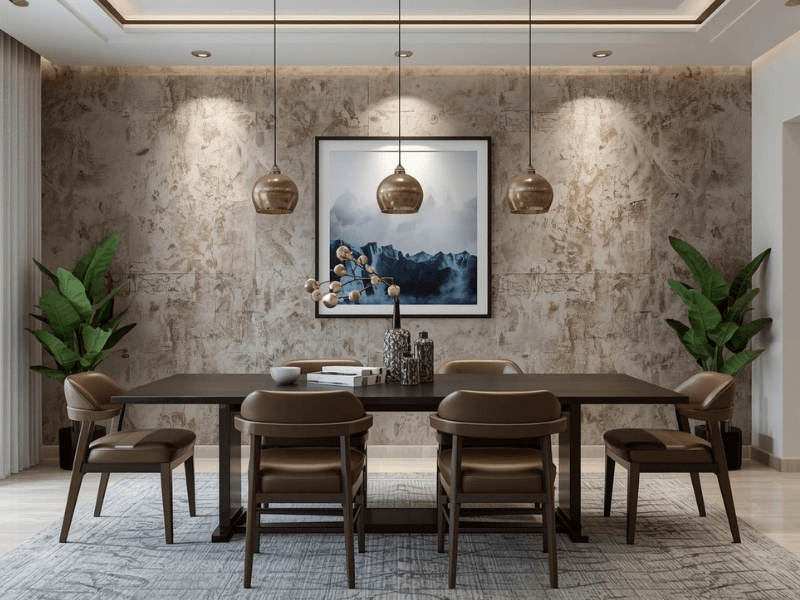

A beautiful chandelier can look ridiculous above the wrong dining table. Too small, and your guests eat in the shadows. Too large, and the light practically joins the conversation. Choosing the right dining table lighting starts with the furniture underneath it. A round breakfast table needs something different from a two-metre family table.
Shape, size, and seating arrangements influence which fittings work best. Get those details right, and your lighting becomes both practical and attractive. These dining room lighting ideas cover everything from compact pendants to statement chandeliers. Discover which designs suit different tables, how to size them, and where to hang them.
How to Choose the Right Dining Table Light for Your Table Size
Before browsing dining table pendant lights, grab your measuring tape. A few measurements can prevent expensive mistakes and help narrow your options.
Measure Your Dining Table Before Choosing a Light
Start with your table's length, width, and height. For circular tables, measure the diameter across the widest point. Next, count the seats and consider how you use the surface. A six-seater needs broader coverage than a breakfast table for two.
Don't forget serving dishes and other activities. Your lighting should illuminate the usable tabletop, not just the decorative centrepiece.
How Wide Should a Pendant Light Be Above a Dining Table?
For a single pendant, start with a diameter around half to two-thirds of your table's width. This often creates balanced proportions without crowding the space. For example, a 90cm-wide table might suit a pendant measuring approximately 45 to 60cm across. However, shade design and light distribution also matter.
Three measurements deserve attention:
-
Fitting width. How far the pendant extends across the table.
-
Fitting length. How far a linear light stretches along the tabletop.
-
Light distribution. How widely the fitting spreads illumination across the surface.
A long decorative fitting doesn't guarantee even coverage. Check its beam angle, light output, and shade design before buying. For more guidance, explore how to choose the right pendant size and spacing.
Consider the Room and Ceiling Height
A fitting might suit your table but overwhelm the surrounding room. Compare its dimensions with nearby furniture and available ceiling height. High ceilings can accommodate taller chandeliers, while compact rooms often suit shallower fittings. In open-plan spaces, coordinate your dining lights with neighbouring kitchen and living areas.
For more inspiration, explore our open-plan dining room lighting ideas.
Quick Guide to Dining Table Lighting Arrangements
|
Dining table |
Recommended starting arrangement |
|
Small round, 80 to 100cm |
One compact central pendant |
|
Large round, 140 to 160cm |
Wide pendant or balanced cluster |
|
Rectangular, 160 to 200cm |
Linear fitting or two pendants |
|
Long rectangular, 220 to 260cm |
Extended linear fitting or three pendants |
|
Square, 90 to 120cm |
Central globe or geometric pendant |
|
Oval, 180 to 220cm |
Elongated pendant or curved multi-light fitting |
These arrangements provide starting points rather than fixed rules. Your final choice should reflect the table's dimensions, light coverage, and available space.

Dining Table Lighting Ideas for Round Tables
Round tables bring everyone together, making them ideal for conversation and smaller dining spaces. Their circular shape works particularly well with lighting that spreads evenly from the centre.
Choose a Central Pendant or Round Chandelier
A single central pendant creates a natural focal point above your table. Globe, dome, and circular fittings complement rounded furniture without introducing competing lines. For a 100cm round table, a pendant around 40 to 55cm wide could work well. This creates enough visual presence without dominating the furniture.
Prefer something more decorative? A circular chandelier can add elegance, particularly in rooms with higher ceilings. However, check whether the fitting illuminates the table's centre. Some ring-shaped designs direct light outwards, leaving the middle surprisingly dim.
When to Use Multiple Pendants Above a Round Table
Larger round tables can benefit from clustered pendants or multi-light fittings. These arrangements distribute illumination across more of the tabletop while adding decorative interest. For example, three compact globes could suit a 150cm circular table. Arrange them evenly around the centre, keeping their overall footprint comfortably within the table's edges.
Different suspension heights can create a relaxed, sculptural appearance. Just ensure the lowest pendant doesn't interrupt conversations across the table.
Lighting Small Round Dining Tables
Compact breakfast tables rarely need elaborate chandeliers. A modest pendant with a downward-facing shade often provides suitable illumination without overwhelming the space. Glass or slimline fittings are particularly useful in narrow dining corners. Their lighter appearance helps the area feel open, even when surrounding furniture sits close together.
Dining Table Lighting Ideas for Rectangular Tables
Rectangular tables present a different challenge because their length often exceeds their width considerably. One small pendant may brighten the middle while leaving both ends poorly illuminated. The solution is choosing lighting that follows the tabletop's length rather than concentrating everything centrally.
Use Linear Pendant Lights for Long Dining Tables
Linear pendants naturally complement rectangular tables because their elongated shape follows the furniture. They also create a cleaner appearance than several separate fittings. For a 180cm table, consider a linear pendant approximately 90 to 120cm long. Treat this as a starting point, then compare the fitting's dimensions with its actual light coverage.
Slim LED designs suit contemporary interiors, particularly where you want an understated feature. Decorative linear fittings can also complement traditional wooden tables without feeling overly modern.
Arrange Two or Three Pendants Along the Table
Multiple pendants work well when a single fitting cannot illuminate the entire surface. Two are often suitable for medium-length tables, while longer designs may benefit from three. For a 200cm table, position two pendants along the centreline, approximately 50cm and 150cm from one end. This divides the table into two equally illuminated sections.
Three smaller pendants can work above longer family tables. Their individual shades should complement one another without creating excessive visual clutter.
Try a Chandelier for Your Formal Dining Room
An elongated chandelier can turn an ordinary dining area into an attractive focal point. Even Tuesday's leftover pasta might feel slightly more sophisticated. Look for multi-arm designs that distribute light along the table's length. Compared with compact chandeliers, these often provide better coverage for guests seated near the ends.
Consider the fitting's visual weight, especially above narrow tables. Open-frame designs can feel less imposing than dense chandeliers with numerous decorative elements.
Avoid Dark Spots at Either End
Before installation, check where the light actually reaches. A long fitting may still concentrate most of its brightness directly underneath. Look for suitable beam angles and sufficient light output across the tabletop. If coverage remains uneven, additional pendants or supporting ceiling lights may help.

Dining Table Lighting Ideas for Square Tables
Square tables need balanced illumination across four equally important sides. Unlike long rectangular tables, they usually benefit from lighting that spreads in several directions.
Choose a Compact Square or Geometric Pendant
A centrally positioned geometric pendant can echo the table's straight edges. Alternatively, a rounded globe softens the look and adds contrast. For a 90cm square table, consider a fitting approximately 40 to 50cm wide. Choose a shade that illuminates each seating position rather than directing brightness into one narrow area.
Use a Multi-Light Fitting for Larger Square Tables
Larger square tables may need broader coverage than one compact pendant provides. A symmetrical cluster or four-light chandelier offers an attractive alternative. For a 140cm table, consider four small pendants arranged in a square formation. This distributes light across the surface while maintaining visual balance.
Keep the overall arrangement compact enough to leave space around its edges. Otherwise, your carefully planned dining room might resemble a geometry lesson.
Dining Table Lighting Ideas for Oval Tables
Oval tables combine the length of rectangular furniture with the softer edges of circular designs. Their lighting should complement this shape without looking overly rigid.
Use Elongated Pendants to Follow the Table Shape
A slim linear pendant can work well above an oval table, especially one seating six or more people. Rounded ends or curved details help the fitting complement the furniture. For a 180cm oval table, a pendant around 90 to 110cm long provides a useful starting point. However, a shorter fitting with wider light distribution might illuminate the curved ends more effectively.
Consider Rounded and Clustered Lighting Designs
Two globe pendants can create a softer alternative to one straight fitting. Position them along the centreline, keeping their spacing consistent with the table's length. Curved multi-light chandeliers also suit larger oval tables. Their flowing shapes complement the tabletop without requiring an exact match.
Avoid oversized clusters that extend too far towards the narrow ends. Your arrangement should follow the seating area rather than simply copying the table's outline.
Lighting Extendable and Unusually Shaped Dining Tables
Not every dining table stays the same size throughout the week. Some expand for family gatherings, while others feature irregular edges that make conventional arrangements difficult. These designs need lighting that accommodates changing dimensions and seating positions.
Choose Lighting for Extendable Dining Tables
Measure your table at its everyday and fully extended lengths. Both configurations matter because your pendant will usually remain fixed even when the furniture changes. For example, a table extending from 140cm to 220cm needs more flexible illumination than a fixed four-seater. A linear fitting with broad coverage may be a good compromise.
Alternatively, multiple pendants can distribute light across the longer arrangement. Additional ceiling lighting can support occasional gatherings without overwhelming the smaller everyday setup. Check whether the extended table remains centred beneath your fitting. Some designs expand towards one end, creating uneven coverage unless you plan the position carefully.
Lighting for Drop-Leaf and Compact Dining Tables
Drop-leaf tables change their usable surface considerably. A large pendant might look proportional when opened but excessive when the leaves are folded.
Compact ceiling fittings with wider light distribution offer greater flexibility. They also work well when your table frequently moves between dining and working positions. For wall-mounted drop-leaf tables, consider whether a central pendant would interfere with movement. A well-placed ceiling light may be more practical.
Lighting for Irregular and Organic Table Shapes
Live-edge and freeform tables already have plenty of visual character. Rather than matching every curve, choose lighting that supports their main seating area. A sculptural pendant can complement an irregular tabletop without competing with its natural features. Alternatively, a restrained cluster can distribute illumination around uneven edges.
Focus on where people actually sit and eat. The geometric centre isn't always the most practical place for your light.

How High Should a Dining Table Light Hang?
Your pendant should illuminate the table without blocking anyone's view. Too high, and it loses its connection with the furniture. Too low, and guests end up talking around it.
Recommended Pendant Height Above the Table
Start with approximately 70 to 85cm between the tabletop and the pendant's lowest point. This provides a useful reference for typical dining arrangements, though you may need to adjust it. For a standard 75cm-high table, that places the fitting's bottom approximately 145 to 160cm above the floor. The final height depends on your ceiling, pendant dimensions and seated sightlines.
Sit opposite another person before deciding on the position. You should be able to see each other comfortably without looking directly into an exposed bulb.
Adjust the Height for Large Chandeliers and Low Ceilings
Large chandeliers may extend further down than their main light source suggests. Measure the complete fitting, including decorative elements and suspension components. Lower ceilings often suit shallower pendants or adjustable fittings. Also maintain safe head clearance wherever people can walk underneath the light.
Keep Lighting Comfortable for Everyone
Exposed bulbs and highly reflective surfaces can create uncomfortable glare. Frosted bulbs, diffusers, and suitable shades help soften the illumination. Glass tables and polished finishes deserve particular attention because they reflect direct light. Test the arrangement from several seats before finalising its position.
Choosing the Right Number of Pendant Lights and Spacing
The number of pendants depends on your table's length, fitting dimensions, and required coverage. More lights aren't necessarily better, especially when their shades compete for space.
When One Pendant Is Enough
One well-proportioned pendant usually suits compact round and square tables. It creates a clear focal point while keeping installation straightforward. A small rectangular table might also need only one fitting. However, check whether its beam spreads far enough toward both ends.
When to Use Two or Three Pendants
For multiple pendants, divide the table into equal sections and position each fitting near a section's centre. This creates consistent spacing without relying on guesswork. For a 240cm table, three pendant centres could sit approximately 80cm apart. Adjust those measurements according to shade width and the illuminated area.
Remember that centre-to-centre spacing differs from the visible gap between shades. Larger fittings need more breathing room, even when their centres follow the same arrangement.
How to Avoid Overcrowding the Ceiling
Consider the combined width of your lighting arrangement before installation. Three oversized shades can overwhelm a room, even above a generously sized table. Where separate pendants feel too busy, a single linear design may work better. Sometimes, less really does achieve more.
Create the Right Dining Atmosphere With Layered Lighting
Your dining pendant shouldn't illuminate the entire room on its own. Supporting lights can brighten nearby furniture and walkways without overpowering the table.
Combine Table Pendants With Background Lighting
Recessed LED downlights provide useful background illumination around the dining area. Wall lights and LED strip lighting can also highlight shelves, cupboards and decorative features. Position these additional sources carefully to avoid glare and competing bright spots. For more guidance, explore how to layer dining room lighting.
Use Dimmable Lighting for Different Occasions
Dining tables handle everything from family meals to homework and occasional work sessions. Dimmable lighting lets you increase brightness for practical tasks and reduce it during relaxed evenings. Check that your bulbs, drivers, and dimmer controls are compatible. Not every LED fitting supports dimming automatically.
Choose a Comfortable Colour Temperature
Warm white lighting around 2700K to 3000K generally creates a welcoming dining atmosphere. Choose warmer tones for relaxed evenings or slightly cleaner whites for everyday flexibility. In open-plan spaces, coordinate colour temperatures with nearby lights. Our kitchen and dining lighting ideas offer additional guidance for shared spaces.

Find the Perfect Dining Table Light for Your Home
Your dining table deserves lighting that fits, not something that merely looks impressive in a product photo. Start with its shape, measure its dimensions, and consider how illumination reaches every seat. Whether you prefer a simple pendant or statement chandelier, proportions make all the difference. Check hanging height, brightness, colour temperature and dimming compatibility before buying.
Explore Simple Lighting's dining room lighting collection to find fittings that complement your table and home. With the right arrangement, every seat can enjoy comfortable lighting, whatever's on the menu.


0 comments