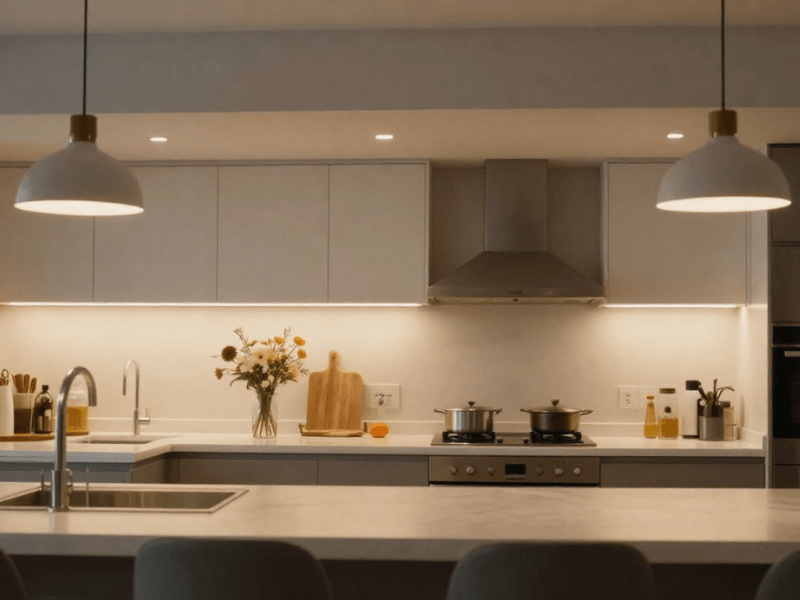


Your kitchen pendant lights do more than hang around and look pretty. They help shape the mood, improve visibility, and stop your island from looking like a boring slab of stone.
But here’s the thing: most people don’t know how to choose good pendant lighting!
Some people choose pendants that are too tiny. Others get fixtures that hang so low you nearly headbutt them while carrying pasta. Then there’s the classic mistake of choosing style over actual usable light. Sure, they’re lovely to look at. But they’re basically useless for chopping onions!
For your kitchens, you want suitable lights that provide enough brightness, while still looking good during late-night snack raids. The trick is balance.
This guide will cover everything you need to know, including:
- Pendant sizes
- Spacing rules
- Brightness levels
- Colour temperature
- Popular styles
- Placement tips
- Smart lighting features
Nobody wants expensive lights that make their kitchen look dull or menacing. Let’s make sure you pick the better options.
Why Kitchen Pendant Lights Matter More Than You Think

While people often treat pendant lights like accessories, they actually do a lot of heavy lifting.
A good pendant setup changes how your kitchen looks and feels. It adds depth, creates atmosphere, and improves everyday tasks. Without them, your kitchen will look flat, like a showroom nobody actually cooks in.
They Create a Focal Point
Kitchen islands naturally attract attention. With pendant lights, you’ll visually anchor the space. They draw the eye upward and make the room feel balanced. This matters even more in open-plan layouts. Large pendants can create drama. Smaller fittings offer cleaner, more subtle styling.
They Improve Task Lighting
Ceiling lights alone rarely give enough focused light. With pendant lights, you’ll brighten:
- Prep areas
- Breakfast bars
- Kitchen islands
- Dining spots
They’ll reduce shadows as you cook. And they’ll keep your chopping board from disappearing into the void. That’s useful when knives are involved.
They Help Define Open-Plan Spaces
Open-plan kitchens can feel messy without visual structure. Pendant lights help separate:
- Cooking zones
- Dining areas
- Entertaining spaces
In other words, you’ll create boundaries without adding walls. That’s very clever, not to mention very Pinterest-y.
They Add Layered Lighting
Great kitchens use layered lighting rather than a single harsh ceiling fitting. Pendant lights work alongside:
- Spotlights
- Under-cabinet LEDs
- Wall lighting
- Natural light
Combined, they’ll create warmth and depth throughout the room.
They Improve Property Appeal
Well-chosen lighting makes kitchens feel more expensive. Even affordable pendant lights can elevate the entire space. Buyers notice lighting more than you think. And bad lighting is quite impossible to ignore.
Start With the Function of Your Pendant Lighting
Before choosing finishes or styles, think about how you use your kitchen. Do you cook constantly? Host dinner parties? Or drink tea while pretending the washing-up doesn’t exist? Your lighting should support these and other things!
Pendant Lights for Food Preparation
Cooking needs bright, practical lighting. This is not the place for dim mood lighting unless you enjoy accidentally seasoning food with confusion. Choose pendants that direct light downward. This improves visibility across worktops and islands.
Good task lighting should:
- Reduce shadows
- Minimise glare
- Brighten prep areas evenly
Look for:
- Metal shades
- Dome pendants
- Adjustable fittings
- Linear suspension lights
Cool white bulbs usually work best here. They’ll provide sharper visibility and cleaner colour accuracy. Your tomatoes should look red, not mysteriously beige. Also, avoid heavily tinted glass shades above prep areas. They’ll often reduce usable brightness.
Pendant Lights for Dining & Entertaining
Unlike kitchens, dining spaces need softer lighting. Nobody wants dinner under lighting that feels medically approved.
Warm white bulbs create the relaxed atmosphere you need. Dimmable LEDs work especially well here. You can adjust brightness depending on:
- Dinner parties
- Family meals
- Late-night drinks
- Midnight cheese decisions
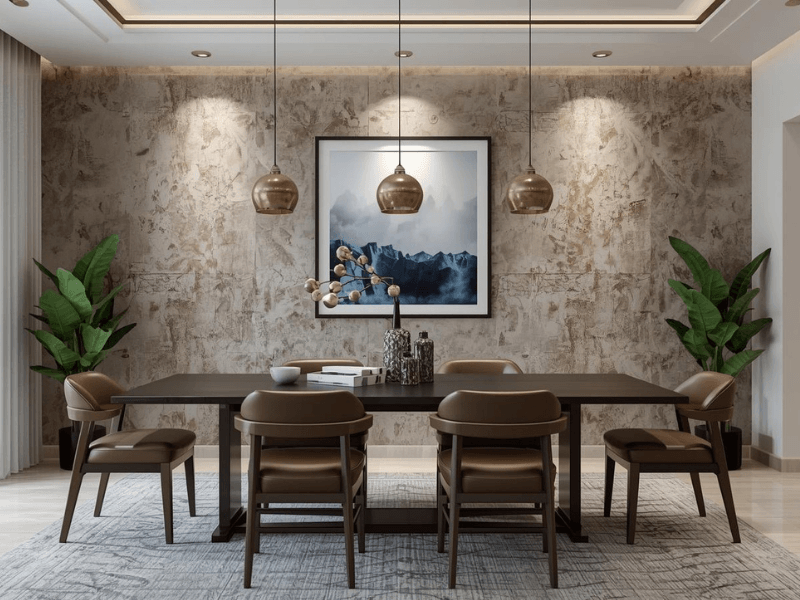
Pendant lights above dining areas should feel inviting rather than overpowering. Popular choices include:
- Glass pendants
- Fabric shades
- Cluster pendants
- Decorative statement fittings
The goal is comfort and ambience, not interrogation-room energy.
Pendant Lights as Decorative Features
Sometimes pendant lights exist purely to make your kitchen look incredible. And honestly, fair enough. Statement pendants work brilliantly in minimalist kitchens. They’ll become sculptural centrepieces rather than simple lighting.
Popular trends include:
- Oversized fittings
- Organic shapes
- Ribbed glass
- Mixed metals
- Sculptural designs
These lights will add personality instantly. And they’ll help kitchens feel more luxurious without a full renovation. That’s far cheaper than knocking down walls for “architectural flow”!
How to Choose the Right Pendant Light Size
Pendant size matters more than most people expect. If it’s too small, your lights will vanish visually. But too large, and your kitchen starts resembling a hotel lobby! As mentioned above, the trick is balance.
Choosing Pendant Size Based on Island Width
Your island size should guide your pendant choice. Small islands suit compact pendants, while larger ones can handle wider fittings or multiple lights.
Here’s a general guide:
- Small islands - 15–25cm pendants
- Medium islands - 25–40cm pendants
- Large islands - 40cm+ pendants
Always leave breathing room around the fittings. Overcrowded lighting makes kitchens feel chaotic.
Keep Proportion in Mind
Pendant lights should complement the room rather than dominate it. Large fixtures work well with:
- High ceilings
- Spacious kitchens
- Wide islands
Meanwhile, smaller fittings suit:
- Compact kitchens
- Narrow islands
- Minimalist interiors
If your pendant blocks every sightline, it’s probably too big.
Small Pendants vs Oversized Pendants
Small pendants create a cleaner, more understated look. They work especially well in:
- Scandinavian kitchens
- Minimalist spaces
- Smaller homes
Oversized pendants create drama and visual impact. They suit:
- Luxury kitchens
- Open-plan layouts
- Contemporary interiors
Both styles work beautifully when scaled properly. The problem starts when tiny kitchens get giant pendants the size of small planets.
Single Pendant vs Multiple Pendants
There is no universal rule here. It all depends on the size of your island and your kitchen layout.
One Large Pendant
Works best for compact islands, round dining tables, and statement styling. This creates a bold focal point quickly.
Two Pendants
The most popular option. Two pendants create symmetry without overcrowding the space. Perfect for medium-sized islands.
Three Pendants
Ideal for long islands, large open-plan kitchens, and wider layouts. Spacing becomes very important here. Otherwise, your lights start looking oddly competitive.

Kitchen Pendant Light Styles Explained
Kitchen lighting styles shape the room’s personality. Some feel sleek and modern, while others create warmth and character. Choose styles that complement your kitchen rather than fighting against it.
Modern Minimalist Pendant Lights
Minimalist pendants focus on clean shapes and simplicity. Think:
- Matte black finishes
- Slim silhouettes
- Geometric designs
- Soft neutral colours
These lights work beautifully in Scandinavian-inspired kitchens. They also suit spaces with:
- Flat-panel cabinetry
- Light wood finishes
- Neutral colour palettes
Minimalist lighting feels calm and uncluttered. Impressive considering most kitchens contain at least one chaotic drawer.
Industrial Pendant Lighting
Industrial lighting adds edge and character. Common features include:
- Metal shades
- Exposed bulbs
- Dark finishes
- Warehouse-inspired styling
These pendants pair well with:
- Brick walls
- Concrete surfaces
- Dark cabinetry
- Rustic wood
Industrial styles work best when balanced carefully. Too much industrial design can make your kitchen feel suspiciously like a converted garage.
Glass Pendant Lights
Glass pendants keep kitchens feeling open and airy. They’re excellent for smaller kitchens because they create less visual weight. Popular options include:
- Clear glass
- Frosted glass
- Smoked glass
- Ribbed glass
Clear glass creates brightness and openness. Smoked glass feels moodier and more dramatic. Frosted glass softens glare and diffuses light more evenly. Very useful if your kitchen lighting currently feels aggressive.
Vintage & Traditional Pendant Lights
Traditional pendants bring warmth and timeless charm. Look for:
- Brass finishes
- Bronze details
- Lantern-inspired designs
- Farmhouse styling
These lights work beautifully in:
- Country kitchens
- Shaker kitchens
- Heritage homes
Traditional lighting adds character without feeling trendy. Which means you probably will not hate it in three years.
Linear Suspension Lighting
Linear suspension lights are becoming increasingly popular. Instead of several pendants, you use one long fitting. Benefits include:
- Even illumination
- Cleaner sightlines
- Modern styling
- Simpler installation
These fittings suit:
- Contemporary kitchens
- Long islands
- Open-plan spaces
They also reduce visual clutter overhead. Very helpful if multiple pendants feel too busy.
Choosing the Best Colour Temperature for Kitchen Pendant Lights
Colour temperature changes how your kitchen feels. The wrong bulb can ruin even the nicest pendant fitting.
Warm White Lighting (2700K–3000K)
Warm white pendants (like this unit) feel softer and more relaxed. It works beautifully in:
- Cosy kitchens
- Dining areas
- Traditional interiors
Warm lighting creates comfort and atmosphere. Food also tends to look better under warmer tones. That matters more than people admit.
Cool White Lighting (4000K–5000K)
Cool white lighting feels brighter and sharper. It suits:
- Modern kitchens
- Task-focused spaces
- Contemporary interiors
This colour temperature improves visibility while cooking and cleaning. It’s very practical, albeit slightly less cosy. Some units can also come off as stylish!
Should Pendant Lights Match Other Kitchen Lighting?
Generally, yes. Mismatched colour temperatures can look strange very quickly. Your kitchen should feel cohesive rather than accidentally assembled. Try to coordinate pendant lights with:
- Ceiling spots
- Under-cabinet LEDs
- Wall lighting
Layered lighting works best when tones complement each other. Otherwise, one area looks warm and inviting while another resembles a supermarket aisle.

How Bright Should Kitchen Pendant Lights Be?
Brightness matters just as much as style. Beautiful lights are pointless if you still cannot see your toast properly.
Understanding Lumens for Kitchen Lighting
Lumens measure brightness. Watts only measure energy usage. This confuses people constantly.
For kitchen pendants:
- Ambient lighting needs fewer lumens
- Task lighting needs stronger brightness
As a rough guide:
- 300–500 lumens per pendant works for ambience
- 700+ lumens suit task-focused areas
Large kitchens may need additional layered lighting, too! One pendant cannot carry the entire room (or practically).
Dimmable Pendant Lights Explained
Dimmable lighting gives you flexibility throughout the day.
Bright lighting works for:
- Cooking
- Cleaning
- Meal prep
Softer lighting works for:
- Dining
- Entertaining
- Relaxing evenings
Smart dimmers make adjustments even easier. You can control brightness using:
- Apps
- Voice assistants
- Smart switches
They’re very useful when your hands are covered in biscuit dough.
Kitchen Pendant Light Placement Tips
Placement affects both function and appearance. Even gorgeous pendants look awkward when installed badly.
Ideal Height Above a Kitchen Island
Pendant lights should usually hang 75–90cm above the worktop. This keeps sightlines open while reducing glare.
Adjust slightly depending on:
- Ceiling height
- Pendant size
- Room proportions
Higher ceilings may allow slightly lower pendants. Very low pendants, however, become forehead hazards.
How Far Apart Should Pendant Lights Be?
A good general rule is to leave 60–75cm between each pendant. This creates balanced spacing and even light distribution.
Oversized pendants may need additional spacing. Avoid cramming fittings together. It makes the room feel cluttered instantly.
Positioning Pendant Lights Over Dining Areas
Always centre pendants over the table, not over the room itself. This creates visual balance and a stronger ambience.
Adjustable hanging heights can help create:
- Softer lighting
- Better intimacy
- More visual interest
Dining lighting should feel warm and inviting. As mentioned earlier, nobody enjoys eating under surgical brightness.
Smart Kitchen Pendant Lighting Trends
Smart lighting is growing in popularity, largely because people enjoy controlling their lights without leaving the sofa.
Modern smart pendants offer:
- App controls
- Voice assistant compatibility
- Scheduling features
- Adjustable brightness
- Scene settings
You can create lighting modes for:
- Cooking
- Entertaining
- Cleaning
- Relaxing evenings
Are Smart Pendant Lights Worth It?
For many kitchens, yes. Smart lighting improves:
- Convenience
- Energy efficiency
- Flexibility
The upfront cost is usually higher. However, LED smart bulbs last longer and use less electricity.
Smart features work especially well in:
- Open-plan kitchens
- Family homes
- Multi-use spaces
Just remember to choose systems that are easy to use. It’s not wise to download four apps just to boil pasta.
Common Mistakes to Avoid When Choosing Kitchen Pendant Lights
Kitchen lighting mistakes happen constantly. Some are small, but others make the entire room feel wrong. Common problems include:
- Choosing pendants that are too small
- Hanging lights too high
- Ignoring colour temperature
- Poor spacing
- Using harsh bulbs
- Prioritising looks over function
Oversized islands need properly scaled lighting. Tiny pendants above large islands often look accidental. Spacing matters, too. Crowded pendants create clutter, while wide gaps leave awkward dark patches. Colour temperature mistakes are especially common. Mixing cool and warm bulbs rarely looks intentional.
And finally, never choose lighting based only on appearance. A stunning pendant means very little if it blinds everyone at breakfast.
Budget-Friendly Tips for Upgrading Kitchen Pendant Lighting
You don’t need a massive budget to get good lighting upgrades. One small change can make kitchens feel dramatically better. Budget-friendly ideas include:
- Replacing outdated shades
- Switching to LED bulbs
- Installing dimmer switches
- Updating finishes
- Choosing simple statement pendants
LED bulbs save money in the long term because they use less electricity and last longer. DIY-friendly pendant swaps are also surprisingly manageable for many homeowners. Whatever you do, though, avoid anything involving dangerous wiring confidence. That usually ends badly.
Affordable lighting can still look premium when chosen carefully. Simple designs often age better than overly trendy styles anyway.

Final Thoughts: How to Choose Kitchen Pendant Lights That Actually Work
The best kitchen pendant lights combine style with practicality. You need lighting that suits your:
- Kitchen size
- Layout
- Daily habits
- Design style
- Brightness needs
Placement and colour temperature matter just as much as appearance. So does functionality. After all, beautiful lighting should still let you see what you are cooking. Explore different:
- Finishes
- Bulb temperatures
- Dimmable options
- Smart lighting features
If you are ready to upgrade your kitchen lighting, explore Simple Lighting’s wide range of kitchen pendant lights. From sleek modern pendants to statement lighting and smart solutions, you’ll find options that combine style, function, and everyday practicality.
If you're looking for more posts like this, you can find them here: Kitchen Lighting Ideas: The Ultimate UK Guide


0 comments