

Ah, hallways. When was the last time you thought about their lighting? Probably when a fixture needed replacing a few years back?
Understandably. Since hallways are one of the smallest areas in your home, lighting often becomes an afterthought. But narrow corridors, windowless entrances, and low ceilings can quickly make a space feel cramped, gloomy, or a little uninviting.
So, getting the light right makes a surprisingly big difference. The good news? Most of the time, you don't need more lights to fix the lighting problem. This guide shares hallway lighting ideas that can transform your space from simple to stylish, but most importantly, functional.
How to Choose Lighting for a Narrow, Dark, or Small Hallway
Attractive fittings won’t necessarily solve your hallway’s lighting problem. Just because a pendant light “might look good by the entrance” doesn’t mean it’s what the space needs.
So, what do you do first? Take a moment to look at what your hallway actually needs. Ceiling height, corridor width, natural daylight, wall colours and existing electrical wiring all influence which solutions will work best.
Identify What Makes Your Hallway Feel Cramped
You can’t solve the problem if you do not know what’s causing it. Identify what’s making the space uncomfortable. Is it simply too dark? Are there heavy shadows around doorways and corners? Or perhaps you have the right brightness, but oversized fittings make an already narrow walkway feel even smaller?
Each problem will need a different solution. Hallways with unwanted shadows might need additional light sources, while a hallway lacking brightness might need better light coverage. If you need to free up your hallway space, then replacing bulky fixtures with slim or recessed ones is a good solution.
Choose Lighting Based on Ceiling Height and Available Space
Not all ceilings are made the same. Low ceilings will benefit from recessed LED downlights and flush-mounted ceiling lights. These are practical choices because they sit flush with the ceiling, unlike hanging fixtures that take up vertical space, which can make an already small space feel even more suffocating.
But if you have a taller hallway, carefully selected pendant lights can introduce a decorative touch without making the space feel claustrophobic.
Plan for Even Light Rather Than One Bright Spot
“It’s just the hallway. Why not just get one very bright light and put it in the centre?”
That might seem like an easy solution, but it can leave the far ends of a hallway and its corners looking surprisingly gloomy. Instead, distribute light evenly along the hallway. This means using several fittings to light each part of the hallway and create a more consistent level of illumination. When the space is easier to see, it’s easier to navigate.
Hallway Lighting Ideas That Make Narrow Corridors Feel Wider
Combine a narrow hallway and poor lighting, and you get a space that feels more like a tunnel than a welcoming entrance. When lighting your hallway, think about how light interacts with your walls and ceiling, too!
Here are some ideas to light your hallways:
Use Recessed Downlights to Keep the Ceiling Clear
Space is valuable for narrow hallways, which is why recessed LED downlights are a practical option. You get general illumination without costing you space. They also help maintain a clean, uncluttered appearance since you only see the bezel.
For even light distribution, consider installing several downlights along the ceiling at equal distances. However, don’t do so without first considering their coverage. This will vary depending on ceiling height, beam angle, and light output, so we can't give you exact distance numbers.
Narrower beams may leave gaps between illuminated areas, while very wide beams might cause glare, so check how the lights will look before committing to a spacing.
Light the Walls to Create a Greater Sense of Width
Most of the time, narrow corridors feel enclosed because the only light comes from the ceiling. So, here’s a neat trick to counter that: brighten the walls. Wall lights distribute illumination across vertical surfaces, helping reduce the dark, tunnel-like appearance that can develop when all the light comes from above.
Or you could try the wall-washing effect, where you direct light across the wall to create a softer, more even finish. Of course, don’t use bulky fittings just because they’re pretty, especially in narrow hallways. This is me telling you to be more intentional with your choices.
Use Linear LED Lighting to Guide the Eye
Next is introducing visual flow. The best way to do that is to use linear LED lighting. The most popular fittings are LED strip lights.
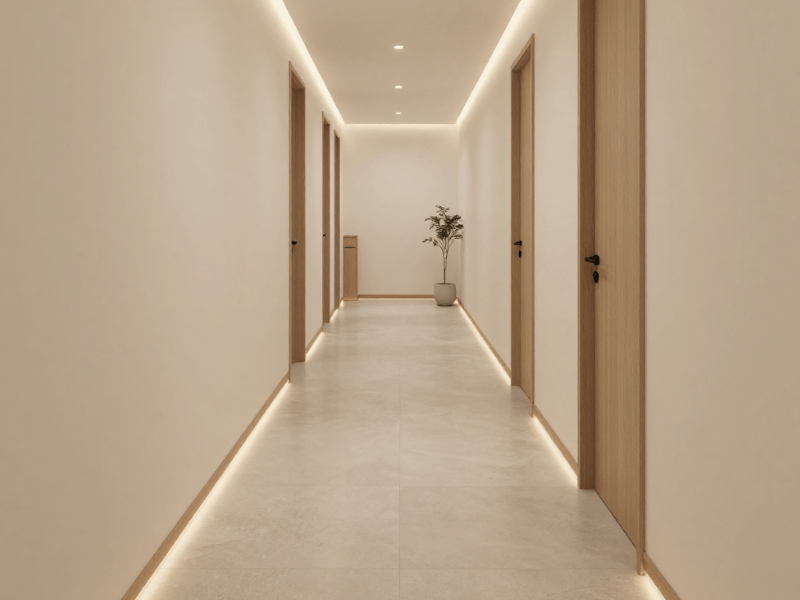
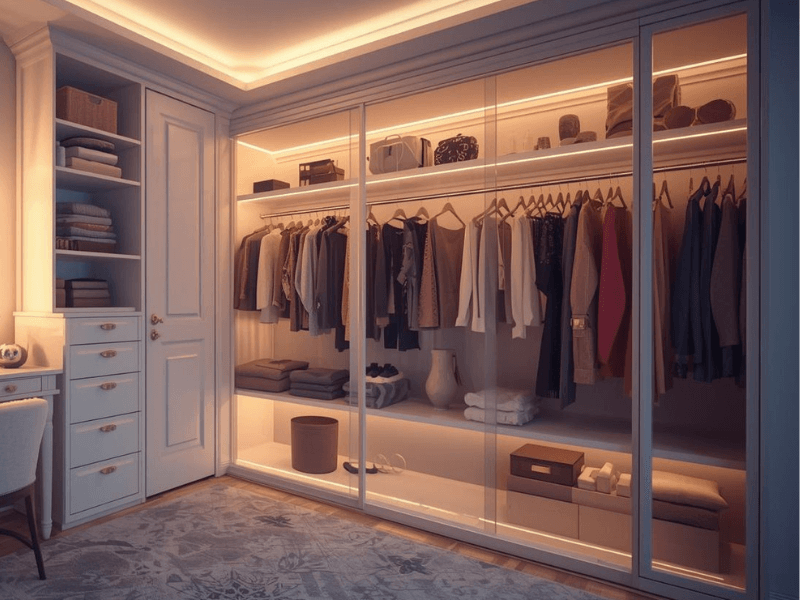
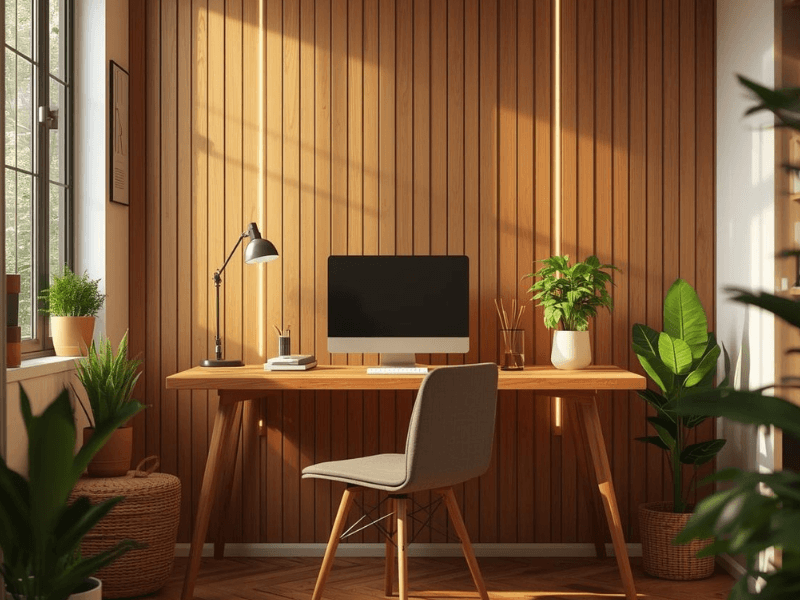
You can install them within the ceiling coving, along slat wall panel grooves, or beneath handrails (if you have them) for a continuous line of light that draws the eye along the corridor. When you can, hide the LED strips to avoid harsh light and glare from exposed LED nodes, or use aluminium LED profiles with diffusers to soften the light.
Avoid Glare and Harsh Pools of Light
Better lighting doesn’t always mean more brightness. Like I just said above, exposed light sources (and overly narrow beams) can create uncomfortable glare, especially in a confined corridor where there's little room to move away from the light.
Look for fittings with diffusers that soften the light, and choose beam angles that suit your hallway's width.

Lighting Ideas for Dark Hallways With Little or No Natural Light
Some hallways barely see daylight, looking like corridors leading to Slytherin House common room. These spaces can feel gloomy even during the middle of the day. The solution? Definitely not green burning flames, no sir. Below are some lighting tips for dark hallways.
Combine Ceiling Lights With Wall Lighting
It’s easy to think that ceiling lights are enough to illuminate a space. Sure, they can brighten the space, but do they always illuminate every surface effectively?
That’s why, for a more balanced result, combine them with wall lights. Ceiling lights provide general illumination, while wall lights brighten vertical surfaces and reduce shadows around furniture, doorways, and corners. This is a simple yet useful approach you can try.
Use Mirrors to Reflect Existing Light
Mirrors aren’t just useful for outfit checks. They're also handy for making a dark hallway feel more open. Not only will the mirror (or mirrors) create the illusion of extra space, but positioning a mirror opposite or at an angle to a light source can also help reflect the light around the space.
But don’t think they create additional light. They redistribute what is already available, so you'll still need adequate lighting to begin with. Poor placement can also cause glare, so be mindful during installation.
Choose a Colour Temperature That Suits the Home
This sets the mood of your hallway. It’s measured in Kelvin (K). Lower numbers produce warmer-looking light, and higher numbers create a cooler, whiter appearance.
Common options you’ll find are:
-
Warm white lighting around 2700K-3000K creates a relaxed, welcoming atmosphere. It has a yellowish tint and works well with traditional homes or entrances that lead into cosy living spaces.
-
Natural white around 4000K is another option. This gives a cleaner, brighter appearance and pairs well with modern interiors. This has a more “true” white colour.
Your choice usually depends on the atmosphere you want to create and the lighting in adjoining rooms. If the next room at the end of the hallway already uses warm white lighting, using natural white light in the hallway might make the change feel abrupt.
Brighten the End of a Long Hallway
It's easy to focus on adding lights at the entrance and overlook the darker areas further inside. Don’t just rely on the light from the room after the hallway. That’s how you create a “light at the end of the tunnel” effect. Add another ceiling fitting at the end of the hallway, or aim an adjustable spotlight toward the wall.
Small Hallway Lighting Ideas That Save Space
Here are some ideas for lighting that doesn’t get in the way.
Choose Flush Lights for Low Ceilings
These are probably the simplest solutions for small hallways. They
- Are low-profile
- Provide general illumination
- Don’t make the space feel crowded
They’re a great alternative where using pendant lights could interfere with comfortable headroom.
Add Slim Wall Lights Without Crowding the Walkway
Sometimes you don’t need more ceiling lights. That’s where wall lights come in, adding another layer of illumination. But in a small hallway, choosing the right size and proper placement are essential. Look for compact designs with diffused light output to prevent glare.
Use Low-Level LED Strips for Subtle Guidance
LED strips take very little space. Positioned well, you won’t even notice they’re there until you turn them on. Try installing them along a skirting detail, beneath a console table, or near steps to create a gentle guide through the hallway. These are also great for evenings or late nights when you don’t want your main ceiling lights blinding you.
Keep the Layout Simple and Uncluttered
Your hallway is already small. Adding too many different fittings can make the space feel and look cluttered. How to avoid this, then? Prioritise a few well-positioned light sources that work together. For example, use a flush ceiling fitting for general illumination, then add a discreet LED strip for a little atmosphere.
A coordinated style can help create a clean, organised look for your hallway.
How to Layer Hallway Lighting for Better Results
If you’ve been browsing hallway and landing lighting ideas, you’ll notice one thing: there’s not just one type of light used. That’s called layered lighting. It’s combining different types of illumination to improve the space. In this case, your hallways.
Start With General Ceiling Illumination
First, you need a reliable source of general illumination. This promotes safe movement and helps you see doorways, furniture, and obstacles. This is where recessed downlights and flush-mounted ceiling lights come into play.
Add Accent Lighting to Highlight Features
Once you can see all the important parts well, it’s time to add a little character.
- Adjustable downlights or spotlights are great for drawing attention to artwork, photographs, or architectural details.
- LED strips are a discreet option, perfect for highlighting a console table or decorative ceiling feature.
Accent lights should complement your main illumination, not replace it, so finalise the latter before choosing your accent lights.
Use Dimmers or Separate Switching Where Appropriate
Your hallways don’t need to be “static”. Try dimmable LED lights paired with compatible dimmers, so you can adjust brightness depending on the time of day or the atmosphere you're after. Another way to change things up is to separate switching. You can run the accent lights independently of the main ceiling lights.
For added convenience, you could also explore smart sensor lighting for hallways to add more intuitive controls that make the experience smooth.

Hallway Lighting Mistakes That Make Small Spaces Feel Worse
Installing Too Few Lights Along a Long Corridor
One central fitting might make one end of the hallway light bright, while the other end remains in the shadows. Think about the entire length of the hallway when planning your layout. Consistent coverage is more useful than having one particularly bright spot.
Choosing Fittings That Hang Too Low or Protrude Too Far
Oversized pendants and projecting wall lights can make narrow walkways feel more claustrophobic and create unnecessary obstacles for people passing through. Flush ceiling lights, recessed downlights, and slim wall fittings are often better choices for compact entrances.
Using Lighting That Is Too Harsh or Inconsistent
Watch out for very bright light sources or exposed LEDs, since they’re the primary sources of glare and uncomfortable lighting.
Also, try to keep a consistent colour temperature with adjacent rooms or areas to avoid making your hallway feel disconnected from the rest of the home. Aim for comfortable brightness, suitable diffusion, and a consistent colour temperature.
Relying on Decorative Lighting Alone
Lovely doesn’t automatically mean “provides enough illumination for everyday use”. Focusing only on decorative wall lights can still leave your hallway dim and uncomfortable. Always establish adequate general lighting first, then introduce decorative fittings as an additional layer.

How to Plan the Right Lighting Layout for Your Hallway
Ready to make a change? Here are a few basic checks to help you avoid expensive mistakes.
Measure the Hallway and Mark Existing Obstacles
Start by recording your hallway's length, width, and ceiling height. Note the position of doorways, stairs, mirrors, furniture, and any existing electrical points. But why? This will help you identify fitting positions and avoid placing lights where they’ll interfere with everyday movement.
Choose Fittings and Check Their Light Output
Next, compare fittings based on their specifications. First, check the lumen output, or how bright the lights are. Then check beam angles, colour temperature, and the design. You want to combine function with style, not one over the other.
Explore Hallway Lighting at Simple Lighting
Finally, you want quality lighting. This means you need a reputable LED supplier for your fittings. That’s where Simple Lighting comes in. If you’re ready to upgrade your hallway lights, visit our website to explore a wide range of hallway lights and accessories. You’ll be glad to know that we have everything you need to satisfy your lighting needs.
And if you’re lighting more than just your hallway, we have a wider lighting by room collection you can get ideas from for your next lighting projects.


0 comments