



Ask anyone who's stayed in a nice hotel, and the first thing they’ll remember is the comfortable bed, the lovely breakfast, or the view from their room. The corridors? Not so much. And that’s understandable, since they play only a supporting role. But that doesn’t mean they're any less important, especially when it comes to lighting.
They need to feel welcoming, make it easy to find the right room, and provide safe, reliable illumination day and night. That means you need consistent light distribution, comfortable brightness, efficient operation, and emergency lighting that performs when it matters most.
Whether you're designing a new hotel or upgrading an existing building, this guide covers the key decisions to consider before choosing corridor lighting.
Why Hotel Corridor Lighting Matters
Think of hotel corridors as connection points linking the rooms, lifts, stairs, and shared facilities. People also use them without thinking much about it, unless they're overly dim or bright and become uncomfortable. Poor lighting can make corridors feel gloomy, create confusing shadows, and make room numbers harder to read. Not really a good impression for new guests.
On the other hand, well-planned illumination helps guests navigate confidently, whether they're returning from dinner or heading to the lift first thing in the morning. But well-lit corridors aren’t just for guests. Housekeeping teams and maintenance staff move through them around the clock.
Hotel corridors need to look inviting, comfortable, and safe, sure. But its lighting should also be practical.
Guest Experience, Visibility, and Operational Needs
Different users have different priorities.
-
Guests want to find their rooms easily without being dazzled by bright fittings.
-
Cleaning teams need dependable illumination across the entire corridor, including less obvious corners.
-
Maintenance staff need fittings and controls that are easy to access for inspection and repair.
Consider all of this when planning hotel corridor lighting.
Choose the Right LED Lights for Hotel Corridors
There’s no one-size-fits-all fitting for corridors. The “best lighting” still depends on the corridor’s dimensions, ceiling construction, interior style, and maintenance requirements. Here are some common options:

LED Downlights
These are typically recessed lights that work really well in modern hotels with minimalist interiors. Since most components sit within the ceiling, they keep the overall design uncluttered while providing good general illumination.
Before choosing them, check the ceiling void depth, required cut-out dimensions, and beam angle. Also watch for glare and plan placement carefully, especially around reflective surfaces. If cutting the ceiling isn’t ideal or feasible, LED bulkhead lights for commercial spaces offer a similar result.

Photo by Nikita Kulikov on Unsplash
LED Panels and Linear Lights
Linear LED lights create a clean, continuous look, which works well in long corridors. These are great if you don’t want the pools of light you typically get from downlights and other fittings.
LED panels, on the other hand, are a great choice for wider corridors or suspended ceiling systems, as they provide broad, consistent illumination. Just be mindful of the panel size you’re getting relative to the ceiling width of the corridors.

Photo by Point3D Commercial Imaging Ltd. on Unsplash
Wall Lights and Concealed LED Strips
Both types of lighting add another layer of light. Use them to highlight artwork, architectural details, or textured wall finishes. They’re also great for creating a softer atmosphere in guest-facing areas like corridors. If a hotel corridor feels flat, it’s probably because it relies only on the main ceiling lights and lacks decorative lighting to add depth and dimension.
No matter which type you choose, there’s a golden rule you need to follow: Choose fittings according to the lighting design first, aesthetics second. A beautiful fitting still needs to deliver adequate illumination, control glare, and remain practical to run and maintain.
Plan Light Placement for Even Illumination
In corridors, even illumination means a safe, easy trip from point A to point B. Which is why where you position the lights matters. Consider several factors when positioning your lights: spacing, beam angle, ceiling height, and reflections from glass or polished surfaces.
Avoid Dark Patches and Harsh Shadows
Consistent illumination will always be better than isolated pools of light with gloomy sections in between. In long corridors, especially, uneven lighting becomes even more noticeable. Beam angles matter, too. Wider beams spread light farther and soften it, while narrow beams concentrate light and make it appear sharper. But which one to choose?
Check the mounting height, as it affects how much light actually hits the floor, and don’t forget to consider the fitting’s output. Glare control and visual comfort also deserve attention. Guests shouldn’t have to cover their eyes as they walk through the corridor. Ever.
Light Doorways, Corners, and Lift Lobbies
These are the three main points of interest in a hotel corridor, so keep them lit throughout the day. Corridor junctions and changes of direction need proper lighting, so guests don’t bump into things or trip while looking for their room number or the nearest lift. Likewise, room numbers, signs, and doorways should also remain easy to see.
Select the Best Colour Temperature and Brightness
Colour temperature sets the mood of any space. In this context, it strongly influences a hotel corridor's character.
Warm White Versus Natural White
Warm white lighting (2700K-3000K) in hotels with traditional interiors and luxury accommodations. If the corridor has timber, warm carpeting, and brass finishes, warm white light can create a relaxed, inviting atmosphere for guests heading to their rooms after a tiring day.
Natural white (4000K) may suit hotels with a more modern interior. It can create a cleaner look that complements minimalist designs.
That doesn’t mean warm white light will not work for modern interiors. In fact, it does. But it depends on the look and feel you want along your corridors. This brings out an important point: Neither option is automatically right or wrong.
When deciding between the two, consider the whole interior, including wall colours, flooring, artwork, and the lighting in adjoining spaces. If the rest of the hotel already uses warmer light, it makes sense to use warm fittings in the corridors, too.
Balance Brightness with Visual Comfort
Choosing the brightest fitting isn’t always the smartest decision. A narrow corridor may need a different approach from a wider one, so it’s ideal to consider dimensions, as well as the corridor's purpose and operating conditions
That said, you need to think about glare and contrast. Highly reflective floors, glossy wall panels, and shiny decorative surfaces can create distracting reflections. Likewise, keeping the corridors dim while the lobby is very bright can make the transition between spaces uncomfortable. Keep the lights balanced, comfortable, and consistent.
Use Sensors and Lighting Controls to Reduce Energy Waste
When looking for ways to reduce electricity consumption, corridors are understandably among the top spaces to consider since they operate for long hours. However, energy efficiency should never come at the expense of guest comfort or safety.
Occupancy Sensors and Corridor Functions
Not all hotel corridors have heavy traffic throughout the day (or at specific times). This is where occupancy sensors make sense. In less-frequently used service corridors or sections of the hotel with predictable traffic, lights can run at a reduced standby level when the corridor is quiet, then brighten when someone approaches or enters.
This might not work in busy corridors, though, because frequent brightness changes may be distracting.
Dimming and Lighting Zones
Have you ever gone out into a hotel corridor in the wee hours and it seems quieter and darker than it did earlier in the evening? When corridors aren’t busy, especially late at night, adjusting brightness instead of turning off the lights usually reduces energy use.
Hotels can also divide lighting into zones, such as individual floors, corridor sections, lift lobbies, and back-of-house areas. This creates a more flexible control setup, which can help when a section needs to be dimmed or switched off, such as during maintenance rounds. In a hotel, the best control system is one guests barely notice because it works smoothly in the background.

Integrate Emergency Lighting and Exit Signage
Emergency lighting and exit signage are among the most important parts of hotel corridor design, not just for compliance, but also for the safety of all occupants. Corridors are typically part of a hotel’s escape route, so this makes sense.
But do you simply put emergency lights and signage wherever there’s an empty space on the wall or ceiling? The simple answer is no.
Where Emergency Illumination May Be Needed
Emergency lighting in hotel corridors is typically installed along escape routes: corridors leading to exits, changes of direction, staircases, and exit locations all need consideration when assessing emergency lighting. Depending on the building layout, lift lobbies and other relevant areas may also need to be included.
Also, position emergency exit signs so people can identify the direction of travel and locate exits during… well, emergencies.
Maintained and Non-Maintained Emergency Fittings
Emergency fittings generally fall into two common categories.
-
Maintained emergency lighting: This simply means the light operates during normal conditions as any normal fitting would, but when power gets cut, it continues to provide illumination in “emergency mode”.
-
Non-maintained emergency lighting: Does the opposite. The light remains off during normal operation and switches on when the normal supply fails.
Both emergency lights and emergency exit signs fall into one of these categories, so check before purchasing!
Testing, Maintenance, and Compliance
Emergency lights aren’t your typical install-and-forget kind of fittings. They need ongoing inspection and testing to confirm that they operate correctly when it matters most. Implement a testing and maintenance programme and keep records in line with applicable emergency lighting requirements.
Requirements can vary depending on the circumstances, so a professional assessment is essential.
Match Corridor Lighting to the Hotel’s Interior Style
Functional lighting doesn't have to look purely functional. With the right combination of fittings, colour temperature, and accent lighting, hotel corridors can be more than just brightly lit transition spaces. With proper planning and lighting placement, even budget hotels can achieve a bright, welcoming look you typically see only in boutique, luxury, and contemporary hotels.
Never underestimate the beauty decorative wall lights, concealed LED strips, and carefully positioned downlights or linear fittings can create. It’s not the price tag or elaborate features that transform a space. A simple, well-planned design does the job.
Use Accent Lighting Without Creating Glare
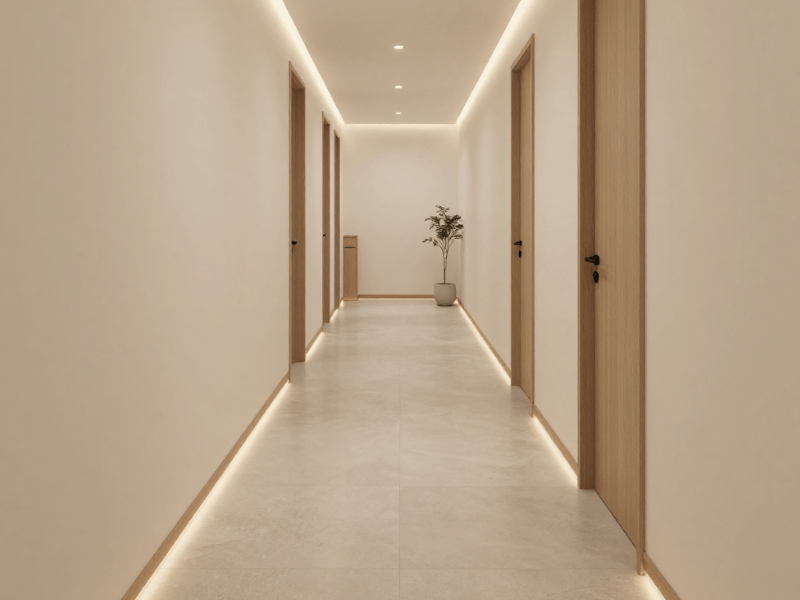
Concealed LED strips that highlight textured wall panels, discreet wall lights that illuminate artwork, or directional fittings that pick out architectural features… these details can add depth and personality to an otherwise plain corridor.
But! They should not compete with the general illumination. Think of them as more of a support role. Going overboard can mean unwanted glare and discomfort. The trick is to keep contrast under control. A dramatically lit painting against a very dark wall might look impressive in a photograph, but it can create uncomfortable visual transitions in everyday use.
Also, check reflective surfaces and the viewing angles of guests walking in both directions. Make sure there’s no glare or distracting bright spots.
Common Hotel Corridor Lighting Mistakes
Here are six common issues to watch for during a new installation or refurbishment.
1. Uneven fitting spacing: Lights positioned without considering their beam angles and mounting heights can leave dark patches between fittings.
2. Excessive glare: Exposed light sources or poorly selected lenses can make corridors uncomfortable, especially when guests look towards the ceiling.
3. Inconsistent colour temperatures: Mixing noticeably different shades of white can make the lighting look untidy.
4. Poor sensor positioning: Sensors with inadequate coverage, poor placement, or wrong settings may have delayed reactions or consistent false triggers. Make sure sensors are pointed toward the target detection area.
5. Insufficient emergency lighting consideration: Not prioritising emergency lights is only one of many common emergency lighting mistakes. Focusing only on normal lighting can leave key escape routes dark during an emergency.
6. Difficult maintenance access: Fittings with awkward access or hard-to-replace drivers can increase maintenance time, costs, and disruption to guests.
These problems are easier to prevent before installation.
How to Plan a Hotel Corridor Lighting Upgrade
As with any lighting project, a structured approach helps guide your installation toward a fully functional system that makes the experience memorable for guests.
Here’s a practical sequence you can follow:
1. Start by assessing the existing corridor. Look for dark patches, glare, inconsistent colour temperatures, and outdated fittings. Also note ceiling construction, corridor dimensions and the condition of the existing wiring and controls.
2. Establish the lighting requirements for each area. Different hotel zones will have different lighting needs.
3. Select appropriate fittings. Make sure every component is compatible to avoid performance issues.
4. Confirm controls. Not all LED lights can work with a dimmer, so plan ahead. Also, when adding motion sensor lights, place the sensors where their detection range is maximised.
5. Emergency lighting and exit signage should be reviewed separately along with the overall fire safety assessment.
6. Test the completed installation under realistic operating conditions. Check the illumination, verify sensor responses, and confirm that the emergency lighting system works.
That’s it! Your hotel corridor lights installation is practically done.
A Simple Pre-Installation Checklist
Here are a few bullet points to consider before work begins:
-
Ceiling type, mounting height, and fitting dimensions.
-
Light distribution, beam angles, and potential glare.
-
Colour temperature and brightness.
-
Dimming compatibility and control settings.
-
Sensor coverage and response times.
-
Access for cleaning, repairs, and driver replacement.

Final Thoughts
Hotel corridor lighting needs to be both functional and attractive. Never one over the other. Combine a welcoming atmosphere with consistent visibility, comfortable brightness, efficient controls, and easy-to-maintain fittings, and the corridor will be set.
And don’t forget to prioritise emergency lighting and exit signage! Ready to turn your hotel corridors into comfortable spaces that reassure guests? Explore Simple Lighting’s wide range of LED lighting solutions today.


0 comments