




Photo by Zayed Ahmed Zadu on Unsplash
The same spotlight can make a diamond sparkle while turning a gold bracelet into a shiny blur. That's the challenge with jewellery shop lighting. Different materials respond to light differently. Gold reflects its surroundings, diamonds need directional light, and coloured gemstones can change appearance under different light sources.
Simply increasing brightness won't solve these problems. You need the right balance of colour, positioning, and controlled reflections to showcase each piece. Here's how to choose lighting that makes your jewellery shine without overwhelming your customers.
1. Understand How Different Jewellery Materials Respond to Light
Jewellery may share the same display cabinet, but each material reacts differently to light. A polished gold bracelet reflects its surroundings, while a diamond bends and reflects light through its facets. The surface finish, viewing angle, and nearby objects also affect what customers see. Understanding these differences helps you highlight each piece's best features.
Gold, Silver, and Platinum: Control Reflections and Preserve Detail
Polished metals behave like tiny mirrors, reflecting nearby lights, objects, even customers. Position a bright spotlight incorrectly, and shoppers might see a white glare instead of a beautiful gold ring. Yellow gold often looks most attractive under warmer lighting, which complements its natural tones. Silver and platinum may look best under neutral white light that preserves their cooler appearance.
However, colour temperature isn't the only consideration. The size and position of reflected highlights also determine how clearly customers see the metal's shape. Broad, softened lighting can create smoother reflections across polished surfaces. This helps reveal curved edges, engraved patterns, and delicate details without producing distracting hotspots.
Brushed and textured finishes behave differently because their surfaces scatter light more widely. Gentle directional lighting can reveal these textures without creating the intense reflections associated with polished metal. For mixed collections, try lighting that balances soft reflections with enough contrast to reveal craftsmanship.
Diamonds: Create Controlled Sparkle Without Harsh Glare
Diamonds don't reflect light the way polished metal does. Their carefully cut facets bend, reflect, and separate incoming light, creating flashes of brightness and colour. Directional lighting can make these flashes more noticeable as customers move around the display. However, covering every angle with intense lighting isn't necessarily better.
Too much uniform illumination can reduce the contrast that makes individual flashes stand out. Exposed spotlights may also create uncomfortable reflections across the showcase glass. Try combining soft background illumination with carefully aimed accent lights. This helps diamonds sparkle while keeping their shape and setting clearly visible.
Remember that a diamond's cut and viewing angle also affect its appearance. A different spotlight position may produce better results than simply increasing brightness.
Coloured Gemstones: Maintain Colour and Visual Depth
Rubies, sapphires, and emeralds need special attention because lighting affects how customers perceive their colours. A sapphire might look rich blue beneath one fitting but noticeably different beneath another. The light source's colour spectrum plays an important role. Some gemstones absorb particular wavelengths, which can change their appearance under different LEDs.
Dark sapphires and garnets may also lose visible detail when insufficient light reaches their interior. Meanwhile, highly reflective stones can develop bright patches that hide their natural colour. Use lighting that reveals each gemstone's colour and internal features without creating excessive reflections. When possible, compare representative stones under different light sources before selecting your fittings.
2. Choose the Right Colour Temperature and Colour Rendering
You've probably noticed how jewellery can look warmer, cooler, or slightly different under various shop lights. Two important factors explain this: colour temperature and colour rendering. Colour temperature describes how white light appears, while colour rendering describes how faithfully colours appear. Both influence your jewellery display lighting, but they measure different things.
Warm White vs Neutral White for Jewellery Displays
Warm white lighting (typically 2,700K to 3,000K) creates a softer, more inviting atmosphere. It complements yellow gold and suits traditional jewellery displays. Neutral white (usually around 3,500K to 4,000K) provides a more balanced appearance. It's often worth testing for collections featuring silver, platinum, diamonds, and coloured gemstones.
Cooler white lighting can suit certain contemporary displays, but it isn't automatically better for diamonds. Excessively cool lighting may also affect how customers perceive coloured stones and precious metals.
|
Colour temperature |
Appearance |
Possible application |
|
2,700K to 3,000K |
Warm, golden |
Yellow gold, traditional collections |
|
3,500K to 4,000K |
Balanced, neutral |
Mixed jewellery, gemstones, counters |
|
Above 4,000K |
Cooler, crisper |
Selected contemporary displays |
These ranges are starting points, not fixed rules. Two fittings with identical colour temperatures can still render gemstone colours differently.
Why High CRI Matters for Precious Metals and Gemstones
Imagine displaying a beautiful ruby that looks vibrant inside your shop. Once the customer steps outside, its colour appears noticeably different. Poor colour rendering can cause this. That's why high CRI lighting matters when customers need to judge subtle colours accurately.
The Colour Rendering Index (CRI) measures colour fidelity against a reference light source. A CRI of 90 or above is a useful starting point for jewellery displays. However, even high-CRI fittings may reproduce certain gemstone colours differently. CRI alone doesn't reveal every detail about a light source's colour performance.
If colour accuracy is especially important, ask suppliers for more detailed colour-rendering information. This can help you compare fittings beyond their headline specifications.
Test Jewellery Under Real Viewing Conditions
A fitting might look excellent on paper but disappointing inside your actual showcase. Surrounding colours, cabinet materials, and nearby lighting can all affect the finished result. Compare yellow gold, silver, diamonds, and representative gemstones beneath your proposed fittings. Where relevant, check how they look in daylight to spot unwanted colour shifts.

3. Select the Best Lighting for Jewellery Cabinets and Showcases
Jewellery cabinets create several lighting challenges in a small space. Glass surfaces, reflective metals, and limited viewing angles can turn poorly positioned lights into distractions. A combination of concealed lighting and directional accents often works well. The aim is to illuminate jewellery clearly while keeping the fittings themselves discreet.
LED Strip Lighting for Even, Discreet Illumination
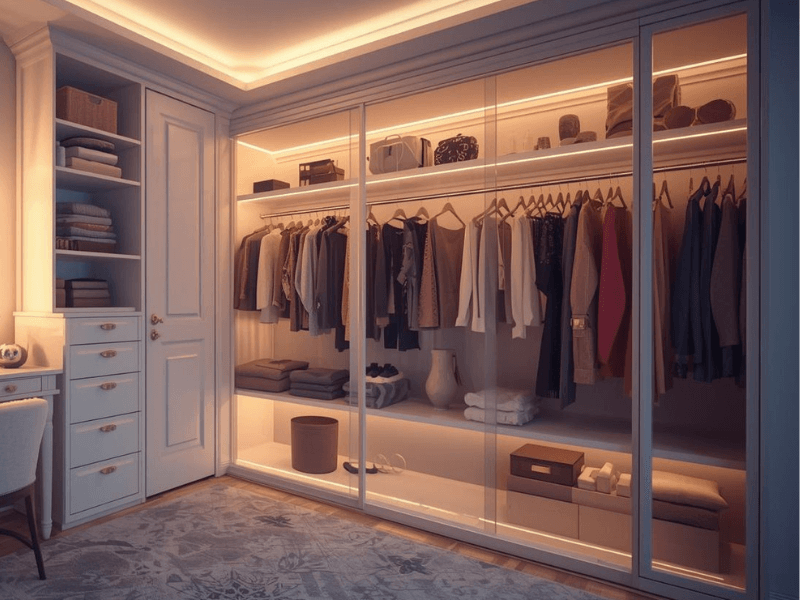
Concealed LED strips work well along cabinet edges, beneath shelves, and inside shallow display recesses. Their continuous illumination helps reveal jewellery without filling the cabinet with visible fittings. For example, strips beneath an upper shelf can illuminate necklaces and bracelets displayed below. However, mounting them too far back may leave the front of the shelf looking dark.
COB LED strips are particularly useful when you want a smooth line of light. Their design reduces visible LED dots, especially when compared with widely spaced traditional strips. You can also try LED light sheets for illuminated displays; these can provide smooth, seamless lighting that flatters a broad area.
Aluminium profiles provide a neat mounting surface and can help dissipate heat. Diffusers soften visible light points, creating a smoother finish inside the cabinet. Consider LED strip lighting for display cabinets when planning your showcase. Check the strip's dimensions, brightness, and driver requirements before selecting a fitting. For further technical comparisons, read our guide to choosing LED strip lights for retail displays.
Spotlights for Individual Pieces and Premium Displays
Sometimes, one necklace deserves more attention than everything surrounding it. Compact directional spotlights can highlight individual pieces while creating contrast within the display. Narrow beams produce concentrated highlights, making them useful for selected rings, pendants, and diamond jewellery. Wider beams spread light across larger arrangements or groups of smaller pieces.
However, mounting distance matters as much as beam angle. A narrow beam positioned too close may create harsh hotspots or leave surrounding details in shadow. Adjustable spotlights offer flexibility when your collections change. You can redirect illumination towards new pieces without redesigning the entire cabinet.
For diamonds, experiment with different angles to reveal sparkle. For polished metals, aim for controlled highlights that reveal shape without obscuring details.
Position Lighting to Avoid Reflections in Showcase Glass
Even expensive lighting can look terrible when positioned directly towards reflective glass. Customers shouldn't need to dodge bright reflections just to examine a bracelet. Consider where shoppers stand when approaching your cabinet. Then check whether the glass reflects any exposed fittings towards their eyes.
Concealed strips and angled profiles can direct light toward the jewellery. However, their effectiveness depends on the cabinet's shape and surrounding lighting. Test the arrangement from several realistic viewing positions before fixing anything permanently. Customers rarely admire jewellery from one perfectly calculated angle.
For broader display techniques, explore our guide to retail spotlight positioning and accent lighting.
4. Light Window Displays, Counters and Individual Pieces Differently
Your shop window, display cabinets, and sales counters serve different purposes. Each needs lighting that suits its surroundings and how customers interact with the jewellery. A striking window display attracts attention, while a sales counter supports careful inspection. Treating both areas identically can make one less effective.
Window Displays: Compete With Daylight and Changing Conditions
Your window display might sparkle beautifully after sunset. Unfortunately, the same arrangement can look rather underwhelming at lunchtime. Daylight and reflections from nearby buildings can overpower your jewellery lighting. This makes carefully directed accent lighting particularly important.
Use spotlights to highlight selected pieces against their backgrounds. Adjustable or dimmable fittings can help you respond to changing daylight conditions. Check the display during the morning, afternoon, and evening. A window that looks spectacular at closing time shouldn't disappear during your busiest shopping hours.
Jewellery Counters: Make Close Inspection Comfortable
Customers need more than dramatic sparkle when examining jewellery at a counter. They want to inspect gemstones, compare colours, and appreciate tiny details. Balanced illumination makes these tasks easier without creating uncomfortable glare. Combine suitable general lighting with focused illumination for closer inspection.
Pay attention to how jewellery looks when staff remove it from the cabinet. A ring shouldn't lose all its appeal the moment someone picks it up.
Feature Displays: Create Focus Without Overlighting
A limited-edition necklace or engagement ring collection deserves a clear focal point. Carefully positioned accent lighting can make these pieces stand out against a softer background. However, excessive contrast can make neighbouring products look dull or hard to inspect. Your feature display should attract attention without making everything around it disappear.

Image Source: Semiha Weber, Unsplash
5. Common Jewellery Shop Lighting Mistakes to Avoid
Good jewellery showcase lighting isn't always about buying more equipment. Sometimes, correcting a few small mistakes produces a much better result. Here are four common problems worth checking before your next lighting upgrade.
Using Brightness to Fix Poor Positioning
If jewellery looks dull despite bright lighting, check where the light actually falls. It may reflect toward customers instead of illuminating the pieces. Adjust the fitting's angle before increasing brightness. Better positioning can reveal more detail without creating additional glare.
Mixing Incompatible Colour Temperatures
Two neighbouring cabinets can make similar jewellery appear different under mismatched lighting. This becomes particularly distracting when customers compare rings or gemstones. Keep colour temperatures consistent across displays serving the same purpose. Save deliberate variations for feature areas where they improve the presentation.
Ignoring Heat, Maintenance, and Electrical Compatibility
LEDs are efficient, but they still generate heat during operation. This matters inside enclosed cabinets where ventilation may be limited. Check fitting specifications, driver requirements, and dimmer compatibility before installation. Also allow adequate ventilation and safe access for future maintenance.
Nobody wants to dismantle an expensive showcase just to replace one faulty component.
Choosing Fittings Before Testing the Actual Jewellery
A spotlight might look impressive on an empty shelf. Add glass, velvet backing, and polished jewellery, and the result could change completely. Use a sample installation to identify problems before ordering fittings for every cabinet. Moving one spotlight is easier than replacing an entire lighting system.
Pre-Installation Checklist
- Check colour accuracy across different jewellery materials.
- Compare warm and neutral white lighting.
- Inspect reflections from customer viewing positions.
- Confirm compatibility between the driver, dimmer, and voltage.
- Allow sufficient ventilation and maintenance access.
- Review window displays under different daylight conditions.
6. How to Choose LED Lighting for Your Jewellery Shop
Choosing the right fittings is easier once you understand what each display needs. Start with your jewellery collection, then work backwards towards the technical specifications. A cabinet filled with delicate gold chains may need something different from a display for a diamond engagement ring. Your selection should reflect those differences rather than follow one standard setup.
Check Colour Quality, Beam Angle, and Dimming
Start by reviewing CRI and colour temperature to see how your jewellery will look. Then consider brightness, beam angle, and how evenly each fitting distributes light. Dimming is useful when you need to adjust displays throughout the day. Make sure your fittings, drivers, and controls are compatible before purchasing.
Where available, review manufacturer lighting data rather than relying entirely on product descriptions. These details can help you compare beam spread and output more accurately.
Choose Fittings That Suit Your Cabinet
Measure your cabinet before selecting LED strips or spotlights. Check shelf depth, mounting space, and whether fittings remain visible from customer positions. For concealed strips, consider compatible aluminium profiles and diffusers. They can improve installation quality while helping you control light direction and appearance.
Here's how common fittings compare:
|
Lighting type |
Best application |
Main consideration |
|
Concealed LED strips |
Cabinet edges and shelves |
Positioning and reflections |
|
Diffused linear lighting |
Groups of jewellery |
Smooth illumination and contrast |
|
Adjustable spotlights |
Diamonds and feature pieces |
Beam angle and hotspots |
Test Before Committing to a Full Installation
Start with one representative cabinet rather than upgrading every showcase immediately. Install sample fittings and check how the display performs under typical trading conditions. Pay particular attention to customer viewing angles and nearby overhead lighting. Then use the results to plan the remaining cabinets with confidence.
Also consider installation costs, driver placement, and future servicing requirements. A slightly cheaper fitting may be less practical if access requires removing permanent cabinet panels.

Make Every Detail Count With the Right Jewellery Lighting
Beautiful jewellery doesn't need the brightest lighting in the shop. It needs light that reveals fine details, preserves natural colours, and creates sparkle without uncomfortable glare. Before choosing fittings, consider your display layout, jewellery collection, and customer viewing angles. Test a few options to find the right balance.
Explore Simple Lighting's LED strip lights and retail lighting range to plan a display that puts your jewellery first.


0 comments