







Photo by Braden Hopkins on Unsplash
No one wants to find their emergency lights not working during an actual emergency. Unfortunately, a power cut isn't the best time to check. BS 5266 provides guidance on designing, installing, and maintaining emergency lighting in buildings. It helps ensure people can find their way safely when normal lighting fails.
But is BS 5266 legally required? And what does the updated 2025 standard mean for building owners and managers? This guide explains what BS 5266 covers, the different lighting requirements, and how to approach compliance. We'll also cover testing, maintenance, and the latest changes under the standard.
What Is BS 5266?
BS 5266 is a British Standard covering emergency lighting in buildings. It provides guidance on keeping people safe when normal lighting stops working. Imagine a busy hotel suddenly losing power. Guests still need to find corridors, recognise exits, and reach the stairs without stumbling in the dark, right?
Well, BS 5266 helps prevent situations like these. It provides a recognised framework for planning emergency lighting around different buildings and their safety needs.
What Does BS 5266 Cover?
BS 5266 is a family of standards covering different aspects of emergency lighting. BS 5266-1 provides the main code of practice for emergency lighting in relevant premises.
Its guidance covers several important areas:
- Design. Planning lighting around escape routes, hazards, and building layouts.
- Installation. Positioning suitable fittings to provide the required illumination.
- Wiring. Connecting emergency lighting to appropriate electrical supplies.
- Commissioning. Checking the completed system before it enters service.
- Testing. Confirming that emergency lights work during simulated power failures.
- Maintenance. Inspecting equipment, addressing faults, and keeping records.
The standard doesn't prescribe one identical lighting arrangement for every building. Instead, it helps professionals determine suitable solutions for different conditions.
Who Needs to Understand BS 5266?
BS 5266 is relevant to employers, building owners, facilities managers, landlords, and fire risk assessors. Electricians and emergency lighting contractors also use it when planning and installing systems. You don't need to memorise every technical requirement to understand your responsibilities. However, knowing the basics helps you recognise problems and make informed decisions.
Is BS 5266 a Legal Requirement?
BS 5266 isn't legislation, so you aren't automatically required to follow every recommendation. However, that doesn't mean emergency lighting itself is optional. Fire safety legislation requires suitable emergency lighting where necessary. BS 5266 provides recognised guidance for designing systems that help meet those duties.
Understanding the Difference Between Standards and Legislation
British Standards explain recognised good practice, while legislation establishes legal responsibilities. Following BS 5266 can help demonstrate that emergency lighting has been planned and maintained appropriately. However, compliance depends on the building's circumstances and applicable legal duties. Simply installing products labelled as compliant doesn't guarantee the entire system meets those requirements.
What Does the Law Require?
In England and Wales, the Regulatory Reform (Fire Safety) Order 2005 sets out key fire safety duties. Article 14 requires adequate emergency lighting where escape routes need illumination. The responsible person must assess fire risks and implement appropriate precautions. This is usually an employer, building owner, or someone responsible for managing the premises.
Scotland and Northern Ireland have separate fire safety legislation. Building managers must follow the rules applicable to their location. For more details, read our emergency lighting compliance guide.
Which Buildings May Need Emergency Lighting?
Emergency lighting is commonly required in offices, shops, warehouses, factories, hotels, and restaurants. Shared escape routes in blocks of flats and other multi-occupied buildings may also need it. However, requirements depend on more than building size or type. The number of occupants, escape routes, activities, and identified hazards all matter.
For example, a small shop with internal rooms may need lighting along its escape route. A warehouse may also need illumination around machinery, storage areas, and changes in floor level. The appropriate arrangements should follow the building's fire risk assessment and relevant guidance.

Types of Emergency Lighting Under BS 5266
Not all emergency lighting has the same purpose. Some systems help people evacuate, while others support safe activities during a power failure. BS 5266-1:2025 addresses three main functions, each serving different needs.
Emergency Escape Lighting
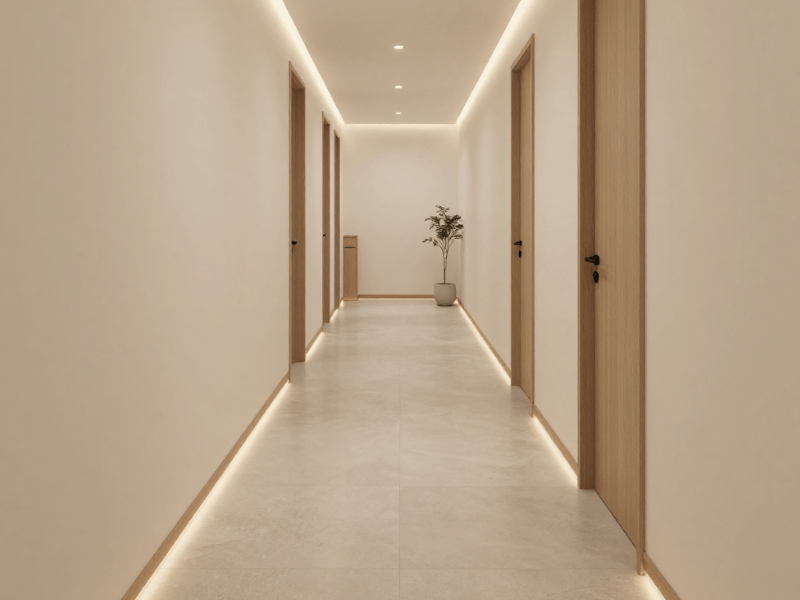
Emergency escape lighting helps people leave a building safely when normal lighting fails. It illuminates escape routes, exits, and other areas where occupants need guidance. For example, a hotel corridor needs enough light to help guests reach the stairs. Larger open areas may also need lighting so people can find their way towards an exit.
Emergency escape lighting may cover staircases, corridors, changes in direction, and final exits. It also includes lighting for open areas and certain high-risk tasks. Illuminated emergency exit signs help occupants recognise exits and follow escape directions. However, exit signs don't replace the lighting needed along escape routes.
Emergency Local Area Lighting
Emergency local area lighting supports safe movement or essential activities within specific areas. It's useful when occupants need illumination without necessarily evacuating immediately. For example, staff might need enough light to operate controls or complete a safe shutdown. The lighting must suit the particular task and any nearby hazards.
This doesn't mean keeping an entire workplace brightly illuminated. It means providing suitable lighting where identified safety needs require it.
Standby Lighting
Standby lighting allows normal activities to continue when the main lighting supply fails. Unlike emergency escape lighting, its primary purpose isn't necessarily helping people evacuate. It may be useful in facilities where operations cannot stop immediately. The required performance depends on the work being carried out.
Standby lighting shouldn't automatically be treated as suitable emergency escape lighting. Where one system serves both purposes, it must meet the applicable requirements for each.
BS 5266 Emergency Lighting Design Requirements
Emergency lighting design isn't about installing a fitting wherever there's an empty patch of ceiling. Good coverage depends on where people need to go and what hazards they might encounter. BS 5266 encourages a planned approach that considers escape routes, occupants, building layouts, and lighting performance.
Lighting Escape Routes and Open Areas
Escape routes need enough illumination to help occupants reach safety. Designers must consider corridors, staircases, doors, and areas where people may struggle to find their way. A corridor might have several emergency lights but still leave a staircase poorly illuminated. Adding more fittings elsewhere won't solve that problem.
Open areas present different challenges because occupants may need help recognising their surroundings. The lighting requirements can therefore differ from those for a narrow escape route.
Identifying Hazards and Safety Equipment
Emergency lighting must also account for hazards that could become dangerous in darkness. These include changes in floor level, stairs, obstacles, and equipment that requires a safe shutdown. Fire alarm call points and firefighting equipment may also need appropriate illumination. People should be able to identify and reach essential safety equipment when normal lighting fails.
Consider a warehouse with tall shelving and machinery. Poorly positioned lights could leave important controls or sections of the escape route in shadow. This is why placement matters just as much as the number of fittings.
Choosing Suitable Emergency Light Fittings
Different emergency light fittings serve different purposes, and no single type suits every building.
Common options include emergency bulkheads, downlights, twin spots, and illuminated exit signs. Each offers different mounting options, light distribution, and coverage. For example, emergency bulkhead lights can suit corridors, stairwells, and communal areas. Twin spots can direct light to specific areas that need extra coverage.
You'll also encounter maintained and non-maintained emergency lights when comparing products. Maintained fittings can operate during normal conditions, while non-maintained fittings usually activate when the normal supply fails. However, choosing a suitable fitting type is only part of the process. You must also consider light output, mounting position, backup performance, and environmental conditions.
The goal is a properly designed system, not simply a collection of emergency lights.

BS 5266 Testing, Duration and Maintenance
Emergency lighting must work when needed, not just look reassuring during routine inspections. Batteries deteriorate, fittings develop faults, and electrical systems can experience problems.
Regular testing and maintenance help identify these issues, thus letting you avoid many emergency lighting mistakes.
How Long Should Emergency Lights Stay On?
Emergency lights need a backup power source when the normal supply fails. However, the required operating duration depends on the building and applicable guidance.
One-hour and three-hour backup systems are commonly used in emergency lighting installations. The appropriate duration depends on the premises, evacuation arrangements, and intended use. For example, some buildings may need lighting during an extended shutdown or delayed reoccupation. A competent professional should determine the required duration during the lighting assessment.
How Often Should Emergency Lighting Be Tested?
Emergency lighting usually needs short functional checks and periodic full-duration tests. Recognised guidance typically recommends monthly functional checks and annual duration tests. A functional check confirms that emergency lights activate when the normal supply fails. A full-duration test checks whether the system operates throughout its required backup period.
Testing arrangements should follow the applicable standards, manufacturer's instructions, and building requirements. Full-duration tests must also allow for battery recovery and continued occupant safety. Keep records of completed tests, results, and any faults discovered. These records help demonstrate that the system receives regular attention.
What Happens If an Emergency Light Fails?
If an emergency light fails, record the fault and arrange repairs promptly. Check whether the failure leaves an escape route or important safety area without adequate illumination.
Temporary safety measures may be necessary until the problem is resolved. A competent person should investigate the fault and confirm that the system works after repairs. Don't leave failed fittings until the next scheduled inspection. A problem discovered during testing could become a much bigger issue during an actual emergency.
What Has Changed in BS 5266-1:2025?
Emergency lighting standards evolve as building needs and safety practices change. BS 5266-1:2025 replaced the previous 2016 edition, introducing broader guidance for emergency lighting systems. The revision reflects a more complete approach to safety during power failures.
Broader Guidance for Different Lighting Needs
The biggest change is the expanded scope, which now covers local area lighting and standby lighting. Previous guidance focused more closely on emergency escape lighting. The updated standard considers situations where occupants may need to remain safely inside a building. It also addresses lighting that supports essential activities or continued operations.
For example, certain facilities may need lighting for important tasks that cannot stop immediately. Others may require arrangements that allow normal activities to continue despite a power failure. The revision also reflects changes to related European standards, including EN 1838 and EN 50172. These updates help align emergency lighting guidance with wider technical requirements.
What Should Building Managers Do Now?
Does the new standard mean every existing emergency light needs replacing? No, and your maintenance budget can breathe a small sigh of relief. A new edition doesn't automatically make older installations unsuitable. However, existing systems must still provide appropriate protection and meet relevant legal duties.
Review your lighting documentation, maintenance records, and any changes made to the premises. For new installations and significant alterations, consider the latest applicable guidance. If you're unsure whether your existing system remains suitable, arrange a professional assessment. Replacing equipment without identifying the actual requirements could waste money without improving safety.
How to Meet Your Emergency Lighting Responsibilities
Understanding BS 5266 helps, but applying its guidance matters. A few practical checks can help identify whether your emergency lighting arrangements need attention.
Use this checklist to review your premises:
- Review your fire risk assessment. Check whether the assessment identified any emergency lighting needs or outstanding hazards.
- Identify important locations. Examine escape routes, stairs, exits, safety equipment, and potential hazards.
- Arrange a lighting assessment. Ask a competent professional to review coverage and relevant requirements.
- Check your documentation. Review installation details, commissioning records, test results, and previous repairs.
- Organise maintenance. Address faults promptly and arrange appropriate testing.
Review the system whenever significant building changes occur. New partitions, relocated equipment, or altered escape routes could affect existing lighting coverage.

Find Suitable Emergency Lighting Products
Choosing suitable emergency lighting starts with understanding your building's requirements. Different fittings provide different coverage, so specifications matter more than appearance. Explore Simple Lighting's range of emergency lights to compare available options. Match your chosen fittings to a professionally assessed lighting design before installation.


0 comments