





A Better-Lit Driveway Starts with a Plan
If your driveway goes dark at night and parking becomes a game of judging the edges, it's time to upgrade your outdoor lighting. You might think, “Is there really a need? I’m already used to it being that way.” That’s fair. But what about visitors who aren’t familiar with the level changes, the sudden drop, or the route to the front door?
Good driveway lighting makes parking, reversing, and walking to and from the house easy and safe. If that doesn’t get you excited, it can also highlight your property’s best features and make the entrance feel more welcoming, even to onlookers.
The secret? Proper planning. Start by thinking of your driveway as a journey: from the entrance, down to where vehicles turn and park, and toward the front door. Don’t forget to add a little accent light for a finishing touch. The result is a driveway that looks good, works properly, and feels comfortable to use after dark.
In this guide, we’ll walk you through how you can achieve that. Ready to find out more? Let’s drive in.
Start by Mapping Out Your Driveway Lighting Plan
Don’t start browsing outdoor lights without first taking a few minutes to plan where you need them. It’s easy to get swayed by the prettiest fittings, but a beautiful light that’s positioned poorly loses its value quickly. Draw a rough sketch of an overview of your driveway. Make it simple. You’re not creating an architectural masterpiece.
Show the road, driveway entrance, house, garage, and surrounding boundaries.
Identify the Main Routes and Potential Hazards
Mark the areas you use most frequently. This includes the entrance, parking bays, turning spaces, and the route from your car to the front door. Note steps, slopes, uneven paving, raised edges, and changes in surface level. These areas (especially) deserve reliable lighting.
If visitors regularly park near the garage or walk along one side of the driveway, include those routes in your plan, too.
Decide Which Areas Need Functional and Decorative Lighting
Give your lighting different jobs to do. You can classify them in two categories:
Functional lighting helps you see where you're driving, parking, and walking. Prioritise it around the entrance, vehicle manoeuvring areas, steps, and pedestrian routes. Basically, use functional lighting wherever practical.
Decorative lighting adds atmosphere and draws attention to features such as boundary walls, planting, textured brickwork, or attractive entrance pillars. The two can work together beautifully. Just remember, you don’t need to illuminate the whole driveway. Start with the areas that need good visibility, and add accent lighting only where it improves the appearance.
Consider Your View from the Road and Inside the Car
A bright light aimed at the driveway may look great from inside the house, but it can be uncomfortable for someone approaching in a vehicle, especially if the light is directly in their eyes. Avoid placing exposed, high-intensity lights where they cause glare. Consider approaching traffic, pedestrian positions, and whether light spill could affect neighbouring windows.
Where to Position Driveway Lights for the Best Results
At the Driveway Entrance
This one’s a no-brainer. Drivers need to know where the driveway begins, especially when the boundary between your driveway and the road is hard to distinguish. Try installing wall lights beside an entrance or on boundary pillars to make the turning point easier to see. Aim the light toward the entrance, not toward approaching traffic.
For a narrow entrance, a pair of balanced lights can define the opening and make entry safe and easy.
Along the Driveway Edges
When your driveway boundaries are easy to distinguish, it’s easier to drive through, park, or reverse.
-
Ground lights are a great option, especially if you want a discreet finish.
-
Bollard lights can provide more visible markers, which is great for wider driveways.
Positioning depends on the driveway's width, shape, and surface. A straight driveway may need only a regular sequence of lights, while a curved route may need additional markers around bends to keep the direction clear. Of course, don’t put bollards and other protruding lights where cars need to turn or reverse. You can use ground lights instead, but make sure they can withstand the load.
Around Parking and Turning Areas
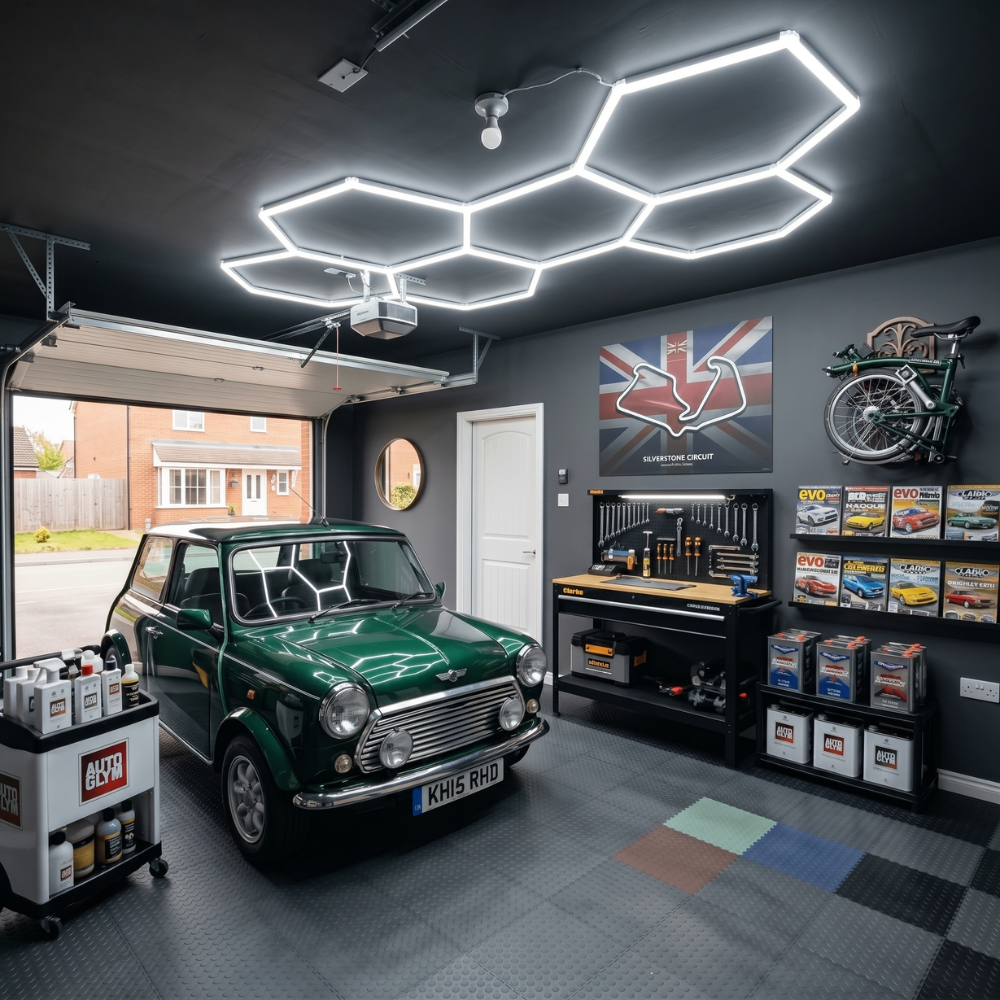
Parking in your own garage should not be a challenge. Add enough light to help you judge distances and see obstacles more clearly. Getting out and moving around your car should also be safe. Try wall-mounted lights for general illumination. Inside the garage, appropriately positioned overhead fittings can provide broad coverage so you can clearly see both sides and the back when backing up.
If you have a large parking space, you may need more than one light to distribute light evenly. Finally, when positioning your lights, avoid smooth, reflective surfaces and angles that create distracting glare for the driver.
Along the Route to the Front Door
Most driveways connect to the front door, so you and others in the house tend to walk that space often. Like, every single day. Good lighting options here are path lights, wall lights, and recessed fittings (where appropriate). Adding light to this route makes the space safer because you can easily see steps, thresholds, and level changes.
If your entrance has a canopy or porch, a fitting beneath it can provide useful light as you approach the door and search for your keys.
On Garage Walls, House Facades, and Boundaries
House walls, garage facades, and boundary walls can provide useful mounting points for driveway lighting. Install downward-facing wall lights to illuminate the ground near an entrance or garage. Also consider up-and-down fittings; they can add a decorative effect to exterior walls.
These fittings mainly create a wall-washing effect, which may suit parking spaces with walls on either side, but can be impractical if you’re aiming to light walkways. If your driveway borders another home, direct the beams towards your own property rather than neighbouring windows or gardens.

Choose the Right Driveway Lighting for Your Needs
You don’t need to choose only one style for the entire driveway. Different fittings create different lighting effects that solve different lighting issues.
LED Ground Lights for Discreet Edge Lighting
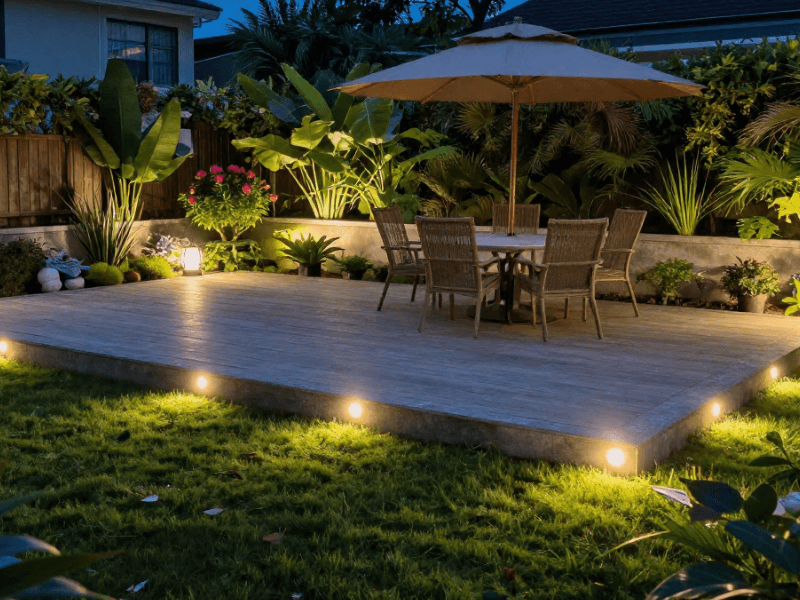
If you’re looking to define driveway edges but don’t want bulky, protruding fittings, go for recessed ground lights. They create a neat, contemporary finish and work particularly well along paved entrances, pathways, and selected parking-area boundaries.
However, not every ground light suits a driveway. Always check the manufacturer's load rating and installation instructions before fitting lights where vehicles pass. If the fitting is not rated for heavy loads, it’ll break. Use LED ground lights for driveways, patios, and pathways.
Outdoor Wall Lights for Entrances and Garages
Wherever there are walls, wall lights are a good option. This makes them a versatile lighting solution that can illuminate entrances, garage doors, and pedestrian routes without taking up ground space. With their downward-facing design, they direct light toward the area beneath the fitting. However, up-and-down wall light designs also create a more decorative effect by projecting light in both directions.
When choosing wall lights, consider beam angle, brightness, and position. A fitting beside a garage door needs to provide useful visibility, while one placed higher on a feature wall might primarily serve a decorative purpose.
Floodlights and Motion-Sensor Lights for Visibility
LED floodlights are probably the go-to outdoor lights for many UK homes, and for good reason! They provide broader illumination and can be useful around larger parking areas, garage entrances and spaces where vehicles need to manoeuvre.
For added convenience, add motion sensors so the lights switch on when they detect movement. Imagine approaching the driveway and the lights turning on automatically. It’s like having a personal welcome party every time you get home.
But sensor placement matters here. Consider the sensor's detection range and angle to keep reaction time fast and avoid false triggers from passing pedestrians, moving branches, or road traffic. Light positioning should be straightforward: avoid pointing the fitting towards the road, neighbouring windows, or the driver's normal line of sight.
Bollard and Post Lights for Wider Driveways
If you have a wider driveway, bollard and post lights are a great option for clearly marking the route from the entrance towards the parking space. Consider height, spacing, and beam distribution, as these factors determine how effectively they illuminate the ground.
-
Shorter bollards offer a discreet marker
-
Taller post lights may distribute light across a wider area
Just make sure you position them outside the vehicle turning areas to avoid damaging both lights and the car. (The latter hurts more.)
Solar and Mains-Powered Driveway Lights
Why get everything mains-powered when you can use free energy, a.k.a. the sun? Solar lights offer flexibility because they don’t require any wiring. Most come in a plug-and-play pack, making them useful for boundaries, paths, and decorative lighting.
The caveat, though? Their performance depends on sunlight exposure, panel placement, battery capacity, and the season. So, watch out for shaded entrances and short winter days, which can reduce the light available after sunset. Mains-powered lighting still offers a more consistent supply, provided it’s designed and installed correctly.

Driveway Lighting Ideas for Different Layouts
The best lighting depends on your property's shape and how you use the space.
Short Driveways and Small Front Gardens
You rarely need a lot of fittings here. Add an entrance light, a wall light near the house, and discreet markers along a pedestrian route, and you're all set. Fewer, well-placed lights help you avoid visual clutter. If your porch fitting already lights part of your driveway, you may only need additional lighting where unwanted shadows remain.
Long or Narrow Driveways
You’ll want a clear visual route from the entrance to the parking area. Ground lights or carefully positioned bollards can help define the edges. Don’t rely on one powerful floodlight at the house. Consider several complementary lighting positions along the route. This can help reduce dark patches and make bends or boundaries easier to judge.
Wide Driveways and Multiple Parking Bays
Wider driveways pose a challenge because you need to distribute light across the usable area. Combine wall-mounted lights with broader lighting and selected low-level markers. Cover pedestrian routes between vehicles and parking spaces.
Curved, Sloped, or Shared Driveways
People need to clearly see changes in direction, which means lighting curves is a top priority. Place markers along curves for better visibility. On sloped driveways, pay particular attention to changes in level, the transition between the road and driveway, and any steps or uneven surfaces.
Finally, on shared driveways… Keep fixtures and cables clear of access routes, keep vehicle and pedestrian movements unobstructed, and direct beams away from neighbouring homes.
Photo by Ibrar Tariq on Unsplash
How to Make Driveway Lighting Safer and More Comfortable
The answer to better visibility is not more light.
Choose Suitable Brightness and Beam Angles
An entrance marker doesn't need to illuminate the same area as a floodlight covering several parking bays. Similarly, a decorative wall light may enhance the overall appearance without providing enough illumination for manoeuvring.
But don’t just check how many lumens you need for outdoor lighting. Also look at beam angle. A narrow beam concentrates light into a smaller area, while a wider beam spreads it across a larger space. Mounting height and direction affect this. Aim for useful, balanced illumination.
Reduce Glare and Dark Patches
Glare can make it harder to see obstacles and the path, especially when you're driving into the driveway or reversing towards the road. The best solution is to use shielded fittings. As the name implies, they block light from shining directly into someone’s eyes and direct it where it matters. You also need to consider light placement and avoid using high-intensity fixtures.
Watch out for reflections on polished and glass surfaces, too, as they can also cause glare for the unsuspecting looker. Check for unwanted shadows along the driveway too. These can make it harder to judge changes in the driveway, especially for visitors who are unfamiliar with the space.
Use Timers, Photocells, and Motion Sensors Where Appropriate
Outdoor lighting does not need to be hard. In fact, if convenience is your goal, adding automatic lighting controls can significantly change how you use your driveway.
-
Photocells switch lights on when natural light falls below a set level and off when daylight returns.
-
Timers run lights on a schedule, making them useful when you want predictable evening illumination. They can also create the illusion that someone is home, even when you’re on vacation.
-
Motion sensors turn on lights when they detect movement, which can be useful for entrances and occasional-use areas.
And you’re not limited to one control only. Combine them when necessary, as long as your lights (and the whole system) support them.
What to Check Before Installing Driveway Lights
A little preparation won’t hurt. In fact, it’s often what you need.
Check IP Ratings and Weather Exposure
The ingress protection (IP) rating indicates how well a fitting protects its internal components from solids and water. The right rating depends on where you'll install the light and how exposed it is to rain, splashing water, dirt, and other environmental conditions.
One common mistake is assuming every outdoor light suits every part of a driveway. If you’re not sure where the fitting is best suited, check the manufacturer's guidelines.
Check Ground-Light Load Ratings and Drainage
Not all ground lights are meant to carry a vehicle’s load, so check whether vehicles will run over the fitting. If they are, then choose a fitting rated for the job. Check not only the installation depth but also the drainage arrangements. You can’t immerse a fitting in water if it’s not rated for it.
Plan Power, Cabling, and Professional Installation
Outdoor lighting can be tricky because power sources are often far from where you’re installing your lights. That’s why we recommend planning this before you install the lights. Also confirm how cables can reach each lighting position so you can plan the runs and best conceal the wires. Proper cable management is needed even in wide outdoor areas.
Exposed wires instantly lower the installation's perceived quality, so hide them if you want professional-looking outdoor lighting. Finally, plan for future maintenance and keep important components accessible for repairs or replacement. If you need mains wiring, hire a certified electrician.

Your Driveway Lighting Checklist
I know you’re already itching to install your new driveway lights, but review this checklist before choosing them:
-
Mark the main zones: Identify the entrance, parking spaces, turning areas, and pedestrian route.
-
Spot potential hazards: Note steps, slopes, uneven surfaces, and areas with poor visibility.
-
Assign each light a purpose: Choose lights for entrances, edges, parking areas, and pathways.
-
Check brightness and beam direction: Reduce glare, dark patches, and unwanted light spill.
-
Confirm technical (and electrical) requirements: Check IP ratings, ground-light load ratings, drainage, and power.
-
Review the layout after dark: Assess the lighting before finalising positions. This can help you identify issues early on.
Good driveway lighting needs three things: practical visibility, thoughtful positioning, and a design that complements your property. You can find all that in Simple Lighting’s range of outdoor lights. Explore our collection today to get your next lighting project started in the right direction.


0 comments