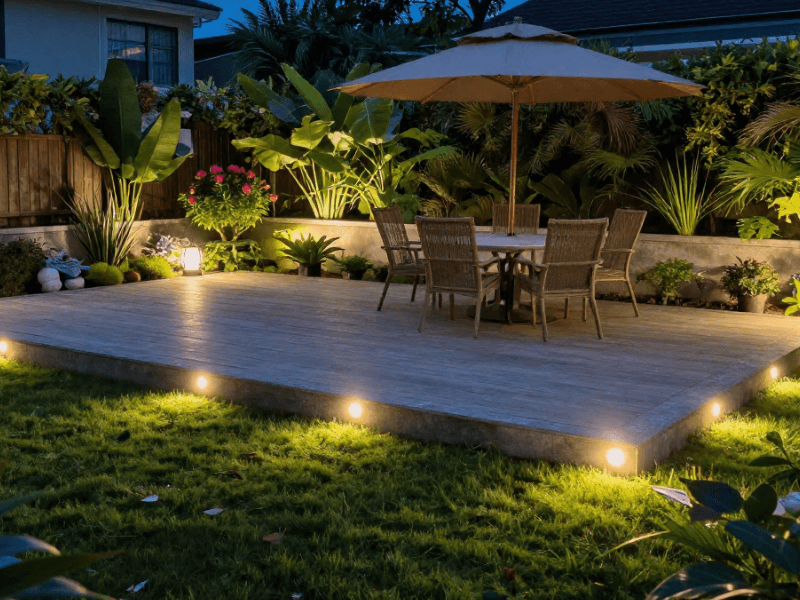


Patios may look lovely during the day. But once the sun sets, does yours become a collection of dark furniture and questionable shadows?
That's where festoon lights come in. A few well-placed strings can turn an ordinary garden into a cosy outdoor retreat without expensive landscaping.
If you're looking for festoon lighting ideas for gardens, the possibilities go far beyond hanging bulbs along a fence. You can create glowing patio canopies, frame outdoor dining areas, or add personality to a neglected garden corner.
The secret is choosing an arrangement that suits your space. After all, a tiny courtyard and a sprawling lawn need very different lighting plans.
Whether you're working with a pergola, fence, or open garden, there's an arrangement worth trying. Here are nine practical ideas, plus tips for choosing and installing your lights.
1. Create a Canopy of Festoon Lights Over Your Patio
Want your patio to feel like an outdoor room? Hang festoon lights overhead to create a glowing ceiling above your seating area.
This arrangement defines the space without walls or partitions. It works particularly well on patios that open directly onto a lawn.
Try a Zigzag Layout for Wider Coverage
For rectangular patios, run festoon lights in a zigzag pattern between suitable attachment points. Keep the runs evenly spaced to spread the light across the area.
This layout works well above larger seating areas, especially when you want decorative lighting across the entire patio. The alternating cables also create an attractive pattern when viewed from below.
Avoid squeezing too many runs into a small space. You're creating a garden retreat, not decorating a fairground.
Frame the Patio with a Simple Perimeter
Prefer something more understated? Run festoon lights around the patio's edges instead of covering the centre.
This creates a subtle border while keeping the space visually open. It works particularly well for square patios and modern gardens with clean lines.
Check that your proposed attachment points can support the arrangement. Measure the complete cable route, including any permitted drape, before choosing your festoon and string lights.
2. Drape Festoon Lights Across a Pergola
A pergola already gives your garden an outdoor room structure. Festoon lights make that space useful and attractive after sunset.
The easiest approach is to follow the pergola's existing beams. This creates clean lines that complement modern gardens and simple timber structures.
For a more decorative look, cross the lights between suitable overhead beams. This creates a canopy effect that's particularly attractive above garden sofas or outdoor dining furniture.
Keep the arrangement proportional to the pergola. Smaller structures usually look better with fewer runs, while larger designs can accommodate more detailed patterns.
Warm white bulbs work beautifully against timber beams and climbing plants. They soften the structure without drawing attention away from its natural features.
If your pergola has hanging plants, position the lights where foliage won't interfere with the cables. Also make sure there’s enough clearance for comfortable movement underneath.
Before installation, check the structure's condition and suitable fixing positions. Timber, metal, and other pergola materials may require different mounting methods.
Always follow the manufacturer's installation instructions. A beautiful lighting display isn't worth damaging the structure holding it up.

3. Use Festoon Lights to Make a Small Garden Feel Special
Small gardens don't need more lights. They need better positioning.
Too many glowing bulbs can make a compact courtyard feel crowded. Instead, choose one arrangement that draws attention towards a particular feature.
Run Lights Along a Fence or Boundary
For narrow gardens, try running a single string along one side. This creates a line that draws the eye towards the far end.
Keep the cable arrangement simple and the bulb spacing consistent. The result feels organised without filling the limited space with overhead wires.
Light One Focal Point
Another approach is to highlight a single garden feature. Try hanging festoon lights above a bistro table, compact bench, or reading corner.
Leave the surrounding space relatively dark to create contrast. This gives the illuminated area more presence without covering every available surface.
For L-shaped gardens, consider lighting the furthest seating corner. It can draw attention beyond the nearest walls and make the layout feel more interesting.
Avoid combining several different arrangements in one tiny courtyard. A single well-positioned display usually looks more polished than three competing strings.
4. Turn a Garden Dining Area into an Outdoor Bistro
A few glowing bulbs can make dinner outdoors feel like a 5-star restaurant experience. You just need the right arrangement above your table.
For rectangular dining tables, try positioning festoon lights lengthways above the seating area. This follows the table's shape and helps define the dining zone.
Round tables often look better beneath a centred overhead arrangement. A few balanced runs can frame the space without making the installation feel crowded.
Keep bulbs away from direct sightlines when everyone is seated. Nobody wants to spend dinner staring into a bright light instead of enjoying their food.
Warm white bulbs usually suit relaxed dining spaces. Their softer appearance complements timber tables, woven chairs, and most outdoor furniture finishes.
However, decorative lighting might not provide enough visibility for every activity. You may need additional task lighting around barbecues, food preparation areas, or serving stations.
Steps and floor-level changes also deserve separate lighting. Festoon bulbs can create atmosphere, but they shouldn't be your only practical light source.
Get the balance right, and even a simple Tuesday dinner feels special. No expensive restaurant booking required.

5. Add a Festoon-Light Border Along Garden Fencing
A garden fence doesn't have to disappear into darkness. Festoon lights can turn an ordinary boundary into part of your evening garden design.
For a clean appearance, follow the fence's upper edge where suitable supports allow. This creates a continuous line that works particularly well with straight, modern fencing.
Alternatively, hang lights in gentle curves between sturdy posts. The relaxed shape complements cottage gardens, timber fencing, and informal outdoor seating.
This arrangement also works well for connecting different garden zones. A continuous line can visually link your patio, flowerbeds, and seating area further down the garden.
Keep the layout consistent; don't change the cable height at every available post. Random dips and uneven spacing can make the installation look unfinished.
Check that your fence is stable before attaching anything. Loose posts and ageing timber might not safely support the planned arrangement.
Use suitable outdoor fixings and avoid pulling cables tightly between supports. For more ways to improve garden boundaries, explore these garden wall lighting ideas.
6. String Festoon Lights Between Trees or Freestanding Poles
No pergola? No nearby walls? You can still create an overhead display using suitable trees or properly installed freestanding poles.
This arrangement works particularly well across open lawns and entertaining areas away from the house.
Use Trees Carefully as Anchor Points
Mature trees can provide natural attachment locations, but not every trunk or branch is suitable. Check their condition and ensure the proposed arrangement can be supported safely.
Avoid tightly wrapping cables around trunks or branches. This can damage the bark and restrict growth as the tree develops.
You'll also need to consider movement during windy weather. Branches that sway significantly may be unsuitable for supporting festoon lighting.
Install Freestanding Posts for Flexible Layouts
Freestanding posts offer greater control over your lighting arrangement. Position them around a seating area or lawn to create your preferred canopy shape.
For example, four properly secured posts could define a rectangular entertaining space. Two suitable posts might support a simpler arrangement using approved support methods.
Make sure each post is stable and designed for the expected loads. Longer spans may require dedicated support wires or other manufacturer-approved arrangements.
Never assume an electrical cable can safely support itself across unlimited distances. Proper support helps prevent damage and keeps your overhead display secure.

7. Create a Cosy Garden Lounge with Layered Lighting
Festoon lights look lovely above garden sofas. However, they work even better when paired with lighting that serves different purposes.
Think of festoons as your decorative overhead layer. They define the lounge area, while other fixtures improve visibility and highlight surrounding features.
Start with warm white festoons above your seating arrangement. Then add suitable outdoor wall lights near doors or covered seating areas.
These fixtures can provide useful background illumination without competing with your overhead display. Explore different outdoor lighting options to find designs that complement your setup.
Next, consider low-level decking lights around steps or changes in height. These help make movement safer when you're entertaining after dark.
For extra character, position a small spotlight towards an attractive tree or feature wall. Keep the surrounding areas softer so the highlighted feature stands out.
Avoid making every fixture equally bright. The contrast between decorative, practical, and accent lighting creates a more interesting result.
For additional inspiration, browse these outdoor lighting ideas for UK gardens.
8. Choose a Festoon Lighting Style That Suits Your Garden
The same arrangement can look completely different depending on the bulbs you choose. That's why style matters just as much as positioning.
Consider your garden furniture, planting, and surrounding architecture before choosing a design.
Warm White for a Relaxed, Timeless Look
Warm white bulbs suit patios, dining areas, and comfortable garden lounges. They also complement natural materials such as timber, stone, and brick.
For a softer look, choose options around 2700K to 3000K. Check the product specifications to confirm the actual colour temperature.
Filament-Style Bulbs for a Vintage Feel
Want your patio to resemble a charming outdoor café? Filament-style festoon bulbs can create that traditional appearance.
Their decorative filament design works particularly well with rustic furniture and timber pergolas. Try arranging them in straight runs above a dining table for a classic courtyard look.
Coloured Bulbs for Parties and Playful Spaces
Coloured festoon lights can bring extra personality to outdoor celebrations. They're particularly suitable for birthdays, summer parties, and family gatherings.
Choose a consistent colour scheme for a coordinated look. Mixing every available colour might work for a party, but it can overwhelm smaller gardens.
Before buying, check the brightness, bulb style, and available controls. Not every festoon set offers dimming, colour changes, or interchangeable bulbs.

9. Make Festoon Lighting Work Throughout the Year
Festoon lighting isn't just for summer barbecues. With the right products, your garden can stay attractive through the changing seasons.
During summer, create overhead displays above dining tables and entertaining areas. Soft lighting can make these spaces more enjoyable as daylight fades.
For autumn, use warm white festoons around a sheltered seating area. Pair them with low-level lighting near steps to improve visibility during earlier evenings.
Winter calls for simpler arrangements and careful weather planning. A suitable festoon display can complement festive decorations without covering every fence in flashing lights.
In spring, use your lights to highlight a refreshed patio or seating corner. Their glow can draw attention towards emerging plants and newly arranged garden furniture.
For more inspiration, explore these garden lighting ideas for every season.
Remember, not every outdoor festoon set is meant to stay installed year-round. Check the manufacturer's guidance on weather exposure, wind, and long-term outdoor use.
Regularly inspect cables and fixings for wear or damage. Remove or secure the lights when required by the product instructions or expected weather conditions.
How to Plan and Hang Festoon Lights Safely
Found your favourite arrangement? A little planning now can save plenty of frustration during installation.
Measure Your Garden and Choose a Layout
Measure the intended lighting area and sketch your cable route. Include attachment points, furniture positions, and the distance to your power supply.
Allow for actual cable runs, turns, and permitted drapes. For broader planning advice, read our complete garden lighting guide.
Check Bulb Spacing, Cable Length and Power Options
Check the total cable length and distance between bulbs. Some products include unlit lead sections, so the illuminated length may differ.
Confirm whether suitable power is available nearby. Check connection compatibility before planning to extend multiple strings.
Check Weather Protection and Mounting Points
Outdoor lighting needs protection suited to its location. IP44 provides splash resistance, while IP65 offers protection against water jets.
However, the right rating depends on the installation's exposure and the product instructions. Our guide to outdoor lighting IP ratings explains the differences.
Choose stable attachment points and approved outdoor fixings. Longer cable runs may need additional support, depending on the product requirements.
Avoid Common Installation Mistakes
Don't overtighten cables or leave long spans unsupported. Don't trail leads across walkways or leave exposed electrical connections without suitable protection.
Never use damaged cables or unsuitable indoor fittings outside. Follow the manufacturer's instructions and hire a qualified electrician for mains work requiring professional installation.
Test the lights before securing the final arrangement. It's easier to correct problems before everything is fixed overhead.
How to Choose the Right Festoon Lights for Your Garden
Once you've chosen a layout, compare festoon lights based on how you'll use them. The right specifications matter more than finding the biggest set.
- Bulb style. Globe bulbs offer a classic look, while filament-style options suit traditional gardens. Coloured bulbs are useful for celebrations and playful spaces.
- Light colour. Warm white suits relaxed seating and dining areas. Other colours can create different effects depending on your garden's style.
- Brightness. Choose comfortable illumination without harsh glare. Remember that decorative festoons may need practical lighting support.
- Cable length and spacing. Longer runs suit larger canopies, while shorter strings work well around compact seating areas. Always check the actual dimensions.
- Weather protection. Choose a product with outdoor protection suited to its intended location. Consider rain exposure, wind, and installation requirements.
- Controls and power. Check whether the lights are mains-powered, dimmable, smart-enabled, or extendable. These features vary between products.
Always confirm the individual specifications before purchasing. Explore Simple Lighting's festoon and string lights to compare suitable options.

Finish Your Garden Lighting Plan
The best festoon lighting arrangement isn't necessarily the biggest or brightest. It's the one that suits your garden and how you use the space.
Whether you're framing a patio or creating an overhead canopy, start with one clear purpose. Then choose suitable bulbs, cable lengths, and secure mounting points.
Add functional lighting where necessary, especially around steps and cooking areas. A thoughtful arrangement should look attractive without sacrificing everyday practicality.
Ready to transform your outdoor space? Browse Simple Lighting's festoon and string lights collection and bring your favourite garden lighting idea to life.


0 comments