

Your garden wall doesn’t just exist to set boundaries. It’s prime design real estate. Most people ignore it, then wonder why their garden looks flat and dull.
By adding quality wall lighting, you’ll change things fast. You’ll get depth, mood, and safer paths. Also, there will be fewer midnight trips over that “clearly visible” step.
But good lighting isn’t just one blinding fixture. It’s layers. Think mood, function, and a bit of drama. In this guide, we’ll show you how it’s done.
Why Garden Wall Lighting Is Key to a Well-Designed Outdoor Space
For starters, wall lighting adds structure to your garden. Without it, everything just disappears at night. You end up with a dark void and one overly bright light doing all the work. Not ideal.
Good wall lighting also adds depth and layers. It breaks up flat spaces and guides the eye across your garden. Suddenly, your walls have purpose. Your patio feels intentional. And your garden stops looking like an afterthought.
It makes things safer as well. Paths, edges, and steps become visible. You’ll be able to walk around without guessing where the ground ends. Always a win.
UK gardens are now used well into the evening. Patios double as outdoor living rooms. Lighting makes that possible. Otherwise, you’re just sitting in the dark pretending it is “ambience”.
Wall lights help create hierarchy, too. Yes, your garden needs that. Some areas will stand out, others will stay subtle. That balance makes everything feel more polished.
And here is the key point: one light will not fix everything. It will just create harsh shadows and awkward glare. Layered lighting is what works. Wall lights are your foundation. Everything else builds from there.
Understanding Layered Lighting for Garden Walls
Layered lighting sounds fancy. But to tell you the truth, it really just means using more than one light properly.
Ambient Lighting
This is your base layer, your background glow. It fills the space without shouting.
Wall lights can wash light across surfaces. This softens shadows and avoids harsh spots. Think calm and even, not “airport runway”.
Task Lighting
This is the practical bit, the part that will help you actually see. It helps you move around without guessing.
Place wall lights near:
- Doors
- Steps
- Seating areas
Remember: You want light where you use the space. Don’t scatter it pell-mell.
Accent Lighting
This is the show-off layer, the part where your garden gets personality.
Use wall lights to highlight:
- Brick or stone textures
- Plants climbing your walls
- Sculptures or features
Done well, it will make your setup look expensive (even if your budget says otherwise).
How It All Comes Together
As mentioned above, a single light won’t cut it. In fact, that’s how you get glare and awkward shadows!
To avoid that, combine layers. Try this:
- Ambient for overall glow
- Task for function
- Accent for detail
Oh, and add spike or strip lights if needed. Trust us, your garden will look designed, not accidentally illuminated.
Types of Garden Wall Lights to Consider
Not all wall lights are created equal. Some are built to seriously impress. Others are just there to get the job done. You’ll need a bit of both for your garden.
Up and Down Wall Lights
These are the crowd favourites. They’ll shine light up and down your wall. Simple idea, strong effect.
They’ll create sharp shadows and highlight texture. It’s especially good for brick and stone.
Try installing these in:
- Modern patios
- Feature walls
- Clean, flat surfaces
They’ll look sleek and intentional, as if you planned your garden rather than “added lights later”.
Bulkhead and Utility Wall Lights
While these aren’t glamorous, they’re quite reliable. Think of them as the sensible shoes of lighting.
They’re tough and weatherproof, and many are rated IP65 or higher. So rest assured that UK rain won’t faze them.
Anyway, these lights are ideal for:
- Side paths
- Back doors
- Sheds and garages
They’ll give you strong, even light. No mood, just visibility. Sometimes that is exactly what you need.
Decorative Lantern-Style Wall Lights
These ornate wall lights bring charm and warmth. They lean traditional, but in a good way.
They’re perfect for:
- Period homes
- Cottage-style gardens
- Brick or stone walls
Pro tip: Use warm white bulbs to keep things cosy. Cool white here feels wrong (like tea without milk).
LED Strip Integration with Walls
This is the subtle one. It does not shout. It just glows quietly and looks very clever.
Try installing strips:
- Under ledges
- Along wall edges
- Behind seating areas
You’ll get soft, modern lighting with clean lines. This helps add depth without stealing attention.
By the way, LED strips aren’t just great for ambient lighting. They’re also fantastic for showing off your garden without being obvious about it.
Garden Wall Lighting Ideas for Different Styles
Your garden has its own style, so your lighting should match it. Otherwise, it will feel like mixing trainers with a tuxedo.
Modern Minimalist Garden Walls
For these types of walls, keep it clean and simple. That way, you’ll avoid clutter and chaos.
Try these:
- Slim up/down lights in matte black or aluminium
- Even spacing for a tidy look
- Neutral tones that blend in
Symmetry is your best friend here. Measure properly (eyeballing it rarely ends well).
The goal is subtle impact. Clean lines, soft shadows, and a calm, polished finish.
Rustic and Traditional Garden Walls
For this style, go warm and soft. This is not the place for harsh white light.
Try these:
- Lantern-style fittings
- Warm white LEDs
- Natural textures like brick or stone
Let the light highlight the material. Old walls love a bit of drama.
And avoid overly bright bulbs. You want cosy charm, not “historic site under inspection”.
Feature Wall Lighting for Impact
Pick one part of the wall and make it the star. Don’t use all of them. You’re not hosting a light show.
Use directional or spot lighting to highlight:
- Climbing plants
- Water features
- Sculptures
Keep the rest of the lighting softer. Contrast is what makes the feature stand out.
Too many highlights and nothing feels special. It just looks busy.
Layered Lighting for Patios and Seating Areas
This is your relaxation zone. Treat it like an outdoor living room.
Try combining:
- Wall lights for background glow
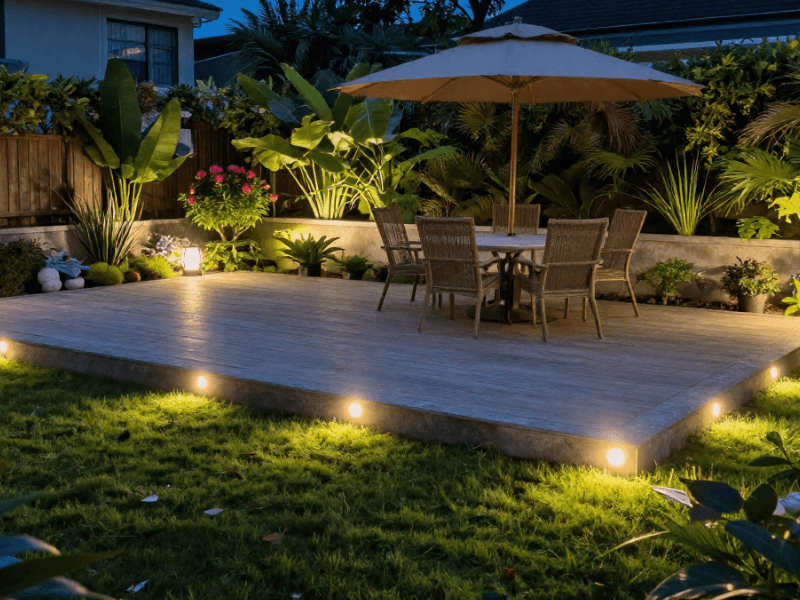
- LED strips under seating or ledges
- Ground lights for depth
The aim is to have warmth and comfort. Not lighting that makes guests feel like they are on stage.
Balance is key. You need enough light to see, but the glow must be soft enough to relax.
Get this right, and your patio will become the place everyone wants to hang out. Even when it is a bit chilly.

Choosing the Right Garden Wall Lights (UK Guide)
Picking wall lights isn’t just about looks. The wrong choice will annoy you every evening. The right one just works.
IP Ratings and Weatherproofing
Always start with this part. You won’t like it if your lights die after getting wet.
- IP44 is fine for sheltered walls
- For exposed areas, get IP65 or higher
The UK weather is unpredictable. Rain, frost, and damp usually show up uninvited. Your lights need to handle it all.
Ignore IP ratings, and you’ll end up replacing fittings sooner than you think. It’s not fun, and it definitely ain’t cheap.
Brightness and Beam Angles
Brightness is measured in lumens. And more is not always better.
- Low lumens offer soft, ambient lighting
- High lumens deliver clear, functional lighting
Additionally, beam angle controls how the light spreads.
- Narrow beam produces sharp highlights
- Wide beam gives you gentle coverage
Choose based on purpose. Lighting a path? Go wider. Highlighting a wall? Go narrower. Guessing leads to glare.
Colour Temperature and Mood
Light colour can change the whole feel of your garden.
- Warm white is cosy, relaxed, and inviting
- Cool white is bright, crisp, and modern
Most gardens look better with warm white. It just feels so natural and comfortable!
Cool white has its place. Security areas, maybe. For relaxing? Not so much! It can feel a bit like a supermarket aisle.
Power Options: Mains vs Solar
Now time for some practical decision-making.
On one side, you have mains-powered lights:
- Consistent brightness
- Reliable all year
- Needs proper installation
On the other corner are solar lights:
- Easy to install
- No wiring needed
- Depends on sunlight
Solar works well in summer. But they tend to struggle during the winter season. The UK is not exactly famous for endless sunshine.
If you want reliability, go mains. If you want convenience, go solar. Just keep your expectations realistic.
Get these basics right, and everything else becomes easier. Get them wrong, and the results will tell. Every single evening.
Installation Tips for Garden Wall Lighting
This is where many plans fall apart. Because no matter how good your lights are, they’ll still look bad if improperly installed.
Positioning and Spacing
Spacing matters more than you think.
- Keep lights evenly spaced for a clean look
- Install around eye level or slightly above
- Align with doors, windows, or features
Random placement looks, well, random. But not in a good way.
Wiring and Safety Considerations
Use outdoor-rated fittings. Always.
Make sure that the cables, connectors, and seals are suitable for outdoor use. Water will find any weakness. It always does.
And always follow UK safety standards. If you’re unfamiliar with those, hire a professional. Saving money is great. Making electrical mistakes is not.
Testing and Adjustments
Don’t always rely on daylight. It sometimes lies to you.
Turn your lights on at night and check:
- Glare
- Dark patches
- Uneven spread
Adjust the angles and positions until you achieve the right tempo. You’d be amazed at how much difference a small tweak could make.
Take your time with installation. Rushing this step could lead you to reinstall everything later. And you wouldn’t want to try that in worse weather.
Maintenance Tips for Long-Lasting Outdoor Wall Lights
Outdoor lights aren’t “set and forget”. They live outside, things get dirty, and crappy weather happens.
Keep Them Clean (Yes, Really)
Dirt builds up fast. Dust, rain marks, and the occasional mystery grime can ruin your lights.
- Wipe fixtures every few months
- Clean lenses to keep brightness up
A dirty light is a dim light. Simple as that!
Check Seals and Fittings
Water loves weak spots. Give it one opening, and it will surge in.
- Inspect seals once a year
- Tighten loose fittings
- Look for cracks or wear
Catch issues early. It’s cheaper than replacing the whole unit later.
Replace Bulbs or LEDs When Needed
Even the best lights don’t last forever. Yes, that includes LEDs.
- Swap out dim or flickering bulbs
- Match the original brightness and colour
Mixing random bulbs leads to uneven lighting. It will bother you more than you think.
Prepare for UK Weather
Remember House Stark’s words: Winter is Coming. And when it does, the real test for your lights begins.
- Check fittings before cold weather hits
- Clear leaves and debris around fixtures
- Watch for moisture build-up
Rain, frost, and damp are relentless. Your lights need to be ready.
A little maintenance goes a long way. Ignore it, and your “beautiful lighting setup” slowly turns into a patchy, flickering mess.
FAQs
What is the best height for garden wall lights?
Around 1.6 to 1.8 metres works well. That is roughly eye level. It gives a good spread without glare. Too high and you lose impact. Too low and it will look unfortunate.
Are wall lights enough to light a whole garden?
No. They’re part of the plan, not the whole plan.
Wall lights handle structure and mood. You’ll still need spike or ground lights for full coverage. Otherwise, expect random dark patches and mild frustration.
Can I mix wall lights with spike or strip lighting?
Yes, you should. This is layered lighting doing its job.
Wall lights set the base. Spike lights highlight plants. Strip lights add a soft glow. Together, it looks designed. Not like you gave up halfway.
What IP rating is best for UK outdoor walls?
Get at least IP44 for sheltered spots. Go for IP65 or higher for exposed areas.
The UK is not known for gentle weather. Your lights need to cope with rain, damp, and the occasional dramatic downpour.

Wall You Waiting For? Light Up Your Garden Properly!
Good garden lighting isn’t about throwing light everywhere and hoping for the best. It’s about balance. Wall lights add depth, guide movement, and make your space feel finished instead of half-assed.
Layer your lighting. Mix function with style. Avoid the “one bright light solves everything” approach. It never does.
Get it right, and your garden works day and night. Get it wrong, and it just looks confused.
Ready to upgrade? Explore Simple Lighting’s garden wall lights and build a setup that actually looks intentional.
And for other garden lighting insights, read more here: The Complete Guide to Garden Lighting.


0 comments