


Are your outdoor lights switched on, but something still isn't right? Perhaps your floodlight blinds visitors, your garden path has dark patches, or your solar lights give up before bedtime? These problems don't always mean you've bought the wrong lights. Poor positioning, unsuitable brightness, and overlooked weather conditions can all affect how your outdoor lighting performs.
Luckily, you might not need to replace anything. Adjusting a fitting or changing its settings can surprisingly make a difference. The trick is identifying what's wrong before spending more money. Here are eight common outdoor lighting mistakes, how to recognise them, and what you can do to fix them:
1. Your Outdoor Lights Cause Glare Instead of Improving Visibility
You intended to install a powerful light to make your entrance safer. Instead, anyone approaching your door gets an unwanted spotlight treatment. Glare happens when excessive light reaches your eyes, making nearby areas harder to see. It can also make surrounding shadows appear darker.
Signs Your Outdoor Light Is Too Harsh
Stand where visitors normally approach your entrance. If you need to squint or look away, your light is probably poorly positioned. Check whether the bulb or LED remains directly visible from nearby paths. Also look for beams reaching neighbouring windows or reflecting off shiny surfaces.
Another warning sign is when areas beyond the brightest light become difficult to see. Your eyes struggle to adjust between extreme brightness and darkness.
Redirect the Light Before Replacing It
Start by adjusting the fitting's direction, if the manufacturer permits it. Aim the beam toward the ground or the specific area that needs illumination. Consider shielded or downward-facing wall lights if glare remains a problem. These can illuminate entrances and paths without shining directly into people's eyes.
When replacing fittings, check the beam angle, lumen output, and mounting position. A correctly positioned lower-output light may provide better visibility than a powerful floodlight.
2. Your Garden Has Bright Spots and Dark Gaps
Your patio looks beautifully illuminated. However, the steps leading towards it seem determined to remain a mystery. Uneven lighting leaves some areas too bright and others too dark. This becomes particularly troublesome around steps, narrow paths and changes in ground level.
Find the Gaps Before Adding More Lights
Walk along your usual garden routes after dark. Notice exactly where you struggle to see edges, obstacles, or changes in level. Check whether walls, tall plants, or furniture block existing beams. One obstacle could cast a surprisingly large shadow.
Light spacing also matters, though there's no universal distance between outdoor fittings. Their beam spread, mounting height, and surroundings determine how effectively they cover an area.
Improve Coverage Where It Matters
Start with routes you use regularly, particularly entrances and steps. Adjust existing fittings where possible before deciding whether you need additional lights. Path lights can define walkways, while step lights highlight changes in level. Wall lights work well near entrances where you need visibility without excessive brightness.
Avoid relying on one central floodlight for everything. Several carefully positioned lights can provide more useful coverage across key areas. The goal isn't to eliminate every shadow in your garden. It's to make sure you can move around comfortably and spot potential hazards.
3. Your Outdoor Lighting Looks Flat or Uninviting at Night
Your entire garden is illuminated, yet it somehow feels lifeless. Everything looks equally bright, from your favourite plants to the bins beside your fence. This often happens when one powerful fitting provides most of the light. Without brightness differences, your garden loses depth and visual interest.
Check Whether One Light Is Overpowering Everything
Switch off your brightest outdoor fitting and examine what's left. If the space suddenly feels more comfortable, that light may be washing out nearby features. Look at your trees, planting, walls, and seating areas individually. You might discover that attractive details disappear because the lighting doesn't distinguish them.
Give Different Areas Different Jobs
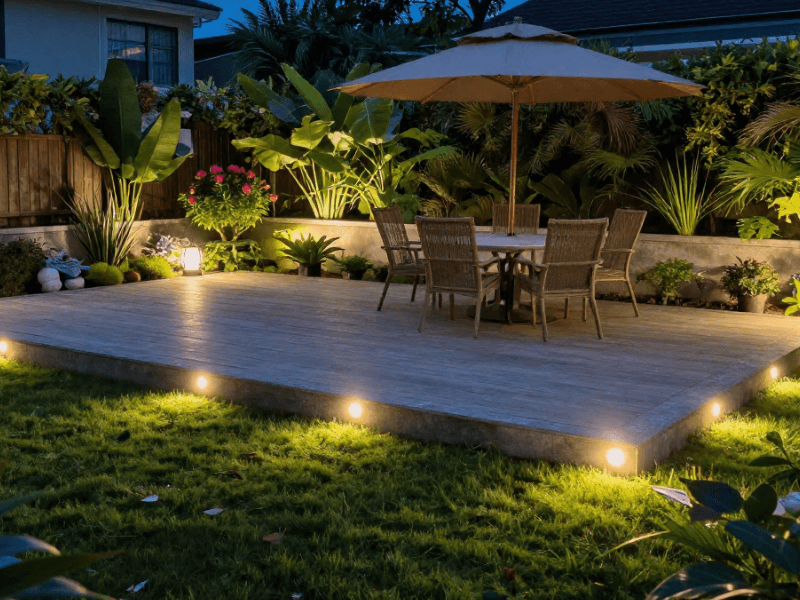
Your garden needs a balance of practical, accent, and decorative lighting. Each type serves a different purpose, so not everything needs the same brightness. Use functional lights around entrances, paths, and steps. Add accent lighting to selected features, then softer decorative lighting around seating areas.
For example, adjustable spike lights can highlight a tree or textured wall. Warm festoon lights can create a welcoming atmosphere above your patio. Explore our outdoor lighting ideas for your home and garden for more inspiration. Focus on combinations that suit how you actually use your outdoor space.
Remember: shadows aren't always the enemy. A little contrast can make your garden feel more inviting than uniform brightness.

4. Your Outdoor Lights Look Mismatched Once They're Switched On
Say you bought several attractive lights, each looking perfect on its own. But when you switched them on together, you discovered they had very different personalities! One produces a warm golden glow, while another looks almost blue. Your carefully planned garden suddenly resembles two unrelated lighting schemes.
Check the Colour Temperature
Colour temperature describes how warm or cool white light appears. It's measured in Kelvin, usually shown as K on product packaging. Warm white lighting around 2700K to 3000K often suits patios and decorative areas. Cooler white lighting suits practical spaces that need a crisper look.
Neither option is automatically better, but unplanned combinations can look awkward. Even products labelled warm white may appear slightly different between manufacturers.
Test Your Colours and Brightness Together
Compare neighbouring fittings after dark, preferably against the same wall or surface. This makes colour temperature differences easier to spot. Try keeping connected areas within a similar colour range. You can use different temperatures elsewhere when each serves a clear purpose.
Brightness needs attention, too! A powerful wall light can overpower several decorative fittings, even when their colours match. If adjustable settings are available, experiment before buying replacements. You might achieve a more balanced look by simply reducing the output of one fitting.
5. Your Outdoor Lights Fail or Deteriorate After Bad Weather
Your garden lights worked beautifully until the first serious downpour. Now one flickers, another has moisture inside, and the third has apparently retired early. Weather-related problems often result from unsuitable fittings, installation issues, or damaged components. Choosing something labelled outdoor doesn't guarantee it suits every location.
Match the Fitting to Its Exposure
A sheltered porch experiences different conditions from an exposed garden wall. Ground-level lights may also encounter standing water and poor drainage. Consider how much rain, dust, and moisture each location receives. Check whether your chosen fitting is approved for that installation position.
Understand IP Ratings Before Buying
IP ratings describe an enclosure's protection against solid objects and water. The first digit covers solid-object protection, while the second describes water protection. For example, IP44 protects against small solid objects and splashing water. IP65 provides dust-tight protection and resistance to water jets.
IP67 offers protection against temporary immersion under specified conditions. However, it doesn't automatically make a fitting suitable for permanent underwater installation. Always check the manufacturer's instructions alongside the rating. Mounting requirements, drainage, and installation methods can affect long-term performance.
Check More Than Weather Resistance
Look for suitable materials, intact seals, and appropriate cable connections. A durable enclosure won't compensate for incorrect installation or damaged wiring. Visually inspect accessible fittings for deterioration without opening electrical components. If you notice flickering, water damage, or electrical faults, contact a qualified electrician.
6. Your Security Lights Don't Cover the Areas You Need
Your motion-sensor light activates whenever a cat crosses the driveway. Yet someone approaching your side gate can remain completely unnoticed. Effective security lighting depends on reliable detection and proper coverage. A powerful light isn't particularly helpful if it switches on too late.
Test Every Approach to Your Property
Walk towards entrances, gates, and driveways from different directions. Check when each sensor activates and whether the light illuminates the intended area. Some sensors detect movement across their coverage area more effectively than movement directly towards them. Detection patterns vary, so consult your product's instructions.
Also check for obstacles that might interrupt detection. Walls, fences, and large plants can prevent sensors from monitoring important routes.
Adjust the Sensor Before Adding More Lights
Check whether your sensor lets you adjust sensitivity, detection direction, and activation duration. Follow the manufacturer's instructions when adjusting these settings. If passing vehicles or moving branches trigger the light, review its detection area. You may be able to reduce unwanted activation without sacrificing useful coverage.
Consider daylight settings where available, too! These can prevent unnecessary activation when natural light is sufficient. Aim for useful illumination rather than maximum brightness everywhere. Your neighbours probably don't need your security light announcing every passing hedgehog.

7. Your Solar Lights Underperform After Sunset
Your solar lights look promising at sunset. By the time you've finished dinner, they've apparently clocked off. Solar lighting performance depends heavily on available daylight and battery condition. Even suitable fittings can struggle during darker months.
Find Out Why They're Losing Power
Check whether your solar panels get enough direct sunlight each day. Nearby trees, fences, and buildings may shade them. Seasonal changes matter because winter days provide fewer charging opportunities. Dirty panels and ageing batteries can further reduce performance.
Advertised operating times may also depend on favourable charging conditions. A gloomy winter afternoon won't necessarily produce the same results as a sunny summer day.
Improve Charging Before Replacing the Lights
Move adjustable panels towards sunnier locations where possible. Clean away dirt and leaves, then check the manufacturer's battery maintenance advice. Compare performance after sunny and cloudy days to identify charging limitations. If the lights remain unreliable, consider whether their output suits your needs.
Solar fittings can work well for decorative borders and occasional pathway lighting. However, frequently used steps and entrances may benefit from a more dependable power source.
8. You Choose Outdoor Lights Before Planning the Space
You've installed three wall lights, two spotlights, and a floodlight. Somehow, your garden steps remain dark while your flowerbed receives enough attention for a celebrity appearance. This often happens when you buy fittings before deciding what each area needs. Fortunately, you can improve your layout without starting from scratch.
Reassess How You Use Your Garden
Think about your regular activities after sunset. You might need clear visibility when unlocking doors, taking out the bins, or walking to your shed. List these practical requirements before considering decorative improvements. Prioritise safety-related areas over lighting ornamental features.
Next, identify existing fittings that already serve their purpose. You may only need to reposition a few lights or address specific gaps.
Review Positions, Power, and Controls
Sketch your garden and mark entrances, routes, seating areas, and existing lights. Identify areas with suitable coverage and those that need attention. Consider power supplies before planning major changes. Mains-powered installations may require professional electrical work and suitable outdoor connections.
Choose controls according to each area's purpose. Motion sensors suit many entrances, while timers can manage decorative patio lighting. Our outdoor garden lighting guide offers broader advice on positioning, safety, and suitable fittings. You can also explore our complete garden lighting guide when planning more extensive improvements.
Make Changes Gradually
Fix the most important visibility problems first. Then assess the results after dark before purchasing anything else. This helps you avoid unnecessary replacements and expensive layout changes. It also ensures each new fitting solves a genuine problem.
How to Audit Your Outdoor Lighting in 15 Minutes
You don't need specialist equipment to identify many outdoor lighting problems. A short evening walkthrough can reveal where your current setup needs attention. Turn on your existing lights and grab your phone to take notes. Divide your inspection into three simple five-minute checks.
First 5 Minutes: Check Visibility
Walk from your entrance towards your paths, patio, driveway, and steps. Note anywhere you struggle to see obstacles or changes in level. Look out for shadows cast by planting, furniture, and garden walls. Identify the locations where better coverage would improve everyday use.
Next 5 Minutes: Check Comfort and Appearance
Look for lights shining directly into your eyes or neighbouring windows. Check whether some areas are excessively bright while others feel uninviting. Compare neighbouring fittings for differences in colour and brightness. Consider whether adjusting an existing light could improve the overall appearance.
Final 5 Minutes: Check Performance
Test motion sensors from the routes people normally approach. Check solar performance and visually inspect accessible fittings for obvious deterioration. Don't dismantle faulty equipment or investigate damaged wiring yourself. Ask a qualified electrician to assess electrical problems or unsafe installations.
Finally, identify your three biggest concerns and prioritise practical fixes. You now have a useful starting point instead of another shopping list.
Find Outdoor Lighting That Works for Your Space
Sometimes, adjusting existing fittings is enough to solve your lighting problems. Other situations call for replacements better suited to your location or intended purpose. Dark walkways may benefit from dedicated path lights, while entrances often need well-positioned wall lights. For decorative areas, consider spotlights, festoon lighting, or softer accent fittings.
Always consider beam direction, brightness, colour temperature, and weather exposure before choosing replacements. The right product should solve a specific problem, not just add more light. Explore Simple Lighting's range of outdoor lights for your garden to find suitable options. You can also try some of our garden lighting ideas for every season.

Get Better Results From Your Outdoor Lighting
Good outdoor lighting isn't about installing the brightest fittings or filling every corner with light. It's about creating useful visibility, comfortable surroundings, and a balanced appearance. Start by identifying your biggest problem, then try practical adjustments before buying replacements. Small changes to positioning, brightness, or controls can often make a noticeable difference.
When you need new fittings, choose ones suited to the job and location. You'll create a garden that's easier to use and more enjoyable after dark.


0 comments