
LED Downlights
Shop LED downlights for home and commercial projects. Compare GU10 fittings with replaceable lamps, integrated LED models, fixed and adjustable designs, and options with verified fire and IP ratings.
Start with the ceiling cut-out and available depth, then choose light output, colour temperature and controls to suit the room. Check each product's included components and installation requirements.
Filters
Sort Featured
-
 In Stock
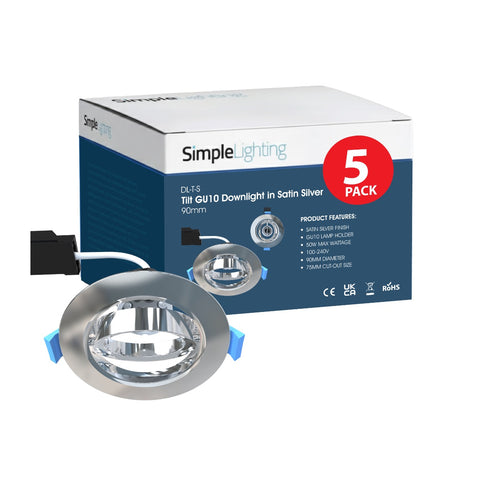
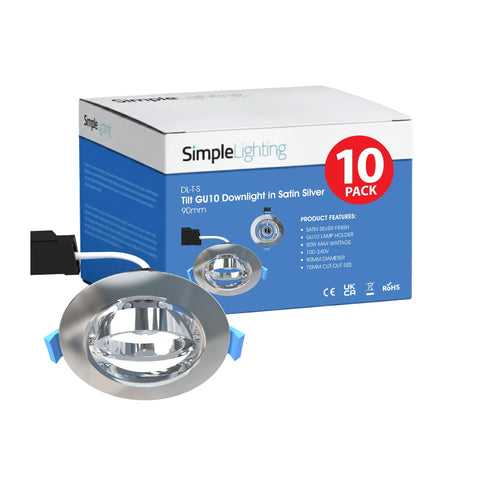
Pack of 5 Tilt GU10 Downlights in Satin Silver - 90mm
£10.55 Was £13.75INC VAT -
 In Stock
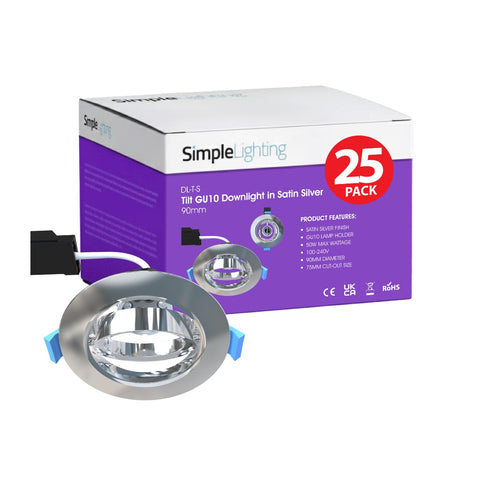
Pack of 10 Tilt GU10 Downlights in Satin Silver - 90mm
£21.09 Was £27.50INC VAT -
 In Stock
Pack of 25 Tilt GU10 Downlights in Satin Silver - 90mm
£52.79 Was £68.75INC VAT -
 In Stock
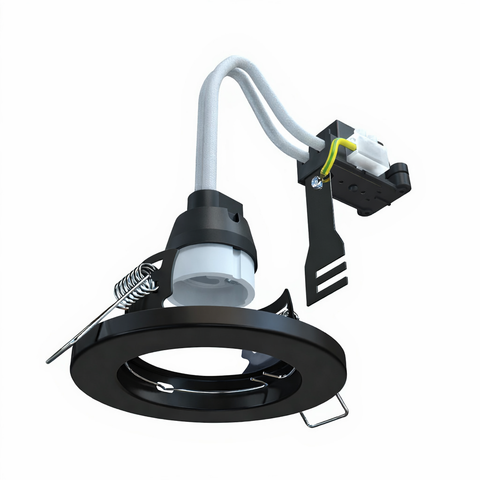
Fixed IP20 GU10 Downlight in Matt Black - 80mm
£2.09 Was £2.75INC VAT -
 In Stock
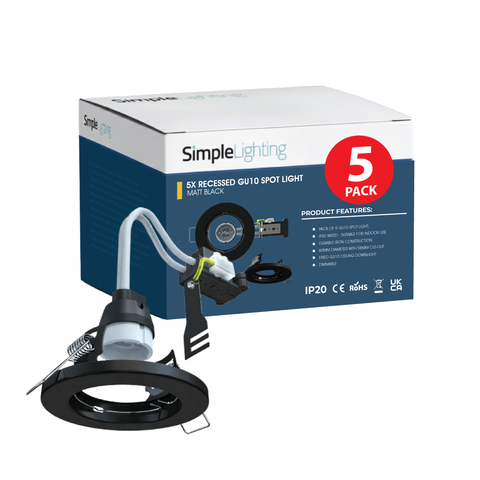
Pack of 5 Fixed GU10 Downlights Matt Black 80mm
£10.55 Was £13.75INC VAT -
 In Stock
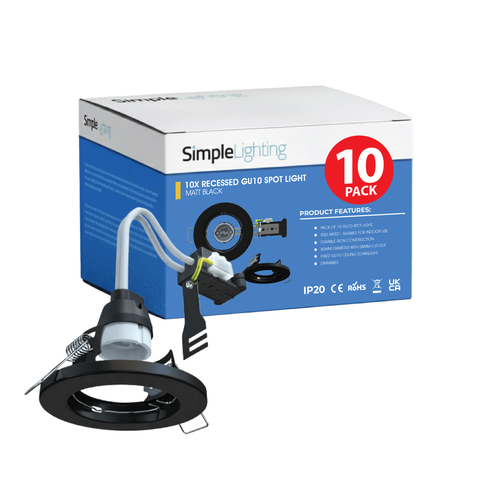
Pack of 10 Fixed GU10 Downlights Matt Black 80mm
£21.09 Was £27.50INC VAT -
 In Stock
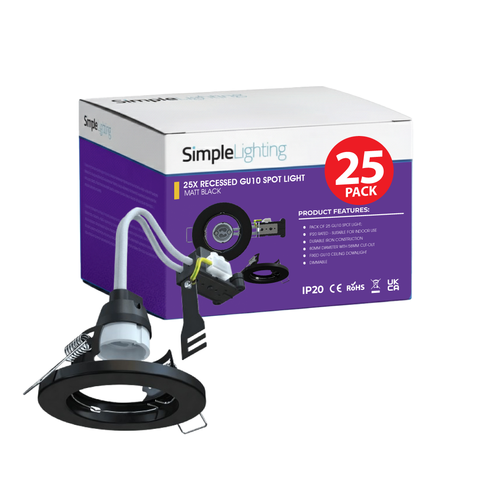
Pack of 25 Fixed GU10 Downlights Matt Black 80mm
£52.79 Was £68.75INC VAT -
 In Stock
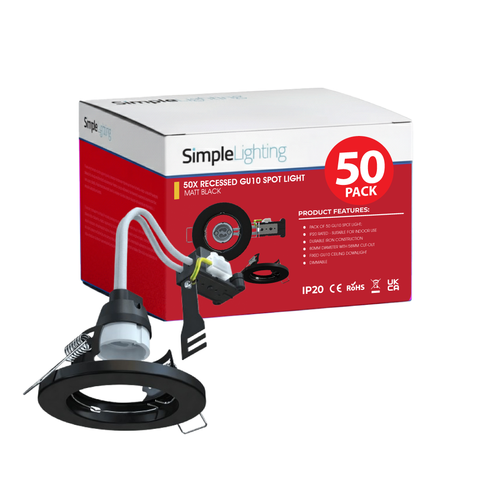
Pack of 50 Fixed GU10 Downlights Matt Black 80mm
£105.59 Was £137.50INC VAT -
 In Stock
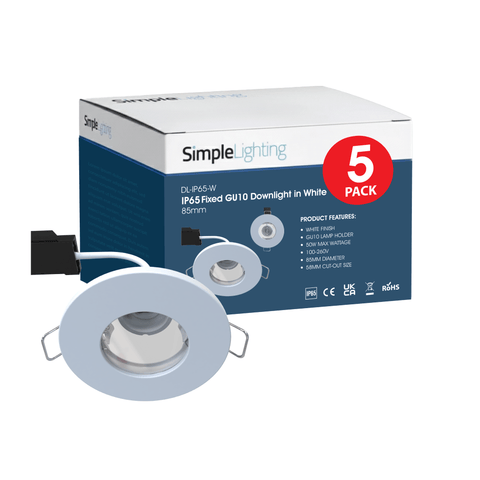
Pack of 5 Fixed IP65 GU10 Downlights in White - 85mm
£18.79 Was £23.75INC VAT -
 In Stock
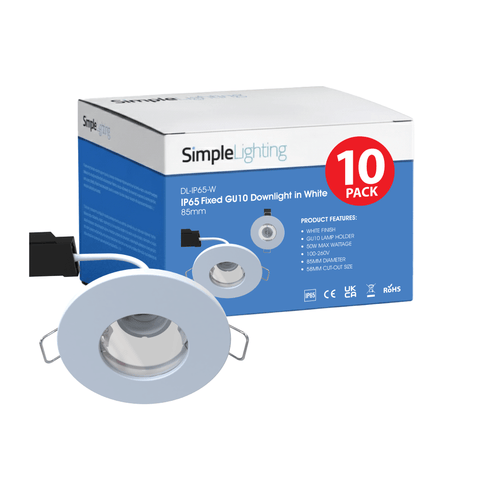
Pack of 10 Fixed IP65 GU10 Downlights in White - 85mm
£37.59 Was £47.50INC VAT -
 In Stock
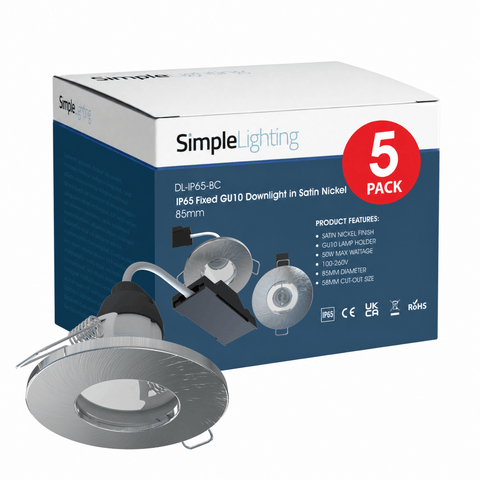
Pack of 5 Fixed IP65 GU10 Downlights in Satin Nickel - 85mm
£18.79 Was £23.75INC VAT -
 In Stock
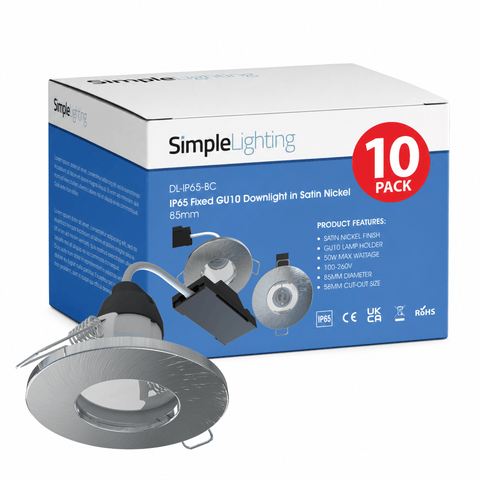
Pack of 10 Fixed IP65 GU10 Downlights in Satin Nickel - 85mm
£37.59 Was £47.50INC VAT -
 In Stock
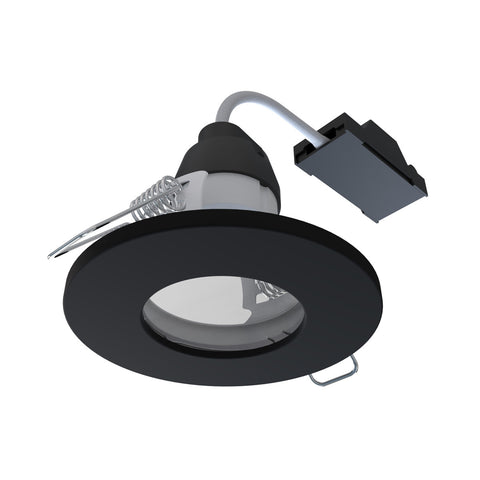
IP65 Fixed GU10 Downlight in Matt Black - 85mm
£3.75 Was £4.75INC VAT -
 In Stock
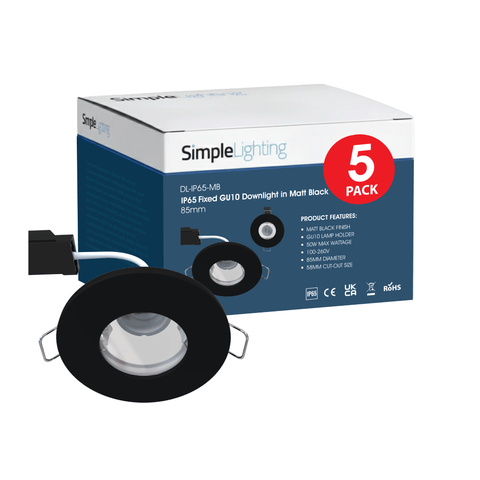
Pack of 5 Fixed IP65 GU10 Downlight in Matt Black - 85mm
£18.79 Was £23.75INC VAT -
 In Stock
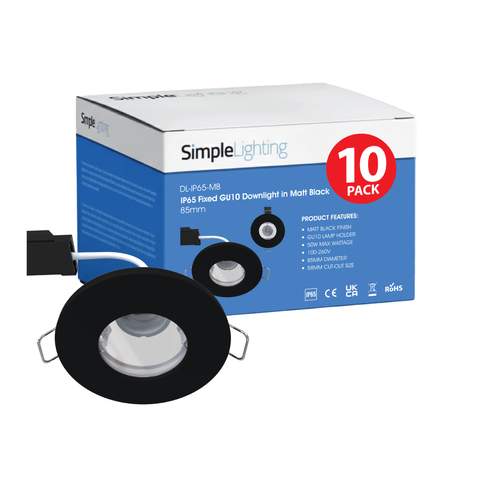
Pack of 10 Fixed IP65 GU10 Downlight in Matt Black - 85mm
£37.59 Was £47.50INC VAT
Frequently Asked Questions
How do I choose between GU10 and integrated LED downlights?
GU10 fittings use separate replaceable bulbs. Integrated LEDs have the source built in; their servicing options depend on the model. Compare dimensions, light output, controls, total cost and manufacturer replacement information.
What IP rating do I need for bathroom downlights?
The required protection depends on the exact bathroom location and exposure to water. Ask your electrician to confirm the zone and complete fitting suitability. IP65 is not a universal minimum for every bathroom light, and an IP rating is not a complete installation approval.
How many LED downlights do I need per room?
Use room dimensions, ceiling height, lumens, beam angle and task positions to plan coverage. Furniture and other lights matter too. Avoid choosing a fixed quantity or spacing without a lighting plan.
Can I replace halogen downlights with LED downlights?
Often, but check whether you are replacing a lamp or a complete fitting. Match the base, voltage, dimensions, permitted lamp type and any dimmer or transformer requirements. Use an electrician for mains wiring or fitting changes.
What's the difference between warm white and cool white downlights?
Compare Kelvin values rather than colour names alone. Around 2700–3000K looks warmer; around 4000K is more neutral; higher values look cooler. Choose the appearance you prefer and suitable light output for the task.
Do LED downlights need transformers or drivers?
Check the specific product. Mains-rated GU10 LED lamps have their own electronics; integrated fittings may use an internal or separate driver. Low-voltage systems need the specified compatible supply. Do not substitute a transformer or driver solely because its wattage looks suitable.
Are LED downlights dimmable?
Only models specified as dimmable, used with compatible controls. GU10 fittings need dimmable lamps; integrated models need a compatible dimmable driver/control arrangement. Check total load and any manufacturer compatibility list.
How long do LED downlights last?
Rated lifespan varies by model and is different from warranty. Heat, daily use and installation conditions affect service life. Check the chosen product rather than relying on a blanket hours or years claim.