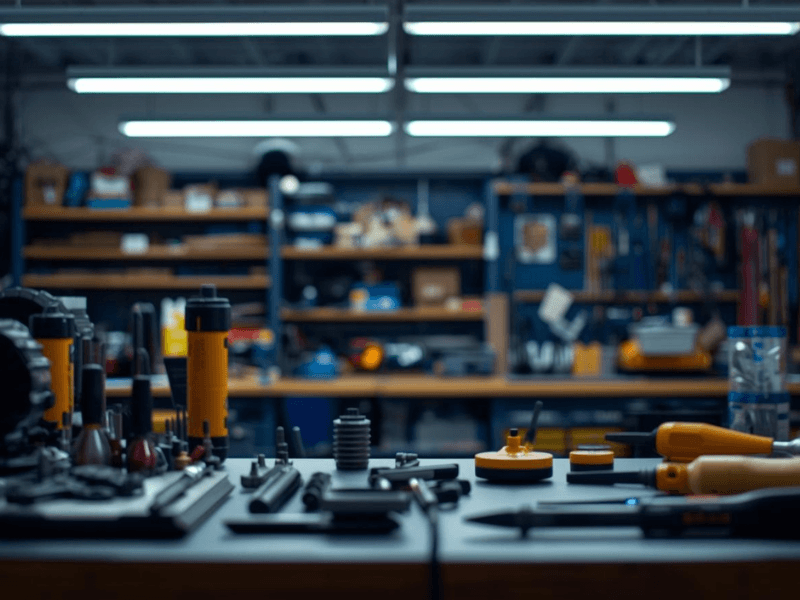

Professional-looking workshops aren't just about expensive tools. You could own a top-of-the-line table saw, a wall full of shiny toolboxes, and enough power tools to make your neighbours nervous. But if your lighting is poor, the entire space will still feel unfinished.
Lighting affects how your workshop looks, feels, and functions. It influences safety, productivity, accuracy, and even motivation. A bright, well-lit workshop feels organised and inviting. A dim workshop feels cramped and chaotic, even when it is tidy.
The good news is that lighting is one of the easiest upgrades you can make!
Modern LED technology has transformed workshop lighting. Today's fixtures are brighter, more efficient, easier to install, and far more stylish than the fluorescent tubes many workshops still rely on.
Whether you have a garage workshop, a woodworking space, a detailing bay, or a hobby room, the right lighting can help you work better while making your workshop look far more professional.
Let's look at the lighting ideas that can transform your space.
Why Workshop Lighting Matters More Than Most People Realise
Many workshop upgrades focus on tools, storage, or flooring. Lighting often gets pushed down the list.
A mistake because it actually affects almost everything you do.
Better Visibility
The most obvious benefit. You need to see clearly when you're measuring, cutting, drilling, assembling, painting, or inspecting.
Poor lighting forces your eyes to work harder. It becomes difficult to spot small details, read measurements, or identify imperfections.
Good lighting removes those obstacles.
Improved Accuracy
Small mistakes often happen because details are hidden in shadows. A measurement can be misread, a cut line can become difficult to follow, and a surface defect can go unnoticed until the project is finished.
Proper lighting helps you catch problems early.
Increased Safety
Workshops contain plenty of potential hazards. Sharp tools, rotating blades, power cables, chemicals, and heavy equipment all require good visibility.
Dark corners and poorly lit work surfaces increase risk. A brighter workshop helps you move confidently and work safely.
Higher Productivity
Nobody enjoys working in a gloomy room. Bright, consistent lighting creates a more pleasant environment.
You'll stay focused for longer and complete tasks more efficiently. Even simple jobs often feel easier when the lighting is right.
A More Professional Appearance
Lighting changes how a room feels. Bright, even illumination creates a clean and organised look. Dark areas make a workshop feel cluttered, even when it's actually tidy.
Many professional workshops achieve their appearance through good lighting rather than expensive renovations.
What Makes a Workshop Look Professional?
Professional workshops often share the same visual characteristics. Interestingly, those characteristics have less to do with the tools and more to do with the environment.
Bright, Even Illumination
One of the most glaring differences between an amateur and a professional workshop is lighting consistency. Professionally designed spaces avoid bright hotspots and dark corners.
Light should be distributed evenly throughout the room. This makes the space feel larger, cleaner, and more organised.
Clean Ceiling Layouts
Ceiling lighting should look intentional. Random fixture placement creates visual clutter.
Simple rows of LED battens or carefully planned hexagon layouts instantly improve the appearance of a workshop. The ceiling becomes part of the design rather than an afterthought.
Defined Work Zones
Professional workshops usually separate different activities into dedicated areas. Examples include:
- Main work area
- Workbench area
- Vehicle inspection zone
- Storage area
- Finishing area
Lighting can help define these zones without adding walls or partitions.
Minimal Shadows
Shadows are one of the biggest enemies of workshop lighting. They hide details and make spaces feel darker than they are.
A professional lighting design aims to minimise shadows through careful fixture placement and layered lighting.
Consistent Colour Temperature
Mixing warm and cool lighting often creates an inconsistent appearance. One area may look yellow, while another may look blue.
Professional spaces typically use one colour temperature throughout the workshop. The result looks cleaner and more cohesive.

The Best Types of Workshop Lighting
Different lighting solutions serve different purposes. The best workshops often combine multiple fixture types to achieve balanced illumination.
LED Battens for Maximum Practical Brightness
If workshop lighting had a workhorse, it would be the LED batten. They're one of the most effective lighting solutions for garages and workshops.
Why LED Battens Work So Well
LED battens offer several advantages:
- High lumen output
- Wide light distribution
- Low energy consumption
- Long lifespan
- Minimal maintenance
They provide strong general illumination across large areas. And unlike older fluorescent fittings, LED battens deliver instant brightness and consistent performance.
Excellent Coverage
One reason LED battens remain popular is their ability to evenly distribute light. Their design helps reduce dark areas while covering a large portion of the room. This makes them ideal for workshops where visibility is critical.
Perfect for Utility Spaces
LED battens work particularly well in:
- Garages
- Workshops
- Utility rooms
- Storage areas
- Commercial workspaces
They prioritise performance over decoration. In most workshops, that's exactly what you need.
Hexagon LED Lights for Modern Workshops
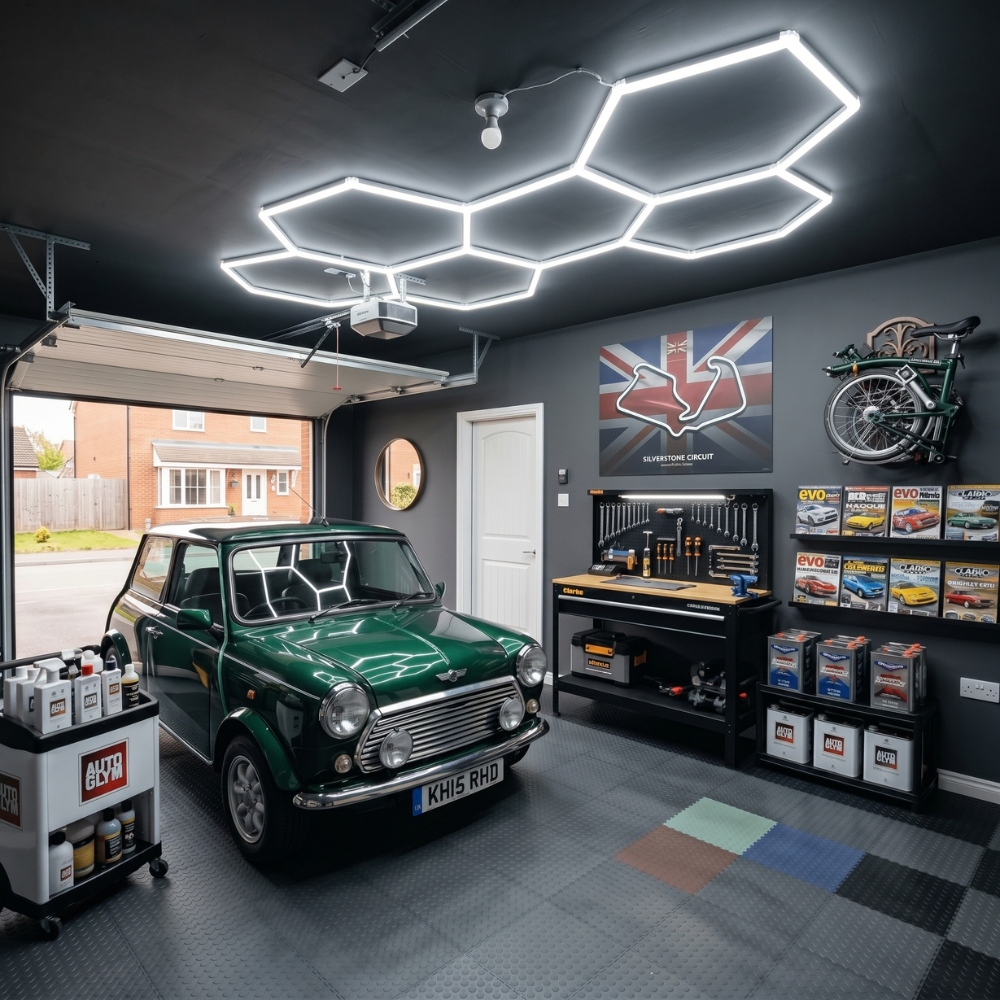
Hexagon LED lighting has become one of the biggest workshop trends in recent years. Originally popular in automotive detailing bays, these geometric lighting systems now appear in garages, creator studios, and premium workshops.
Why Hexagon Lighting Stands Out
Hexagon fixtures combine form and function. They provide excellent brightness while creating a striking visual feature.
Benefits include:
- Even light distribution
- Modern aesthetics
- Distinctive ceiling designs
- Premium appearance
The result feels far more high-end than traditional workshop lighting.
Ideal for Showcase Spaces
Hexagon lights are particularly popular in:
- Automotive workshops
- Detailing bays
- Content creation studios
- Home garages
- Showrooms
The lighting creates clean reflections across vehicle surfaces and polished equipment.
A Workshop Worth Showing Off
Let's face it: Nobody takes photos of old fluorescent tubes. Hexagon lighting instantly elevates a workshop's look and helps create a space you actually enjoy spending time in.
Task Lighting for Workbenches
General lighting is important. Task lighting is where the real work happens.
Why Task Lighting Matters
Many workshop activities require precision. Examples include:
- Measuring
- Electronics work
- Assembly
- Soldering
- Detailed repairs
Overhead lighting alone often creates shadows directly where you need visibility most.
The Benefits of Dedicated Task Lighting
Task lights help:
- Improve accuracy
- Reduce eye strain
- Increase visibility
- Minimise shadows
Adjustable fixtures are particularly useful because you can direct light exactly where it's needed.
LED Strip Lights for Shelving and Storage Areas
Storage often receives little attention during lighting design. That can be a mistake.
Poorly lit storage areas waste time and make organisation more difficult.
Practical Applications
LED strip lights work well for:
- Under-shelf lighting
- Tool walls
- Cabinets
- Storage racks
- Drawers
They improve visibility without occupying valuable workspace.
Functional and Attractive
LED strips serve both practical and decorative purposes. They make tools easier to find while adding depth and visual interest to the workshop.
Sometimes, the difference between a good workshop and a great workshop is being able to find the right screwdriver immediately.

Workshop Lighting Ideas for Different Types of Spaces
Every workshop has different requirements. The best lighting solution depends on how you use the space.
Garage Workshops
Garage workshops are often multi-purpose spaces. One day you're changing brake pads, the next you're building shelves. Flexibility clearly matters.
A strong garage lighting setup often includes:
- LED battens for general illumination
- Task lighting at workstations
- LED strips for storage
- Smart controls for convenience
Cool white lighting usually works best because it improves visibility and creates a clean appearance. And for a more premium look, many homeowners now add hexagon ceiling layouts. These provide excellent brightness while transforming the overall aesthetic.
Woodworking Workshops
Woodworking requires accuracy; small mistakes can ruin hours of work.
Good lighting helps reveal grain patterns, cut lines, and surface imperfections. Key priorities include:
- Reducing shadows
- Maximising visibility
- Improving colour accuracy
- Creating even illumination
Fixtures should be positioned carefully around machinery and workbenches. Task lighting is especially valuable near assembly and finishing stations. Dust-resistant fixtures are also worth considering in environments where sawdust is common.
Automotive Workshops
Automotive work presents unique lighting challenges. Vehicle surfaces reveal imperfections through reflections. Poor lighting makes it harder to identify scratches, dents, and paint defects.
Effective automotive lighting typically includes:
- Bright ceiling lighting
- Side lighting
- Inspection lighting
- Detailing lights
This is one reason hexagon lighting has become so popular. The geometric patterns create clear reflections across body panels, making flaws easier to spot.
The result is both practical and visually impressive.
DIY Hobby Workshops
Not every workshop occupies a large garage. Many hobby spaces are created in spare rooms, sheds, or compact corners.
Fortunately, modern LED lighting works well in smaller environments. Useful options include:
- Slim LED battens
- Compact task lights
- LED strips
- Smart controls
Even modest spaces can feel professional with a well-planned lighting design.
The Best Colour Temperature for Workshop Lighting
Colour temperature affects both appearance and functionality. Choosing the right option can significantly improve your workshop experience.
Cool White for Visibility and Focus
Cool white lighting is the most common choice for workshops. It generally falls between 4000K and 6500K.
Why Cool White Works
Cool white LEDs tend to:
- Feel brighter
- Improve concentration
- Enhance visibility
- Reveal details more clearly
This makes them ideal for task-focused environments.
Best Applications
Cool white works particularly well in:
- Garages
- Workshops
- Automotive spaces
- Detailing bays
- Woodworking areas
If productivity is your main goal, cool white is usually the best option.
Warm White for Multi-Use Workshop Spaces
Some workshops double as leisure areas. Perhaps your garage includes a seating area or social space.
Warm white lighting creates a more relaxed atmosphere. It feels softer and more comfortable during downtime.
While it may not offer the same crisp visibility as cool white lighting, it can work well in mixed-use environments.

How to Create a Clean, High-End Workshop Aesthetic
Modern workshops are becoming more design-focused. Many people now want a space that looks impressive as well as functional.
Use Symmetrical Lighting Layouts
Symmetry creates order. A balanced lighting layout immediately feels more professional. Fixtures should align with the room's architecture whenever possible.
Keep Storage Organised
Lighting highlights everything, including the mess. Well-organised storage systems help reinforce the clean appearance created by good lighting.
Hide Cables
Visible cables can undermine an otherwise premium workshop. Simple cable management solutions create a cleaner finish.
Choose Reflective Surfaces
Light-coloured walls and reflective flooring help maximise brightness. They allow light to bounce throughout the room, improving overall illumination.
Add Accent Lighting Carefully
RGB lighting can work well when used sparingly. A subtle glow behind shelving or display areas adds personality without becoming distracting. The goal is a workshop, not a nightclub.
Smart Lighting Features for Workshops
Smart lighting is no longer limited to living rooms and kitchens. Workshops are increasingly adopting smart technology, too.
Motion Sensors
Motion sensors provide hands-free convenience. They work particularly well in:
- Entry areas
- Storage rooms
- Utility spaces
Lights switch on automatically when needed.
Smart Switches
Smart switches allow you to control lighting through:
- Smartphones
- Voice assistants
- Automation systems
This adds convenience and flexibility.
Zoned Lighting Systems
Not every area requires full brightness all the time. Zoned lighting allows different sections of the workshop to operate independently. This can improve efficiency, not to mention reduce your energy consumption.
Lighting Modes
Many workshop owners create custom settings, such as:
- Work Mode - Maximum brightness across all fixtures
- Cleaning Mode - Full-room illumination to highlight dust and debris
- Ambient Mode - Reduced lighting for relaxation or casual us
Common Workshop Lighting Mistakes
Even expensive lighting systems can perform poorly if planned incorrectly. Avoid these common mistakes:
Not Installing Enough Brightness
Many workshops simply lack sufficient light output. The room may feel dim despite having multiple fixtures. Always consider total lumen output rather than fixture quantity alone.
Uneven Lighting Layouts
Fixtures concentrated in one area create bright spots and dark corners. Spread lighting evenly throughout the room.
Relying on One Light Source
A single lighting layer rarely performs well. Combining general, task, and accent lighting creates better results.
Ignoring Workbench Lighting
Workbenches need dedicated illumination. Overhead lighting alone is often insufficient.
Mixing Colour Temperatures
Different colour temperatures create visual inconsistency. Choose a lighting colour and maintain it throughout the workshop.
Forgetting Storage Areas
Storage zones deserve proper lighting, too. Finding tools quickly improves efficiency and reduces frustration.
How to Upgrade Your Workshop Lighting Without a Full Renovation
Many lighting improvements can be completed quickly. You don't need to rebuild the workshop.
Replace Old Fixtures
Swapping outdated fluorescent fittings for LED battens often delivers the biggest improvement. The difference in brightness can be dramatic.
Add Task Lighting
Targeted lighting upgrades provide excellent value. A well-lit workbench can completely change how a workshop functions.
Install LED Strip Lighting
Shelves, cabinets, and storage systems benefit greatly from additional illumination. The installation process is usually straightforward.
Introduce Smart Controls
Smart switches and automation systems add convenience without major disruption.
Think in Layers
The most professional workshops combine:
- General lighting
- Task lighting
- Accent lighting
This layered approach creates balanced illumination throughout the room.
Why Modern Workshop Lighting Is Becoming More Design-Focused
Workshops are evolving. They're no longer hidden spaces used only for repairs and storage. Today they serve as:
- Creator studios
- Automotive detailing bays
- Premium DIY spaces
- Smart home extensions
- Hobby workshops
As these spaces become more important, expectations increase.
People want workshops that look good and perform well. Modern LED lighting makes that possible.
A combination of LED battens, hexagon lighting, task lights, LED strips, and smart controls can completely transform a workshop. The result is better visibility, improved productivity, enhanced safety, and a far more professional appearance.

Upgrade Your Workshop with Simple Lighting
Whether you want practical brightness for everyday projects or a premium workshop transformation, Simple Lighting has everything you need.
From powerful LED battens and stylish hexagon lighting systems to versatile LED strips and smart controls, you'll find solutions designed to make workshop upgrades simple.
Explore our range today and create a workshop that looks professional, works harder, and feels like a space you actually want to spend time in.


0 comments