

Ever walked up the stairs and thought, “Gonna tumble down the stairs now!”?
No? No one does. And yet in the UK alone, every year, there are more than 200,000 people who are seriously injured from falling down the stairs. At the top of the list of causes? Poor lighting.
That’s right. Stairs become surprisingly different creatures after dark. During the day, they're a quiet, innocent part of the house. At night, they become a series of poorly defined edges and shadows.
Not good when you’re half-asleep and on autopilot, going down the stairs for a quick sip!
For families with young children, older relatives, or regular midnight kitchen invaders (we're not here to judge snack-related decisions), stair visibility is a top priority.
Strong overhead lights can work, but when you’re up in the middle of the night, and you don’t want to wake the whole household up (or get your eyes fried), harsh brightness can do you worse than good.
And that’s sometimes the challenge right there.
If you're wondering how to light stairs at night, the answer usually isn't more ceiling lights. It's smarter, lower-level lighting that helps you see where you're going without the blinding after-effect.
Why Dark Stairs Can Be a Problem
If you really think about it, any dark space in your home is a safety hazard. But even more so when it is your staircase. It’s one of the few places in your home where a small mistake can quickly become a painful one. Worse, a dangerous one.
If you’ve ever tumbled down the stairs at night before (wouldn’t recommend), then you already learned an important lesson: depth perception changes when it’s dark. Shadows hide edges. The top and bottom steps blend into the surrounding floor.
Even in familiar homes, people can misjudge a tread when visibility is poor.
That's why many homeowners look for a dedicated stair night light solution rather than relying solely on existing room lighting. So, the goal here isn't to make the staircase bright enough to read a book. It's simply to make every step clearly visible.
Good stair lighting is a practical upgrade that can help you:
-
See the edge of each step clearly
-
Reduce trips and falls in low-light conditions
-
Navigate safely without turning on bright overhead lights
-
Improve confidence when using stairs at night
-
Create a more welcoming atmosphere throughout the home (this is a bonus)
Low-Level Lighting That Doesn't Dazzle
This might come as a surprise, but the solution to dark stairs is not to flood them with super bright lights.
We all know the feeling. You switch on a powerful light in the middle of the night, and suddenly it’s like you’re being beamed up by an alien spaceship.
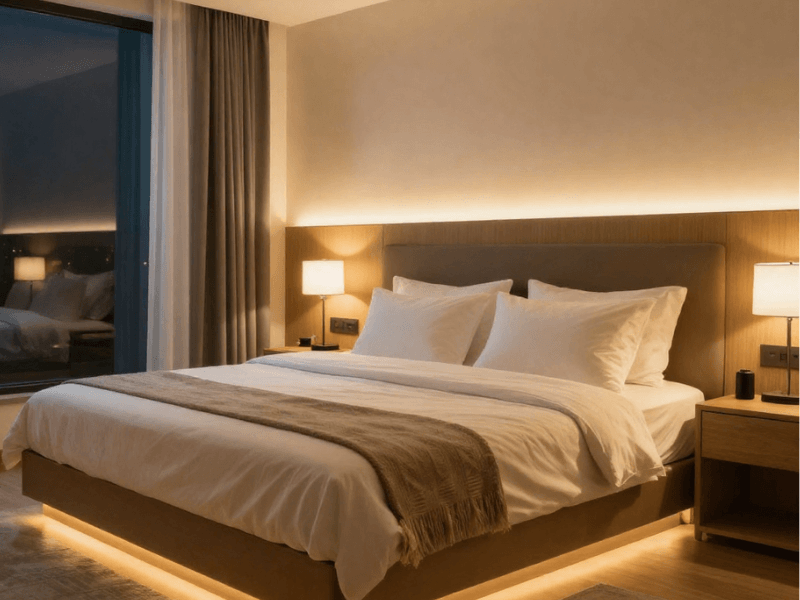
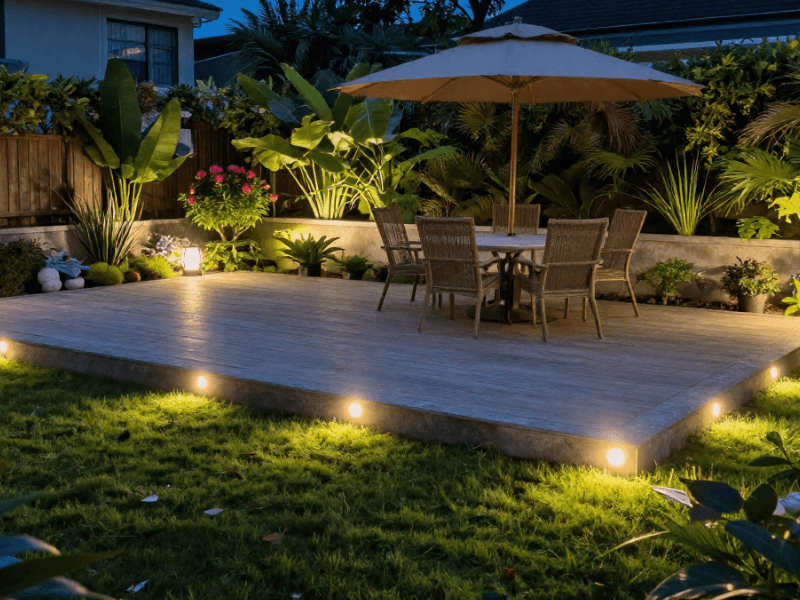
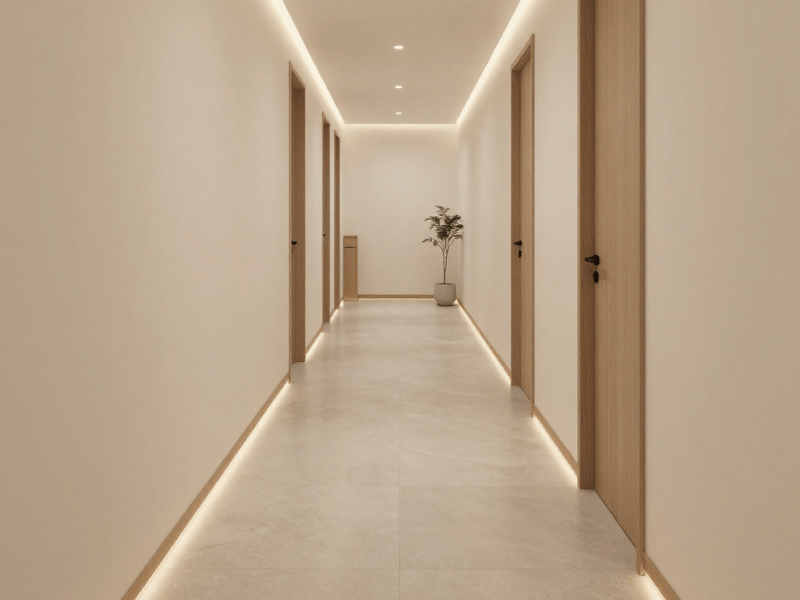
That’s why for stair lighting, you don’t need to shine light down. Dedicated step lights are exactly what they sound like: they’re lights on each step of your stairs. This creates a gentle glow that highlights the walking surface without burning your eyeballs.
A particularly clean approach is using a light bar on each tread or riser. The effect is simple: every step becomes easier to see, but the space still feels calm and comfortable.
How to Light Up Dark Stairs Without Creating Glare
Brighter equals safer. Sounds correct, doesn’t it? But in reality, it’s a false assumption that most people make.
Here’s the reality: Excessive brightness can create glare. This makes it harder for your eyes to adjust when moving from a dark space to an illuminated area. Remember the “beam up” analogy from earlier?
So, no. Overly bright light is not the solution for illuminating your stairs. A better approach is consistent lighting across the staircase.
When every step is gently highlighted, your eyes can naturally follow the route without sudden changes in brightness. Your eyes don’t need to constantly adjust to the lighting levels. That’s what a comfortable staircase experience is.
That’s why proper stair lighting installation is crucial for any setup.

Hands-Free Lighting with Motion Sensors
You say you want a touch of luxury for your home, but have you ever even Googled “motion sensor night lights for stairs” yet? Because I’m telling you, an illuminated staircase is one thing. But a staircase that automatically lights up as you approach it? That’s a luxury hotel level of sass!
Motion-activated sensors detect movement and switch the lights on as someone (or your cat) approaches. No searching for switches. No remembering to turn the lights off when you get to the landing. Your stair lights turn on and off on their own.
For households with children or older family members, this takes convenience and stair safety to a whole new level.
The lights remain off most of the time, and the motion sensor stair lighting only activates automatically when movement is detected.
Note: This automatic operation is managed by the stair lights controller, which you can add to your existing setup and is usually included in pre-made stair lighting kits.
A Simple Safe Setup for Most Homes
If you got into reading this post thinking that stair lighting installation is going to be complicated, I’m here to tell you right now that it’s the exact opposite.
In reality, modern systems are designed to be far more straightforward than many people expect. Many modern stair lighting ranges use plug-and-play rigid aluminium light bars. This means reduced installation complexity compared with building a custom setup from scratch.
Don’t let a random streamer or a YouTuber tell you that it’s not cool if you don’t make everything from scratch. Not all of us have the time to research and source compatible components. Sometimes it makes more sense to just get a pre-made setup.
There are ready-made options, such as the 8-step stair light kit, that can provide everything needed for a typical staircase setup. But if your staircase has an unusual layout or step count, you can instead build a kit for your staircase using Simple Lighting’s configurator.

Final Thoughts
The best stair lighting isn't necessarily the brightest. It doesn’t need to be.
It's the lighting that helps people move safely and comfortably through the home, especially at night.
Because when the options are: 1) playing Russian roulette with danger, and 2) having a clear, visible path every time you walk up to your stairs, the answer is obvious.
Frequently Asked Questions
How do you light stairs at night?
The most effective approach is low-level lighting positioned directly on or near the steps. This highlights each tread clearly without creating harsh glare.
What is the safest lighting for stairs?
Lighting that clearly defines each step while avoiding excessive brightness is generally the safest option. Dedicated stair lighting systems are a good first choice.
Should stair lights stay on all night?
Not necessarily. Many homeowners prefer motion-activated systems that illuminate only when needed. This provides visibility when someone uses the staircase without leaving lights on continuously.
Are motion sensor lights good for stairs at night?
Definitely yes. Motion sensor lighting allows the staircase to illuminate automatically as someone approaches it. No more hunting for the switch.
How do you stop stair lights from being too bright?
Focus on low-level illumination rather than maximum brightness. You only ever need to illuminate each step, so positioning the lights near them is enough to reduce glare.


0 comments