

What areas should you use uplights?
There are specific areas in your yard or garden that will look gorgeous with uplights. Trees, for example! When you light up a beautiful tree (those with barks that have exciting textures) with uplights, you can create unique shadows. The lights can illuminate the branches, leaves, and bark, leaving an ethereal glow that makes your garden extra magical! Aside from trees, you can also use your uplights with architectural columns. Don't hide the beauty of your home's façade in the dark. The best way to show them off even at night is by brightening them with some soft lights! When you illuminate your columns below, it will create more drama and fascinating shadows on the wall. In addition to trees and architectural columns, garden features are another perfect candidate to complement uplights. If you have a fountain, statues and sculptures, or exotic plants, adding lights beneath can create a dramatic flair to your garden. Who wouldn't want that?!
Uplighting with ground lights or wall lights versus directional uplights!
When it comes to uplights, there are three kinds that you need to take note of; Ground lights are non-adjustable lights that, as the name suggests, are installed on the ground and can be walked over. They are usually installed permanently. They are not recommended for areas where grass or flowers will grow over them and block the light. Spike lights are fittings that can be ‘spiked’ into soft ground and grass etc., they’re attached to short posts with a spike at one end. They can be installed permanently, however, they are very easy to move and reposition after installation. This type of light is directional and it’s easy to adjust & change the trajectory of the light. Wall uplights do exactly what the name suggests. They are visually attractive and are often bought in pairs and installed on the wall on each side of a front door or porch. Each has different purposes, so make sure that you're using the right one to perfect your lighting design. Ground lights are ideal for trees to highlight the branches and trunk's stunning texture and foliage. However, this kind is not suitable for flower beds as they will only grow over them and block the light. On the other hand, to ensure that your directional uplights will not cause glaring or blinding lights, it's best to add lids. Directional lights are better for garden features since they highlight their exquisite beauty!What areas should you use downlights?
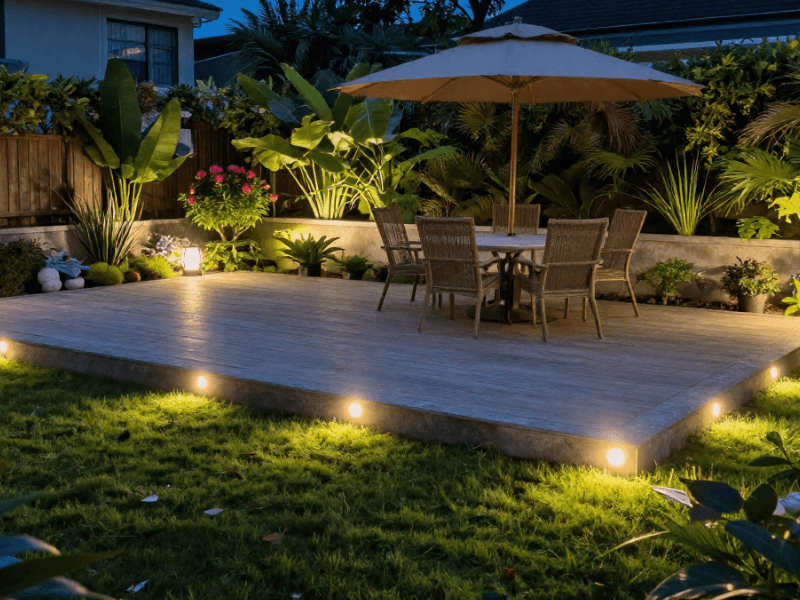
When it comes to downlights, they’re best incorporated with outdoor seating. You can add them to your patio walls for a subtle cast of light that will not only enhance the aesthetics of the space but also improve its safety. With downlights in pathways and patios, you, your family, and guests will be able to see along the trail and avoid hazards and accidents.
Are downlights more practical?
Sometimes downlights are indeed more practical than uplights when it comes to your lifestyle and the people living in the house. If you have children running around playing with whatever they can get their hands on, then uplights like spike lights might be a no go since they might hurt themselves if they trip over them. Also, there's a higher chance of them breaking your fittings if they’re planted in the ground within their reach. In addition, if you use your backyard for active outdoor activities, it's better to go for something mounted on the wall. This way, you can use your space freely without breaking anything. Just make sure that the ball doesn't go flying into your downlights!Moonlighting: a magical form of downlight
If you're aiming for a more natural look, then you can try moonlighting. It's a form of downlighting that replicates the shine of the moonlight. In this lighting scheme, an outdoor light fitting is placed at the high end of a tree and pointed downwards. In here, you'll see a moonlight effect with the branches and leaves making an enchanting outline on the ground! When you're planning to incorporate moonlighting in your lighting plan, think of a spot in your home that will marry well with this idea. Patios are one option. You can mount it on the overhead trees to create a drizzling light effect that can entertain your guests. Other than your patio, you can also use moonlighting for your swimming pool if you’re lucky enough to have one! Imagine swimming under the moonlight. Magical, isn’t it?


0 comments