
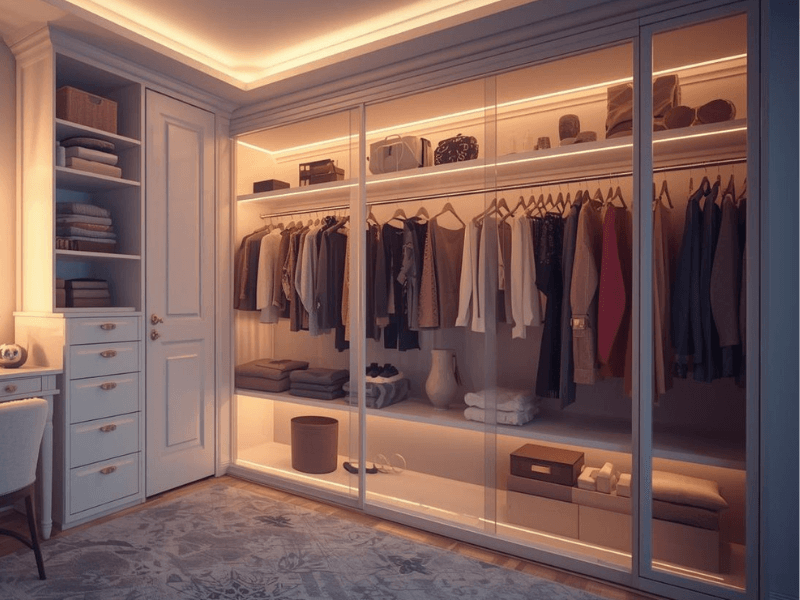
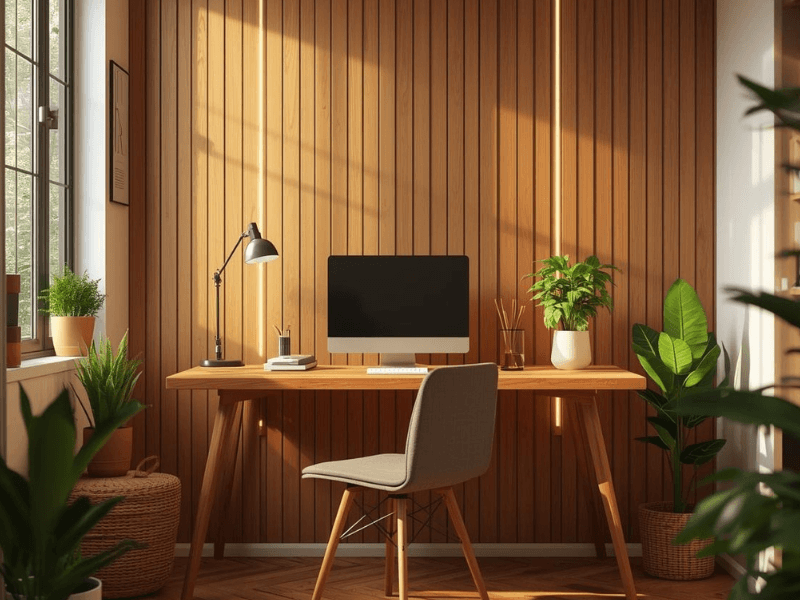
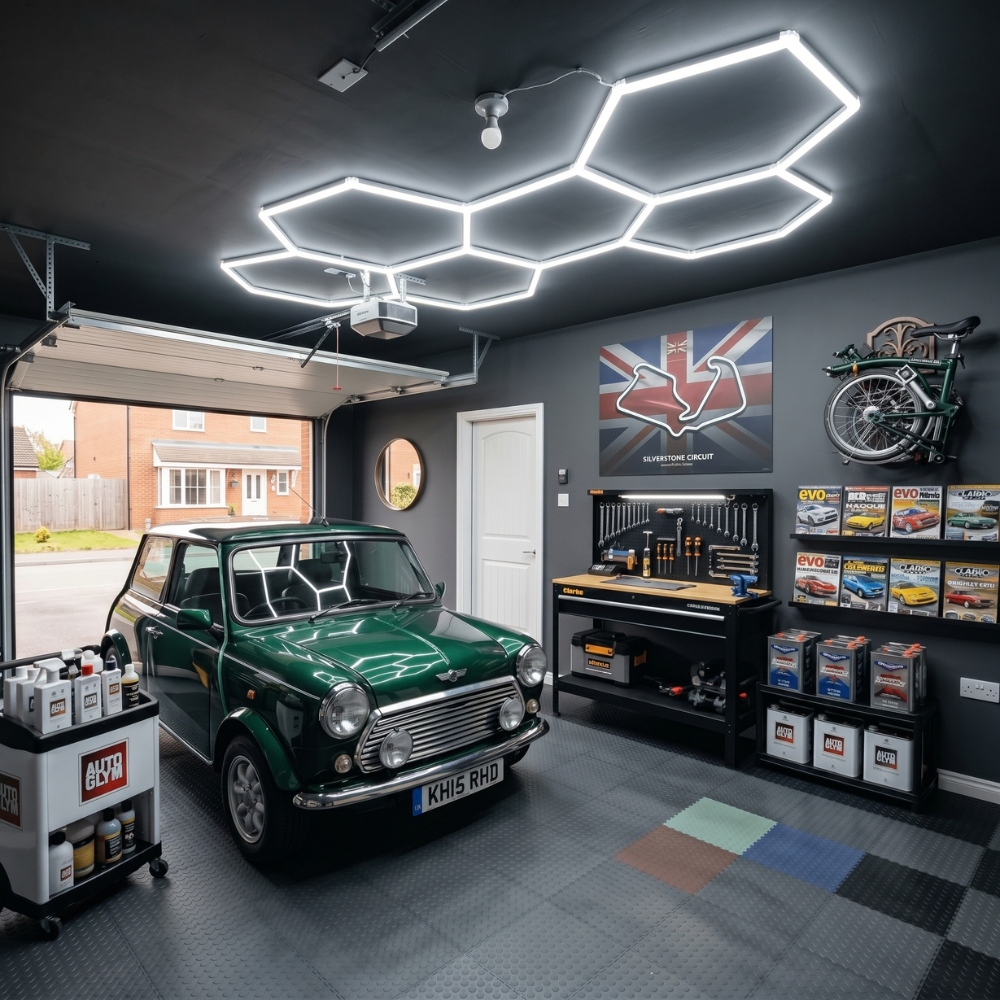

So, you’ve decided to upgrade your stairs with lighting. You just ditch the overhead lights and switch to stair-specific lighting. Sounds simple enough, right? Until you're faced with one surprisingly important decision: warm white or cool white?
Like most people, you might tend to focus on comparing light fittings, styles, and brightness levels. Then, when the lights arrive, they’re either too warm or too cool for your taste.
If there’s one thing you need to understand about lighting, it's that the shade of white your lights produce can completely change how the space looks and feels. That, too, applies to your staircase.
The same set of LED stair lights can create a cosy, welcoming entrance or a bright, contemporary feature, depending entirely on the colour temperature you choose.
It's not just about appearance, either. The right lighting can make each step easier to see, help tie your interior design together and create a more comfortable atmosphere throughout your home.
In this guide, we'll compare warm white stair lighting and cool white stair lighting. We’ll scrutinise appearance, visibility, and the types of homes they suit best. We'll also explain how stair light kits make it much simpler to achieve professional-looking staircase lighting than purchasing individual components.
Understanding Warm White and Cool White LED Lighting
You’re finally deciding between warm white and cool white lighting, but do you truly understand what each term means?
The colour temperature of LED lights is measured in Kelvin (K). Despite its name, it doesn't describe how hot a light gets. Instead, it tells you the colour of the light that your eyes will see.
Here’s how it works: the lower the Kelvin rating, the warmer and more golden the light appears. Higher Kelvin ratings, on the other hand, produce a whiter, crisper light with cooler tones.
Here’s a general guide:
-
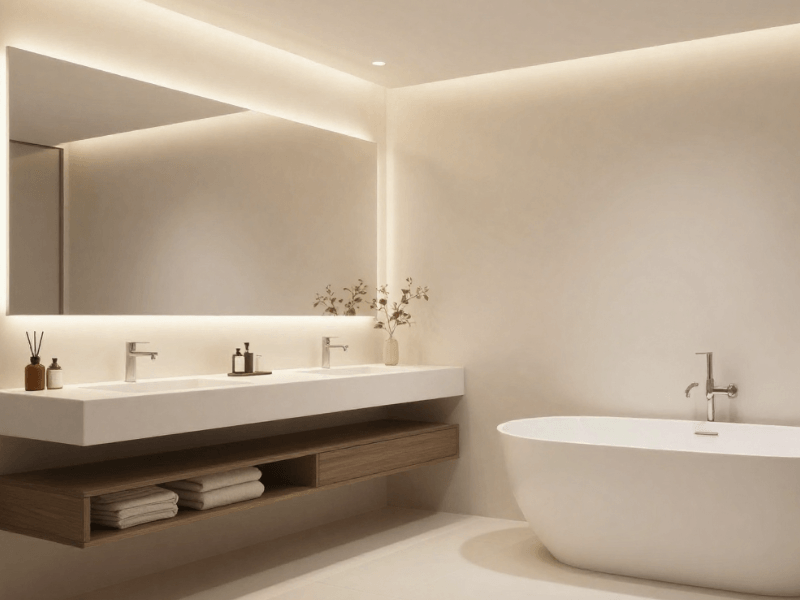
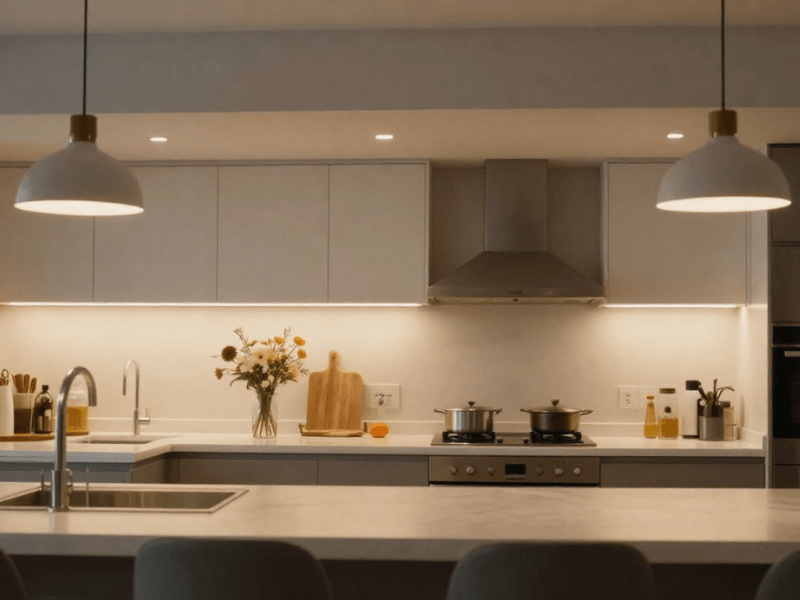
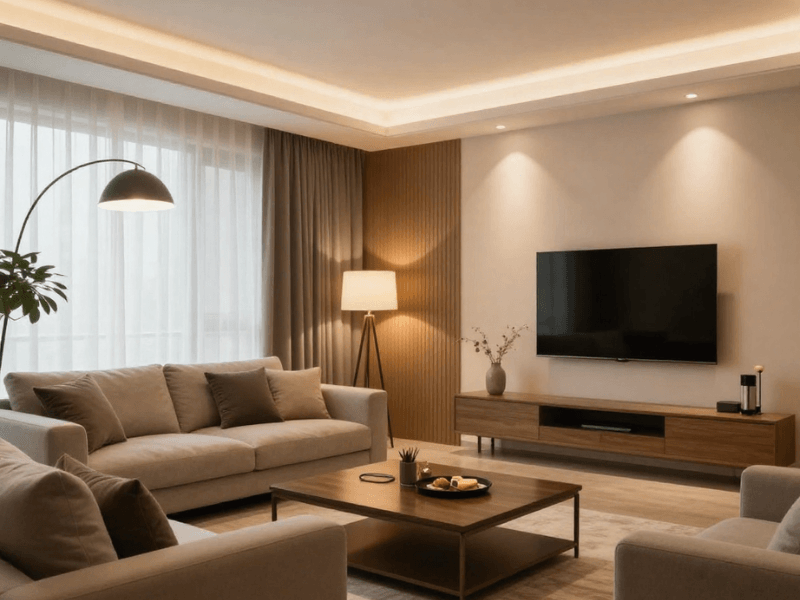
Warm White (around 2700K to 3000K) produces a soft, yellowish glow that's often compared to traditional incandescent bulbs.
-
Cool White (around 4000K to 6000K) creates a cleaner, brighter-looking white light with subtle blue undertones. Typically used to give spaces a fresher appearance.
One thing to note, though: colour temperature is not by any means the same as brightness. A lot of people often get confused between the two.
Brightness is measured in lumens. That alone should already tell you the difference. Lumens is a measure of how much light a fitting produces. Colour temperature simply changes the appearance of that light.
Pro Tip: A warm white stair light and a cool white stair light can produce the same number of lumens yet create very different moods.
Here's a quick comparison.

Understanding this difference makes choosing your LED step lights much easier.
Warm White Stair Lighting: Creating a Comfortable and Welcoming Space
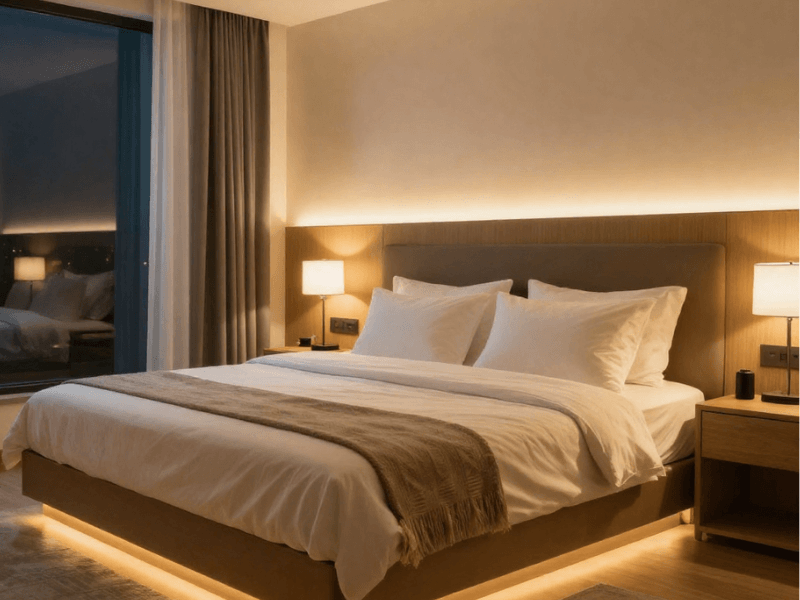
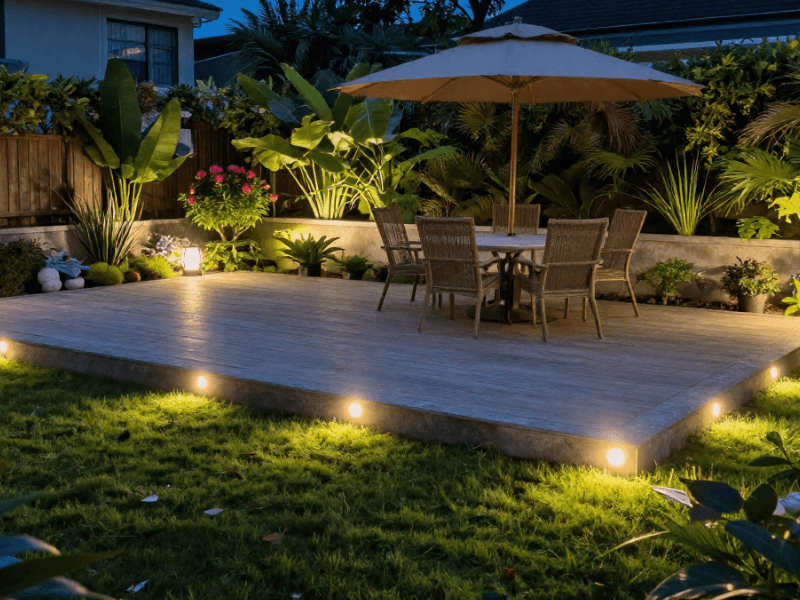
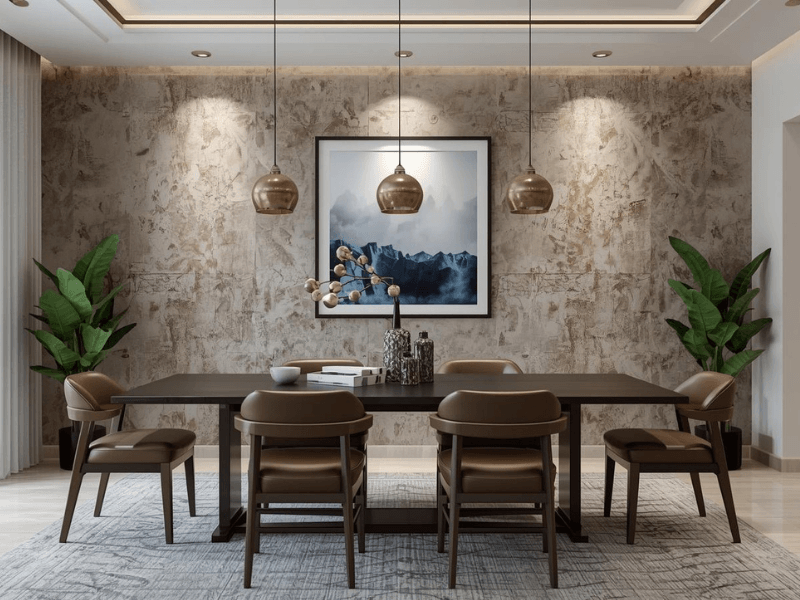
Up to this day, warm white lighting is one of the most popular choices for residential interiors, and it's easy to see why. It creates a gentle glow that instantly makes a space feel more inviting.
Used on your staircase, warm white lighting can add subtle definition to each step while keeping the overall atmosphere relaxed.
If you’re aiming for illuminated stairs that feel elegant, warm white light is the most effective choice.
Ideal for Traditional and Contemporary Homes
Traditional homes typically feature timber staircases, carpeted stairs, natural stone finishes, and wooden handrails and balustrades. All of which are greatly enhanced by warm white lighting.
The gentle warmth helps highlight textures rather than wash them out. Under warm white light, timber appears richer, carpets feel softer, and painted surfaces gain a little extra depth.
But thanks to its versatility, warm white light works just as well in many modern interiors, particularly those that lean towards softer colours and natural materials. If your decor includes plenty of wood, linen, or other natural materials, warm white often ties everything together effortlessly.
Creates a Relaxed Evening Atmosphere
Didn’t I already mention that lighting affects the mood of the room?
During the day, your staircase is likely receiving natural light, but once evening arrives, artificial lighting takes over. This is where warm white really shines. Softly. Its appearance feels comfortable on the eyes, especially in the evening when you’re winding down.
Instead of flooding the stairs with stark lighting, as is common in many UK homes, warm white light gently illuminates each step while keeping the atmosphere calm and relaxed.
Pair that with dimmable fittings or motion sensor stair lights that activate only when needed, and your stairs are golden.
Best Rooms to Pair with Warm White Stair Lights
Warm white light is all about comfort and relaxation.
Here are some of the most popular spaces you can pair warm white stair lighting with:
-
Hallways that create a welcoming first impression
-
Landings with softer lighting
-
Open-plan living areas connected to staircases
-
Bedrooms with adjoining staircases
-
Period homes (adds a touch of elegance without overpowering the traditional vibe)
In these settings, the staircase feels like an extension of the surrounding space instead of standing apart from it.

Cool White Stair Lighting: Bright, Modern and Practical
If warm white is all about winding down, cool white light is about clarity and creating an energetic environment.
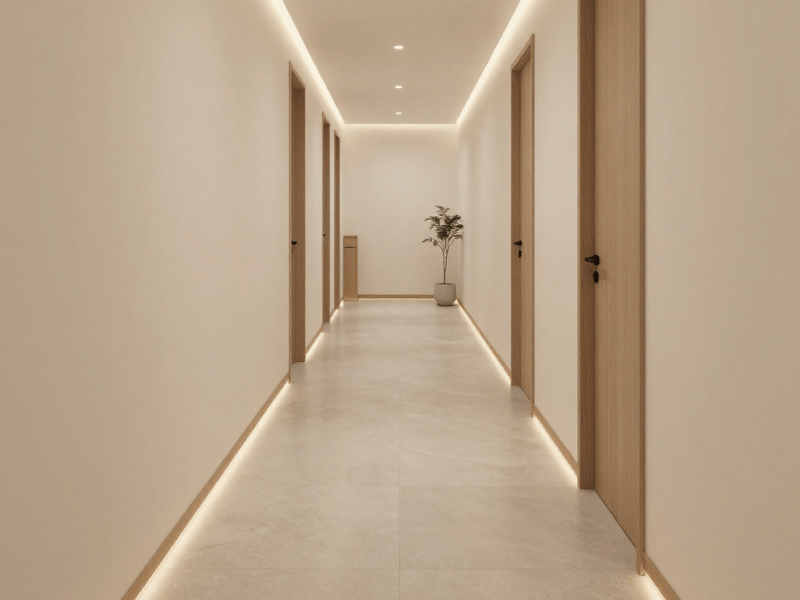
Cool white lighting has become increasingly popular in modern homes as it complements contemporary design with a fresh, crisp appearance.
Unlike warm white light, which tends to have an amber tone, cool white light has a bluish hue that gives staircases a sharper, more defined appearance while blending in with modern decor.
If you’re looking to make your stairs into a design feature, cool white LED stair lighting is a good choice.
Enhances Visibility Around Every Step
If there’s one big reason why people choose cool white light, it’s because of the way it improves perceived visibility.
But don’t get the principles twisted. Brightness is measured in lumens, not colour temperature. But because cooler light appears more crisp when compared to soft warm white light, edges and surfaces tend to appear more defined, even when two distinct lights have the same lumen outputs.
The increased contrast makes individual steps stand out more clearly. This is particularly helpful for staircases with darker finishes.
Of course, positioning still matters just as much as colour. Done properly, cool white lighting can certainly help maximise visual clarity.
Complements Modern Interior Design
Clean lines and finishes are the best friends of cool white lighting. That’s why it pairs particularly well with:
-
Grey colour schemes
-
Monochrome interiors
-
Glass staircases
-
Stainless steel details
-
Polished stone flooring
-
Minimalist designs
These materials often reflect light beautifully, helping the staircase feel bright and spacious. (Because cramped and dark stairs are a no-no, especially if you’ve ever tried tumbling down in the middle of the night. Accidentally, of course.)
If you’re going for a modern aesthetic, cool white lighting usually feels like the natural choice.
Best Rooms to Pair with Cool White Stair Lights
You might already have guessed it by now, but cool white stair lighting is effective in spaces that prioritise visibility and a contemporary appearance. They’re best paired with:
-
Modern entrance hallways
-
New-build homes (modern interiors)
-
Home offices with stair access
-
Commercial entrances and reception areas
-
Loft conversions
-
Contemporary apartment staircases
The result: clean and uncluttered lighting.
Pro Tip: Whatever the colour temperature the adjacent spaces or areas have, it’s best to use a similar tone to create a cohesive look. Different colour temperatures can feel abrupt and disjointed.
Warm White vs Cool White Stair Lighting Comparison
Now we’re back to the biggest question: Which one should you choose?
The easiest answer is that it depends on what you want your staircase to do visually. Both can be attractive and practical staircase lighting, but they bring very different qualities to a space.
Here’s a quick side-by-side comparison:

In terms of appearance, neither is automatically better than the other. It really comes down to the effect you're trying to create.
For the atmosphere, warm white tends to make staircases feel more inviting, while cool white is fresher and more energetic.
When it comes to visibility, cool white can make edges and details appear more defined. However, that doesn't necessarily mean warm white is unsuitable for safe stair lighting. Positioning, brightness (lumen output), and distribution of your lights all play a major role too.
Your style and preference are the two main drivers for making the final decision.

Which Colour Temperature Is Safer for Stair Lighting?
Safety is one of the biggest reasons for installing LED stair lighting in the first place…right? I sure hope so.
A well-lit staircase means individual steps are easier to identify. This helps boost safety, especially at night or when natural light is limited.
But does choosing cool white automatically make your stairs safer?
Not necessarily.
Visibility Matters More Than Brightness Alone
Sure, cool white light can make surfaces and edges look sharper and more defined. However, colour temperature is only one part of the equation.
How you position your LED step lights is arguably more important.
Ideally, the lighting should help define each tread without shining directly into your eyes as you move up or down the staircase. Otherwise, this can cause glare and discomfort every time you ascend the stairs.
You can have the lights recessed into walls beside the steps, positioned near the risers, or integrated into the staircase itself to avoid creating glare.
Spacing matters too.
Place lights too far apart and you'll create dark patches between illuminated areas. Put them in random positions, and you may create distracting shadows and hotspots.
In other words, staircase lighting is not about throwing the brightest light on the space. It’s about careful planning and shining just the right amount of light where it is useful.
Choosing the Right Brightness
Excessive brightness can create glare, especially if your stairs have glossy tiles, glass balustrades, or polished surfaces. And glare is a safety risk.
That’s why you need to aim for just enough light to define the steps comfortably. One that doesn’t blind you momentarily when you turn them on in the middle of the night.
This is where brightness and colour temperature need to work together. The goal should always be balance:
-
Clear steps
-
Comfortable light
-
No unnecessary glare
Why Even Light Distribution Is Essential
Consistency is another key part of safe staircase lighting.
Picture this: You’re going up the stairs, and one section of the staircase is brightly illuminated, then the rest suddenly disappears into the shadows. Not the best experience. And definitely not the safest!
Even light distribution helps avoid this problem.
Strategically spaced stair lights create a more consistent visual path, helping each step remain clearly defined as you move up or down.
Think of it as drawing a clear route for everyone using the stairs.
Matching Stair Lighting with Your Interior Design
The thing about home staircases is that they’re not built in isolation. They're often connected to hallways, landings, and nearby rooms, so your choice of colour temperature should match the rest of your interior.
Modern Homes
Modern interiors typically thrive in cool white lighting. This is because the crisp appearance complements clean architectural lines, glass balustrades, polished surfaces, and minimalist decor.
In other words, it gives illuminated stairs a more striking, contemporary edge.
If the rest of your home already uses cooler lighting, keep the same colour temperature around the staircase for a consistent look.
That said, modern doesn't automatically mean cool white. Contemporary homes with lots of timber and softer neutral shades can look fantastic with warm white too.
Traditional Homes
Warm white tends to feel more at home in traditional interiors as it enhances the natural colours and textures of wood, carpets, and period details.
Using cool white lighting in period properties might feel slightly out of character and make everything look flat.
Scandinavian Interiors
This is where things get interesting. That’s because both colour temperatures can work here.
If your home features pale timber, white walls, and plenty of soft textiles, warm white can enhance the cosy side of Scandinavian design.
On the other hand, cool white can emphasise its cleaner, minimalist qualities.
Usually it all comes down to which elements are more dominant in your space (and the final look you’re after): softer woods and warm neutrals for warm white; while crisp whites, greys, and cooler finishes for cool white.
Industrial Style Homes
Cool white often works particularly well in industrial-style interiors.
Exposed brick, concrete, black metalwork, and steel details naturally suit crisp lighting, helping emphasise textures and giving the staircase a sharper architectural feel.
Other Factors to Consider Before Choosing Stair Lights
Recessed or Surface Mounted Fittings
Recessed fittings sit neatly within a wall or suitable surface, creating a more built-in appearance. These are popular in minimalist interiors.
Surface-mounted fittings sit directly on the installation surface and can be useful where creating recesses isn't practical.
The choice is greatly influenced by how the staircase is constructed, installation requirements, and the finished look you want.
Motion Sensor Compatibility
Motion sensor stair lights can make staircase lighting particularly convenient.
If you don’t like leaving the light on unnecessarily, or you do not like fumbling for the switch in the middle of the night, a suitable sensor setup can activate the lighting when movement is detected.
You approach the staircase; the lights activate. All hands-free.
Just make sure you’re using a compatible sensor for your lights.
Stair Width and Layout
No staircases are made the same… is what I’d like to say, but cookie-cutter homes will beg to differ. But still, not every staircase is a neat, straight flight. Some turn corners, include landings, widen at the bottom, or have more unusual layouts.
More careful planning and positioning might be required for some staircase designs to achieve consistent coverage.
Simply put, your staircase should dictate the lighting plan.
Existing Lighting in the Hallway
Don't forget to look at the lighting already around your staircase.
Ceiling lights, wall lights, pendant fittings, and nearby rooms can all influence how your LED step lights appear.
If your hallway uses warm white lighting and you introduce noticeably cooler stair lighting, the contrast may stand out more than expected. This can be good or bad, depending on how you’re showcasing the space.
But the general rule of thumb still stands: keeping colour temperatures reasonably consistent usually creates a more cohesive result.
Why Stair Light Kits Make Choosing Easier
Once you've settled the warm white versus cool white debate, there's still the practical matter of getting the stair lights and all the necessary components.
This is where stair light kits can make things considerably easier.
These kits come with complete, compatible parts designed to work together right out of the box. This means there’s no need to look for every component separately. It also eliminates the risk of getting incompatible components, which adds to your confidence during installation.
Consistency is another advantage. Using coordinated stair lights helps maintain the same colour temperature throughout the staircase. This helps create a more professional-looking installation.
More than that, planning and installation are made straightforward, as a lot of guesswork is removed from the process.

Which Colour Temperature Is Right for Your Home?
There's no universal winner in the warm white versus cool white debate.
The right LED stair lighting depends on your interior, the atmosphere you want to create, and how your staircase is used. All these factors contribute to the decision-making.
Choose warm white if you want a cosy ambience, softer appearance, and relaxing evening lighting.
Choose cool white if you prefer sharper perceived visibility, crisp-looking light, and contemporary styling.
Whichever colour temperature you prefer, remember that effective stair lighting isn’t just about the shade of white you choose. Positioning, spacing, brightness and even light distribution all contribute to a staircase that looks great and feels comfortable to use.
If you’re ready to transform your stairs, check out Simple Lighting’s stair lighting collection to find the right fitting with the colour temperature that you need.
Frequently Asked Questions
Is warm white or cool white better for stairs?
Neither is inherently better. Warm white creates a softer, cosier atmosphere, while cool white provides a crisper appearance and can make edges appear more defined. The right choice depends on your interior style, surrounding lighting, and personal preference.
What colour temperature is best for staircase lighting?
For residential staircase lighting, warm white around 2700K to 3000K is popular for creating a comfortable atmosphere. Cooler colour temperatures can work well in modern interiors where a cleaner, sharper appearance is preferred.
Can I mix warm white and cool white lighting?
Yes, but it should be done carefully. Very different colour temperatures positioned close together can look mismatched. For a more cohesive look, it's generally best to coordinate your stair lighting with nearby hallway and landing lights.
Does cool white make stairs look brighter?
Cool white can appear crisper or brighter to the eye, yes. But colour temperature doesn't determine actual brightness. Brightness is measured in lumens. Two lights can have the same lumen output while producing completely different colour temperatures.
Are warm white stair lights modern?
Yes. Warm white isn't limited to traditional interiors. It can look particularly stylish in modern homes featuring timber, natural materials, and warm neutral colours. The design and positioning of the fittings also have a major influence on how modern the finished staircase appears.
Which colour temperature works best with motion sensor stair lights?
Both warm and cool white can work with motion sensor stair lights. Warm white may feel gentler when the lights activate at night, while cool white offers a crisper appearance. Again, the best option depends on your surrounding decor, preferred atmosphere, and the colour temperature of nearby lighting.


0 comments