



Have you ever been to a kitchen with a single ceiling light?
You notice it right away: the middle of the room is bright, yes, but the worktops where all important activities happen, such as chopping, cooking, and coffee-making, are left in the shadows.
If your kitchen suffers from the same predicament, then you know how annoying (and, frankly, unsafe) it is when your own body casts a shadow over your food preparation area. With only a single light source, your kitchen ends up feeling darker, flatter, and somehow older than it really is.
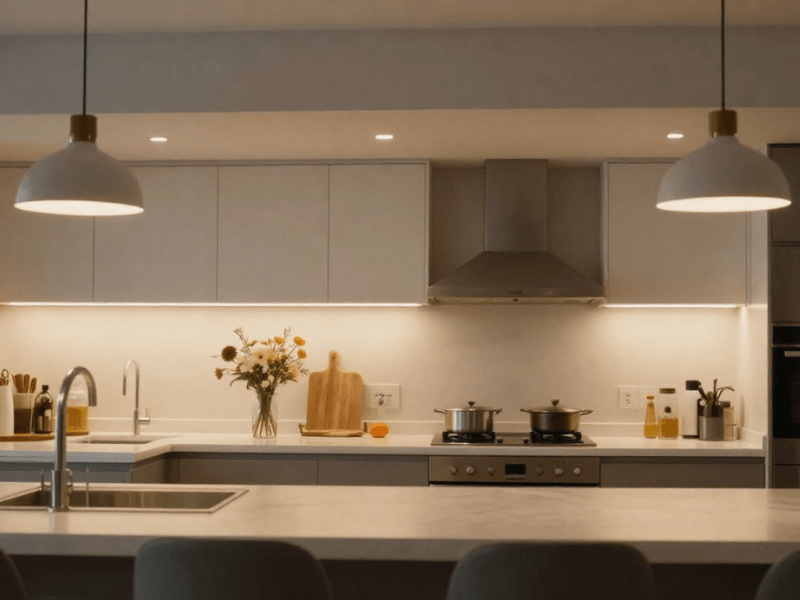
That’s why under cabinet lighting is one of the most important upgrades for your kitchen. These lights add depth and atmosphere, which can turn even a simple kitchen into a premium-looking space.
Good modern LED lighting is all about layers, not relying on a single light source. That means combining ceiling lights, task lighting, and accent lighting to create a balanced space. And LED under cabinet kitchen lighting helps with that. It also ticks all the practical boxes: energy-efficient, long-lasting, and available in all colour temperatures, with some models even having adjustable CCT functions and smart app-controlled integrations.
In this guide, we’re going to walk you through how you can get it right when choosing your under-cabinet light. We’re going to discuss:
-
Type
-
Colour temperature
-
Placement
-
And more
By the end of this guide, under cabinet lighting will leave you wondering how you ever lived without it.
What Is Under Cabinet Kitchen Lighting?
When you install lighting underneath wall-mounted kitchen cabinets, that technically becomes an under cabinet lighting. Its main job? Effectively illuminate all work areas in the kitchen, including worktops and food prep areas.
Since light is focused directly onto the work surfaces, you get fewer shadows, better visibility, and a much more functional kitchen layout. Most under cabinet systems use LEDs because they’re compact, efficient, and easy to integrate into modern kitchens. The most common options include:
-
LED strip lights
-
Puck lights
-
LED batten lights
Each style creates a slightly different effect depending on the kitchen design and the level of brightness you want. There’s also an important difference between task lighting and ambient lighting.
-
Task lighting: offers better visibility for food prepping, reading recipes, and cleaning.
-
Ambient lighting, on the other hand, is more about mood and atmosphere. Soft under cabinet lighting can create a warm evening glow that makes the kitchen feel calmer and more inviting after dark.
Many homeowners want the best of both worlds. That’s why dimmable options are becoming more popular.
Why More Homeowners Are Adding Under Cabinet Lighting
There are a few practical benefits to this.
First, under cabinet lights remove shadows cast by your ceiling lights by bringing the light directly over the workspace. This, in turn, improves visibility exactly where it matters most. Chopping vegetables, reading measurements, or checking whether the chicken is fully cooked becomes much easier when they’re properly lit.
Second, it completely enhances the kitchen's aesthetics. When soft lighting washes across worktops and splashbacks, even a humble kitchen can look expensive and sophisticated.
Third, LED options are energy-efficient and cost-effective. In other words, modern LEDs use far less electricity than older lighting systems while lasting for years before replacement is needed.
And lastly, proper layered lighting adds to the perceived value of the kitchen. This is a great bonus when selling properties.
Types of Under Cabinet Kitchen Lighting
Under cabinet lights might not look the same, but they provide the same benefits. So, choosing the right type depends entirely on your preference. Some homeowners want lighting that disappears completely into the cabinetry. Others prefer decorative fittings that serve as design features.
LED Strip Lights
LED strip lights are easily the most popular choice for modern under cabinet lighting.
These thin strips sit neatly beneath cabinets, creating a clean and discreet line of light across the worktop. Because they’re slim, they work especially well in modern minimalist kitchens.
One of their biggest advantages is flexibility. They can easily be fitted into awkward corners, uneven surfaces, or around obstacles. And since they can be cut to size (look for cutting markers), they’re ideal for illuminating custom layouts.
Like many modern LED lights, they’re available in different colour temperatures:
-
Warm white for softer ambience
-
Natural and cool white for task lighting and everyday use
-
RGB colour-changing adds personality
But they don’t come without their challenges. The most common are visible hotspots from their LED dots, which can break the premium lighting effect you’re going for. That’s why many homeowners pair LED strips with aluminium profiles and diffusers to create a smoother, dot-free light.
LED Batten Lights
These are the more practical, utility-focused brother of LED strip lights. Unlike the flexible strips, these are rigid linear fittings that provide stronger, more uniform illumination. The focus of this under cabinet lighting is function. Installation is often simpler for LED batten lights compared to strip lighting systems, since it typically doesn’t require separate LED drivers, profiles, or connectors.
LED battens are ideal for:
-
Utility kitchens
-
Pantry areas
-
Food prep zones
-
Rental properties
-
Fast kitchen upgrades
Puck Lights
Maybe you’re looking for a more spotlight-style effect? Then these small fittings are perfect for you. They’re typically circular, resembling hockey pucks, hence the name. Puck lights (not to be confused with plinth lights) create a focused pool of light over work surfaces instead of the usual one continuous wash of light from strips and batten. This makes them a more decorative choice for the kitchen.
You’ll find puck lights used to:
-
Highlight feature splashbacks
-
Add decorative/accent lighting
-
Create a softer, layered atmosphere
-
Draw attention to stone or marble finishes
The effect can feel more boutique-like, which many homeowners love.
Sensor-Activated Cabinet Lighting
Sensor-activated lighting adds convenience to your current setup. When motion is detected, the lights turn on immediately, providing ample illumination without turning on the overhead lights. Because who wants blindingly bright lights in the kitchen during late-night visits?
Motion sensor cabinet lighting is popular for:
-
Family kitchens
-
Night-time visibility
-
Pantry cupboards
-
Utility spaces
-
Smart home setups
Because the lights only activate when needed, they can also help reduce unnecessary energy use. Many newer sensor-activated lights are now compatible with smart home ecosystems, too. This opens up options for automated schedules, dimming, and voice commands.

Choosing the Right Colour Temperature
How your kitchen looks and feels is largely determined by one factor: colour temperature. Depending on whether your light is warm or cool, your kitchen can feel completely different. Choose the wrong colour temperature, and you can end up creating an uncomfortable atmosphere.
Warm White (2700K-3000K)
Typical warm white lighting ranges from 2700K to 3000K. It creates a softer, cosier atmosphere with gentle golden tones that feel welcoming and relaxed. If your home has many visible natural-wood surfaces, this colour temperature will help it look more refined. This makes it ideal for traditional kitchens. And if your kitchen doubles as a social space where people gather in the evenings, warm white can make the room feel far more comfortable and inviting.
You can pair warm lights with:
-
Oak cabinets
-
Walnut worktops
-
Cream kitchens
-
Brass fixtures
-
Rustic interiors
Cool White (4000K-5000K)
Cooler tones range from 4000K (natural white) to 5000K (cool white/daylight). This produces a cleaner, brighter, and more modern appearance. This enhances visibility, making it perfect for tasks like food prep, cooking, and cleaning, and it is commonly used in modern kitchens.
Some common applications:
-
Gloss cabinets
-
White quartz worktops
-
Grey kitchens
-
Modern minimalist designs
-
Stainless steel finishes
The safer colour to choose is 4000K, as it provides a balanced brightness without appearing too blue.
Which Colour Temperature Is Best for Kitchens?
There really isn’t a universal answer to this since this all depends on your kitchen style and the atmosphere you want to create. Again, it’s up to your preferences.
But there are some general rules you can use to guide you:
-
Traditional kitchens often suit warm white lighting
-
Contemporary kitchens do well with cool white lighting
-
Mixed-style kitchens often work best around 3000K-4000K
Try to match your under cabinet lights to your main ceiling lights where possible. Mixing warm white and cool white lighting in the same kitchen can make the room feel visually awkward, almost like two different kitchens stitched together.
Picture this: If your ceiling spotlights are cool white, adding extremely warm under cabinet lighting may look yellow by comparison. Likewise, cool strips beneath warm ceiling lights can feel harsh and disconnected.
How Bright Should Under Cabinet Lighting Be?
Lights are lovely and useful… until they’re too bright or too dim. A beautiful lighting setup that’s too dim quickly becomes frustrating during everyday kitchen tasks. On the other hand, excessively bright lighting can feel harsh and uncomfortable, especially in a smaller kitchen.
So, what do you need to look out for? The answer to that is Lumens. This refers to how much visible light a fitting produces. Simply put, higher lumen output means brighter light. Depending on the level of brightness, your under cabinet lights can fall into two categories of lighting:
-
Task lighting for cooking and preparation (bright and crisp)
-
Mood lighting for ambience and aesthetics (soft and subtle)
How many lumens you need for your under cabinet lights depends on the size of the kitchen. Small kitchens may need fewer lumens because light reflects more easily across compact spaces, while larger kitchens usually need stronger or more extensive lighting coverage. Dark worktops, such as black granite or deep wood surfaces, absorb more light, so they often require brighter lighting than light-coloured kitchens.
Recommended Lumens for Kitchen Task Lighting
For LED strip lighting, around 500 to 1000 lumens per metre is a good general target for kitchen task lighting. The exact level depends on your kitchen surfaces and how bright you want the space to feel.
For example:
-
Dark worktops, as mentioned earlier, usually benefit from higher lumens
-
Glossy white surfaces reflect more light naturally, so lower lumens can be enough
-
Utility kitchens often need stronger task lighting
-
Decorative mood lighting can sit at lower lumen outputs
Pro Tip: When you have light-coloured, polished surfaces where light can bounce easily, lower brightness levels can still provide strong visibility.
If you’re unsure, dimmable lighting offers useful flexibility. It allows you to increase brightness while cooking and soften the atmosphere later in the evening.
Best Placement for Under Cabinet Lights
Do you know the big difference between good and poor lighting? Often, it’s not about the quality. It’s in the placement. Install them in the wrong position, and even the best light fittings can perform poorly. Not only that, but placement affects brightness, shadow reduction, glare, and the visibility of the fittings.
Positioning LED Strips Correctly
For most kitchens, LED strips should be installed close to the front edge of the cabinet rather than pushed all the way to the back wall. This way, the light from the strip removes the shadow your body casts over the counter.
Positioning strips too far back often creates uneven lighting, with the splashback bright while the actual work surface remains partially shaded. Most kitchen cabinets have light rail mouldings to keep under cabinet lights hidden from direct view. Which leads us to the next point…
How to Hide Under Cabinet Lighting
The cleanest under cabinet lighting setups are the ones you barely notice. Aluminium LED profiles are one of the best ways to achieve this. These hold LED strips neatly in place, help manage heat, and provide a clean appearance. They typically come with diffusers that soften the light output, effectively reducing the visible LED “dots” for a more professional finish.
Cable management matters, too. Exposed wires instantly make even expensive lighting system installations look amateur. Some good hiding techniques to take note of:
-
Running cables behind cabinets
-
Using concealed trunking (running cables along LED profiles)
-
Matching cable colours to cabinetry
-
Installing recessed profiles where possible
When done properly, the lighting almost appears to float beneath the cabinets rather than looking like a visible add-on.
Spacing Tips for Even Lighting
Continuous LED strip runs usually produce the smoothest, most consistent results. But for batten and puck lights, which are prone to uneven lighting when the layout is planned poorly, spacing is a crucial element during installation. What to do is simple: Avoid leaving large dark gaps between the fittings.
Corner cabinets deserve extra attention, too. Without proper planning, corners can end up noticeably darker than the rest of the kitchen. There are compatible accessories for LED strip lights, including angled connectors, that can help with mounting around bends and awkward sections.
Plug-In vs Hardwired Under Cabinet Lighting
This is one of the biggest decisions you will face when choosing under cabinet lighting. But it doesn’t have to be the hardest. Both options have advantages depending on the kitchen setup and the installer's experience.
Plug-In Lighting
Plug-in under cabinet lighting is the easier DIY-friendly option. Most systems can be installed without major electrical work (plug-and-play), making them ideal for quick upgrades, rented homes, or homeowners who want a simpler project.
With plug-in lighting, you can enjoy:
-
Faster installation
-
Lower upfront costs
-
Minimal disruption
-
Easier maintenance and replacement
The downside? Visible plugs and cables that need more work to hide.
Hardwired Lighting
Hardwired lighting often creates a much cleaner, more premium finish, provided that your mains circuit is concealed within your walls.
Hardwired systems are usually the preferred option for:
-
New installation and full kitchen renovations
-
Luxury kitchen designs
-
Permanent long-term upgrades
While installation costs are higher (one of its cons), the finished result often looks considerably more professional. Also, since these lights are directly connected to your mains, it’s usually best to hire a qualified electrician for safety.
Smart Under Cabinet Kitchen Lighting
A few decades back, smart lighting was the future. Now the future is here! And smart lights play a big role in homeowners’ everyday convenience. Modern smart under cabinet lighting allows you to control brightness, choose colours, create schedules, and set up automation directly from smartphones or voice assistants (Alexa, Google, etc.). App-controlled LED strips are especially popular because they combine functionality with flexibility.
Here are what you’re missing out on if you’re not yet using smart under cabinet lights:
-
Brightness dimming
-
Colour changing
-
Voice assistant control
-
Timers and schedules
-
Scene presets
-
Motion detection (using sensors)
Without installing multiple fittings or swapping bulbs to serve different purposes, you can adjust your lights to fit the current activity or time of day.
Imagine this: One tap on your smartphone and your kitchen lights switch to soft, warm lighting in the evening. A simple voice command brightens the worktop for food prep, cooking, and cleaning. And the moment you leave the premises of your kitchen, the lights automatically shut down after a few minutes. With smart lighting, your kitchen quietly adapts to the rhythm of daily life.
But Are Smart LED Kitchen Lights Really Worth It?
For many homeowners, yes.
Smart lighting adds convenience that quickly becomes part of your routine. Being able to dim the lighting on your phone or activate kitchen lights via voice commands feels surprisingly useful once you start using it regularly. Plus, the energy-saving benefits. Schedules and automation reduce unnecessary energy use by keeping the lights on only when needed.
They’re especially useful in modern smart homes with open-plan kitchens, evening entertaining spaces, and households already using voice assistants. But it’s not all pros and no cons. It has its rough edges, too. Smart lighting usually costs more upfront than standard systems, so if you don’t have the budget yet, you might want to hold off on the upgrade for a while. That said, the convenience smart lighting brings far outweighs their upfront costs.
Common Under Cabinet Lighting Mistakes to Avoid
Here are some of the biggest issues homeowners run into.
1. Choosing the Wrong Colour Temperature
A kitchen can have a beautiful design under natural light, but can feel strangely uncomfortable once the lights are on and the tone clashes with the interior. Always consider the overall kitchen palette before choosing warm or cool lighting.
2. Insufficient Brightness
Lighting that looks good online may not provide enough usable brightness for real cooking tasks. Always check the lumen rating of the lights before ordering. And only get your lights from trusted suppliers like Simple Lighting. Remember that task lighting should prioritise visibility over aesthetics.
3. Poor Placement
Installing lights too far back beneath cabinets often creates shadows on the worktop instead of removing them. Front-edge positioning usually works best. Also, to avoid dark spots, make sure there isn't too much of a gap between fittings when using puck or batten lights.
4. Exposed LED Strips
Visible LED dots and hanging cables instantly reduce the premium feel of a kitchen. Maximise the use of profiles, diffusers, and light rail mouldings to hide your lights. Also, practice proper cable management.
5. Ignoring IP Ratings Near Sinks
Kitchens involve moisture, steam, and splashes. Lighting installed near sinks or water-prone areas should have suitable IP ratings for added protection and durability.
6. Mixing Lighting Tones
While this might seem like a good idea, combining warm and cool lighting without a clear design plan can make the kitchen feel visually inconsistent. Keep a uniform lighting temperature throughout the space.
How Much Does Under Cabinet Kitchen Lighting Cost?
Under cabinet lighting costs vary depending on the product type, brightness level, installation method, and whether smart features are included. At the budget end, simple plug-in LED battens or basic strip light kits can be relatively affordable without sacrificing performance. You can get a 5-metre kit for as low as £13.35.
Premium setups may include:
-
Smart controls
-
Aluminium profiles
-
High-output LED strips
-
Professional installation
-
Integrated dimming systems
Installation costs also vary. DIY plug-in systems naturally cost less, while hardwired lighting may require an electrician's labour during renovations, so take that into consideration.
The good news is that LEDs remain extremely energy-efficient. They use far less electricity than traditional lighting alternatives and typically last for many years before replacement is needed (20,000 to 50,000 hours). That means even if the upfront investment is higher, the long-term running costs stay low.

Choosing the Best Under Cabinet Lighting for Your Kitchen
Start by thinking about how you use your kitchen. Do you use it mostly for cooking? Then, brighter, cool white task lighting should be your priority.
Do you mostly use your kitchen to host guests? Then warmer tones and dimmable lights can create a softer, more relaxed atmosphere. Your kitchen style matters too! Sleek modern spaces often suit hidden LED strip lighting, while traditional kitchens may benefit from decorative puck or batten lights.
Then there’s the matter of installation. Do you want a DIY-friendly option? Or a high-end professional finish? For added convenience, consider adding smart lighting to your under cabinet setup. It doesn’t need to be grand. A simple dimmer or CCT control can instantly transform how you use your space.
If you’re ready for the upgrade that will take your kitchen to the next level, explore Simple Lighting’s range of under cabinet lights and compatible accessories today!


0 comments