


The kitchen island has become the command centre for managing the chaos of modern homes. Just like the living room, it has transformed into a multi-purpose space, wearing different hats throughout the day. It is where food is prepped, where guests gather during a party, where children finish their homework, and where coffee somehow tastes better at 6 AM.
In many homes, the island is a multitasking hub, and often the first thing people notice when they walk into the kitchen. That’s exactly why lighting matters here more than most people realise. The right kitchen island lighting can completely transform how the space looks and feels. It improves visibility, adds atmosphere, and helps tie the entire kitchen design together.
Thanks to the number of trends that have popped up over the years, homeowners are given more options. You can go for Scandinavian, industrial, oversized, and smart lighting, among many others, to create character, texture, and control. But despite the long list, there is no single “best” kitchen island light for every home. There are several factors you need to consider:
-
Island size
-
Ceiling height
-
Kitchen style
-
How you use the space
A compact apartment kitchen needs something very different from a large open-plan family kitchen with cathedral ceilings and dinner-party ambitions. The good news? Once you understand the basics, choosing the right lighting becomes far less overwhelming. And that’s what we’re diving into with this guide. Ready for it yet?
Why Kitchen Island Lighting Is More Important Than Ever
Because kitchen islands now handle so many activities, the lighting around them needs to work harder, too. A good kitchen island lighting needs to do multiple things:
-
Support practical tasks like chopping vegetables, reading recipes, or cleaning.
-
Help create ambience when the kitchen shifts into social mode.
Bright overhead lighting may be perfect for cooking, but dimmed, warm lighting instantly makes the room feel more relaxed and welcoming for dinner or socialising. (We’ll discuss how that’s achieved in more detail later.)
You can also thank open-plan living for transforming how kitchens are designed. In many homes, the kitchen is fully visible from the dining and living areas. This means the island has become its visual anchor.
Lighting fixtures above the island are no longer purely functional. Now, they act as decorative centrepieces that help inject personality into the room. Lighting has become a blend of function and design language. When done properly, even a fairly simple kitchen can feel polished and elegant.
How to Choose the Right Kitchen Island Lighting
I’d be lying if I told you that choosing the right kitchen island lighting is just about picking the prettiest fitting you find. I did mention above that there are several factors you need to consider, didn’t I? Scale, proportion, ceiling height, and overall kitchen style all play major roles in shaping your lighting choices.
Consider Your Kitchen Island Size
This is the first thing that should influence your lighting choice. If you have a large kitchen island, then a tiny pendant above it would just end up disappearing virtually. In the same way, an oversized fitting in a small kitchen would feel, well, oversized and cramped.
For smaller kitchen islands, simpler fittings often work best. One or two compact pendants can provide enough light without overwhelming the room. Choose glass pendants and other slimline fixtures when you can to maintain an open feel.
Larger kitchen islands aren't limited by space, so they can accommodate larger fittings or multiple lights. When using pendants, a good rule is to have three units evenly spaced across. This creates balance while improving light distribution.
Since you have more space, try to experiment with other statement lighting, such as chandeliers and multi-pendant lights.
Think About Ceiling Height
Yes, the ceiling height has a huge impact on how kitchen island lighting looks and performs. In kitchens with standard ceilings, pendant lights usually work best when hung around 75cm to 90cm above the worktop. This provides good, comfortable task lighting.
Higher ceilings, on the other hand, give more flexibility for your lighting since you have more space to work with. This is where large statement pendants or dramatic cluster lighting can really shine, literally.
Low ceilings, however, will work best with recessed spotlights or flush fittings, as hanging pendants will only hinder movement and make the room feel smaller than it actually is. The goal is always to strike a balance between functional light and usable space.
Match Your Kitchen Style
It goes without saying that your island lights should complement your kitchen's overall style. Otherwise, you’ll be left with a disjointed space.
Modern kitchens often suit sleek LED fittings, matte-black pendants, or clean, geometric designs. Minimal shapes and uncluttered lines help reinforce the contemporary aesthetic.
Traditional kitchens typically include finishes like brass, bronze, or brushed gold. Soft warm white lighting enhances the cosy atmosphere they are known for.
Scandinavian-inspired kitchens lean towards simplicity. Neutral colours, soft textures, natural materials, and discreet fittings help maintain that calm, minimalist feel.
Industrial kitchens embrace character and texture. Metal shades, exposed filament bulbs, aged finishes, and warehouse-inspired designs all work beautifully here.
Matching your lighting style to the kitchen creates cohesion. It’s the difference between a carefully composed room and one that feels like a collage of several Pinterest boards.
Pendant Lighting Ideas for Kitchen Islands
Now, you might be asking: Why does he keep talking about pendant lights when referring to kitchen island lighting? The answer is simple:
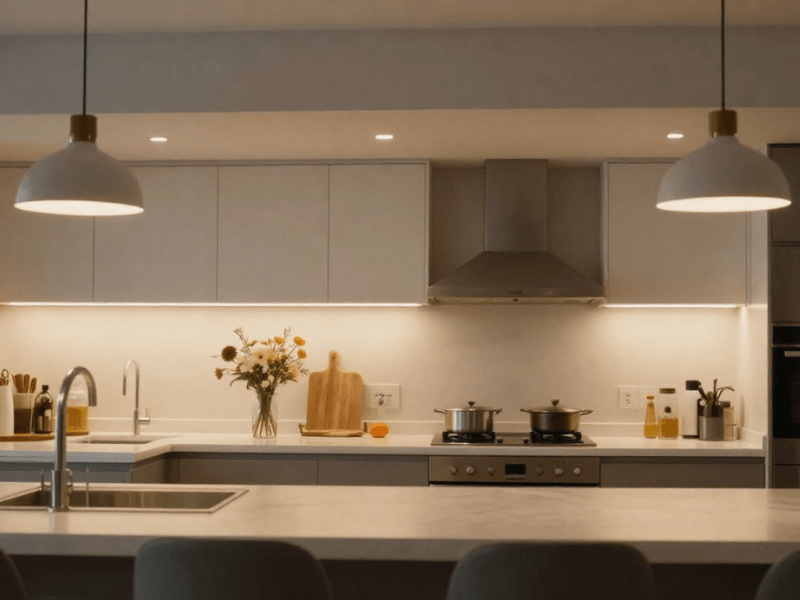
Pendant lighting remains the most popular choice for kitchen islands. That’s because pendants combine focused task lighting with decorative impact. It’s a practical and stylish lighting choice for your kitchen! And the best thing? There’s a variety of choices available today that will fit almost every kitchen style imaginable. You just have to know which types to pick.

Minimalist Pendant Lights
Minimalist pendant lighting is an easy choice for most people. Clean lines, slim profiles, and discreet lighting placement create a sophisticated look that can elevate the kitchen’s aesthetic.
Matte black pendants are especially popular because they pair beautifully with cabinetry, stone worktops, and monochrome colour palettes. They add contrast and definition without feeling overly decorative.
Scandinavian-inspired designs fall into this category. If you want soft neutral colours, simple shapes, and natural materials that help kitchens feel calm, bright, and uncluttered, this style will suit you best. This is also a good choice for smaller kitchens, helping them feel more spacious.
Minimalist pendants are proof that your lighting doesn’t need to stand out; it just needs to make the strongest impact.

Photo by Kailun Zhang on Unsplash
Oversized Statement Pendants
Now we go to the complete opposite end of the spectrum: oversized pendants. If minimalist pendants were all about being discreet, these ones are all about creating drama and turning your island into the kitchen's focal point.
But here’s the sad truth: since these pendants are large, they’re also best-suited for large, spacious kitchens, especially ones with open-plan layouts. So, if you have a smaller kitchen, you might want to reconsider getting one.
Oversized lights help prevent the space from feeling empty, especially in kitchens with high ceilings. You can get them in countless styles, from giant glass globes to sculptural metal designs.
Often, function is just a secondary priority for these pendants; the first priority is to make a statement or showcase art, whichever is preferred. When used correctly, these pendants can create the kind of kitchen that people stop to stare at and say, “Whoa.”

Glass Pendant Lights
Glass pendants are also a popular choice because, unlike bulky solid shades, they give the illusion of space, since you can usually see through each pendant. This is especially useful in compact kitchens or rooms with lower ceilings. Though various styles are available, there are usually two kinds you can choose from:
-
Clear glass pendants, which maximise brightness and keep your vertical space clean, and
-
Smoked glass, which offers a softer, moodier aesthetic that works beautifully in modern luxury kitchens.
Glass pendants pair especially well with decorative LED filament bulbs, combining style and functionality in one elegant package.

Industrial Kitchen Island Lighting
This is for the homeowners who like to add a “we accidentally left construction materials hanging from the ceiling” edge to their interior.
Industrial-style lighting adds texture and personality to your kitchen island with metal finishes like black steel, brushed nickel, or aged bronze.
Exposed bulbs, cage designs, and raw materials bring a warehouse-inspired aesthetic that works particularly well in kitchens featuring brick walls, dark cabinetry, concrete surfaces, and exposed architectural details.
One edge of industrial pendants? They tend to provide strong, focused task lighting, making them a practical choice for food preparation areas. Done well, industrial lighting can add that favourite café vibe to your kitchen that you and your guests will surely love.

Cluster Pendant Lighting
This is for homeowners who want to add a more artistic, contemporary approach to island lighting. Instead of evenly spaced individual fittings, cluster lighting groups multiple pendants together at varying heights to create visual interest and movement.
Examples are multi-drop pendants that work especially well above round or square islands, though they can also create stunning focal points above larger rectangular spaces.
With cluster lighting, you can add creativity to your space using shapes, bulb styles, and arrangement patterns. If you’re tired of the traditional linear pendant setup, this is something “new” you can try!
Linear Lighting Ideas for Kitchen Islands
That’s enough pendant lights for now, as there are other alternatives for modern kitchen islands that work and look just as great! We’re talking about linear lighting.
Let’s look at the options:

Photo by Tanya Swindells on Unsplash
Linear Suspension Lights
Linear suspension lights provide clean, even illumination across the entire island surface.
Unlike separate pendants, you get a single line of light that works especially well in minimalist kitchens. They’re particularly effective above long kitchen islands because they distribute light evenly from end to end.
And since you only install one fitting, you can reduce visual clutter compared to having multiple hanging lights. (Just make sure to properly manage the cables.)

LED Strip Lighting Around Kitchen Islands
You want to add a touch of luxury to your island? Install LED strip lights for kitchens.
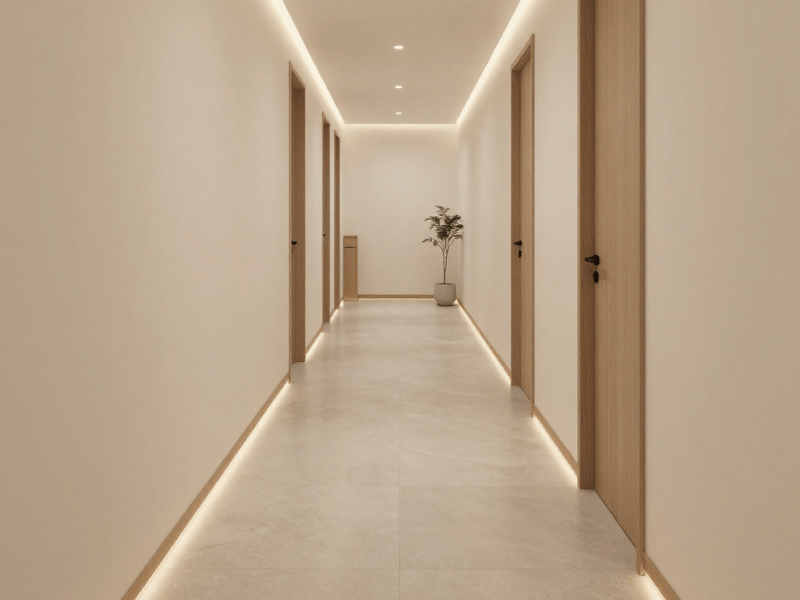
Installing LED strips beneath the island overhang or kickboards creates a floating effect that instantly makes the kitchen feel more high-end. In the evening, this soft ambient glow completely transforms the room.
Strip lighting adds atmosphere and depth while improving visibility around the island. It’s the perfect solution for creating layered lighting.
Of course, you want your strips to look clean and professional. That’s why most homeowners install strips inside aluminium profiles. Aside from keeping the setup clean and protecting the strips from dirt and knocks, these have built-in diffusers, which help diffuse the light evenly. If there’s one thing that’s true about lighting, it’s this: You can never go wrong with LED strips.

Recessed Ceiling Spotlights
Recessed spotlights offer a clean and clutter-free lighting solution because they sit flush with the ceiling. Typically, only the bezel is visible once they’re installed, making them ideal for kitchens with lower ceilings.
You don’t even need to use these lights on their own. These can work alongside pendant lighting to create a layered effect. Here’s how it goes:
-
Pendants provide decorative focus and task lighting
-
Recessed spotlights help eliminate dark spots around the rest of the kitchen
But do you know what’s better than a recessed ceiling spotlight? Adjustable spotlights, of course! Use these, and light can be directed precisely where needed.
Best Colour Temperatures for Kitchen Island Lighting
When it comes to kitchen island lighting (or any kind of lighting at all, really), brightness is not everything. Colour temperature affects how a kitchen feels just as much as brightness does. Choose the wrong one, and even a beautiful kitchen can instantly look dull, cheap, and uncomfortable.
Warm White Lighting for Cosy Kitchens
Warm white lights are those rated between 2700K and 3000K. These lights produce a yellowish tone, creating a softer, more inviting atmosphere in your kitchen.
This colour temperature works particularly well on islands used more for dining and relaxing than for food prep. Lights with this tone enhance exposed natural materials, such as wood, brass, and stone, which makes them ideal for traditional kitchens and farmhouse-inspired spaces. For kitchens that double as social spaces, warm white often feels more welcoming than cooler lighting temperatures.
Cool White Lighting for Modern Kitchens
For everyday task lighting, 4000K natural white is the sweet spot since you get a neutral colour (not too yellow and not too blue). But if a brighter, crisper light is needed, go for cool white lighting (5000K+). This is perfect for detail-heavy tasks that need good visibility, including peeling, slicing, filleting, and more cooking activities.
Cool white light also brings a modern glow to cabinetry, marble worktops, and minimalist interiors, making this a popular choice for contemporary designs. However! Use it too much, and you risk creating a space that feels harsh.
Can You Mix Colour Temperatures?
The technical answer is: yes. But it needs to be done carefully. Layered lighting often benefits from mixing colour temperatures slightly. For example, cooler task lighting above the island can be combined with warmer ambient lighting elsewhere in the kitchen.
This approach helps maintain practical brightness while still creating a comfortable atmosphere. But this needs control. Mixing dramatically different colour temperatures can make the kitchen feel disjointed and visually uncomfortable.
You do not want one area to appear warm and cosy while another suddenly feels like a supermarket refrigerator aisle. Mixing colour temperatures that are relatively close together usually produces the best results.
How Many Lights Should You Put Above a Kitchen Island?
That depends mainly on three things:
-
Island size
-
Fixture size
-
Overall kitchen design
Two Pendant Lights
This is the most common setup for medium-sized kitchen islands. What this offers for most households:
-
Balanced symmetry
-
Sufficient task lighting
It works especially well in standard family kitchen islands that serve multiple purposes, where one pendant is not enough, but three overcrowd the space.
Three Pendant Lights
Use three pendants when you have a larger island and an open-plan kitchen. This way, you can provide even illumination across the full length of the island while creating a luxurious, designer-inspired appearance. With three pendants, spacing becomes especially important. You want to achieve balance. Having asymmetrical distances between the pendants can tip off your kitchen design.
One Large Statement Fixture
Instead of multiple fittings, a single dramatic pendant creates a clean and sculptural focal point for your kitchen island. This approach is particularly effective in interiors where you want to add a dramatic element. When done properly, even smaller islands can benefit from using a single oversized fixture, which helps reduce visual clutter without sacrificing performance.

Kitchen Island Lighting Placement Tips
Now that you have the type, brightness, colour temperature, and the number of lights figured out, it all comes down to their placement. This plays a crucial role in how your space will function and appear.
Ideal Pendant Spacing
Different guides will suggest different spacing, but the general rule is to keep each pendant about 60-75cm apart. Also, don’t let your pendants “spill” over the edge of the island. Give at least 15-30cm between the edge and the first pendant.
This helps prevent overcrowding while maintaining visual balance across the island. Oversized pendants may need slightly more spacing to avoid the fittings feeling cramped. Remember that you want to achieve symmetry when it comes to pendant installation.
Recommended Height Above the Island
Pendant lights generally work best when hung around 75cm to 90cm above the worktop. This helps:
-
Reduce glare
-
Maintain good task lighting
-
Preserves clear sightlines (no fixtures blocking your view)
Higher ceilings may allow slightly longer drops, while lower ceilings may require more compact positioning.
Avoiding Shadows and Dark Spots
The biggest mistake most homeowners make is relying on a singular light source. That applies to your kitchen island lighting as well.
Pendant lights alone may create shadows, especially when someone stands directly beneath them while preparing food. So, it’s a smart move to combine your pendants with other types of ambient lighting.
Kitchen lighting works best when layered, after all. Also consider standing and seating positions when placing your fittings. Lighting should illuminate the island comfortably without shining directly into people’s eyes while seated.
Smart Kitchen Island Lighting Ideas
We can’t talk about lighting without mentioning smart lighting.
It was once only science fiction. Then it became a reality, available only to those who could afford it and technology enthusiasts. Now it’s made its way into mainstream home improvement, particularly in kitchen lighting.
With modern smart systems, you can control your pendants’ brightness, colour temperature, and scheduling directly from an app or voice assistant.
Kitchen islands particularly benefit from dimmable smart LEDs, as they allow the space to adapt to changes throughout the day. Most smart systems have scene-setting features. Easily create presets for activities like cooking, dining, entertaining, or evening relaxation.
A tap on your smartphone turns on bright task lighting for cleaning and cooking, or shifts them to softer dimmed settings for a relaxed atmosphere when dining and socialising. Also, an “Alexa, brighten island lights” voice command while your hands are full or covered in flour? That’s surprisingly convenient. Not to mention futuristic!
Is Smart Lighting Worth It in Kitchens?
For many homeowners, yes.
Smart lighting offers convenience, flexibility, and energy savings. LEDs already consume far less energy than traditional bulbs, and smart controls further improve efficiency by enabling more precise use. You can:
-
Schedule and automate routines (bright in the morning, dim in the evening)
-
Add sensors so the lights only turn on when people are around
-
Adjust colour temperature to match the activity or time of day
Smart lighting is adaptable lighting. And for a multi-purpose space like your kitchen island, it is the smart choice.
Common Kitchen Island Lighting Mistakes to Avoid
1. Choosing fixtures that are too small. Tiny pendants above a large island often look disconnected and underwhelming.
2. Hanging pendants too high. When placed too far from the island, pendants lose their effectiveness as task lighting. Hanging them too low, however, can obstruct views and create glare.
3. Poor spacing can. Pendants positioned too close together feel cluttered, while too far apart make the arrangement feel incomplete.
4. Mixing incompatible finishes. Lighting should complement nearby hardware and kitchen finishes rather than competing awkwardly against them.
5. Over-lighting the island. This can make the kitchen feel harsh and uncomfortable. For better results, layer your lights and consider using dimmers.
6. Ignoring colour temperature consistency. Matching or carefully coordinating colour temperatures helps create a more cohesive atmosphere. Again, don’t mix dramatically different colour temperatures.
Budget-Friendly Kitchen Island Lighting Ideas
Most of the time, you don’t need to empty your bank account for a lighting upgrade. Follow these simple tips to keep you grounded… financially.
1. Replacing outdated pendants with modern fittings is often one of the quickest and most affordable ways to refresh a kitchen. Even simple changes can dramatically improve the room's overall appearance.
2. LED lighting offers long-term savings through reduced energy consumption and longer lifespan. So, ditch the traditional halogen and fluorescent lights you have at home. Modern LEDs provide excellent brightness while using far less electricity.
3. DIY-friendly upgrades like LED strip lighting are another cost-effective option. Adding subtle under-island illumination can instantly modernise the space without major construction work. Most of these are peel-and-stick, so installation is pretty straightforward and can be done easily as a DIY project.
4. Swapping outdated shades or bulbs often delivers noticeable improvement at a fraction of the cost of complete replacement. Did you know you could do that?
A friendly reminder:
Good lighting design is less about spending huge amounts of money and more about making thoughtful choices that work for the space.

Choosing the Perfect Kitchen Island Lighting
Let’s recap the different factors that need to work together for you to achieve the perfect kitchen island lighting:
-
Kitchen style
-
Island size
-
Ceiling height
-
Preferred atmosphere
All of these influence what will look and perform best for your space.
Pendant lighting remains a timeless favourite, but linear fittings, recessed spotlights, and LED strip lighting all offer excellent alternatives. Colour temperature also plays a major role, shaping whether the kitchen feels warm and cosy or crisp and contemporary.
For best results, combine your pendant lights with other ambient and decorative lights to create a comfortable environment. Lastly, don’t forget smart lighting options, as they can add convenience and versatility to your island, helping it adapt to changes throughout the day.
If you’re planning a kitchen update, now is the perfect time to explore Simple Lighting’s ranges. You can browse kitchen collections, compare pendant finishes, and discover how LED strip lighting can add depth and atmosphere to your space.
A team of light experts are also ready to help you if you have specific questions you need answered. Check out our updated website now!
And don't miss out on similar posts like this here: Kitchen Lighting Ideas: The Ultimate UK Guide.


0 comments