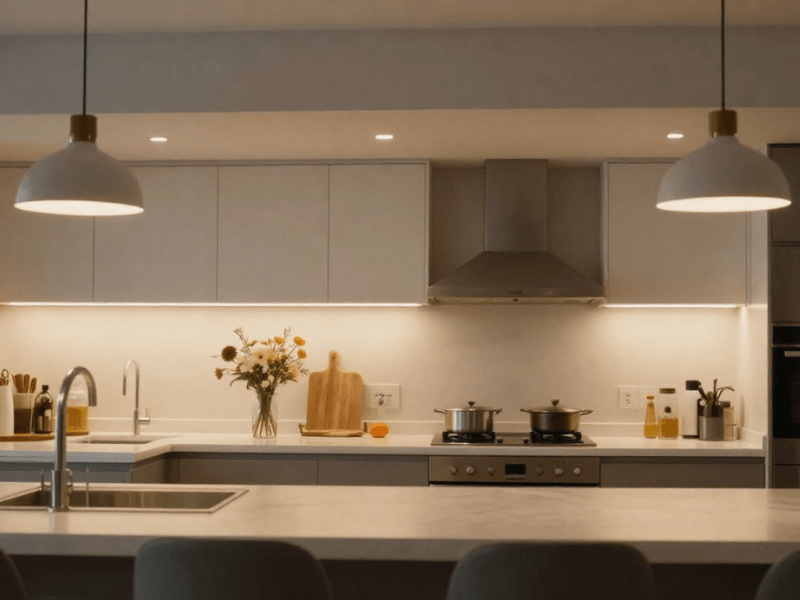




Your kitchen ceiling lighting does far more than help you locate the kettle at 6am. It affects how your kitchen looks, feels, and functions every single day.
Bad ceiling lighting creates shadows, dull corners, and harsh glare, making your kitchen feel cold and flat. Even expensive kitchens can look disappointing under such lighting! Nothing says “questionable renovation choices” quite like one lonely bulb fighting for its life in the middle of the ceiling.
Modern kitchens need layered lighting. That means combining ambient, task, and accent lighting together for a balanced setup.
In simple terms:
- Ambient lighting lights the whole room
- Task lighting helps you cook safely
- Accent lighting adds atmosphere and style
When these layers work together properly, your kitchen instantly feels more polished and practical.

The right ceiling lighting also helps define zones in open-plan layouts, improves visibility while cooking, and creates a more welcoming atmosphere for dining and entertaining. Whether you prefer minimalist spotlights, statement pendants, or smart lighting systems controlled from your phone while pretending you live in a sci-fi film, there are plenty of options available.
This guide covers:
- The best kitchen ceiling lighting types
- Layout and spacing tips
- Modern kitchen lighting ideas
- Colour temperature and brightness
- Smart lighting features
- Common mistakes to avoid
- Budget-friendly upgrades that actually look good
Your kitchen deserves better than harsh lighting and permanent worktop shadows. Let’s make sure it gets it!
Why Kitchen Ceiling Lighting Matters More Than You Think
Kitchen ceiling lighting serves as the foundation of your entire lighting scheme. Everything else works around it. Without good ceiling lighting, even beautiful kitchens feel awkward to use. Dark prep areas, uneven brightness, and glare-heavy lighting can make the space uncomfortable surprisingly fast. And since kitchens are now social spaces as much as cooking spaces, lighting matters more than ever.
It Creates Your Main Ambient Lighting
Ceiling lighting provides the base level of brightness across the room. It helps your kitchen feel:
- Open
- Clean
- Comfortable
- Functional
Natural light helps during the day, but it rarely covers the entire room evenly. Especially in British homes, where sunlight occasionally appears for emotional support only. Proper ceiling lighting keeps the kitchen usable from morning until late evening.
It Improves Safety and Visibility
Sharp knives and dim lighting make for a terrible combination. Good ceiling lighting helps you:
- See preparation surfaces clearly
- Reduce shadows on worktops
- Improve visibility around hobs and sinks
- Avoid eye strain while cooking
Task lighting matters, too, although strong ceiling lighting creates the essential starting point. Without it, your under-cabinet lighting ends up doing all the heavy lifting.
It Shapes the Mood of the Kitchen
Lighting changes how your kitchen feels emotionally. Warm lighting creates a softer, relaxed atmosphere. Cooler lighting feels brighter and cleaner. The right balance makes the room feel inviting rather than clinical. Nobody wants their kitchen to resemble an operating theatre while making toast. Dimmable ceiling lighting also gives you flexibility throughout the day. It’s bright while cooking, and softer while eating or entertaining.
It Supports Layered Lighting
Modern kitchens rarely rely on one light source anymore. Your ceiling lighting should work alongside:
- Under-cabinet LEDs
- Pendant lights
- Shelf lighting
- Plinth lighting
- Dining lighting
When layered properly, the kitchen feels more luxurious and visually balanced.
It’s Essential in Open-Plan Kitchens
Open-plan spaces need carefully planned lighting. Your kitchen lighting must blend naturally into nearby living and dining areas. Otherwise, the kitchen can feel disconnected from the rest of the room. Ceiling lighting helps create a sense of flow between spaces while clearly defining distinct zones.
Types of Kitchen Ceiling Lighting Explained
Different kitchens need different lighting solutions. A huge pendant might look amazing in a large open-plan kitchen, but slightly ridiculous in a tiny galley space. Here are the most popular kitchen ceiling lighting options and where they work best:
Recessed Ceiling Spotlights (Downlights)
LED spotlights are one of the most popular choices in modern kitchens. Recessed ones sit flush with the ceiling, achieving a clean, minimal look without bulky fittings hanging overhead.
Spotlights provide:
- Even light distribution
- A sleek, modern appearance
- Flexible placement options
- Excellent task lighting support
They suit almost every kitchen style, especially:
- Contemporary kitchens
- Scandinavian interiors
- Minimalist layouts
- Open-plan spaces
Spacing matters more than people think. Poorly positioned spotlights create dark patches and awkward shadows. As a general rule:
- Space them evenly
- Avoid placing them directly behind where you stand
- Add extra lighting above preparation areas
Otherwise, you become the reason your chopping board sits in darkness.
Choose:
- Dimmable LEDs
- Adjustable beam angles
- Fire-rated fittings
- Energy-efficient models
Integrated LED spotlights also reduce long-term maintenance costs. No more climbing onto counters every few months just to change bulbs (while questioning your life choices).
Pendant Ceiling Lighting
Pendant lighting adds personality and visual impact. These hanging fixtures create focal points while helping define kitchen zones. Pendant lights look fantastic above:
- Kitchen islands
- Breakfast bars
- Dining tables
They visually separate social areas from cooking spaces. Very useful in open-plan kitchens. Popular pendant styles include:
- Matte black pendants
- Glass globe designs
- Brass finishes
- Industrial styles
- Oversized statement pendants
- Cluster lighting arrangements
Simple designs often age better than ultra-trendy fittings. Remember the copper obsession from a few years ago? Exactly! Regarding placement, pendant lights should:
- Sit low enough to create impact
- Stay high enough to avoid blocking views
- Provide useful task lighting below
Balance is important. Nobody wants guests making accidental head contact with decorative lighting.
Flush & Semi-Flush Ceiling Lights
Flush fittings sit directly against the ceiling. Semi-flush designs hang slightly lower. They’re ideal for kitchens with lower ceilings where hanging fittings may feel cramped. These fittings help:
- Maximise ceiling height
- Maintain clean sight lines
- Provide broad ambient lighting
- Keep smaller kitchens feeling open
Modern flush fittings now look far more stylish than older dome-style designs. Thankfully, the “cheap rental flat ceiling light” aesthetic is slowly disappearing.
Flush lighting works particularly well in:
- Small kitchens
- Flats
- Utility kitchens
- Compact modern homes
Minimal designs create the cleanest overall look.
LED Panel Ceiling Lights
LED panel lighting has become increasingly popular in modern residential kitchens. They provide wide, even illumination across the room without visible hotspots. LED panels offer:
- Bright, even lighting
- Low energy consumption
- Minimal glare
- Long lifespan
They work especially well in:
- Contemporary kitchens
- Handleless kitchen designs
- Minimal interiors
Slimline LED panels create a very clean architectural appearance. They blend neatly into ceilings and avoid visual clutter. Perfect if you prefer a streamlined kitchen rather than “country cottage with seventeen decorative signs”.
Track Lighting Systems
Track lighting uses multiple adjustable spotlights mounted along a ceiling track. It combines flexibility with a slightly industrial design style. Track lighting lets you place light exactly where needed. This works brilliantly for:
- Awkward kitchen layouts
- Large kitchens
- Multi-zone spaces
- Kitchens with changing layouts
Track lighting suits:
- Industrial interiors
- Contemporary kitchens
- Black-and-wood colour schemes
- Loft-style homes
Black track systems remain especially popular in modern kitchens. They add contrast without overwhelming the space.

How to Plan Your Kitchen Ceiling Lighting Layout
Even premium lighting looks bad when poorly placed. Planning your layout properly makes a massive difference to how the kitchen feels and functions.
Understanding Kitchen Zones
Modern kitchens usually serve several purposes at once. Each zone needs slightly different lighting support.
Cooking Zone
This area needs bright, practical lighting. You should clearly see:
- Hob areas
- Ovens
- Preparation surfaces
Spotlights work especially well here because they reduce shadows and improve visibility.
Preparation Zone
Prep areas need focused lighting from the correct angle. Position lights slightly in front of worktops rather than directly overhead. Otherwise, your body completely blocks the light.
Dining & Social Zone
Dining areas benefit from softer, warmer lighting. Pendant lights and dimmable LEDs work brilliantly here. They allow the atmosphere to feel relaxed and welcoming rather than aggressively bright. Nobody wants dinner lighting with airport security energy.
How Many Ceiling Lights Do You Need?
The number depends on:
- Kitchen size
- Ceiling height
- Lighting type
- Room layout
Small kitchens may only need four to six spotlights. Larger ones often require multiple lighting layers.
Avoid using too few lights. Otherwise you'll create:
- Dark corners
- Uneven brightness
- Shadow-heavy worktops
These will immediately make your kitchen feel smaller and less welcoming. Conversely, over-lighting will make your kitchen feel harsh and uncomfortable, especially if you install cool-white LEDs. You want balanced brightness, not supermarket aisle intensity.
Ceiling Lighting Placement Tips
A few simple layout adjustments dramatically improve lighting.
Keep Spacing Consistent
Even spacing creates cleaner-looking ceilings and more balanced illumination. Random placement always looks messy, even if somebody insists it feels “artistic”.
Align Lights With Kitchen Features
Try aligning ceiling lights with:
- Islands
- Counters
- Cabinet lines
- Dining tables
This creates a more intentional and polished layout.
Reduce Shadows on Worktops
Position ceiling lights slightly forward of key work areas. This helps light fall directly onto preparation surfaces rather than behind you. Your kitchen should support cooking, not sabotage it.

Best Kitchen Ceiling Lighting Ideas for Modern Homes
Need inspiration? These kitchen ceiling lighting ideas remain popular for a reason. They look stylish, improve functionality, and help kitchens feel far more expensive than they actually were.
Minimalist All-White LED Ceiling Lighting
Minimalist kitchens thrive on simplicity. White ceiling spotlights and slim LED fittings blend seamlessly into pale ceilings, creating a clean, uncluttered appearance.
All-white lighting layouts help:
- Make kitchens feel larger
- Reflect light evenly
- Reduce visual clutter
- Create a calm atmosphere
This style works especially well in:
- Scandinavian kitchens
- Modern flats
- Small open-plan layouts
- Contemporary renovations
Hidden Lighting Looks More Expensive
Recessed lighting creates a subtle “hidden light source” effect. The kitchen feels brighter without bulky fittings drawing attention overhead. Very sleek. Very modern. And very likely to make guests suddenly discuss “architectural lighting” even though they never mentioned it before.
Black Spotlight Ceiling Layouts
Black spotlights create contrast and definition. They work beautifully in modern kitchens with:
- White cabinetry
- Wood finishes
- Concrete textures
- Industrial details
Black fittings help frame the ceiling visually without overwhelming the room. They add depth while still feeling minimal. Grid-style spotlight layouts look especially polished in larger kitchens. Additionally, black ceiling lighting pairs well with:
- Black taps
- Dark cabinet handles
- Metal-framed doors
- Black appliances
It creates consistency across the space without feeling overly coordinated. It can make your kitchens look stylish, not like somebody aggressively matched every object on purpose.
Layered Lighting Ceiling Designs
Layered lighting combines multiple light sources together, usually with:
- Ceiling spotlights
- Pendant lighting
- LED strips
- Under-cabinet lighting
This creates a far more balanced kitchen environment.
Different activities need different lighting levels. Bright task lighting works well while cooking. Softer ambient lighting feels better during meals and entertaining. Layered lighting gives you flexibility, rather than forcing a single lighting setup to handle everything poorly.
Luxury kitchens nearly always use layered lighting. The space feels richer because light comes from multiple levels and directions rather than blasting down from one central fitting. It also adds depth and atmosphere during evenings. Far more inviting than a single bulb illuminating your leftovers like museum artefacts.
Statement Pendant Ceiling Arrangements
Pendant lighting remains one of the easiest ways to add personality to a kitchen. Large pendants, in particular, instantly create visual impact. Current favourites include:
- Oversized dome pendants
- Glass globe lights
- Cluster pendants
- Matte black finishes
- Warm metallic tones
Simple shapes usually age better than ultra-trendy designs. Nobody wants lighting that screams “inspired by 2022 social media”. Pendant lights work best:
- Above islands
- Above breakfast bars
- Over dining tables
- In double-height kitchens
Spacing matters, too! Multiple pendants should feel balanced rather than awkwardly squeezed together like nervous strangers on public transport.
Smart LED Ceiling Lighting Setups
Smart home lighting is now far more practical than gimmicky. Modern systems give you proper control over brightness, colour temperature, and lighting scenes. Popular features include:
- App control and sensors
- Voice assistant support
- Dimming schedules
- Adjustable colour temperatures
- Energy monitoring
These are very useful when your hands are covered in flour and touching switches becomes a terrible idea. In short, smart lighting improves flexibility. You’ll easily switch between:
- Bright cooking mode
- Soft dining ambience
- Evening relaxation lighting
- Night-time low brightness
Your kitchen instantly becomes more adaptable throughout the day.

Choosing the Right Colour Temperature for Kitchen Ceiling Lighting
Colour temperature affects how your kitchen feels just as much as brightness does. The wrong temperature can make even beautiful kitchens feel uncomfortable. Too cool feels harsh. Too warm feels dull. Somewhere in the middle is usually the sweet spot.
Warm White Kitchen Lighting (2700K–3000K)
Warm white lighting creates a softer and more inviting atmosphere. It produces a gentle yellow-toned glow that feels cosy and relaxed.
Warm white lighting, such as this fitting, works particularly well in:
- Traditional kitchens
- Farmhouse styles
- Dining areas
- Family kitchens
It also pairs beautifully with:
- Wood cabinetry
- Warm neutral colours
- Brass finishes
Warm lighting feels comfortable during evenings. It softens the room and creates a more welcoming atmosphere for dining and entertaining. Perfect if you want your kitchen to feel calm rather than like a surgical prep room.
Cool White Kitchen Lighting (4000K–5000K)
Cool white lighting (like this panel) feels brighter, sharper, and cleaner. It improves visibility and creates a more modern appearance.
Cool white works well in:
- Contemporary kitchens
- Minimalist interiors
- Task-heavy cooking spaces
- Modern open-plan homes
Cooler lighting helps:
- Improve task visibility
- Brighten darker kitchens
- Enhance modern finishes
- Create crisp contrast
It especially suits white and grey kitchen designs. Just avoid going excessively cool unless you genuinely want “high-end supermarket bakery department” energy.
Can You Mix Colour Temperatures?
Yes. But do it carefully. Mixing lighting temperatures badly creates visual chaos surprisingly quickly. A balanced layered setup often works best:
- Cooler lighting for prep zones
- Warmer lighting for dining areas
- Neutral lighting for ambient brightness
This keeps the kitchen functional while still feeling comfortable. Smart LED systems also allow you to adjust colour temperature throughout the day. You can make it cooler during cooking and warmer in the evenings. Very useful during winter when darkness arrives before your motivation does.
How Bright Should Kitchen Ceiling Lighting Be?
Brightness matters just as much as design. A stunning kitchen still needs practical lighting that actually lets you see what you’re doing.
Understanding Lumens in Kitchen Lighting
Lumens measure brightness. The higher the lumens, the brighter the light output. Here are a few recommendations for your kitchen:
- Ambient lighting should feel bright but comfortable
- Task areas need stronger, focused lighting
- Dining spaces benefit from softer brightness
LED lighting provides strong brightness while remaining energy efficient. Much better than older halogen bulbs that heated the kitchen like tiny portable suns. That being said, brightness balance matters, too! Too little creates shadows and dull corners. Too much feels uncomfortable and harsh. And when it comes to cool white lighting, balance always wins.
Dimmable Ceiling Lighting Benefits
Dimmable LEDs give you far more control over the kitchen atmosphere. You can have it bright when cooking, and softer while relaxing. It’s simple, effective, and surprisingly life-improving.
Dimmable lighting helps:
- Reduce energy use
- Improve comfort
- Create mood lighting
- Support layered lighting schemes
It also makes open-plan kitchens feel more flexible throughout the day.
Modern kitchens often serve several roles at once:
- Cooking space
- Dining room
- Workspace
- Social area
Dimmable lighting adapts easily between them. Honestly, once you use dimmable lighting properly, standard on-off switches feel oddly aggressive!
Kitchen Ceiling Lighting Mistakes to Avoid
Even expensive kitchens make lighting mistakes constantly. Here are the biggest ones to avoid:
Poor Light Spacing
Uneven spacing creates:
- Dark spots
- Bright patches
- Messy-looking ceilings
Measure carefully before installation. “Eyeballing it” rarely produces luxury results.
Relying on One Light Source
One central ceiling light is usually not enough, especially in larger kitchens. Layered lighting creates:
- Better brightness balance
- Fewer shadows
- Improved atmosphere
- Greater flexibility
Your kitchen deserves more than one exhausted bulb attempting heroics.
Ignoring Kitchen Zones
Different kitchen areas need different lighting levels. Preparation zones need bright task lighting, while dining zones need a softer glow. Treating the entire kitchen identically usually creates poor results.
Choosing the Wrong Colour Temperature
Lighting that feels too cool will come across as clinical. But if it feels too warm, the room will appear dull or yellow. Balanced colour temperatures create the best overall atmosphere.
Creating Harsh Shadows
Poor spotlight placement creates shadows directly across worktops, usually because lights sit directly behind you. Again, your own body should not become the kitchen’s main obstacle to lighting.
Over-Lighting Small Kitchens
Too many fittings overwhelm smaller spaces. Compact kitchens benefit from:
- Cleaner layouts
- Simpler lighting schemes
- Consistent brightness
Avoid using too many spotlights, or you’ll end up recreating daylight at midnight.

Smart Kitchen Ceiling Lighting Ideas
Smart kitchen lighting is now genuinely useful rather than unnecessarily futuristic. You no longer need a complicated setup worthy of a spaceship control room.
Modern smart systems offer:
- Voice control
- App-based dimming
- Scheduled lighting
- Colour temperature adjustment
- Scene settings
Very helpful when cooking with messy hands. Or when you simply cannot be bothered standing up again. Custom lighting scenes allow quick changes between activities. For example:
- Bright prep lighting while cooking
- Soft ambient lighting during dinner
- Low evening lighting before bed
One tap completely changes the mood of the room. Smart ceiling spotlights combine modern design with flexible control. Many systems now support:
- Dimming
- Adjustable warmth
- Smartphone integration
- Voice assistants
A far cry from aggressively flicking switches and hoping for the best.
Are Smart Ceiling Lights Worth It?
For most modern kitchens, yes. For open-plan homes, absolutely! Smart lighting provides:
- Better convenience
- Improved atmosphere
- Energy savings
- Flexible lighting control
The upfront cost is slightly higher, but the long-term flexibility makes a huge difference.
Kitchen Ceiling Lighting for Small vs Large Kitchens
Kitchen size changes how lighting should be planned. A setup that works beautifully in one kitchen may fail completely in another.
Small Kitchen Lighting Solutions
Small kitchens benefit from simple, uncluttered lighting designs. Great options include:
- Flush ceiling fittings
- Compact spotlights
- Slim LED panels
- Under-cabinet lighting
These help maximise brightness without overwhelming the room. Keep the ceiling clean, though! Too many decorative fittings make small kitchens feel crowded. Minimal lighting layouts usually work best. Clean lines help the space feel larger and brighter.
Large Kitchen Lighting Solutions
Large kitchens need layered lighting and multiple zones. One central fitting will not provide enough coverage. Combine:
- Ceiling spotlights
- Pendant lighting
- Accent LEDs
- Under-cabinet task lighting
This creates flexibility and balanced brightness throughout the space. Additionally, proper light helps define different areas. You'll separate:
- Cooking zones
- Dining areas
- Seating spaces
- Kitchen islands
This is especially important in open-plan homes. Without zoning, large kitchens can feel visually flat and slightly chaotic.
Budget-Friendly Kitchen Ceiling Lighting Ideas
Good lighting doesn’t require a terrifying renovation budget. Even a small upgrade can lead to surprisingly big improvements.
Simple changes include:
- Switching to LED bulbs
- Replacing outdated spotlights
- Adding dimmer switches
- Installing smart bulbs
These upgrades improve both appearance and efficiency. LEDs can save you money long-term. They:
- Use less energy
- Last longer
- Produce less heat
- Require less maintenance
Your electricity bill will appreciate that effort.
Retrofitting Existing Fixtures
You don’t always need completely new fittings. Upgrading the following can modernise the entire kitchen for far less money:
- Bulbs
- Trims
- Finishes
- Controls
It’s much easier than ripping ceilings apart while questioning every renovation decision you’ve ever made.

Final Thoughts: Choosing the Best Kitchen Ceiling Lighting
The best kitchen ceiling lighting balances practicality, comfort, and style. Your lighting should support how you actually use the kitchen every day. That means thinking beyond basic brightness alone.
A well-designed kitchen lighting setup should:
- Improve visibility
- Reduce shadows
- Create atmosphere
- Support different activities
- Complement the overall design
Start with strong ambient ceiling lighting first. Then layer in task and accent lighting where needed.
Think carefully about:
- Kitchen size
- Ceiling height
- Layout zones
- Brightness levels
- Colour temperature
- Smart lighting features
Most importantly, avoid relying on one single ceiling fitting to handle everything. Layered lighting always creates the best results. Your kitchen will feel brighter, more welcoming, and far more premium. Whether you prefer sleek spotlights, statement pendants, smart LED systems, or minimalist ceiling panels, choosing the right lighting transforms the entire space.
At Simple Lighting, you’ll find stylish kitchen ceiling lighting solutions for every layout and budget. Explore our:
- Modern LED spotlights
- Dimmable ceiling lights
- Smart lighting systems
- And more!
Feel free to reach out! We’ll help you make your kitchen look better and function properly.
Also don't miss out on more Kitchen Lighting Ideas: The Ultimate UK Guide.


0 comments