








If you’ve ever looked at two sets of LED strips and thought they’re the same because they essentially look similar, especially when they’re turned off… You could be wrong.
There’s a key difference that divides LED strip lights besides colour, tone, and brightness levels: their voltage.
LED strips are divided into two groups: 12V and 24V. These affect how far your lighting can run, how consistent it looks, and how simple (or frustrating) your installation becomes.
Get the wrong voltage and your lights will never function as they’re intended.
In this post, we’ll go over what that voltage number really means and why it matters more than most people expect.
Let’s break it down.
12V vs 24V LED Strip Lights: What’s the Real Difference?
You can think of voltage as the pressure behind the flow of electricity.
With LED strips, the key difference between 12V and 24V isn’t about brightness. It’s about how efficiently that power travels along the strip. Here’s what I mean:
-
A 12V system delivers power in smaller steps.
-
A 24V system delivers it with greater power.
That changes how far electricity can travel before it starts to weaken… And that’s where performance steps in.
In real-world installations, especially on longer under-cabinet runs or cove lighting, that difference becomes very visible.
Choose the wrong voltage, and your lighting might start strong… then quietly fade into disappointment further down the strip. Choose the right one, and you get smooth, even light from start to end of the strip.
Let’s look at each voltage option in more detail.
What Are 12V LED Strip Lights?
12V LED strip lights are the classic choice. They’ve been around longer and are widely used in smaller-scale installations.
They operate on a lower voltage system, which makes them particularly appealing for DIY projects. There’s a sense of simplicity to them. They’re easy to understand, easy to power, and easy to work with.
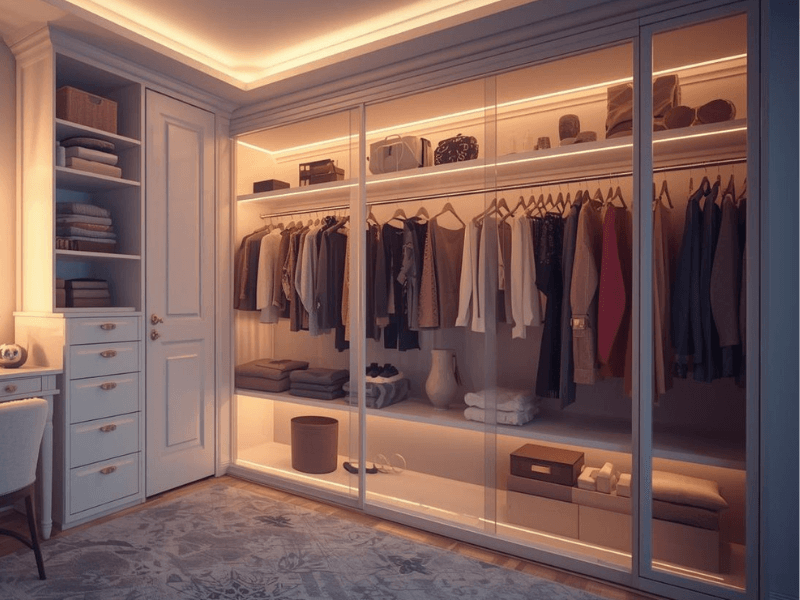
You’ll often find 12V strips used in places like kitchen cabinets, shelving, wardrobes, and display units. Anywhere the runs are short and controlled.
One of their biggest advantages? Compatibility. Many accessories, controllers, LED drivers and power supplies are designed for 12V systems, making it easier to build a setup without overthinking it.
They’re also considered safer to handle, especially for beginners, since the voltage is lower.
What’s the catch?
Because the voltage is lower, the power doesn’t travel as far. That means 12V strips are more prone to voltage drop, which limits how long a single run can be before brightness starts to dip.
12V LED strips are great for small jobs, but less ideal for anything that spans a room.
What Are 24V LED Strip Lights?
24V LED strip lights take the same concept and give it a bit more muscle. By doubling the voltage, these strips can push power further along the length of the tape without losing strength as quickly. That makes them ideal for longer runs and more demanding installations.
They’ve become increasingly popular in modern lighting design, especially in larger residential spaces and commercial settings.
If you’re lighting ceiling coving, long kitchen runs, or open-plan living areas, 24V strips are often the go-to.
The benefits are immediately noticeable. You get more consistent brightness from one end of the strip to the other. You also need fewer points for supplying power, which simplifies installation and keeps things looking cleaner.
The Key Difference: Voltage Drop Explained (Most Important Factor)
If there’s one concept that truly separates 12V and 24V LED strips, it’s voltage drop. This is where the difference really hits.
What Is Voltage Drop?
There’s really no special meaning behind this line. Voltage drop is exactly what it sounds like. As electricity travels along an LED tape, some of its energy is lost.
The further electricity travels, the more it loses. The result?
The LEDs at the start of the strip look bright and crisp, while the ones further down begin to dim slightly. The longer the run is, the more this difference becomes obvious.
Why 12V Strips Lose Brightness Faster
With 12V strips, the electrical “push” is smaller to begin with. So as power travels along the strip, it runs out of steam more quickly. That’s why shorter runs are recommended for this voltage.
If you try to stretch a 12V strip too far, you’ll often see uneven lighting. Bright at the start, weaker at the end.
To fix this, you’d need to add extra power feeds along the strip, basically having multiple runs. That works, but it adds complexity.
How 24V Solves This Problem
Compared to the 12V strips, the 24V ones have more “push” behind them. Because the voltage is higher, the power can travel further before the drop becomes noticeable. That means longer continuous runs with consistent brightness.
This means:
-
Fewer interruptions.
-
Fewer additional wires.
-
A cleaner result overall.
If you’ve ever seen a perfectly even glow running around a ceiling or along a long wall, chances are it’s a 24V setup doing the heavy lifting behind the scenes.
Maximum Run Length: How Far Can You Go?
This is where we step into the practical side of things.
-
With 12V LED strips, typical maximum runs are around 5 metres before voltage drop becomes an issue. Beyond that, you’ll likely need to inject power again (another LED driver).
-
With 24V LED strips, you can often stretch to 10 metres or more, depending on the specific strip and wattage. But 10 metres is the sweet spot.
That difference might not sound huge on paper, but in real installations, it changes everything.
Picture a kitchen.
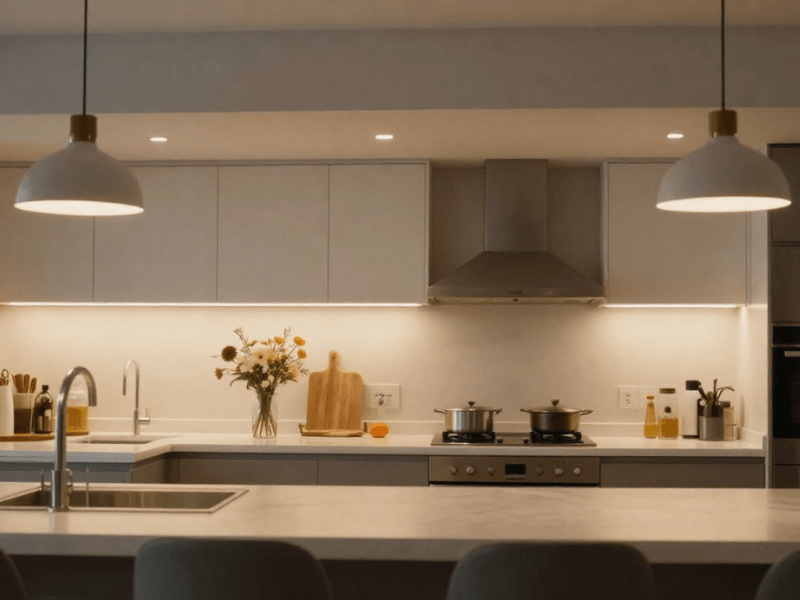
A 12V strip under cabinets might work perfectly if you’re lighting a short section. But if your kitchen runs across multiple walls, you’ll need additional feeds to keep brightness consistent.
Now picture a living room with ceiling coving.
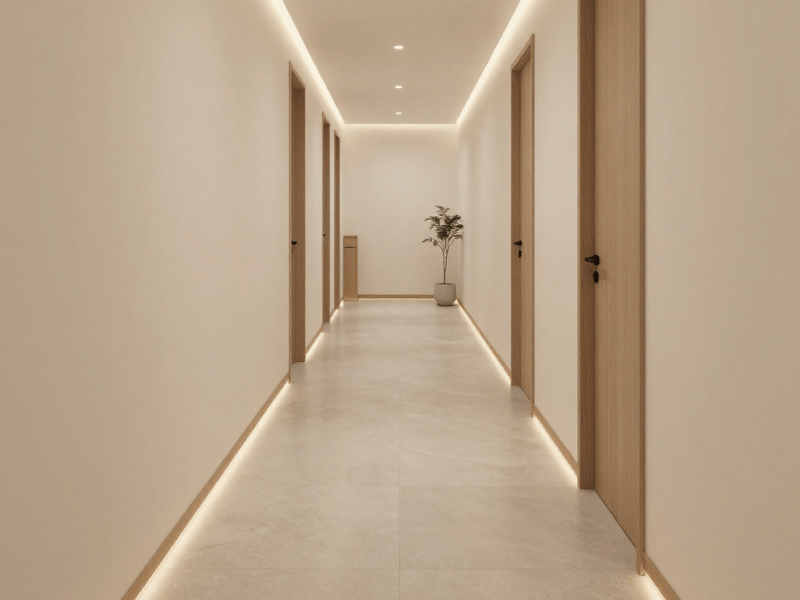
With 24V, you can often run your LED strips in one go, making the installation smoother and cleaner. But if you used 12V strips, that could mean extra wiring and more planning due to the need for multiple power points.
The longer the run, the more 24V starts to feel like the obvious choice.

Brightness and Performance Comparison
Now, you might think that because 24V is better than 12V in longer runs, they’re also brighter. That’s a common misconception.
Brightness is actually determined by lumens per metre, not voltage. You can have a very bright 12V strip and a softer 24V one, depending on how they’re designed. So, always check the specifications before purchasing.
But here’s where voltage does matter: Performance consistency.
While voltage doesn’t directly equal brightness, it plays a big role in how that brightness is delivered. Think of 24V and 12V LED strips as the difference between a spotlight that stays steady and one that slowly dims as you move away from the source.
Installation Differences: Which Is Easier?
If you’re working on a small DIY project, 12V strips often feel more manageable. They’re straightforward:
-
Short runs
-
Simple wiring
-
Widely available components
You can often connect everything to a single driver, keep cable runs minimal, and get the job done without much planning, aside from the layout. For things like shelf lighting or under-cabinet accents, they’re a natural fit.
But once projects get bigger, the balance shifts.
Because 12V strips are more susceptible to voltage drop, longer installations often require additional wiring in the form of power injection points. That means running extra cables back to the driver or adding parallel feeds along the strip to maintain consistent brightness.
This setup works, but you might have to rule out a clean installation.
Here’s the irony: 24V systems can actually be easier for larger installations because they require fewer power feeds. From a wiring perspective, 24V systems are generally cleaner.
-
Less wiring.
-
Fewer connection points.
-
Less troubleshooting.
Power Supply (LED Driver) Requirements
Driver selection follows the same basic rule for both systems.
Choosing the Right Driver for 12V
With 12V LED strips, you must match the voltage exactly. A 12V strip requires a 12V LED driver. No exceptions.
Also, make sure the driver can handle the total wattage of your strip (wattage per metre x length), with a bit of headroom to spare; a 10% or 20% margin is ideal.
Choosing the Right Driver for 24V
The same rule applies here. A 24V strip needs a 24V driver.
However, because 24V systems are often used for longer runs, you may benefit from improved efficiency and fewer drivers overall. That can simplify your setup and reduce clutter, especially in larger installations.
Best Use Cases: When to Choose 12V LED Strip Lights
We’ve already touched on this a bit. 12V LED strips shine brightest in smaller, contained projects. If you’re working on short runs, they’re often the easiest and most practical choice.
They’re ideal for:
-
Under-cabinet lighting
-
Shelving
-
Wardrobes
-
Display units
Anywhere you’re working within a limited distance, use a 12V strip.
They’re also a great option for DIY projects where simplicity matters more than scalability. And in tight spaces, where you don’t need long continuous runs, they do the job perfectly.
Best Use Cases: When to Choose 24V LED Strip Lights
If you’re dealing with long runs, large rooms, or continuous lighting designs, 24V LED strips offer clear advantages. They’re perfect for:
-
Ceiling coving
-
Long kitchen layouts
-
Open-plan living areas
-
Commercial spaces
Basically, anywhere you want smooth, uninterrupted light without juggling multiple power feeds.
They’re also the better choice when consistency is critical. No fading, no uneven patches, just a clean, even glow.
Cost Comparison: 12V vs 24V
12V strips are generally cheaper than 24V options… but cost isn’t just about the strip itself.
-
With 12V strips, longer installations may require additional drivers, connectors, and wiring to manage voltage drop. That can quickly rack up the costs.
-
24V systems may have a slightly higher upfront cost, but they often need fewer components for larger projects.
So while 12V might win on initial price, 24V can offer better value over time, especially for bigger installations.
Common Mistakes When Choosing LED Strip Voltage
You need to avoid these at all costs:
1. Using 12V strips for long runs. It might seem fine at first, but the uneven brightness becomes obvious once installed. Not to mention the cost when adding drivers.
2. Ignoring voltage drop altogether. It’s not always visible in planning, but it shows up the moment the lights are on.
3. Choosing the wrong driver. A voltage mismatch can damage your strip or even ruin it.
4. And sometimes, people overcomplicate things. Not every project needs a high-powered 24V system. If you’re lighting a small shelf, 12V is often more than enough.
The key is matching the solution to the job.
Quick Decision Guide: 12V or 24V?
Still can’t decide? Here’s a simple checklist:
-
If your runs are short, go with 12V.
-
If your runs are long, go with 24V.
-
If you’re working on a simple DIY project, 12V keeps things easy.
-
If you’re planning a larger or more professional installation, 24V gives you better performance and cleaner results.
It’s less about which is “better” and more about which fits your setup.

LED Strip Lighting Solutions from Simple Lighting
At Simple Lighting, you’ll find a wide range of both 12V and 24V LED strip lights designed for different applications.
Whether you’re upgrading kitchen lighting, adding ambient glow to a living space, or planning a full lighting scheme, there are options to suit every project. You’ll also find compatible LED drivers, connectors, and aluminium profiles for a complete professional build.
And if you’re unsure which route to take, getting the right advice early from our team of lighting experts can save time, effort, and frustration later on.
Choose Based on Your Setup, Not Just Specs
The smartest approach when choosing your LED strip is to think about your space first.
How long are your runs? How important is consistency? How complex do you want the installation to be? Answer those, and the voltage choice becomes clear.
Keep it simple where you can. Go stronger where you need to. And when in doubt, choose the option that makes your lighting feel effortless once it’s switched on.


0 comments