

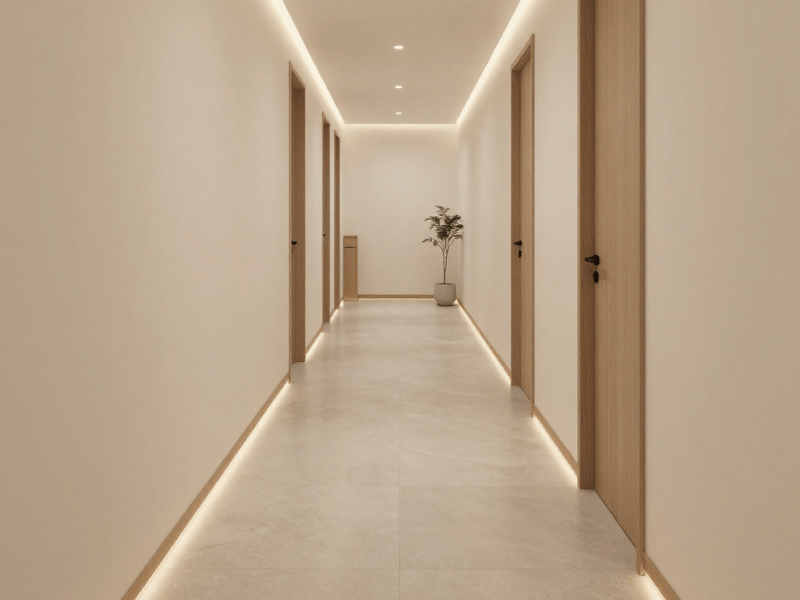

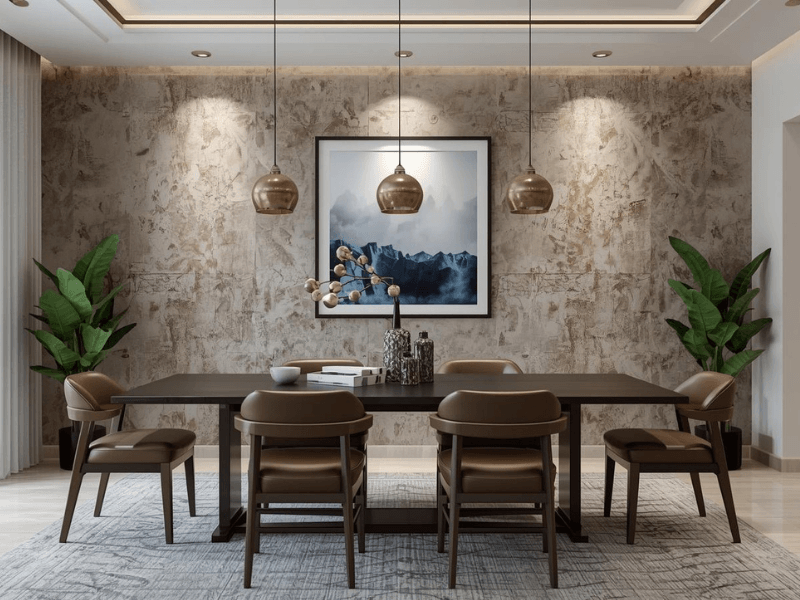




If modern lighting has a “Swiss Army knife,” it's the LED strip light.
You see them tucked beneath kitchen cabinets, glowing behind media walls, wrapping around shelving, lining up living room ceilings, and adding to the creative appeal of commercial interiors.
They used to feel like niche lighting options back in the day, reserved only for hobbyists, set designers, and commercial retail displays. But now, it has become one of the most popular lighting upgrades for homes and businesses alike.
And honestly, it’s easy to see why. LED strips are flexible, energy efficient, stylish, and surprisingly transformative… when you know which type to use.
That brings us to a speed bump many buyers hit: not all LED strip lights look or perform the same.
One of the biggest decisions people face is choosing between COB and SMD LED strip lights. Both are flexible. Both light up. Both stick to surfaces. Both come in warm white, cool white, RGB, and smart lighting options. Yet the difference becomes impossible to ignore.
When you look at your options, some strips produce a smooth, seamless glow that looks straight out of a luxury interior design magazine. Others create visible dots of light that are the total opposite.
Then there are differences in brightness, pricing, flexibility, installation quality, and energy efficiency to consider.
It’s no wonder buyers find it hard to make up their mind on which strip to get.
That’s why in this guide, we’ll break everything down in simple terms. We’ll compare COB vs SMD LED strip lights in terms of appearance, brightness, flexibility, efficiency, installation, and best applications.
By the end, you’ll be able to confidently choose the right strip for your project without feeling like you need a degree in electrical engineering to buy lighting. Because, really, you don’t.
What Are SMD LED Strip Lights?
These are your standard LED strip lights. The term SMD stands for Surface-Mounted Device, which refers to the method of mounting LED chips directly onto the circuit board.
If you’ve ever seen an LED strip where individual “dots” of light are clearly visible, there’s a very good chance it was an SMD strip. These dots are separate LED chips spaced evenly along the tape.
The chips themselves vary in size and output depending on the strip specification. Some of the most common SMD LED types include:
-
SMD 2835
-
SMD 3528
-
SMD 5050
These may look too technical, but they’re simply the dimensions of the LED chip in millimetres. For example, a 3528 LED chip measures 3.5mm x 2.8mm.
Of course, different chip sizes offer different benefits. Smaller chips tend to be more energy-efficient, providing impressive light output while delivering a higher lumen-per-watt rating than bigger chips.
But if you want strips that deliver higher brightness or support colour-changing functionality, like RGB lighting, larger chips are the better option.
How SMD LED Strips Work
On a flexible circuit board, LED chips are spaced evenly along the entire length. That’s how SMD LED strips come to be, in the simplest explanation. Each chip emits light independently, creating multiple light sources along the strip.
Because the LEDs are spaced apart, when the strips are exposed, you’ll see visible “dots” or hotspots during operation. The closer the LEDs are positioned together, the less obvious the spotting becomes, especially when you’re going for indirect lighting.
However, in many standard SMD strips, the diode appearance is still noticeable. Though many position it as such, this isn’t always a bad thing. In fact, for some installations, visible LED points can add character or simply don’t matter because the strip itself is hidden from view.
To soften the appearance of the individual LEDs and create a smoother lighting effect, SMD strips are often paired with LED aluminium profiles with built-in diffuser covers.
Advantages of SMD LED Strips
One of the biggest reasons SMD strips remain popular is affordability. Compared to COB LED strips, they’re generally cheaper. For large installations that require long runs of LED strips, this is a no-brainer for saving on running costs.
High-output SMD strips can also produce excellent brightness, making them ideal for task lighting or commercial applications.
Another advantage is availability. SMD strips are the traditional standard. The “OG,” if you will. It’s easy to find a variety of options with different voltages, colour temperatures, IP ratings, lumen output (brightness), and smart lighting compatibility.
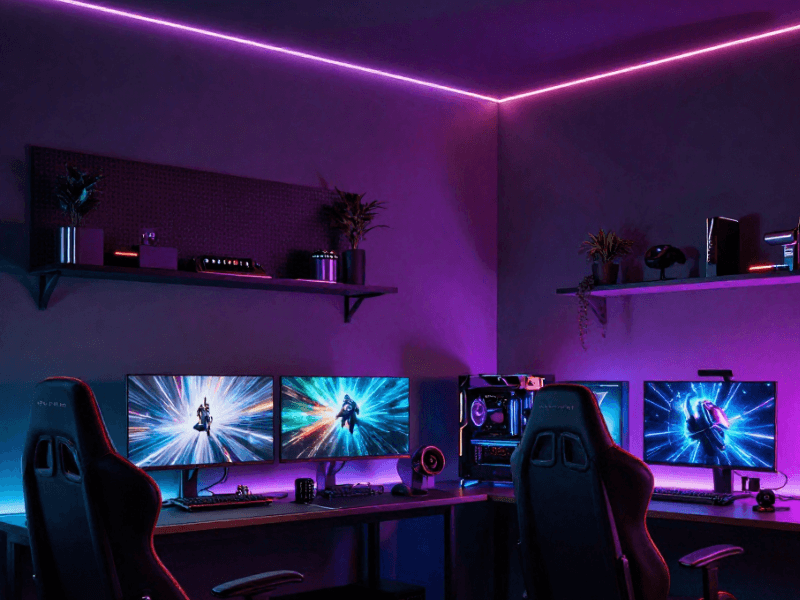
Lastly, they’re also a good choice for RGB setups. Many entertainment spaces and gaming rooms still rely heavily on SMD technology because it excels at delivering vibrant, dynamic lighting effects.
They may not always be the prettiest option, especially when fully exposed, but in the LED world, they’re often the most practical, dependable, and cost-effective lighting at your disposal.
What Are COB LED Strip Lights?
COB LED strips are the new kids on the block. They’re the more premium cousin of standard LED strips.
COB stands for Chip-on-Board, and unlike traditional SMD strips, COB strips have their LED chips mounted directly onto the strip in a dense, continuous line.
This gives the strip its signature smoother and more uniform light output.
That means you don’t see individual “dots” of the LED chips, giving it a considerably higher-end appearance. And this is exactly why it exploded in popularity for modern kitchens, shelving, media walls, and architectural lighting designs.
COB strips are the kinds of strips you want to flaunt rather than hide in a corner, which is what you’d typically do with SMD strips.
How COB LED Strips Work
Hundreds of tiny LED chips are packed closely together on the surface of the flexible circuit (strip). These chips are mounted directly onto the board and coated to create a smooth, diffused lighting effect.
Because the LEDs are so tightly packed, the light blends together almost instantly. Something your typical SMD strip can never replicate without a diffuser.
The result is softer visual output with fewer harsh points of light. Even when viewed directly, COB strips tend to appear smooth and continuous rather than pixelated.
For installations where the strips need to be exposed, COB strips are the effective choice.
Advantages of COB LED Strips
The biggest advantage of COB LED strips is appearance. The effect they create is an instant sense of premium, polished lighting.
Modern interiors benefit greatly from these since lighting is often a big part of the design aesthetic. Kitchens, floating shelves, wall panels, and media units all benefit from cleaner-looking illumination.
Visual comfort is also an edge of the COB strips. Since the light output is smoother, there’s less harsh glare and reduced eye strain when looking toward the strip.
Another strength is that they’re suitable for exposed installations. There’s no need to hide individual LEDs since the light is smooth; most of the time, a diffuser isn't needed.
Think of COB LED strips as an HD upgrade to your pixelated SMD strips.

COB vs SMD LED Strip Lights: The Biggest Differences
Though similar in many ways, coming from the same LED strip lighting family, COB and SMD LED strips create very different overall experiences.
Dot-Free Lighting vs Visible LED Dots
The most noticeable difference when you put COB and SMD strips side by side is their appearance, especially in the light they emit.
COB strips create a smooth, continuous line of light with minimal spotting. This makes them look sleek and modern even when fully visible.
SMD strips, on the other hand, usually display individual points of light unless paired with a diffuser profile.
Aluminium profiles with frosted diffusers can significantly improve the appearance of SMD strips, but in many cases, you can still detect slight hotspots depending on LED spacing and diffuser depth.
If you’re aiming for a luxury interior finish, COB strips almost always look more premium.
But if you’re hiding the LED strips behind a lip, shelf edge, or pelmet anyway for indirect lighting, the visible dots may not matter entirely. SMD strips can perform perfectly well without the higher cost.
Brightness Comparison
This comparison can be a bit challenging because actual brightness and perceived brightness are not always the same, and lumen output may vary across LED strips, regardless of whether they're COB or SMD.
SMD strips often achieve extremely high lumen outputs, especially high-density versions designed for task lighting or commercial use.
COB strips also produce high brightness, but this is where perceived brightness can trick the eyes. Because the light is more evenly diffused, they can sometimes appear softer to the eye despite delivering similar lumen ratings.
For kitchens, worktops, and task lighting, both strips can work well. However, if you want powerful functional lighting with less glare, COB strips often create a more comfortable experience.
Flexibility and Bend Radius
LED strips are designed to bend, but not all handle curves and tight spaces equally well.
Generally, COB strips are more flexible because the chips are smaller and distributed evenly across the strip. This allows smoother bending around corners and tighter installations. Cabinet interiors? Curved shelving? Tight recesses? COB strips are an easy choice for each one.
SMD strips can still bend effectively, but larger LED chips may slightly limit flexibility depending on the strip type.
For straight installations, both strips work perfectly well. But for intricate installations, COB strips often have the advantage.
Energy Efficiency Comparison
Both COB and SMD strips use LED technology, so you know that both are energy-efficient, especially when compared to traditional lighting. The difference would be in how they manage power and heat.
COB strips have a denser LED array, so they tend to run hotter than SMD strips, which can dissipate heat more easily because the LED chips are spaced out.
But then again, both are LED, so heat really isn't a problem, as LEDs don’t waste energy as heat, unlike traditional lighting like halogen lights.
Running costs between the two are usually fairly close when comparing similar lumen outputs.
Lifespan and Durability
We’re basically making the same point here as the one above. Both are LED and boast long lifespans of 30,000 to 50,000 hours.
There are a number of factors to consider, but COB strips typically have a slight durability and thermal advantage due to their integrated design. SMDs, on the other hand, offer higher flexibility for customisation and repair.
That said, build quality matters more than technology alone. A high-quality SMD strip will usually outperform a cheap COB strip.
Reliable drivers, good ventilation, and proper installation all play major roles in the strip's lifespan, regardless of strip type.
Which LED Strip Type Looks Better?
It all comes down to this eventually, right? You want your lights to be functional, but you also want them to enhance your space’s aesthetics.
So, which is better? COB or SMD?
Why COB Strips Dominate Modern Interior Design
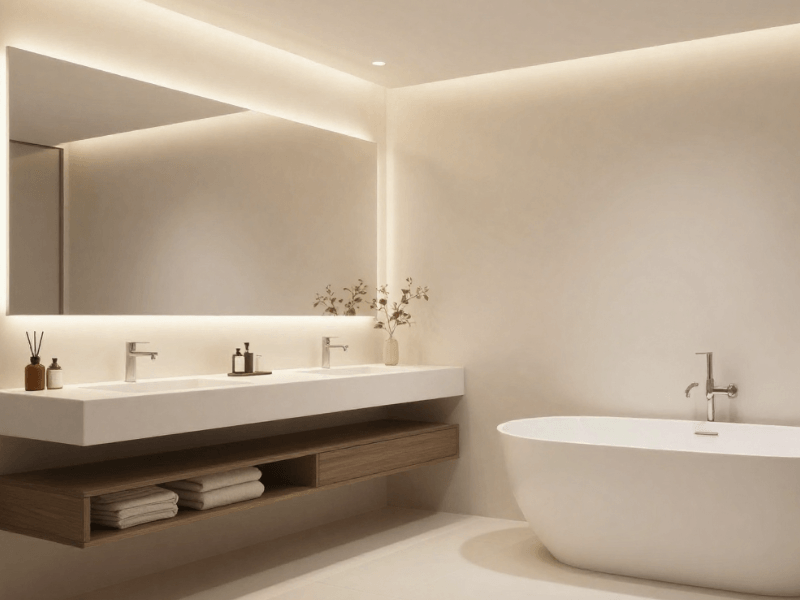
Unsurprisingly, COB LED strips are a fan favourite, especially in modern interiors, for their elegant, floating light effects. Instead of seeing individual dots, you get clean, uninterrupted illumination that feels architectural and refined.
In luxury kitchens, COB strips are often used to create smooth task lighting across worktops. The absence of LED “dots” becomes especially noticeable on glossy surfaces, whereas traditional LEDs tend to reflect them.
Media walls are another area where COB strips shine, both literally and figuratively. The soft ambient glow enhances depth and atmosphere.
Shelving also benefits greatly from COB strips. Ever seen floating shelves illuminated with seamless light? That’s instant premium aesthetic, and it’s become increasingly popular in modern homes.
COB strips are also becoming more prominent in architectural lighting, where the light source feels more integrated into the structure rather than added on.
When SMD Strips Still Make Sense
All this praise for COB LED strips is not to say that SMD strips are obsolete. Despite the obvious design advantage of COB lighting, SMD strips still absolutely have their place in the lighting world.
The biggest issue with SMD strips is the visible LED chips. But if the strip is hidden from direct view, the visible dots issue often disappears entirely.
Popular applications:
-
Plinth lighting beneath cabinets
-
Utility rooms
-
Garage lighting
-
Commercial backlighting
-
Ceiling coving
In these situations, SMD strips can deliver excellent brightness at a lower cost.
For lighting projects that prioritise light output over decorative impact, standard strips remain a strong choice. Large commercial spaces often prioritise output and efficiency over seamless visual appearance.
And of course, RGB lighting still leans heavily toward SMD technology for many applications.
Best Uses for COB LED Strip Lights
When you want your lighting to be seen and admired rather than hidden away, COB strips really step up.
Kitchen Under Cabinet Lighting
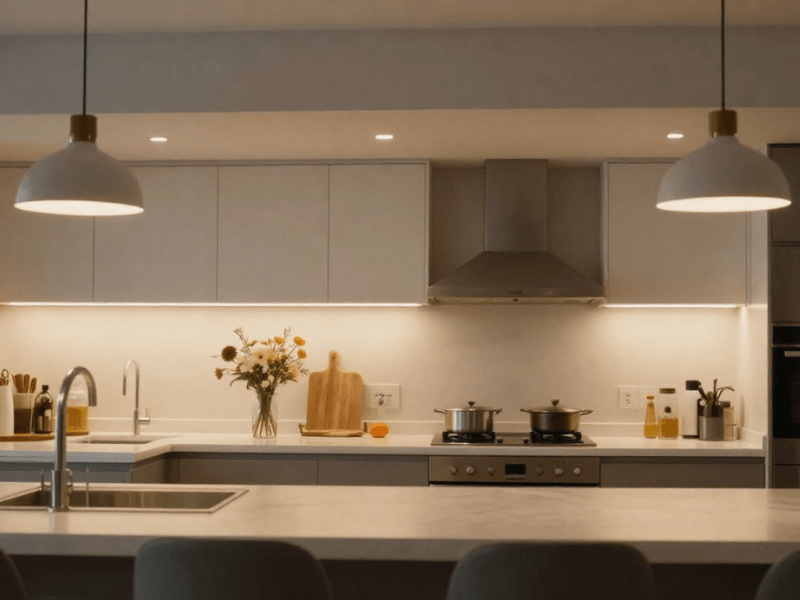
COB strips positioned beneath kitchen cabinets create smooth task lighting. This is especially helpful when you have reflective surfaces like splashbacks, polished stone worktops, and smooth cabinet finishes in your kitchen.
With SMD strips, the hotspots from each LED chip can bounce around, creating glare. COB strips create cleaner reflections and a far more premium finish overall.
If you’re one to invest heavily in kitchen design, COB lighting should be a no-brainer.
Media Walls and Living Rooms
Your living room is the one place in your home that needs atmosphere, since it is where much of your guest hosting happens, as well as a multitude of other activities.
COB strips help create soft ambient lighting that adds depth to the space. You can install it behind the TV, inside shelving, or around wall panelling. The seamless glow will instantly give your living room a modern and sophisticated feel.
Warm white COB strips are especially effective in living rooms because they soften the space while still adding visual interest.
No complicated lighting systems needed. You can even get a plug-and-play kit for quick, easy installation.
Bedroom and Furniture Lighting
Bedrooms benefit enormously from indirect lighting.
You can use COB strips inside the wardrobe, behind your headboard, beneath the bed, or along the shelving to create a soft, calming illumination. The smooth output feels more relaxing and hotel-inspired.
Overall, furniture lighting looks noticeably more premium with COB strips.
Best Uses for SMD LED Strip Lights
SMD strips are your versatile and practical option for many lighting projects.
Bright Utility Lighting
You go for SMD strips if you’re looking for functional brightness in your setup.
Choosing high-output SMD strips can even produce brightness levels suitable for task-heavy environments. Garages, workshops, commercial units, and utility spaces benefit from powerful directional lighting where aesthetics is a lesser priority than visibility.
Commercial spaces also frequently use SMD strips because they provide reliable performance across larger installations without dramatically increasing costs.
Budget-Friendly LED Projects
If you’re in the market for cost-effective LED strip installations, SMD strips are a perfect fit.
DIY projects, large-area lighting runs, and budget renovations often benefit from the lower upfront pricing of SMD technology. If the strip will remain mostly hidden, paying extra for COB lighting may not be a smart choice.
This makes SMD strips particularly appealing for:
-
Basic under cabinet lighting
-
Ceiling coving
-
Plinth lighting
-
Storage areas
-
Large installations
Basically, anything that does not need exposed LED strips. With SMD, you still get energy-efficient LED performance without going over budget.
RGB and Smart Lighting Applications
RGB or the colour-changing market is where SMD strips dominate.
RGB and RGBW smart lighting systems frequently use SMD chips because they effectively deliver vibrant colours and dynamic effects. If you’re a gamer who needs a daily dose of bright RGB strobes, opt for SMD strips.
Likewise, entertainment spaces, bars, and home cinemas often rely on SMD RGB strips for bold lighting scenes and smart automation.
COB vs SMD LED Strip Installation Differences
Which Is Easier to Install?
At first glance, both options are generally straightforward to install. Both have a pre-appplied adhesive backing that’s stick-and-peel.
However, COB strips are often slightly easier to position neatly because their flexibility helps them handle curves and corners more smoothly.
Connector compatibility is usually similar between the two, although buyers should always check strip width, voltage, and connector specifications carefully. If unsure, ask your supplier or the manufacturer.
While COB strips are flexible, careful alignment still matters. Why? Because the COB strip’s light output is continuous, it can sometimes reveal uneven installation more clearly. Any waviness or crooked placement may become more noticeable.
Why Aluminium Profiles Matter
Aluminium profiles might not be a hard requirement for LED strip installations, but their benefits are not something you should overlook (which many people tend to do):
-
Protect the strip
-
Enhance light output
-
Create a cleaner appearance
-
Improve heat management
-
Increase lifespan
For SMD strips in particular, profiles with diffusers can dramatically reduce visible spotting and improve the overall look of the installation.
And yes, even though COB strips already produce a smoother line of light, that’s still not a foolproof feature if you’re looking to have a professional-looking setup. Aluminium LED profiles can help make everything look more polished.
Choosing the Right Driver for COB and SMD Strips
Both options are LED strips, and these systems typically operate on 12V or 24V power supplies.
12V strips are common for shorter runs and smaller installations. They’re popular in DIY projects because components are widely available.
24V systems are often better for longer runs because they reduce voltage drop, helping maintain consistent brightness across greater distances.
So, step one: Determine if you’re installing a short or long run.
Another important factor when choosing a driver is selecting the right wattage. Your driver should comfortably support the strip load with extra headroom for safety and reliability.
So step two is: Add the total wattage of your LED strip run, then add 10-20% safety margin. So, if your strip draws 15W, you’ll need at least a 20W LED driver to operate it safely.
Poor-quality drivers are one of the most common causes of flickering, reduced lifespan, and performance issues.

Which Is Better for Kitchens: COB or SMD?
I don’t know if you’ve noticed, but even in this post, it’s a bit one-sided. You see, for most modern kitchen designs, COB usually comes out on top.
Why COB Is Usually Better for Modern Kitchens
What you’ll typically find in modern kitchens: reflective surfaces, clean lines, and minimalist styling. COB strips complement this aesthetic beautifully by creating a smooth, uninterrupted glow beneath cabinets and shelving.
And since there are no visible dots, the result feels cleaner, softer, and more premium overall.
If you’re aiming for a high-end kitchen look, COB strips are often the go-to here.
When SMD Still Works Well in Kitchens
That said, SMD strips can still work very well in kitchens depending on the application.
Plinth lighting beneath cabinets is usually hidden enough that visible LED dots aren’t particularly noticeable. If it is, it’s not a nuisance.
Utility areas, pantry spaces, and budget renovations can also benefit from SMD strips without sacrificing practicality.
When it comes to cost-effectiveness, SMD remains a perfectly solid kitchen lighting option.
Common Mistakes When Choosing LED Strip Lights
1. Choosing based on price alone. Cheap strips can suffer from inconsistent brightness, poor colour quality, weak adhesive backing, and shorter lifespan. Quality might be a bit costly sometimes, but when you need to replace strips frequently, it can add up too.
2. Ignoring visible spotting. Many buyers only realise they dislike visible LED dots after installation. That’s why understanding the difference between COB and SMD matters so much before purchasing.
3. Using poor-quality drivers. This can cause a major headache. Flickering, buzzing, overheating, and early strip failure are often caused by unreliable power supplies rather than by the strip itself.
4. Skipping aluminium profiles. Profiles improve heat dissipation, protect the strip, and create a more professional finish.
5. Incorrect brightness selection. Overly bright strips can feel harsh, while weak strips may not provide enough functional lighting. You want your lighting to be somewhere in between.
6. Choosing the wrong IP rating. Kitchens and bathrooms require higher moisture resistance (IP65 or higher), while dry indoor spaces usually work perfectly well with IP20-rated strips.
But Are COB LED Strip Lights Worth the Extra Cost?
This is the biggest question. If SMD strips still work for most of the applications, are COB LED strips worth it?
The answer depends largely on what you value most.
COB LED strips usually cost more upfront than SMD strips, yes. However, the difference in visual quality can be dramatic, especially in exposed installations.
If your lighting is going to be visible, decorative, or central to the room design, COB strips often justify the extra cost through appearance alone. The smooth, seamless glow creates a noticeably more modern and premium finish.
There’s also the long-term aesthetic value to consider. Interior design trends continue moving toward softer architectural lighting rather than visible point-source LEDs. Choosing COB strips is future-proofing your lighting setup.
When it comes to energy savings, COB and SMD are generally comparable at the same lumen output, so appearance often becomes the deciding factor.
-
For budget-focused installations where the strip remains hidden, SMD strips may still offer better overall value.
-
But for luxury kitchens, media walls, shelving, and feature lighting, COB strips often deliver a polished result that makes people pause and think the lights are expensive (even when they weren’t).

Should You Choose COB or SMD LED Strips?
Choosing between COB and SMD LED strip lights ultimately comes down to the aesthetic you want to achieve.
If your priority is premium appearance, smooth lighting, and modern interior design aesthetics, COB LED strips are usually the better choice. The seamless dot-free glow works beautifully in kitchens, media walls, shelving, and exposed installations.
But if your lighting project focuses more on the function (and budget) rather than design, then SMD LED strips offer excellent performance and versatility. They’re the most practical lighting solution, especially if you’re going for hidden installations.
Other factors, such as the use of aluminium profiles, reliable drivers, and correct voltage, can dramatically improve both the performance and lifespan of the strips.
Smart control is also open for both COB and SMD options, so you can easily integrate them into existing smart home systems.
But despite the ongoing debate, there’s no universally “wrong” choice here. It’s simply about matching the strip technology to the style, function, and atmosphere you want for your space.
If you’re ready to upgrade your lighting setup, visit Simple Lighting to explore premium COB and SMD LED strip collections, browse through different aluminium profiles and drivers, and maybe dabble a little in smart LED strip systems.


0 comments