
Why Garage Lighting Deserves More Attention
When was the last time you thought of your garage’s lighting? Probably not since the last time you changed that one bulb installed there, right?
The sad truth is that garages are often the forgotten corners of the home. It’s where things in your house “that may still have some use” are moved into. But luckily, there’s good news.
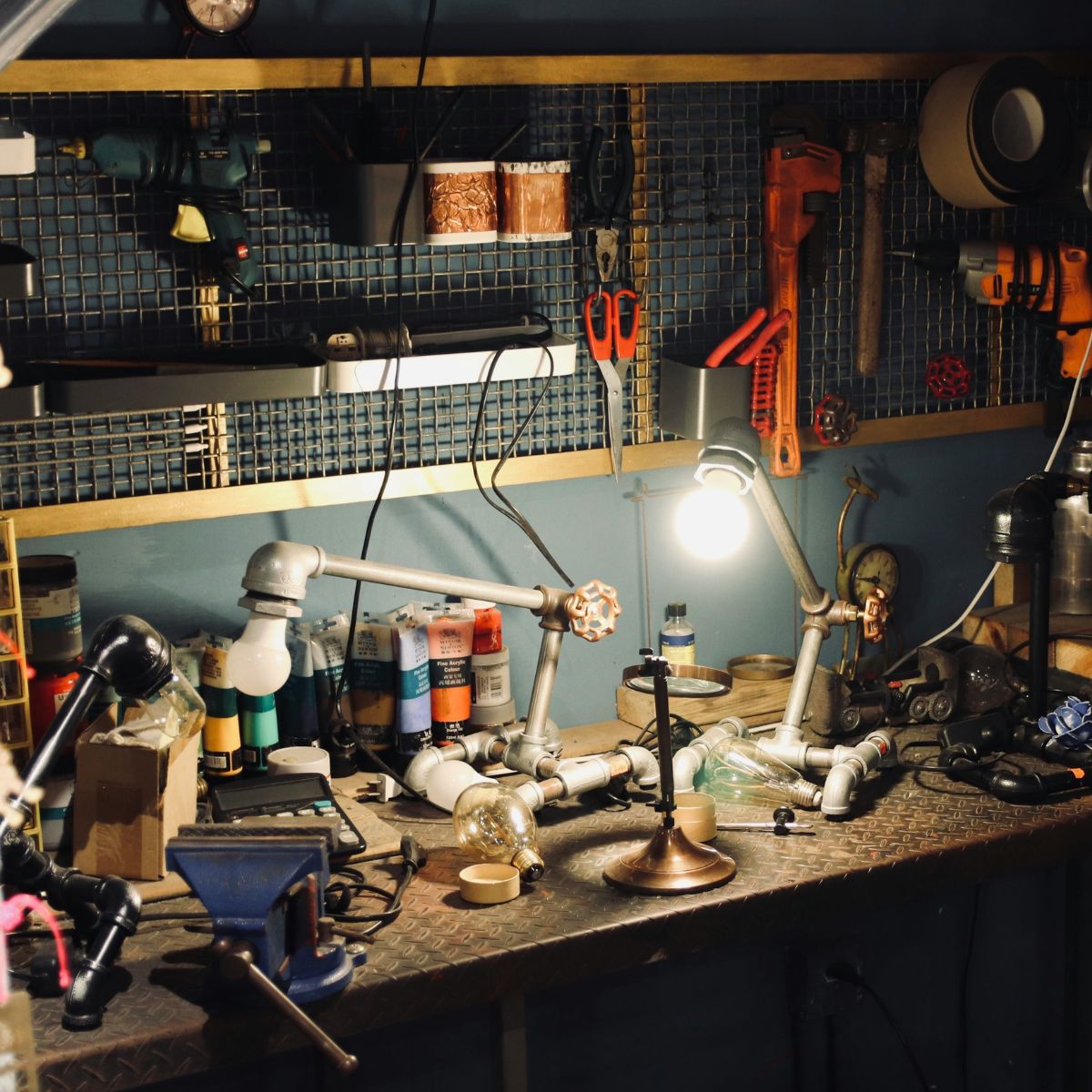
Today’s garages are evolving. They’re not just spaces to park your car or store the five-year-old Christmas decorations anymore. They’ve become multi-purpose environments. From DIY workshops and home gyms to creative studios and utility zones, modern garages are doing far more than ever before!
That’s why good lighting isn’t just a nice-to-have in garages anymore; it’s essential, and in some cases, crucial. Proper lighting equals a brighter, safer, and more usable garage, after all. It improves task visibility, reduces accidents, enhances security, and even makes the space feel cleaner and more welcoming.
In this guide, we’ll share expert lighting ideas to help you balance brightness, safety, and efficiency in your garage. It’s time to transform your garage into a functional, inspiring space. Ready? Let’s start glowing.
Understanding the Role of Light in Garage Design
We may be saying this over and over by now, but the truth is that lighting does far more than illuminate. For one, it can define how you use your garage.
Light can greatly affect how clearly you see, how you feel, and how efficiently you work on your activities. Tuning up a bike, lifting weights, or hunting for tools? Light won’t let you down.
When planning garage lighting, it’s important to remember these three main goals:
- Brightness – Ensuring the space is evenly and adequately lit for its purpose.
- Safety – Minimising glare, shadows, and dark spots that can cause accidents.
- Control – Providing flexibility through switches, sensors, or smart systems to match how you use the space.
How Bright Should a Garage Be?
Garages typically require higher illumination levels than living spaces. That means your living room lighting won’t work in your garage. And yet some garages only have one light bulb hanging from a wire.
A good target is between 300 – 700 lux, depending on what you use your garage for:
- 300 lux for general storage and parking.
- 500-700 lux for a more detailed work on workshops and DIY projects.
Pro tip:
Look for lumens, not watts. Since LED lighting is far more efficient than traditional lights, a lower wattage can still produce plenty of brightness.
Colour Temperature Matters
Colour temperature affects not only the look of your garage but also your focus and comfort.
- Cool white (5000K-6500K) – Crisp, bright light that enhances clarity and concentration, ideal for workshops or utility areas.
- Natural white (3000K-4000K) – Balanced, comfortable light suitable for multipurpose garages.
- Warm white (2700K-3000K) – Softer, more relaxing light that suits gym or studio zones of your garage.
By strategically mixing colour temperatures, you can tailor the garage to your lifestyle: bright and energising in one corner, calm and ambient in another.
Layered Lighting That Works Hard in Every Corner
What? You think layered lighting is exclusive only to your kitchen and living room? Think again.
A great garage lighting plan uses layers. Combining ambient, task, and accent lighting ensures every part of the space is properly illuminated—and adaptable to your needs.
Let’s break them down:
Ambient Lighting – The Everyday Foundation
Ambient light is the backbone of your garage illumination. It provides uniform coverage that eliminates dark corners and ensures safety when entering or moving around.
Best fixtures for this:
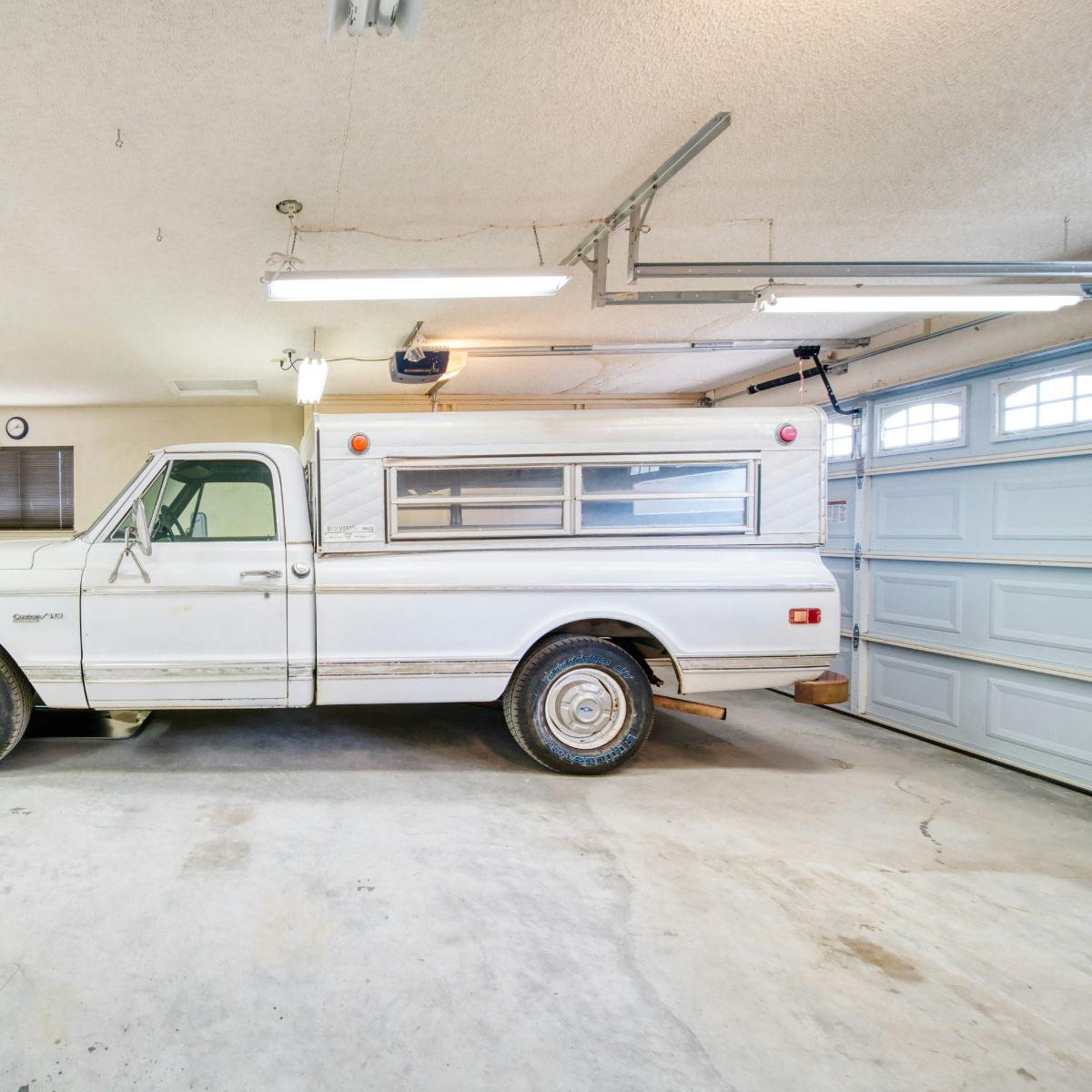
- LED batten lights – A popular choice for garages thanks to their wide beam and bright, even output.
- LED panel lights – Yes, they’re not only for offices. They’re ideal for garages with lower ceilings, offering sleek design and glare-free illumination without taking up headroom.
- Ceiling-mounted bulkheads – Durable and often IP-rated, making them perfect for utility or damp areas.
Placement tips:
- Mount fixtures centrally or evenly spaced across the ceiling.
- Avoid positioning lights directly above shelving or garage doors, where shadows can form.
- Choose cool or natural white for maximum clarity and visibility.
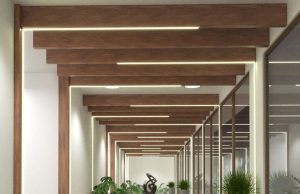
Pro Tip: For a clean, professional look, consider a row of slim LED battens running the length of your garage ceiling. They “flood” the area with bright white light and distribute illumination evenly across every corner.
Task Lighting – Focus Where You Need It Most
If you use your garage for DIY projects, repairs, or hobbies, task lighting is essential. This layer targets specific zones where precision matters: your workbench, tool storage, or crafting table.
Recommended fittings:
- Adjustable spotlights – Direct focused light exactly where you need it.
- Under-cabinet or under-shelf LED strips – Perfect for illuminating work surfaces directly below them without casting shadows.
- Clamp or magnetic task lamps – Flexible and easy to move for small projects.
Design tips:
- Opt for glare-free lighting to reduce eye strain.
- Aim the fixtures at your workspace at a 45-degree angle to avoid harsh reflections.
- Choose (Colour Rendering Index) CRI >80 lighting for accurate colour rendering. This is perfect when painting or working with materials.
Task lighting improves visibility, yes. But it does more than that. Like boost safety and comfort, turning your garage into a functional workspace that feels as professional as it looks… maybe just clean up the clutter a bit.
Accent Lighting – Form Meets Function
Accent lighting is often overlooked in garages. Because, really, why would you need accent lighting in your garage?
Here’s the thing: It’s the secret to turning a purely functional area into an attractive, well-organised space.
How to use accent light effectively:
- LED strips along shelving or storage racks help you locate tools easily.
- Cabinet lighting makes looking for tools a breeze.
- Floor-level LED strips or marker lights define parking areas or pathways. It’s actually a stylish and practical safety feature.
Accent lighting doesn’t just look good; it’s also functional. Softly outlining key zones helps you navigate in low light, preventing trips or scratches when manoeuvring your car or equipment.
Safety and Practical Considerations
Let’s be real. Garages are demanding environments. That means that your lights face dust, humidity, temperature changes, and occasional knocks, so they need to be tough enough to handle it all.
Here’s what to consider for a long-lasting, safe performance:
1. IP Ratings
- IP65 or higher are great for exposed or damp areas (like near garage doors).
- IP44 for general ceiling fittings if the space is occasionally humid.
IP-rated fittings have good dust protection and are protected against water spray (IP44 or higher), making them ideal for garage use.
2. Build Quality and Materials
Good quality performance comes from good quality materials. Choose fittings with shatterproof polycarbonate lenses or aluminium housings to resist impacts. Avoid glass fittings, which can crack under sudden temperature changes (and accidental bumps).
3. Wiring and Installation
Protect and neatly secure your cables. Ideally, you can manage them using conduit or trunking. This prevents damage and keeps your setup tidy and professional.
4. Glare and Positioning
Install lights so that they don’t shine directly into your eyes. Angled or diffused lighting prevents glare when parking or reversing.
5. Motion Sensors and Automation
Adding PIR motion sensors boosts both convenience and efficiency. You walk into your garage and the lights automatically turn on; you leave, and the lights turn off on their own after some time.
Totally hands-free garage lighting. And did we mention the energy savings? No more “I forgot to turn off the garage lights.” Motion-activated lighting also doubles as a security feature, deterring intruders.
Lighting Ideas for Different Garage Uses
No garage lighting is the same. Yours should match how you use the space. Whether it’s a workshop, home gym, or simply for storage, each setup requires its own lighting approach.
Workshop or Hobby Space
Workshops are spaces for focus and demand bright, accurate, and evenly distributed light.
Recommendations:
- High-CRI LED battens or panels (CRI 80+) – Show the true colours for painting, detailing, or repairs.
- Natural to cool white light (4000K–5000K) – Prevents eye fatigue, helping you focus better.
- Under-cabinet or pegboard lighting – Illuminates the work surface, specific tools, and materials. Eliminates shadows.
Example setup:
- Two long LED battens above your workbench.
- A directional spotlight for close-up tasks.
- Motion-activated overhead lights for the main area.
This combination ensures both clarity and flexibility, perfect for long DIY sessions.
Home Gym or Studio
As we’ve established above, lighting can influence your energy, motivation, and mood… especially in a home gym.
Recommendations:
- Even, shadow-free lighting (LED panels or recessed ceiling strips).
- Dimmable controls to shift from bright workout lighting to softer ambient tones for cooldowns.
- Smart lighting systems that let you adjust brightness or colour temperature via app or voice command. Totally hands-free!
For creative studios, warm and natural white lighting creates a welcoming and inspiring environment that still supports focus.
Example setup:
- LED panels across the ceiling for balanced light.
- Accent strip lights around mirrors or storage racks.
- Optional RGB LED strips to add a dynamic, modern touch.
Storage & Utility Garage
If your garage mainly functions as a storage or utility area, prioritise simplicity, reliability, and visibility rather than style.
Recommendations:
- LED battens for broad, bright illumination.
- Motion sensors or automatic switches so lights come on instantly as you enter with your hands full.
- LED puck lights or cabinet lights inside cupboards for added convenience. Makes it easier to store or look for items.
- Doorway lighting to eliminate dark entry zones.
A practical, low-maintenance setup ensures you can always find what you need without fumbling for switches or torches.
Lighting Layout Examples for Different Garage Sizes
Every garage is different, but the principles of good lighting design stay the same:
- Distribute light evenly
- Reduce shadows, and
- Tailor brightness to your activities
Below are layout ideas to help you visualise your setup:
Small Garage (Single Car or Compact Storage)
Goal: Maximise brightness using minimal fittings.
Here’s our recommended setup:
- One or two central LED battens or panels (5000K – cool white).
- PIR motion sensor near the door for automatic activation.
- Compact task light over a small bench or storage unit.
Placement tip: Mount battens parallel to your vehicle, not across it. This reduces side shadows when working along the car or accessing tools.
Medium Garage (Two-Car or Multi-Use Space)
Goal: Combine ambient and task lighting for flexibility.
Example layout:
- Install two to three linear LED battens or recessed panels, evenly spaced on the ceiling.
- Under-cabinet LED strips for tool benches or hobby zones.
- Wall-mounted bulkheads or LED downlights near entry points.
- Smart or motion controls for convenience and energy saving.
Pro Tip: Keep lighting symmetrical for balanced illumination. Uneven placement can create dark spots or glare zones.
Large Garage or Workshop
Goal: Deliver high brightness and control across multiple zones.
Layout idea:
- Zone your circuits or use smart systems to control areas independently (parking, workbench, storage).
- Install suspended linear lights or wall-mounted fixtures for broad, even coverage.
- 500-700 lux in work zones, 300-400 lux in general areas.
- Use daylight sensors to automatically dim or switch off when sunlight is sufficient.
With proper lighting, you get a garage that adapts to every purpose, from weekend projects to everyday routines.
Brightness and Energy Efficiency – Getting the Balance Right
Many people assume more light means higher energy bills. And maybe this was true with traditional lights… but modern LED technology has changed the game.
LEDs deliver up to 80% greater efficiency than fluorescent or halogen bulbs, offering instant illumination, minimal heat, and an exceptional lifespan (even reaching up to 50,000 hours).
How to Calculate the Right Brightness
The question still remains: How many fixtures do you need to reach your desired brightness?
The answer is: it depends. But the good news is you can calculate it easily.
- Multiply your garage’s floor area (m²) by the desired lux level.
- For example:
- A 20m² garage × 500 lux = 10,000 lumens total.
- Divide by the lumen output of your chosen fitting (e.g., 5000 lumens per batten), then you’ll need two battens.
- If both battens run at 40W, that means you can illuminate your garage at 10,000 lumens of maximum brightness with only 80W of power.
- That’s an efficacy of 125 lumens per watt. (10,000lm/80W)
Pro Insights:
Switching to LEDs is not just about brightness. It’s about long-term value, comfort, and sustainability.
Ready to Upgrade?
Giving your garage a better (and brighter) lighting isn’t just practical. It can completely transform your experience.
- Bright, even light creates a sense of cleanliness and control.
- Smart task lighting makes every project easier and safer.
- Accent lighting adds a touch of style and order.
Pair all that with energy-efficient LEDs, and you have a space that’s both functional, efficient, and sustainable. The best garage lighting setups are installed with a purpose. The key is to make lighting work for you, not against you.
Simple Lighting offers a wide range of high-performance LED lights that create a garage that’s bright, efficient, and built to last.
If you loved this post, you’ll surely love the list we have here: How to Choose the Best Lighting for Your Garage.