

Understanding Lighting in Open-Plan Spaces
Open-plan layouts are brilliant for bringing everyone together. However, they’re also notorious for tricky lighting. One wrong move, and you’ll end up with a room that’s either blindingly bright or dim and lifeless. Balance is everything. The challenge lies in lighting a large, shared space without making it feel flat. You need a scheme that flows beautifully from one area to the next while still giving each zone (kitchen, dining, and living) its own identity and purpose. That’s where zoning through light comes in! Instead of walls, you use lighting types, tone, and placement to subtly define each area. A pendant cluster can mark the dining zone, while warm wall lights can anchor a cosy seating area. Done right, your lighting doesn’t just illuminate—it choreographs. It guides movement, creates comfort, and ensures your home feels cohesive yet dynamic, no matter how many purposes your open-plan space serves.Layering Light for Function and Flow
The secret to great lighting for open spaces lies in layering. Instead of just one harsh overhead light, you mix different types to create depth, flexibility, and mood. Here’s how each layer works its magic:Ambient Lighting – The Foundation of the Space
Think of ambient lighting as your daylight substitute, the base layer that evenly brightens the whole room. It’s what keeps your space practical and welcoming when the sun dips. Ceiling lights, recessed fittings, or LED panels all work beautifully for ambient light. Spread them evenly so no zone feels ignored or overlit. The goal is consistency, not competition. Keep your colour temperature uniform throughout. A warm 3000 to 3500K tone ties everything together visually, preventing that “patchwork” effect where one area feels sterile and another looks like a moody restaurant. With ambient lighting done right, your open-plan area instantly feels balanced and harmonious, never dull or glaring.Task Lighting – Focus Where It’s Needed
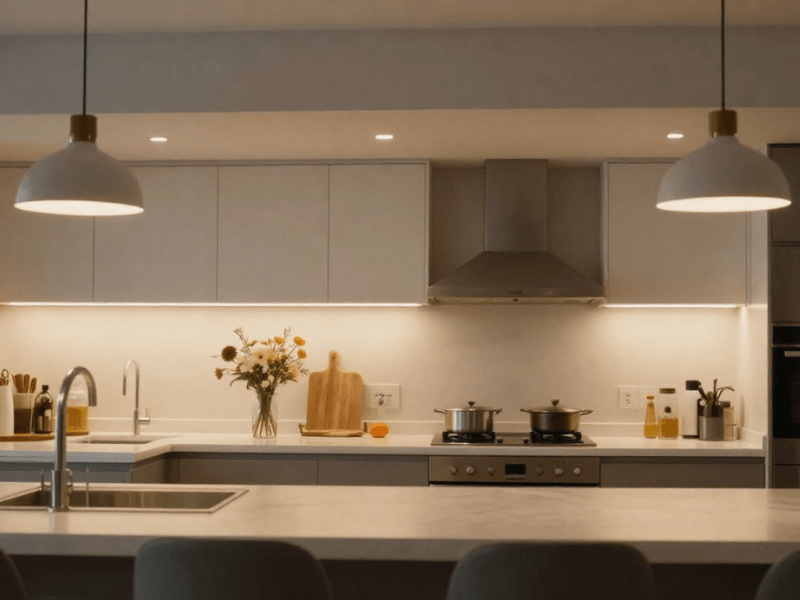
Task lighting steps in where the hard work happens. Whether you’re chopping vegetables, reading, or finishing a crossword after dinner, it’s precise, directional, and totally functional. In the kitchen, under-cabinet LEDs keep your worktops bright without casting shadows. Adjustable spotlights handle awkward corners, while a pendant cluster above the island adds both focus and flair. Elsewhere, think of a reading lamp in the lounge or subtle lighting above a drinks cabinet. It’s about giving each activity its perfect light, without overpowering the space. Task lighting ensures you see exactly what you’re doing. Nobody wants to julienne their fingers instead of the carrots.Accent Lighting – Adding Depth and Character
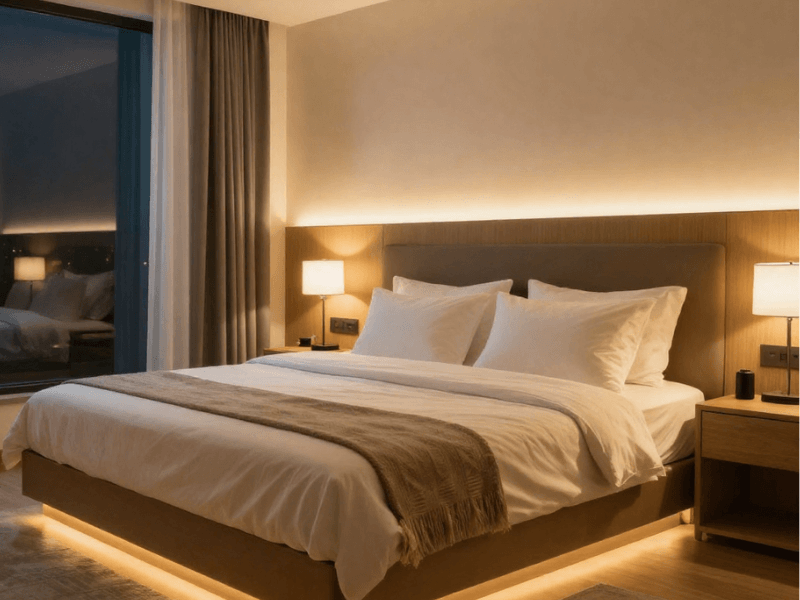
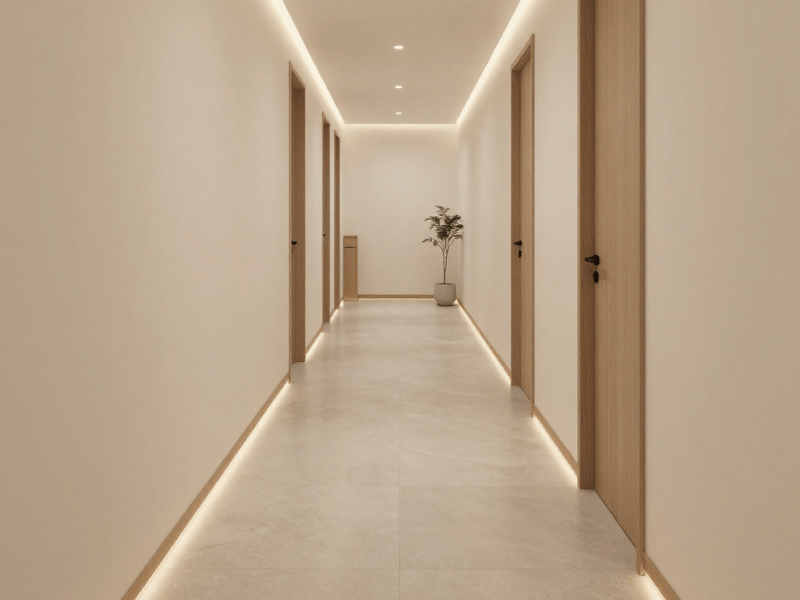
Accent lighting is your stylist’s touch. It highlights texture, depth, and detail, the features that make your space unique. Try shelf lighting to bring artwork or crockery to life, or a soft wall wash to frame your seating area. Plinth lighting under cabinets or islands can create a gentle, floating effect that can make some open-plan kitchen lighting ideas feel surprisingly luxurious. Accent lighting isn’t about brightness; it’s about atmosphere. It adds dimension where ambient and task lights stop, transforming functional areas into focal points.Creating Distinct Zones Without Walls
With open-plan layouts, your lighting has to play double duty. It needs to keep the whole space connected while still giving each area its own personality. The trick is to treat light like invisible architecture. Each zone should feel distinct without ever breaking the flow.Light Your Kitchen Like a Work Zone
 Your kitchen is mission control. It needs clarity, focus, and light that means business. Forget moody glows! This is where sharp, functional illumination wins!
Natural white lighting (around 4000K) is your best friend here. It’s bright enough for chopping and cooking, but not so cold that it feels clinical. Think recessed downlights, under-cabinet LEDs, or pendants that spread light evenly across worktops.
Pay attention to shadow control. No one likes mysterious dark patches while prepping dinner. The correct placement of lights above islands or sinks keeps everything crisp and clear.
The best open-plan kitchen lighting ideas feel confident. They’re bright enough for work, but stylish enough to complement the rest of your open space.
Your kitchen is mission control. It needs clarity, focus, and light that means business. Forget moody glows! This is where sharp, functional illumination wins!
Natural white lighting (around 4000K) is your best friend here. It’s bright enough for chopping and cooking, but not so cold that it feels clinical. Think recessed downlights, under-cabinet LEDs, or pendants that spread light evenly across worktops.
Pay attention to shadow control. No one likes mysterious dark patches while prepping dinner. The correct placement of lights above islands or sinks keeps everything crisp and clear.
The best open-plan kitchen lighting ideas feel confident. They’re bright enough for work, but stylish enough to complement the rest of your open space.
Soften the Mood in Dining Spaces
 Once the food’s ready, it’s time to dial it down! Dining areas thrive on atmosphere, so aim for light that flatters both food and faces.
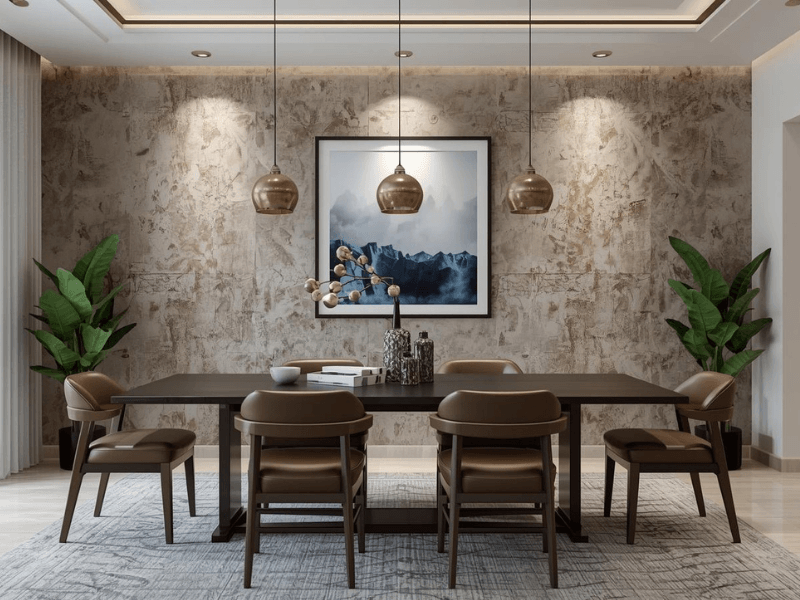
A cluster of pendants above the table instantly defines the space. Keep them dimmable so you can shift from “family breakfast” to “wine-and-candles” with one quick tweak.
Warm tones (around 3000K) make everything look richer and cosier. Avoid cool white; it’ll make your lasagne look like it’s under a hospital lamp.
Use the pendant arrangement as a visual anchor. It says, “This is where we gather,” even in a completely open room.
Once the food’s ready, it’s time to dial it down! Dining areas thrive on atmosphere, so aim for light that flatters both food and faces.
A cluster of pendants above the table instantly defines the space. Keep them dimmable so you can shift from “family breakfast” to “wine-and-candles” with one quick tweak.
Warm tones (around 3000K) make everything look richer and cosier. Avoid cool white; it’ll make your lasagne look like it’s under a hospital lamp.
Use the pendant arrangement as a visual anchor. It says, “This is where we gather,” even in a completely open room.
Layer Warmth in Living Areas
 The living zone should invite you to exhale. Here, lighting softens, scatters, and wraps the space in warmth.
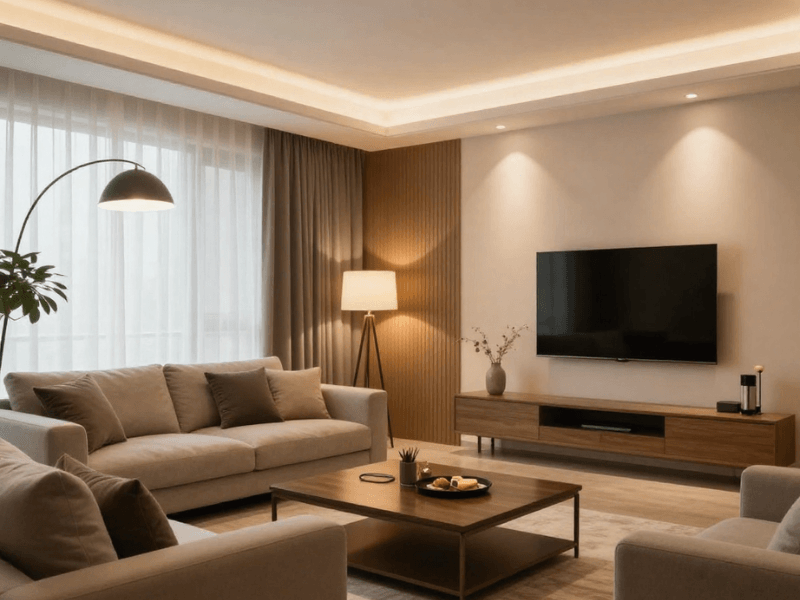
Table lamps, wall sconces, and LED coves create that relaxed, lived-in glow. Mix a few light sources at different heights to add depth without glare.
Keep the colour temperature low; 2700K to 3000K is perfect for winding down. Pair that with warm metallics or textured shades to build visual comfort.
Contrast is key: when your kitchen glows bright and your living area hums gently with golden tones, the transition feels effortless, natural, and oh-so-welcoming.
The living zone should invite you to exhale. Here, lighting softens, scatters, and wraps the space in warmth.
Table lamps, wall sconces, and LED coves create that relaxed, lived-in glow. Mix a few light sources at different heights to add depth without glare.
Keep the colour temperature low; 2700K to 3000K is perfect for winding down. Pair that with warm metallics or textured shades to build visual comfort.
Contrast is key: when your kitchen glows bright and your living area hums gently with golden tones, the transition feels effortless, natural, and oh-so-welcoming.
How to Maintain Cohesion Across Zones
Open-plan living works best when everything feels connected but not identical. The challenge is creating separation without visual chaos. To keep your kitchen, dining, and living areas singing from the same design sheet, focus on three simple principles:Keep Your Colour Temperature Consistent
Nothing ruins a space faster than mismatched light tones. One zone feels like a spa, another like a chaotic clinic. Stick to a consistent base temperature across your leading lights (preferably around 3000-3500K). It keeps transitions smooth and prevents that jarring, stop-start feeling as you move through the room. Save cooler or warmer tones for accents, not the main act.Repeat Fixture Finishes and Styles
You don’t need identical fittings everywhere, but they should look related. Maybe the kitchen has matte black pendants, and the living area has lamps with the same finish. That subtle repetition creates continuity. Matching metals, glass styles, or even shade textures quietly tie the zones together without feeling forced.Align Layouts and Sightlines
Your ceiling lights and pendants can do more than illuminate; they can guide the eye. Align fixtures along the same grid or sightline where possible. For instance, line up island pendants with the dining lights to balance the spaces.Mood Control: Dimmers, Zones, and Smart Lighting
Lighting isn’t just about how things look; it’s about how they feel. The same open-plan space can go from family breakfast to movie night with a single adjustment. That’s where control comes in. Here’s how to make your lighting as flexible as your lifestyle:Divide and Conquer with Zones
Think of your open-plan layout as a team. Each area needs its own role. Give your kitchen, dining, and living spaces separate lighting circuits. This lets you brighten the kitchen for food prep, keep the dining area softly lit, and dim the lounge for downtime, all without touching a single plug. Zoning equals instant atmosphere control.Use Dimmers for Every Layer
A dimmer is like a volume knob for light. It gives you complete control over the mood, from bright and productive to warm and intimate. Add them to pendants, downlights, and even accent lights. You’ll wonder how you ever lived with just “on” and “off.”Go Smart for Effortless Transitions
Smart lighting takes the faff out of manual adjustments. Use voice commands or an app to switch between scenes like “Cooking,” “Dinner Party,” or “Evening Chill.” It’s sleek, simple, and future-ready.Common Open-Plan Lighting Mistakes
Even the most stylish open-plan homes can fall flat if the lighting isn’t right. Most issues come down to poor planning, uneven light, or simply forgetting that one light doesn’t fit all. Here are five common mistakes (and how to fix them before your home starts feeling like a supermarket aisle).Using the Same Brightness Everywhere
Uniform brightness makes everything look flat and lifeless. The kitchen, dining, and living zones all blur together. Instead, layer your lighting as suggested above. Try bright, open-plan kitchen lighting ideas for practicality, softer ones in the dining area for ambience, and dim ones in the lounge for relaxation.Ignoring Shadows (Until They Ruin Dinner)
Bad light placement means shadows right where you need clarity. That includes worktops, sinks, or islands. Avoid overhead cabinets blocking your downlights and add under-cabinet LEDs to fill those dark patches. Shadows are great for drama, not for chopping onions.Skipping Dimmers and Controls
Lighting without dimmers is like a TV with only one volume setting. It’s either too loud or too quiet. Dimmers let you fine-tune the mood instantly. They also help save energy, so you’ll be smug and sustainable.Leaving Circuits as an Afterthought
You can’t control what you didn’t plan. Without separate circuits for each zone, your lighting flexibility vanishes. Plan your wiring early so you can light each area independently. It’s far cheaper to do it now than rip out ceilings later.Picking Fixtures Before Planning the Layout
Choosing that perfect pendant before knowing where it’ll hang? Classic rookie move. Always plan the lighting layout first, and then select fixtures that suit the space, not the other way around.Bringing It All Together – Lighting That Connects the Space
 Open-plan living is all about balance. The spaces must blend, yet still feel distinct. The right lighting bridges that gap, creating natural flow between your kitchen, dining, and living zones without sacrificing personality.
When every layer works in harmony, your home transforms from functional to fluid. Bright, focused light energises your kitchen; warm, dimmed tones set the mood for dinner; soft accent glows invite you to unwind in the lounge. Now that’s choreography!
Light isn’t just illumination; it’s emotion. It defines how you move, feel, and connect within your home. Done well, it turns everyday moments into something a little magical.
At Simple Lighting, we know how to make that magic practical. From under-cabinet LEDs to innovative dimmable fittings, our lighting helps you design open-plan spaces that shine day to night, weekday to weekend.
We've got more kitchen lighting posts like this at Choosing the Best Lighting for Your Kitchen.
Open-plan living is all about balance. The spaces must blend, yet still feel distinct. The right lighting bridges that gap, creating natural flow between your kitchen, dining, and living zones without sacrificing personality.
When every layer works in harmony, your home transforms from functional to fluid. Bright, focused light energises your kitchen; warm, dimmed tones set the mood for dinner; soft accent glows invite you to unwind in the lounge. Now that’s choreography!
Light isn’t just illumination; it’s emotion. It defines how you move, feel, and connect within your home. Done well, it turns everyday moments into something a little magical.
At Simple Lighting, we know how to make that magic practical. From under-cabinet LEDs to innovative dimmable fittings, our lighting helps you design open-plan spaces that shine day to night, weekday to weekend.
We've got more kitchen lighting posts like this at Choosing the Best Lighting for Your Kitchen.


0 comments