
Types of Cabinet Lighting
While you can find tons of cabinet lighting, four are widely used: bar lights, puck lights, rope lights, and LED tape.Bar Lights
This is a classic option for under-cabinet lighting. As the name entails, bar lights are straight fittings that are linkable and easily customisable. They are plug-in or hardwired lighting fixtures and can be mounted using adhesive backing or screws. Since bar lights are elongated tube lights, it produces a consistent stream of illumination. It's also a low-profile fixture, durable, affordable, and easy to maintain. This under-cabinet lighting is available in different IP ratings and is linkable, so it fits extended cabinet rows. The only downside to a bar light is it's not that low-profile, unlike other under cabinet lighting. So, if you prefer one that's not noticeable, this may not be the best fixture for you.Puck Lights
This type of under-cabinet lighting looks like a hockey puck. It's easy to install (adhesive backing), low-profile and available in different styles, finishes, and colour temperatures. When installing puck lights, keep a gap of eight to twelve inches in between. Space them more closely together to avoid having a scallop effect or pooling of light. Puck lights are ideal for renters because they're easy to install and remove and come in battery-operated options. Although, because of their shape, puck lights tend to create circular light, and if not spaced correctly, they can create shadows.Rope Lights
Rope lights are flexible and versatile and can be used for accent lighting or decor. While this lighting solution is bendable, you cannot push them beyond their capacity. Rope lights come with an adhesive backing, or you can add screw hooks to keep them in place. Since it's low-profile, you can use them as kickboard lights on your kitchen cabinets or kitchen island. Compared to tape lights, rope lights are slightly thicker but still low-profile. Since they're flexible and lengthy, they can provide continued uniform illumination. Rope lights are relatively low-light, so you need to check the lumens before buying. Also, they can't bend fully on sharp corners, and once a single lamp dies, you have to replace the entire rope light.LED Tape
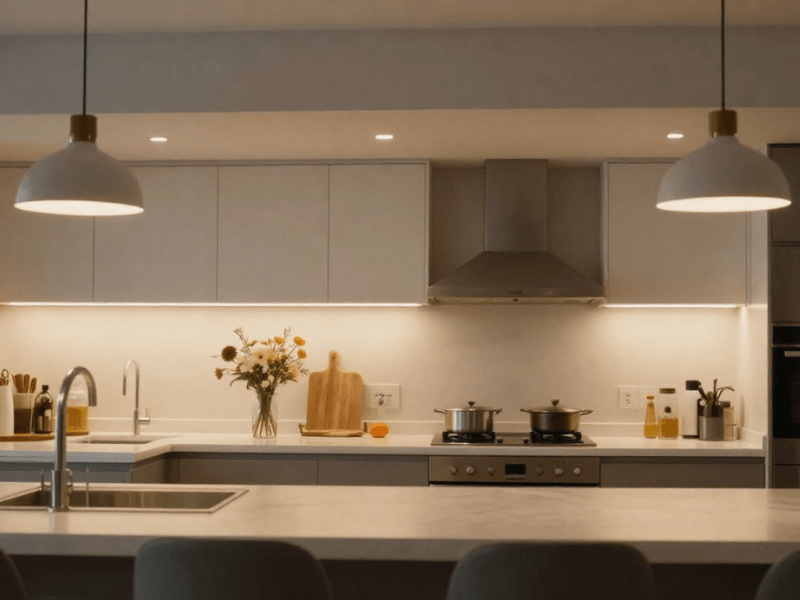
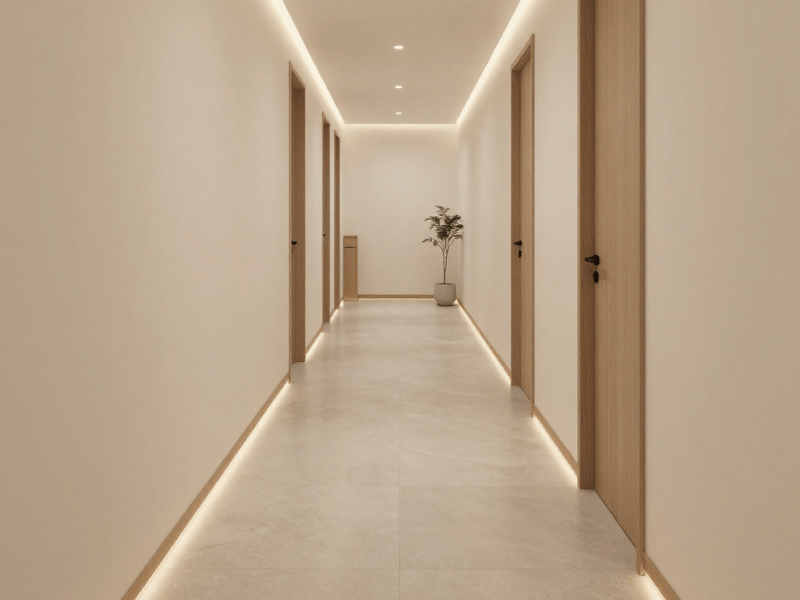
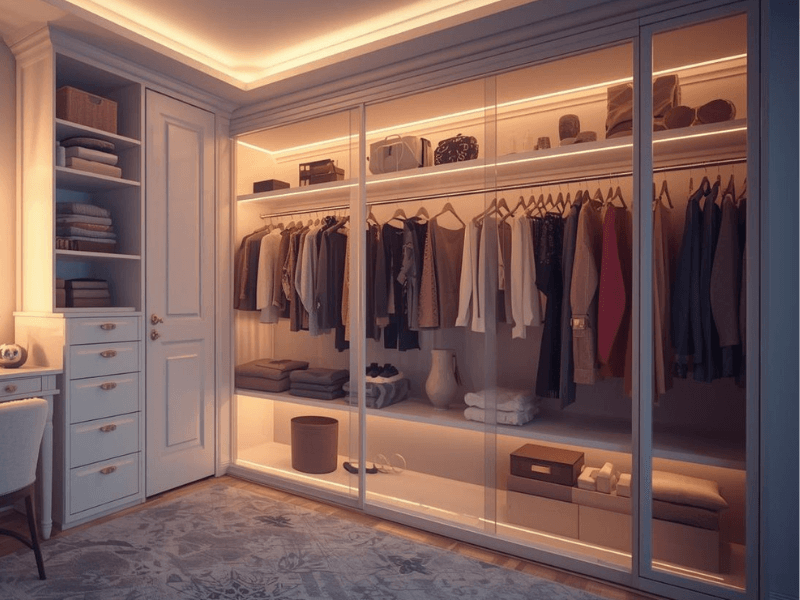
This is the most discreet cabinet lighting available. LED tapes can offer an extended stream of uniform lighting, are available in various colours, and is flexible. Some variations of this lighting are dimmable. Also, they're cuttable (following the cut lines) and can be joined together to fit in corners. LED tapes have an adhesive backing, but you can add an LED aluminium profile for extra protection and adhesion. You can make them plug-in or hardwire to control them using wall switches. This cabinet lighting option is energy-efficient, long-lasting, extremely low-profile and easy to install. Just check the lumens count to ensure you get the brightness you need. The only challenge you'll face with an LED tape is hiding the LED driver. Still, the driver is not that big and can be tucked away inside the cabinet or on top! When choosing the type of cabinet light, you need to consider the following:
- Available space – How much space do you have, and which type will fit best?
- Power choices – Do you have a power outlet near the cabinet for a plug-in cabinet light, or should you get a battery-operated one?
- Purpose - What is the use of the cabinet light? Is it for task lighting (kitchen countertops), or will it be for decorations (shelving, kickboards, display cases)?
Placement and Functionality
Now that you've finished purchasing your lights, it's time to install them. However, there's still a step that you cannot skip or screw up! That is the placement of your lights. Here are some tips that will be helpful for you!- Space the under cabinet puck lights depending on the beam spread of the fixture. Also, place them at the centre of the upper cabinets.
- LED tape and rope lights should be mounted closer to the front edge of your upper cabinets.
- When installing bar lights, run them lengthwise and position them close to the front edge of your cabinet. When you have directional bar lights, angle the beam towards the backsplash.
- Determine the zones where you require more lighting, like countertops and the kitchen island, and address them before the others.
- Avoid putting your fixtures near the back wall. If you have a textured backsplash, it may create shadows, making the fitting lose its brilliance.
- Consider using dimmable under-cabinet lights to adjust the brightness of your fixtures to suit your needs.
Creating a Cohesive and Stylish Look
When choosing your cabinet lighting, look for one that matches your aesthetic or can harmonise with your other fixtures. You don't want it to stand out too much and look out of place. Sometimes, it's better to get simple fixtures than those too elaborate to fit anywhere. Consider getting cabinet lights with neutral finishes like chrome, brushed chrome, black or white. When selecting a light fixture, ensure that you do not pollute the space but rather enhance its visual appeal. Too much brightness is overwhelming, while too little illumination is lacking. Find the balance and avoid over-illuminating your area by packing it with various lighting fixtures. To create a cohesive and stylish lighting system, you must plan thoroughly. If you're unprepared and do not research enough, you may buy random designs that don't fit together. You can look for inspiration online and try to infuse your personal style. In addition, you can set a focal point and harmonise from there. If you have a statement pendant light on top of your kitchen island, you can use neutral cabinet lighting to balance the elaborate design of the ceiling fixture.


0 comments