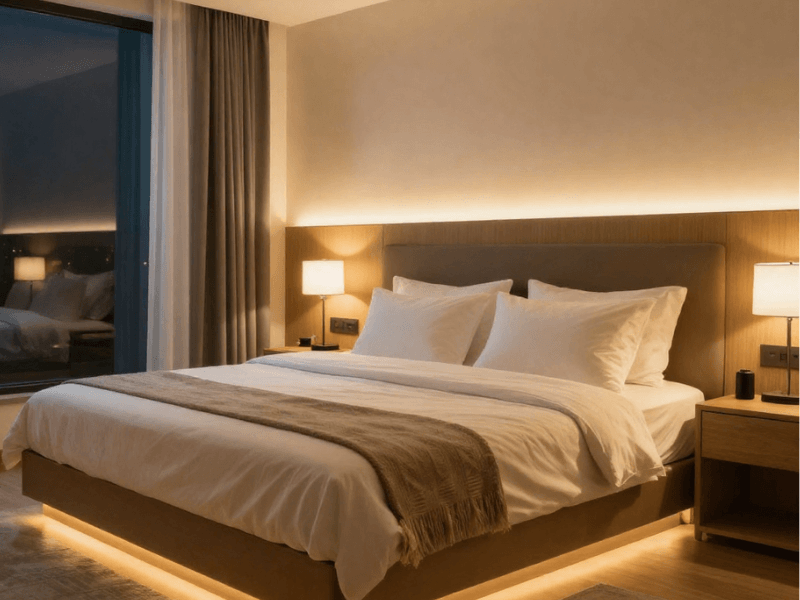


You can have your 52-inch telly perched on a stand to keep things simple. Or you can have it on a media wall, completely changing the feel of the whole living room.
The whole wall becomes the focal point for relaxing, gaming, and binge-watching nights. But while the screen and the open shelving get all the attention, what truly brings the whole design together is your lights.
LED strip lights, specifically, add depth, atmosphere, and a premium look to the media wall, making it more immersive and transforming it in both practical and impressive ways. In this guide, we’ll go over how LED strip lights can enhance your media wall.
Why LED Strip Lights Are Essential for Modern Media Walls
As media walls have become more popular in UK homes, blending entertainment, storage, and interior design into one seamless feature, lighting has become an essential “ingredient”.
Without proper lighting, even the most expensive media wall can look flat or lacking. But adding an LED strip light instantly creates a layer of light that adds atmosphere and depth, creating a comfortable and relaxing environment.
There’s also the practical benefit. Watching a bright TV screen in a dark room can strain your eyes. Backlighting (or bias lighting) using LED strips prevents this by reducing the contrast between the bright screen and the dark room.
If you’re used to painful eyes after a long marathon or gaming session, this simple upgrade to your setup might amaze you. But perhaps most importantly, lighting gives media walls a luxury hotel and home-cinema vibe. Without lighting, the wall can look bare and incomplete.
The Cinematic Effect: How Lighting Transforms Your Viewing Experience
A well-lit media wall doesn’t just look better. It changes how the space feels when you use it.
Bias Lighting for Eye Comfort
If you’ve ever seen a telly with a soft glow behind it, that’s bias lighting. While it may seem more like a decorative element at first glance, it’s one of the most effective ways to reduce eye strain while watching your favourite show.
In the dark living room where the telly is the brightest object, your eyes constantly adjust between the intense brightness and its surrounding darkness. This strains your eyes, leading to fatigue. Backlighting softens that contrast, helping your eyes relax.
Placement matters here, too! Don’t just haphazardly install LED strips behind the TV. They should be inset slightly behind it to create an even spread of light. Too close to the edges and you risk hotspots. Too far, and the glow might not even be noticeable.
Pro Tip: You want a gentle halo around the TV, not a spotlight effect. Warm white or neutral white LED strips are usually ideal for everyday use because they create a balanced, comfortable glow.
Creating Depth and Visual Separation
Especially with darker media walls, the TV will tend to disappear into the surface when switched off. If this is not your intended effect, LED strip lights help make that visible separation.
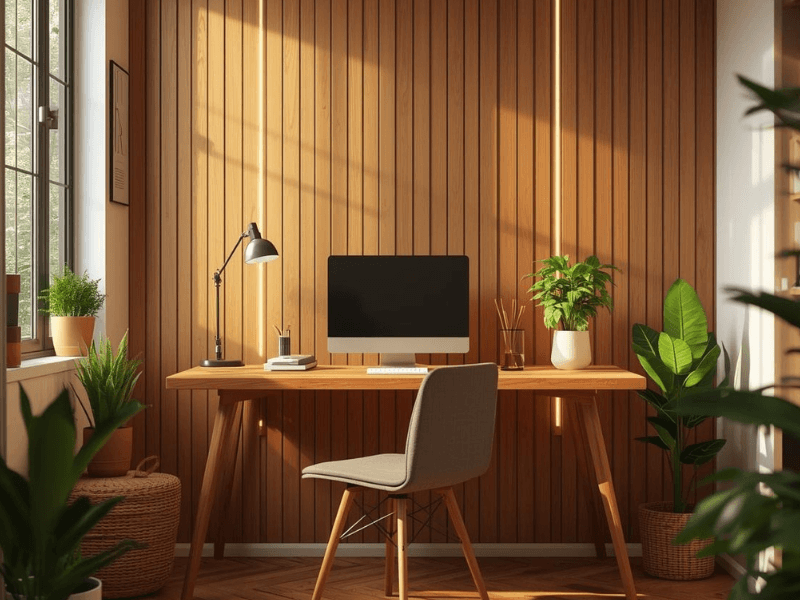
The beams from the LED strip light, washing over textured finishes such as wood slats, marble panels, stone cladding, or acoustic panels, create subtle shadows. This adds depth and richness to your media wall.
But don’t think that minimalist media walls cannot benefit from this. A simple floating TV panel with soft backlighting instantly feels more sophisticated and architectural.
Setting the Mood for Movies, Gaming, and Relaxing
You know what happens when your media wall lights only have one colour temperature throughout the day? They can look out of place, depending on what’s going on in the living room. Simply said, different activities call for different moods, and LED strip lights make it easy to switch between them.
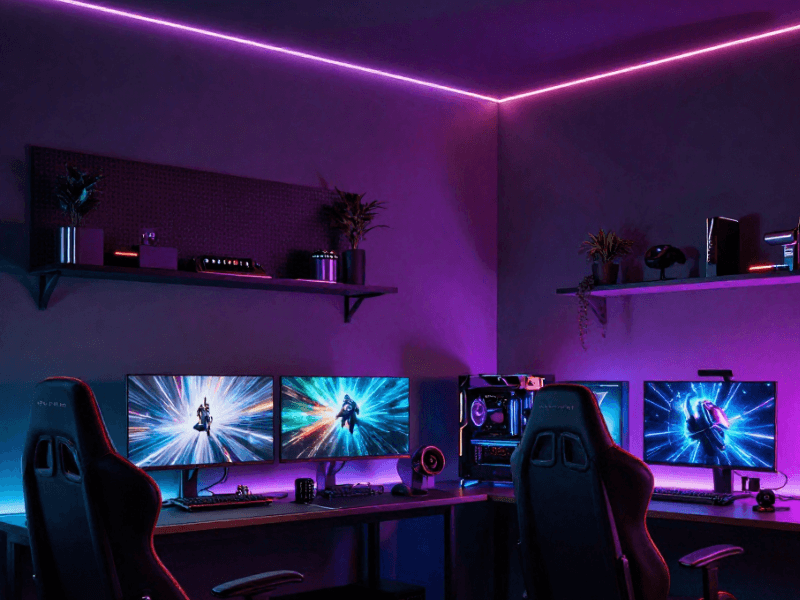
Warm white lighting works beautifully for cosy movie nights, while cooler white tones create a cleaner, modern look. RGB colour-changing strips open up even more possibilities, allowing you to introduce bold colours for gaming or film nights.
Dimmable lighting is particularly valuable here because it gives you full control over brightness levels. You might want brighter accent lighting during social gatherings, but softer tones for late-night marathons.
With smart lighting, you can even create scenes for different activities: a “Movie Night” scene that dims the main lights and activates warm backlighting, or a “Game Mode” that triggers an RGB sequence around shelving and panels.

Best LED Strip Light Placement Ideas for Media Walls
If you didn’t know this yet about lighting, then it’s time you learned: Even high-quality LED strips can appear underwhelming if positioned poorly.
Behind the TV (Backlighting)
By far, this is the most important of the bunch, and for good reason! We’ve already mentioned above, but the glow around the screen improves comfort and enhances the cinematic feel of your media wall.
Notice the words used? You want a glow, not harsh hotspots. So, avoid placing the strips too close to the edge. A few inches inward should do the trick. Using adhesive-backed LED strips makes installation relatively straightforward, but make sure to clean the surface properly beforehand to ensure strong adhesion.
Pro Tip: For larger TVs, consider high-density LED strips for smoother illumination
Around Shelving and Display Units
What’s a media wall without shelves? Use these to layer your lights.
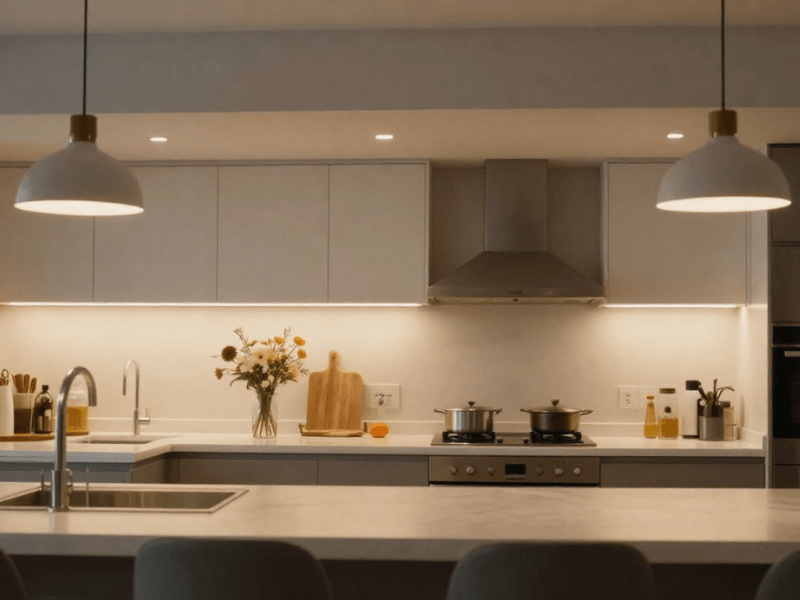
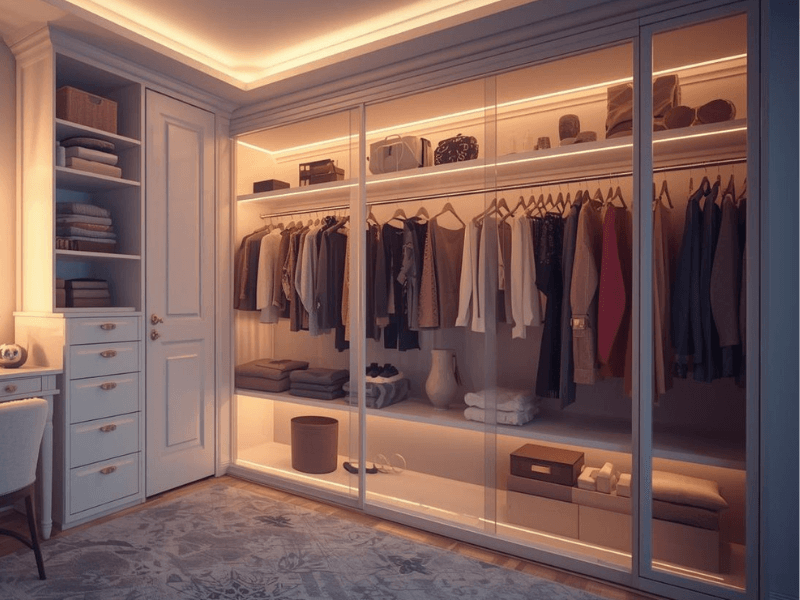
Adding LED strips under these shelves can help highlight books, ornaments, plants, accessories, or your prized collectables. Doing so also helps visually balance the room by drawing attention beyond the TV screen. It also adds depth to the overall design by creating multiple layers of light, giving your wall a more premium look.
Under Floating TV Units
Adding LED strips underneath floating TV units dramatically enhances their already-sleek, contemporary look. The soft glow beneath the unit creates the illusion that it’s hovering above the floor. It’s a small detail that instantly makes the media wall feel more luxurious.
Ceiling Coving Above the Media Wall
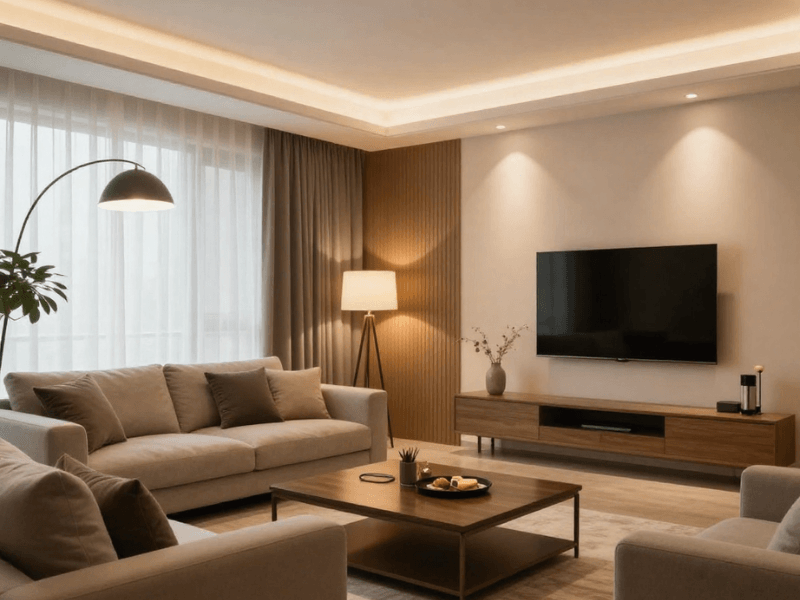
When talking about living room lighting, you might automatically think: bright LED downlights. But relying on these alone can create harsh lighting that can make your media wall look bland. So, what if there was a softer, more indirect alternative? That’s where coving lighting becomes handy.
Instead of focusing attention directly on the TV area, ceiling lighting spreads ambient light across the room, reducing reliance on overhead ceiling fixtures. The result is lighting that feels balanced, calm, and inviting rather than harshly lit.
Vertical LED Accents for Feature Panels
Did you know that vertical lighting can completely transform your space? This is ideal if you have slatted wood panels, textured finishes, or architectural features within your media wall.
Vertical accents create elegant lines that emphasise height and structure. The effect? Subtle but striking. And with recessed profiles, the lines of light almost look woven into the architecture itself.
Choosing the Right LED Strip Lights for Your Media Wall
There’s no one-size-fits-all LED strip light for media walls. That’s why choosing the right type makes a major difference in performance, appearance, and overall atmosphere.
Brightness and Lumens Explained
How do these two differ? In simple terms, lumens indicate the light output, and brightness is how that output looks and feels in the space. Basically, the higher the lumens, the brighter the light should be. But when it comes to media walls, brighter isn’t always better.
Overly powerful lighting can distract from the TV screen and create uncomfortable glare. For viewing areas, softer indirect lighting is usually the goal. There are dimmable LED strip options if you want full control over the light's brightness.
Colour Temperature vs RGB Lighting
Your strip light’s tone has a huge impact on mood and appearance.
Warm white lighting creates a cosy, inviting atmosphere that works beautifully in living rooms and home cinema spaces. Cool white lighting feels sharper and more contemporary, though it can seem too clinical if you’re aiming for a relaxed viewing environment.
RGB lighting adds colour-changing functionality, making it ideal for gaming setups, entertainment spaces, or homeowners who enjoy customisable effects.
For greater flexibility on this matter, you might want to consider an RGBW LED strip to enjoy the best of both worlds (RGB + CCT).
IP Ratings and Durability
An Ingress Protection (IP) rating measures how resistant a light is to dust and moisture. For most indoor media walls, standard indoor-rated LED strips (IP20) are perfectly fine. However, if your media wall includes a fireplace, protected strips offer extra resistance against dust build-up and everyday particles settling around the installation.
Cuttable and Flexible Strips
There are no standard sizes for media walls. This means that they’re often custom-built. This makes installation flexibility an important factor for the lights.
LED strip lights are cuttable, with cutting markers throughout the run. This allows you to customise precise lengths. Their thin profile also means they can be easily bent and twisted to fit around corners or curved surfaces. LED strips adapt to the design, not the other way around.
Smart LED Strip Lighting for Media Walls
It’s 2026. Everything is smart. That means your LED strip lights are too.
App-Controlled and Voice-Activated Lighting
Many LED strip systems now connect directly to smartphone apps or smart home assistants. This means you can adjust brightness, colours, and scenes without leaving the sofa. Voice control through systems like Alexa or Google Assistant makes the experience feel even more seamless.
“Alexa, set media wall lights to Game Mode.” No more fumbling for switches or remotes.
Sync Lighting with Your TV or Music
Want to take the immersion to another level? Use reactive lighting. Some smart LED systems can sync with on-screen colours or music, extending visual effects beyond the TV itself. Action scenes? Exhilarating. Classical music? Super calming. With synced lights, everything from your media wall feels atmospheric.
Preset Scenes for Different Activities
With smart lighting, you can create different lighting setups for watching films, gaming, entertaining guests, or relaxing quietly in the evening. Just one tap or a voice command instantly changes the mood of the entire room.

Installation Tips for a Clean, Professional Finish
What separates a poor DIY from a professional-looking media wall is good installation.
Hiding LED Strips and Wires
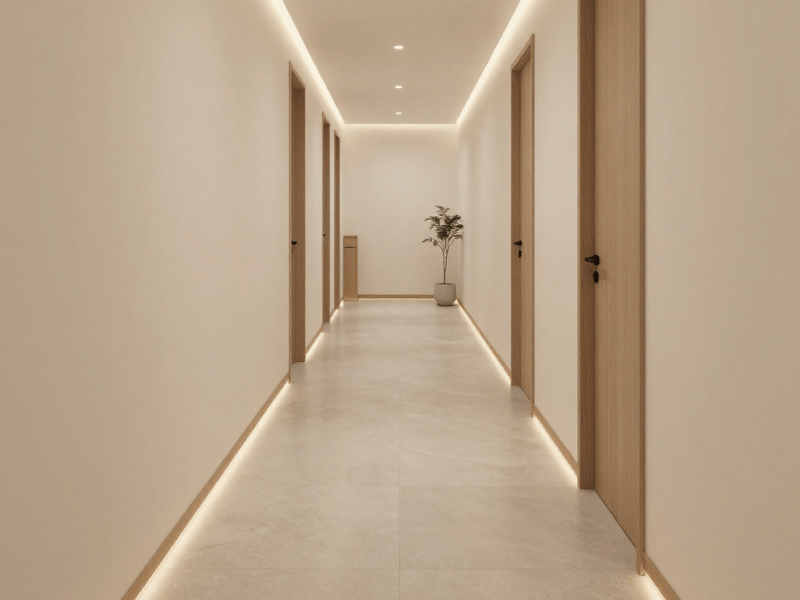
If you’re a sucker for clean lighting setups, then you don’t want any visible wires dangling about. Planning cable routes early helps keep everything hidden behind panels, cabinets, or trunking. LED aluminium profiles are also useful because they neatly conceal strips while improving overall appearance.
Positioning matters too! Indirect lighting generally looks cleaner because the light source itself remains hidden while only the glow is visible.
Using Diffusers for a Softer Glow
Bare LED strips can appear harsh and distracting, thanks to the visible individual LED dots. Diffusers soften and spread the light, eliminating the “dotted” look of the LED and creating a smoother, premium-looking glow. Aluminium profiles are commonly supplied with diffusers.
Planning Power Supply and Connections
One of the biggest missteps when installing LED strips is overlooking the location of the power source. Always position your LED driver close to the power source to avoid the need for extensions.
The capacity and voltage rating of your LED drivers also matter. Long LED runs can experience voltage drops when using lower voltage strips (12V). Insufficient wattage can also cause flickering, uneven brightness, and complete failure of your lights.
Pro Tip: Always use a driver with at least 20% more wattage than what you need to ensure safety and quality performance.
Common Media Wall Lighting Mistakes to Avoid
1. Placing LED strips too close to visible edges. This often creates glare or exposes the LEDs directly, rather than producing a soft, indirect glow.
2. Choosing lighting that’s too bright or too cool. Harsh blue-toned lighting can make living spaces feel clinical rather than relaxing.
3. Skipping diffusers. This is another frequent oversight. Visible LED dots rarely create the elegant finish homeowners expect.
4. Poor cable management. Tangled wires and exposed connectors disrupt the clean architectural appearance that media walls are known for.
5. Not planning your lighting layout. Media wall lighting works best when planned from the beginning. Make sure to plan ahead where drivers will be, where channels will be used, and whether your light is going to be recessed or surface-mounted.
Media Wall LED Lighting Ideas by Style
Different lighting styles can completely change the personality of a media wall.
Minimalist Media Walls
Minimalism is all about restraint.
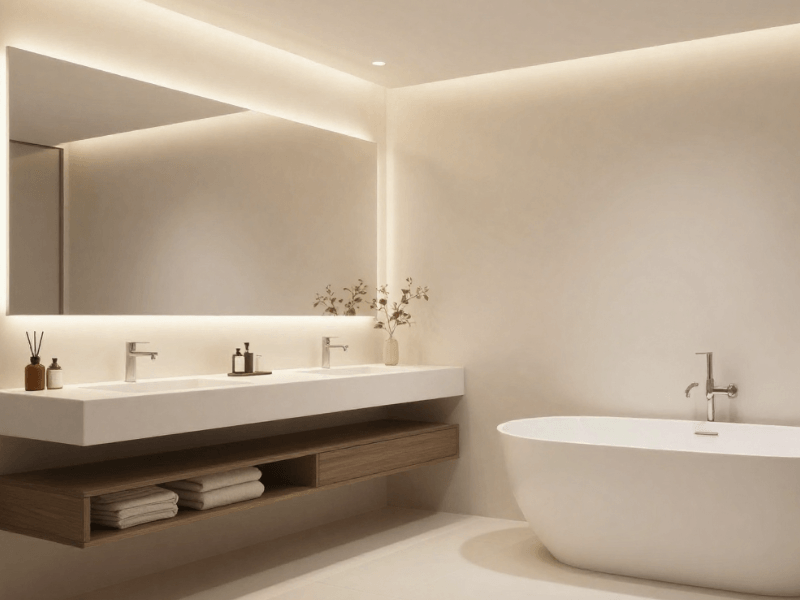
Try subtle white backlighting behind the TV or a floating unit to create a calm, sophisticated atmosphere. Soft neutral tones work particularly well in Scandinavian-inspired interiors.
Luxury Feature Walls
Maximise on layered lighting.
Try warm white LED strips combined with illuminated shelving, textured finishes, and ceiling coving to create a rich hotel-inspired aesthetic. The goal is depth, softness, and visual balance, not brightness alone.
Gaming Setups
Gaming spaces often call for bolder lighting choices.
Try using RGB LED strips, reactive effects, and colour-changing scenes to create an immersive atmosphere that enhances gameplay and movie nights. Combining vertical accents with shelving illumination can bring out the gamer vibe.

Turn Your Media Wall Into an Experience
Your media wall is more than just where you hang your TV. With lighting done right, it should shape the room's atmosphere and enhance how the space feels every time you use it.
LED strip lights play a major role in achieving that transformation. They add depth, comfort, and personality, shaping the space's experience. The most successful media walls use layered lighting thoughtfully rather than relying on a single source. Common lighting you should not miss out on your media walls are:
-
Backlighting
-
Shelving lights
-
Ambient lights
Whether you’re building a brand-new media wall or upgrading an existing one, LED strip lights offer one of the simplest and most effective ways to elevate the experience.
If you’re ready to upgrade your media wall, head over to Simple Lighting and check out our wide range of LED strip lighting and compatible accessories that can take your living room to the next level.
But if you still need more insights, you can check out our Living Room Lighting Ideas: The Complete Guide here!


0 comments