
Back in the 90s, if you heard anyone talk about “talking to your lights,” they’d think they’re crazy or a science nerd with dreams way ahead of your time. That’s right. Voice-controlled lights were almost synonymous with flying cars.
Who knew that a decade or so later, voice-controlled lighting would be made possible? Flying cars… maybe a little too complicated.
Although already a reality, smart home lighting was a novelty that evolved rapidly over the last decade, transforming into a mainstream must-have for UK households. And that’s what we’re here to talk about.
The Rise of Voice-Controlled Smart Lighting
Smart lighting is now synonymous with “voice-control,” a feature that makes modern lighting systems feel intuitive, effortless, and surprisingly enjoyable.
“Alexa, turn on the living room lights.”
With smart speakers and home assistants now common in living rooms, bedrooms, kitchens, and yes, even garden spaces (virtually anywhere you want them), voice-controlled lighting has become more accessible than ever.
Being able to speak a simple command and have your lights respond instantly is one of the best quality-of-life upgrades you can add to your everyday living.
Carrying heavy groceries and can’t get to the light switch? Settling into bed and too tired (or lazy, we don’t judge) to get back up to turn off the lights? Walking into a dark hallway and not wanting to fumble for the light switch?
With one command, your lights respond to your voice, adding a new layer of comfort, safety, and convenience. For many homeowners, it’s not just a tech upgrade. It’s a lifestyle upgrade.
From Switches to Speech: A Lighting Revolution
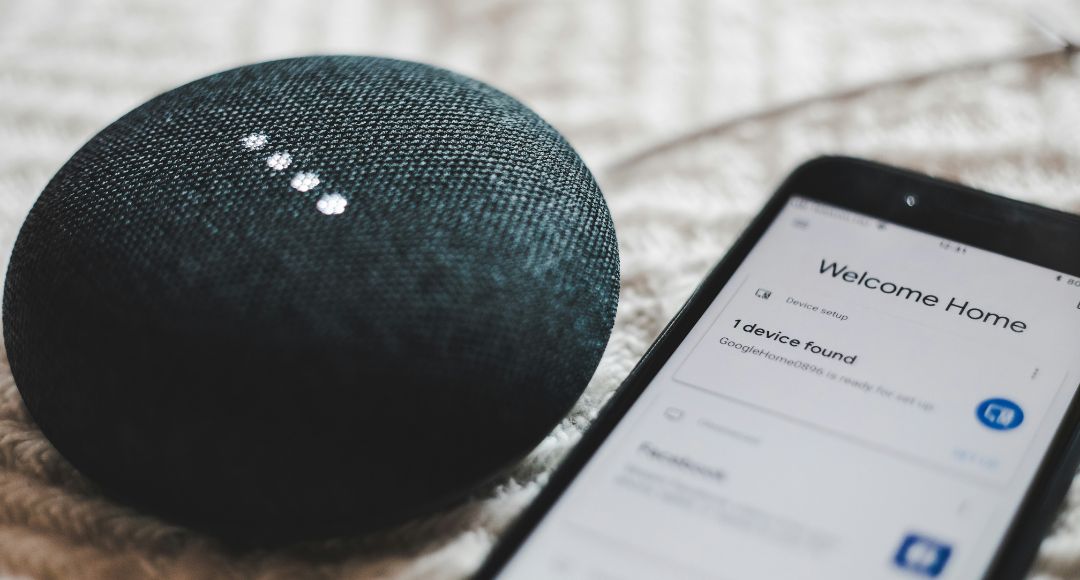
With the introduction of the Amazon Echo featuring the Alexa voice assistant in 2014, followed by the Google Home (now Google Assistant) two years later, the use of voice commands for smart home functions, such as lighting control, has become more popular and common.
These voice assistants have completely reshaped the way we interact with our homes.
Instead of fumbling for a light switch or pulling out a phone to use an app, we can now control our lighting with quick phrases:
- “Alexa, turn on the hallway light.”
- “Hey Google, set the kitchen lights to warm white.”
- “Alexa, switch to movie mode.”
What started as smart speakers became the hub for controlling various smart home appliances and devices, including lights. In a fast-paced world where more homeowners are looking for ways to simplify routines, voice-controlled lighting stands out as one of the most transformative upgrades.
Voice-controlled lighting:
- Eliminates unnecessary steps
- Provides hands-free accessibility
- Integrates seamlessly with other smart devices
The Benefits of Voice-Activated Lighting
Voice-controlled lighting offers several practical perks that quickly become indispensable:
Convenience for Busy Lifestyles
Imagine cooking with both hands full, holding a sleeping baby, or returning home with shopping bags in hand. A quick voice command lets you adjust the lights without interrupting or having to put your task on hold (pun intended).
Accessibility for All
For elderly users, individuals with mobility challenges, or those recovering from an injury, voice commands offer independence and ease of movement. No more reaching for awkward switches, asking for help to adjust the light, or navigating rooms in the dark.
Comfort and Personalisation
Voice commands make it simple to create the perfect setting for reading, hosting guests, or watching movies. You can instantly change brightness, colour temperature, and lighting arrangements without lifting a finger.
Energy Efficiency
Got a habit of forgetting lights on all day? They are no longer an issue. A simple “Alexa, turn off all lights,” helps reduce energy waste and save money on electricity bills.
How Voice-Controlled Lighting Works
There’s a whole complex science and technology at work with every innovation, such as voice-controlled lighting. However, we’re not here to discuss the jargon-filled specifics, but rather to provide an overview of how things work.
Voice-controlled lighting integrates smart bulbs and/or switches with your home assistant through Wi-Fi, Bluetooth, or Zigbee networks. Once connected, the assistant recognises your commands and relays them to your smart lighting system.
Although the technology behind it is advanced, the user experience is intentionally simple: you speak, and the lights respond.
For most users, the essential components include:
- A voice assistant (Amazon Alexa, Google Home, or Apple HomeKit)
- Smart lighting products compatible with that assistant
- A stable internet or Bluetooth connection
Still a bit confusing? Let’s break down how everything comes together.
Connecting Smart Lights to Alexa or Google Home
Your smart lights typically connect through one of three wireless methods:
- Wi-Fi — The most common option. Each light connects directly to your home network (usually the same network your speaker is connected to).
- Zigbee — A low-power mesh network that requires a smart hub (such as Philips Hue Bridge or certain Alexa devices). This option is ideal for larger homes.
- Bluetooth — Quick setup without Wi-Fi, though the range is limited.
Basic Setup (Beginners-Friendly):
- Install your smart bulb, downlight, or fitting.
- Download the manufacturer’s app and connect the light to your Wi-Fi or Bluetooth network.
- Enable the relevant Alexa, Google Home, or Apple HomeKit commands (you can edit, add, or delete commands at will).
- Discover the device in your assistant’s app.
- Assign it to a room for easier control (e.g., “Living Room Lights”).
Once paired, the assistant will recognise commands instantly.
Commands You Can Use Every Day
The idea of voice control is having the smart assistants work for you. Here are examples of everyday phrases you can copy and use:
- Brightness: “Alexa, dim the bedroom lights to 40%.”
- Colour temperature: “Hey Google, make the office lights cooler.”
- On/off: “Alexa, turn on the garden lights.”
- Scenes: “Hey Google, activate Movie Mode.”
- Routines: “Alexa, start my morning routine.” or “Alexa, good morning.”
- Smart home system integration: “Hey Google, turn on the lights and play relaxing music.”
Lighting scenes can be linked with other systems, such as heating, blinds, speakers, security cameras, and more, creating a fully automated environment.
Compatibility Matters: Choosing the Right Products
Not all lights are made for all home assistants, and vice versa. That’s why it’s advisable to choose certified-compatible products. They are essential to ensure smooth performance.
Opting for reputable smart lighting providers, such as Simple Lighting, ensures fast response times, stable connections, and clear integration instructions.
Simple Lighting’s smart range includes bulbs, LED strips, downlights, and more designed specifically for seamless voice control, providing homeowners with a reliable and hassle-free experience.
Everyday Ways Voice-Controlled Lighting Makes Life Easier
For many people, smart lighting may still sound futuristic, but its benefits appear in surprisingly ordinary moments; the kind that occur dozens of times a day. What do we mean by that?
Hands-Free Help in Busy Homes
Modern households juggle cooking, cleaning, childcare, pets, work-from-home tasks, and social life all at once. Voice-controlled lighting naturally fits into this rhythm:
- Switch the lights on while chopping ingredients.
- Adjust brightness without pausing your work call.
- Turn on the hallway lights while carrying heavy laundry.
- Create a calming nursery atmosphere during bedtime routines.
Little time-savers like these might seem irrelevant, but they quickly add up to create a smoother day.
Accessibility and Safety for All Ages
Lighting plays a huge role in providing a safe environment for movement around the home. Voice control helps minimise hazards:
- Turn on stairway lights before you reach them.
- Light the hallway from your bed if you hear a noise.
- Help elderly family members avoid dark corridors.
- Offer children a safe way to control their own lights. (No more playing with light switches!)
Smart lighting, in its truest form, is a practical life upgrade.
Perfect Ambience with a Simple Command
One beauty of smart lighting is the ability (for you) to create preset lighting scenes. Whether you prefer warm lighting for evening relaxation or bright white for focused tasks, adjusting the ambience is effortless:
- “Alexa, set the dining room lights to romantic dinner.” (Relaxed, warm lighting.)
- “Hey Google, switch lights to cooking mode.” (Bright task lights for the kitchen.)
- “Alexa, turn on Reading Mode.” (Comfortable, glare-free brightness.)
With voice commands, mood lighting becomes second nature.
Smarter Energy Management
Smart lighting is not only convenient but also efficient.
You can lessen energy waste by:
- Turning off all lights in one go when leaving the house.
- Scheduling dimming for nighttime to conserve electricity.
- Linking routines that automatically shut off lighting when rooms are unoccupied.
- Checking your lights (and adjusting) remotely using your assistant’s app.
Every small reduction in energy use can accumulate and contribute to lower bills and a more sustainable home.
Integrating Voice-Controlled Lighting into Your Smart Home
Once you’ve tried voice-controlled lighting in one room, it’s easy to expand your setup into a complete smart home ecosystem.
Here’s what we mean:
Combine Lighting with Other Smart Devices
A fully connected home offers impressive possibilities:
- Pair lighting with thermostats to set temperature and light levels simultaneously.
- Link lights with smart plugs for coordinated “wake-up” routines.
- Integrate security systems so that indoor lights also turn on when motion is detected by security outdoor lights (motion sensors).
Imagine saying, “Alexa, I’m leaving,” and watching the house respond instantly: the lights go off, the doors lock, and the heating is set to eco mode.
Create Custom Lighting Routines
Lighting routines can be tailored to your daily schedule:
- Wake-Up Routines: Slowly brighten your bedroom lights to mimic sunrise (for rooms that lack natural lighting).
- Bedtime Routines: Dim lights automatically at a set hour or when you say “Hey Google, good night!”
- Google “Home and Away” Modes: Automatically turn lights on when you arrive and off when you leave. (Will detect your location.)
These routines add structure, security, and comfort to your day without needing manual input.
The Role of Smart Hubs and Apps
Hubs help manage multiple devices more reliably, especially in large homes. They act as a central link between lights, sensors, switches, and your voice assistant.
Recommended systems include:
- Alexa-compatible hubs
- Google Home app ecosystem
- Zigbee-based lighting systems
Apps also let you monitor and control your lights when you’re away, offering both peace of mind and convenience.
Choosing the Right Voice-Controlled Lighting for Your Home
We’ve only been using the most common voice assistants as examples so far, but with so many options on the market, choosing the right smart lighting can feel overwhelming. But hey, we got you. Here’s a simple breakdown of popular choices available to get you started.
Smart Bulbs for Simplicity
Smart LED bulbs are ideal for beginners. Simply screw them into your existing fittings, connect them to your assistant, and start lighting with voice commands.
Many offer:
- Adjustable brightness
- Colour-changing options
- Energy-saving LED technology
Perfect for bedrooms, table lamps, and smaller spaces.
Smart Downlights and Panels for Modern Spaces
For a sleek, contemporary feel, smart LED downlights and LED panels are excellent choices. You can group your lights by “zones,” control them individually, or adjust them as part of a room-wide scene.
These are great for open-plan kitchens, home offices, living rooms, and hallways as they provide consistent lighting and blend beautifully with modern interior design.
Outdoor Voice-Controlled Lighting
Smart lighting is not just limited to indoors. Although it comes with its own nuances, smart outdoor lighting enhances both the security and ambience of your space.
With Alexa or Google Home, you can:
- Turn on garden path lights before stepping outside.
- Set up schedules for porch or patio lighting. (Turn on/off at specified times.)
- Sync motion-activated outdoor security lights with your assistant.
This combination enhances the safety, visibility, and nighttime aesthetics of your outdoor space.
Getting Started with Voice-Controlled Lighting
Contrary to popular belief, creating a smart (voice-controlled) home lighting system is relatively easy. Here’s a quick roadmap:
Step 1: Pick Your Preferred Voice Assistant
Both Alexa and Google Home are your top contenders:
- Alexa is excellent for command recognition and works with a wide variety of third-party devices.
- Google Home provides natural language processing and smart suggestions.
Choose the one that fits your ecosystem or the one already in your home.
Step 2: Choose Compatible Smart Lights
Like we said earlier, not all lights are compatible with all voice assistants. Select products that work smoothly with your assistant. Simple Lighting offers an expanding range of voice-compatible options designed for UK homes.
Step 3: Set Up and Start Talking
Connect your lights, link them to your assistant, assign rooms, and try a few basic commands. You’ll be surprised how quickly voice control becomes an effortless part of your daily routine. Experience lighting that listens and transforms the way you live.
Lighting Made Easy
Voice-controlled lighting brings together convenience, comfort, accessibility, and energy efficiency in a way that feels natural and transformative (which it is). Whether you’re upgrading a single room or creating a fully connected smart home, Alexa and Google Home make managing your lights easier than ever.
And switching to smart lighting has never been easier than it is today. Even beginners can experience the full benefits of voice-controlled lighting with plug-and-play options.
Simple Lighting offers a range of high-quality, yet affordable, smart lighting fixtures, switches, and controllers to get you started.
Loved this guide? Check out more posts like this by clicking here: Smart Lighting Ideas for a Connected, Convenient Home.