
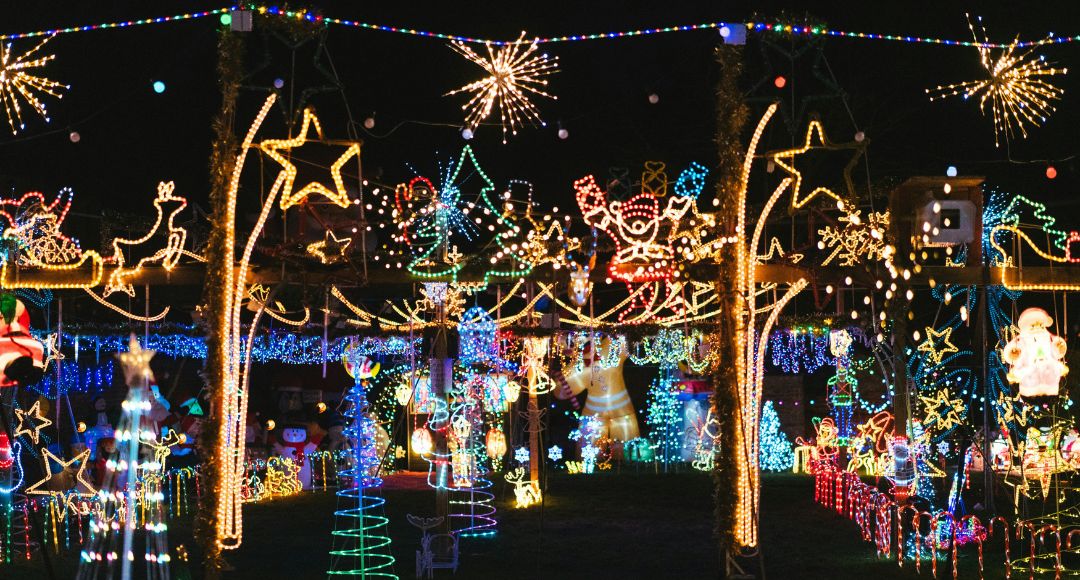
Christmas… the most magical time of the year. And arguably the most expensive too! Aside from the new decorations you impulsively purchase when you said you were just going out to get groceries, there are the added lights, too.
From trees wrapped in twinkling fairy lights to houses glowing with vibrant outdoor displays, it’s no surprise that electricity bills are higher than expected. The good news? LED lights.
You can enjoy a beautifully lit Christmas without draining your wallet or increasing your carbon footprint. They’re the perfect solution: low energy consumption, long lifespan, and brilliant festive brightness.
In this guide, we’ll explore why holiday lighting affects your bills, how LEDs dramatically cut energy use, and how to maximise efficiency while keeping the magic alive. You’re not spending a gloomy Christmas. Not on our watch.
Why Holiday Lighting Can Hurt Your Energy Bills
Christmas lights may be small, but their energy use adds up, especially with traditional incandescent or halogen lights. Before LEDs became widely available, households relied on decorations that consumed considerably more power.
Traditional Lights Use Much More Energy
A standard 100-bulb incandescent fairy light string typically uses 50-60 watts of power total. By comparison, a 100-LED string usually uses 6–10 watts total. That’s up to 80% less energy, but more on that shortly.
Average UK Energy Use for Christmas Lighting
Many households in the UK keep their festive lights on for 6 to 8 hours each evening from late November to early January. When you multiply that by multiple indoor strings, an outdoor display, a tree, and often a garden feature, the numbers grow quickly.
It can be easy for a UK household to spend £20–£40 on incandescent decorations over the holidays… sometimes even more for those who love the bright, festive lights.
Long Winter Evenings Increase Consumption
The other culprit, aside from the energy hog traditional lights? The long nights, because this means you’re running your lights earlier and longer.
Outdoor lights especially contribute to increased usage because:
- They are often brighter and higher wattage
- They may run overnight “accidentally”
- Many people use multiple strings to cover a facade, hedge, porch, or garden feature
The result: hours of extra, unnecessary energy consumption.
LED Christmas Lights – A Low-Energy Alternative
LEDs have revolutionised festive decorating. They provide eye-catching colour, sharp clarity, and impressive brightness without the energy waste, heat output, or fragility of older bulbs.
How LEDs Use Less Power Than Traditional Lights
LEDs are extremely energy efficient because they convert far more of the electricity they consume into light rather than heat. Traditional lighting, particularly incandescent bulbs, wastes up to 90% of its energy as heat, which is why it runs hot and fails quickly.
An 80W incandescent bulb can be replaced with a 12W LED bulb that produces the same brightness. That’s around 85% less energy consumed.
LEDs achieve this through semiconductor technology that emits light efficiently with minimal resistance and minimal heat. The result: vibrant colours and crisp illumination at a fraction of the cost.
Longevity and Durability Reduce Replacement Costs
If you’ve ever had incandescent lights for Christmas decorations before, then you know how “fragile” they are and how fast they burn out.
LEDs are the opposite.
- Lifespan of 25,000 to 50,000 hours
- Bulbs don’t blow out easily
- Flexible, durable wiring
- Low heat, reducing fire risk and helping the fitting last longer
Since LED decorations last for many Christmases, households don’t need to buy new sets every year, which saves money and reduces waste. The perfect decor for eco-conscious homeowners!
Brightness Without High Electricity Costs
LEDs deliver rich colour, sharp definition, and consistent brightness. Unlike older bulbs that dim over time, LEDs maintain clarity throughout their lifespan. All that for a fraction of the energy cost of traditional lights.
This applies to all Christmas lighting types:
- Fairy lights – brighter sparkles using tiny micro-LEDs
- LED strip lights – perfect for outlining windows, fireplaces, hallways, and trees
- LED neon flex – bold, stylish lines ideal for outdoor displays or decorative shapes
- Cluster lights – dense, eye-catching glow without high wattage
With LED lights, you get the festive impact without the energy spike.
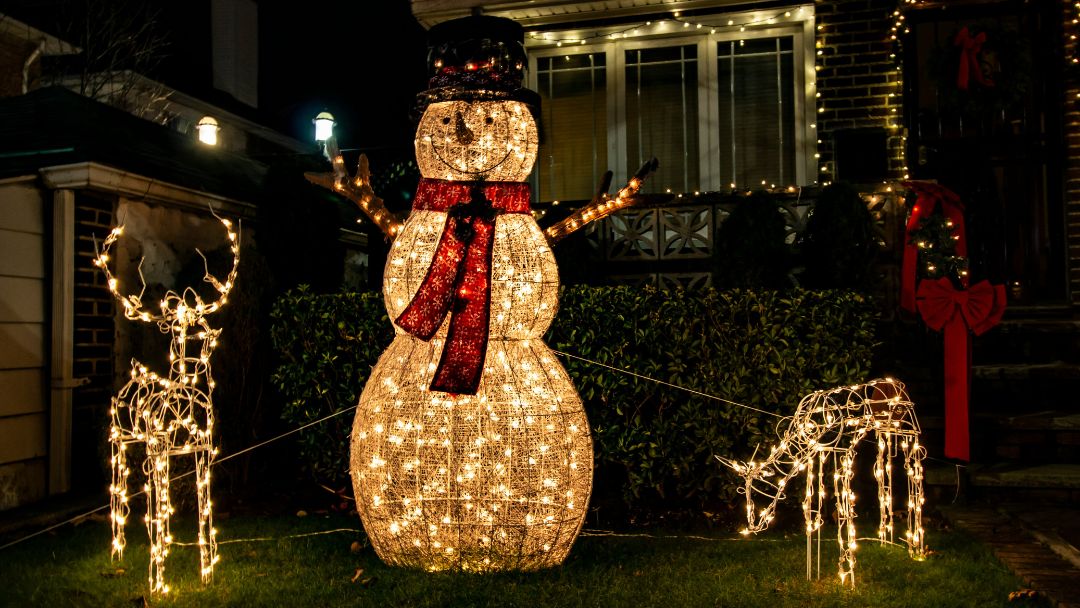
Calculating Your Potential Savings with LEDs
Let’s do some easy maths to better understand how LEDs save you money. We’ll compare a typical scenario to show the real-world savings.
Here’s the formula we’ll use:
Total Watts x hours per day x number of days / 1000 = kilowatt-hour
A simple comparison: a 100‑bulb incandescent string drawing 60W used 5 hours/day for 30 days consumes:
60W × 5h/day × 30 days / 1000 = 9 kWh
At an average of 26p/kWh, that’s £2.34 for one string for the month.
An equivalent LED string drawing 6W consumes:
6W × 5h/day × 30 days = 0.9 kWh
That’s £0.23 total (at the same 26p/kWh rate), which is a saving of ~£2.11 per string. Multiply that across multiple strings and nights, and the savings become meaningful for households and shops.
Indoor vs Outdoor Energy Usage
Compared to indoor lighting, outdoor lighting usually consumes more energy for different reasons:
- Runtimes are longer (often left on overnight).
- Lights are brighter to compete with street and ambient lighting (and the neighbour’s).
- Larger areas are typically covered, meaning more fixtures.
Switching outdoor decorations to LED makes the biggest, fastest impact on your bills.
Recommended LED solutions:
- Indoor: Low-wattage strip lights, battery micro fairy lights, LED curtain lights. No need for high IP fixtures.
- Outdoor: Use LED neon flex, IP65 fairy lights, and low-voltage LED icicle lights. Make sure all lights are IP-rated to at least IP65. (The higher the better)
Choosing the right IP rating ensures the safety and longevity of your lights.
Smart Control & Scheduling to Maximise Savings
LEDs save energy on their own, but pairing them with smart control takes their efficiency to the next level.
Automatic Timers for Dusk-to-Dawn Illumination
Timers and smart plugs prevent accidental overnight lighting, one of the biggest culprits behind holiday bill surprises.
Benefits include:
- Automatic on/off at set times
- Lights never stay on when not needed
- No need to remember daily switching
- Ideal for outdoor lights where accessibility is limited
Smart dusk-to-dawn sensors even adjust automatically as sunset times change, ensuring precise efficiency all season.
Scene Control and Dimming Options
You don’t always need your lights at full brightness. Depending on the occasion and activity, you might need a dimmer light to match or set the mood.
LED controllers allow:
- Dimming to reduce consumption
- Low-energy warm glow scenes
- Soft ambient settings for evenings
- Higher brightness only for gatherings or displays
- Colour-changing modes without extra power draw
For example, running LED strip lights at 60% brightness can significantly reduce power use while maintaining a cosy ambience.
Eco-Friendly & Sustainable Christmas Decorating
Have you ever thought about saving the planet? Not in the superhero kind of way, but in a more ecocentric way. Yes? Then we have good news for you. LEDs are not just better for your bills; they’re better for the planet.
Lower Energy = Lower Carbon Footprint
Because LEDs use significantly less electricity, they reduce the carbon emissions associated with energy production. For households aiming to make sustainable lifestyle choices, merely switching to LED indoor lighting is a simple yet impactful change.
Pairing LEDs with Reusable Décor
Sustainability isn’t just about energy use. Reusing decorations year after year reduces waste and supports a circular approach to holiday styling. You can also be confident that your LED lights will still work for next Christmas.
Consider pairing LEDs with:
- Reusable garlands and wreaths
- Wooden or fabric ornaments (ones you won’t easily throw away)
- Long-lasting window décor
- Natural elements like pinecones or dried oranges
The combination of low-energy lighting and reusable materials creates a festive look that’s kinder to the environment.
Smart Energy Choices for Commercial Displays
Small businesses and shops often face higher lighting costs due to long operating hours and larger displays during the Christmas season.
That’s why switching to LEDs is ideal for:
- Lower monthly bills (less energy usage)
- Reduced maintenance and replacements
- Brighter, more modern lighting (good for grabbing attention)
- Greener branding and environmental credibility
- A more festive environment overall
LED neon flex is especially popular for retail displays because it delivers bold, eye-catching lines while using minimal power.
Additional Tips for Maximising Efficiency Without Sacrificing Festivity
Saving energy doesn’t mean reducing the sparkle. (Cue pixie dust—cos, you know, sparkles.) Anyway, here are easy ways to make your lighting display more efficient and visually impactful.
Use Fewer High-Power Displays
One bright focal feature can be more effective (and more festive) than lots of scattered lights. For example:
- A glowing LED neon star on a wall
- A highlighted tree with warm LED fairy lights
- A single outline around windows or the porch
- A feature staircase wrapped with LED tape
Purposeful placement creates a stronger aesthetic while cutting energy use. Also keeps your decoration clean and organised.
Mix Colour and Warm Whites
Using a combination of colours and warm whites can create depth and visual interest without increasing wattage.
Use LEDs for:
- Rich RGB colour effects
- Soft, cosy golden tones
- Bright, modern cool whites
You can build stunning displays with variety rather than volume.
Combine Static and Dynamic Effects
LEDs can create dynamic patterns that are more engaging than static incandescent lights:
- Twinkle modes (cosy feels)
- Colour fades (a wash of nostalgia with every glow)
- Chase effects (perfect for snow effects)
- Sparkle animations (a touch of Christmas magic)
These look impressive without needing large quantities of light sets.
Position Lights Strategically to Enhance Brightness
The position of your lights matters. Lighting needs to be strategic. Placing LEDs against reflective surfaces enhances their glow. Try doing the following:
- Wrap trees near windows
- Outline mirrors
- Place strip lights under shelves
- Frame doorways to create “light portals”
- Use uplighting to cast a warm spread across the walls
Effective placement increases perceived brightness without increasing actual power consumption.
Grouping LED Lights in Zones
Creating lighting zones is a smart, energy-efficient approach for both homes and commercial spaces.
Why zone, though?
- Turn off areas not in use
- Create an ambience tailored to different rooms
- Easy control via smart apps or controllers
- Saves energy by reducing unnecessary lighting
By activating only the zones you need, you maximise impact while minimising consumption.
Celebrate Sustainably with LEDs This Christmas
And there you have it. Christmas lighting doesn’t have to be expensive or wasteful. Don’t let TikTok trends tell you otherwise. With LED smart lighting and smart control solutions, you can enjoy all the festive magic while using just a fraction of the energy required by traditional lights.
By choosing LEDs for both indoor and outdoor displays, you can enjoy a brilliant Christmas without the post-holiday bill shock. Ready to decorate smarter?
Explore Simple Lighting’s full range of low-energy Christmas LED lights and create a festive display that shines bright…sustainably, of course.
You can find more LED lighting ideas for Christmas here: Christmas Lighting Ideas for UK Homes.