
Picture this:
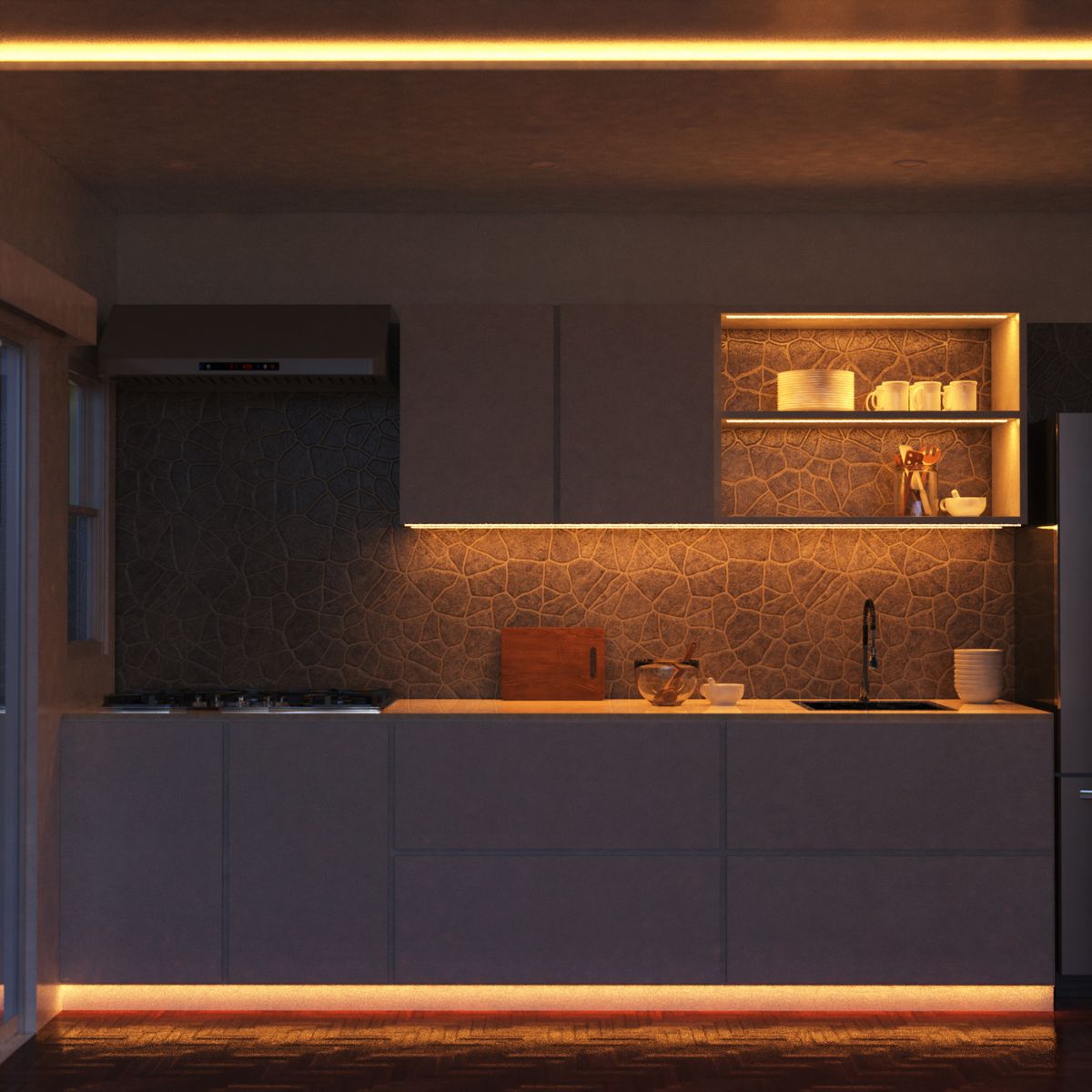
It’s a quiet evening, and your kitchen counters are softly aglow, cabinet edges traced with a subtle halo of light, and the floor gently illuminated beneath your feet.
The space has an inviting atmosphere. It’s modern and effortlessly functional.
That’s the magic of LED strip lighting.
Contrary to many people’s beliefs, LED strip lights are more than just decoration. They have already become an essential ingredient in contemporary kitchen designs.
And, really, it’s not shocking.
They offer unmatched flexibility, energy efficiency, and sleek style that transforms kitchens from dull and “flat” into bright, layered, and visually balanced spaces.
In this guide, we’ll walk you through how to best use LED strip lights in your kitchen.
We’ll discuss placement ideas, product choices, and expert installation tips.
By the end of this post, you’ll learn how to design lighting that’s both practical and beautiful.
Ready to turn your kitchen into a space that glows with personality and purpose?
Let’s get right to it.
Understanding the Role of LED Strip Lights in Kitchen Design
Before we jump the gun, we have to first understand how LED strip lights fit into the kitchen.
To do that, let’s talk layers.
Every well-designed kitchen combines ambient, task, and accent lighting to achieve balance and atmosphere.
- Ambient lighting provides the overall brightness, often from flush or semi-flush ceiling fixtures or downlights.
- Task lighting targets specific work areas, such as counters, sinks, and islands.
- Accent lighting highlights architectural or decorative features, adding depth and character to the space.
LED strip lights can support all three layers, depending on how and where they’re installed.
They’re slim, discreet, and adaptable. Thanks to their flexibility and slimline build, they can be easily hidden under cabinets, in shelves, or along plinths, making them ideal for kitchens where design and function need to work hand in hand.
The key is placement.
Done right, strip lighting bridges the gap between performance and ambience, bringing your entire kitchen to life.
Where to Use LED Strip Lights in Your Kitchen
So, where is the best place to install your LED strip lights?
Under Cabinets – Brighten Your Worktops
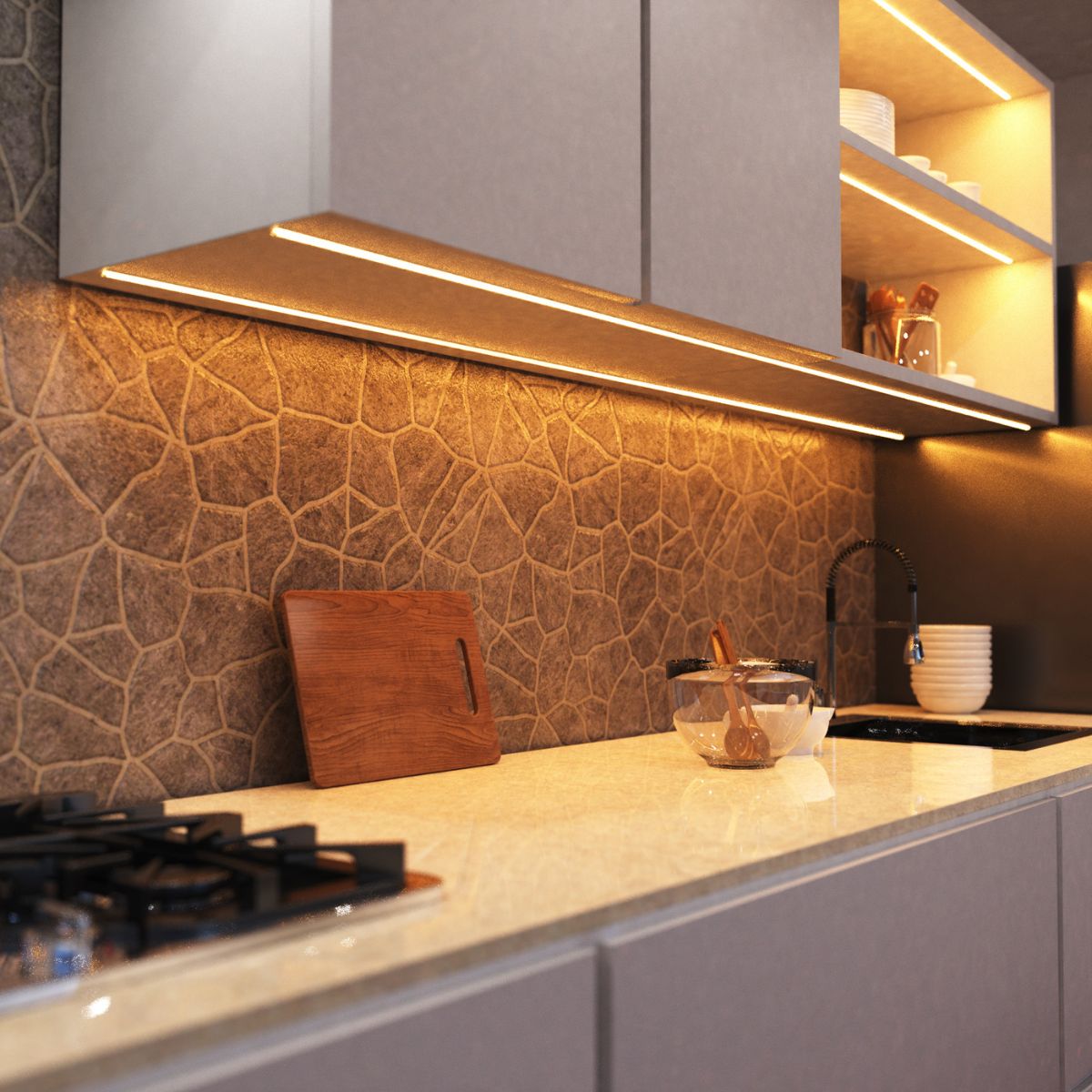
If there’s one place LED strip lighting truly shines, it’s under the cabinets.
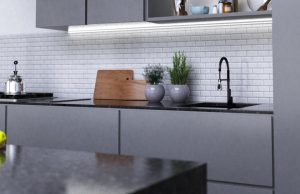
Positioned just beneath the wall cabinets, strips provide powerful task lighting that illuminates your counters and cooking areas.
Instead of working in shadow, you’ll enjoy a clear, even wash of light. It’s perfect for food prep, reading recipes, or making coffee early in the morning.
Installation tip: Mount the strips toward the front edge of the cabinet underside, not at the back. This ensures the beam reaches the full counter area rather than casting light onto the wall.
For a more professional finish, use aluminium profiles with diffusers. These conceal the LED dots and evenly spread the light, giving you a smooth, clean look that complements modern cabinetry.
Above Cabinets – Add Warmth and Height
If not below, why not above?
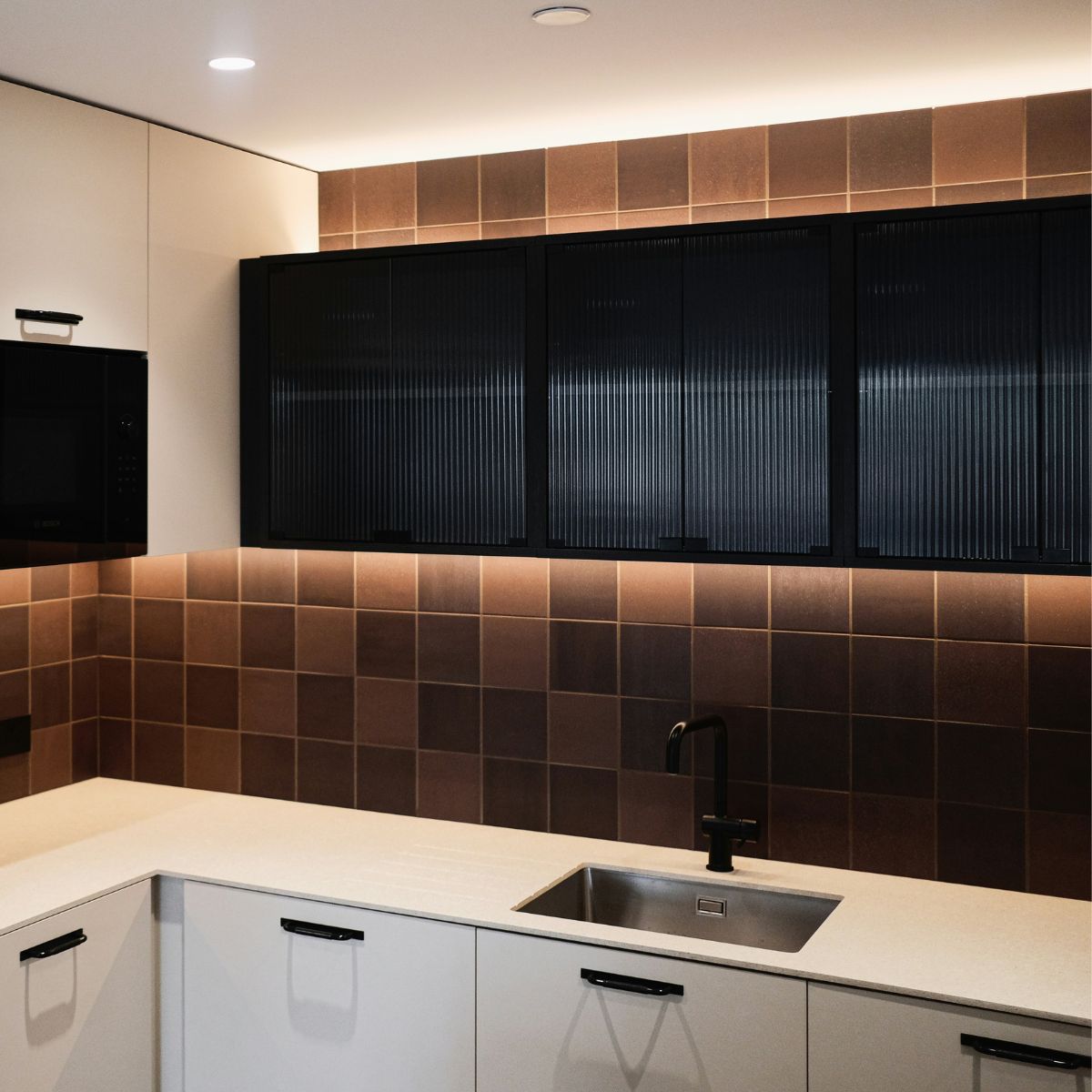
Lighting above your cabinets can give your kitchen a lift, somewhat literally. Above-cabinet lighting can make your kitchen feel taller and more luxurious.
How?
By placing LED strips along the top edge of your cupboards and directing the beam upward, you create an uplighting effect that visually extends your ceiling and adds a soft, ambient glow.
This technique works wonders in open-plan or minimalist kitchens where subtle lighting helps define the space.
Choose a warm white colour temperature (around 2700K-3000K) for a welcoming and relaxing golden tone that mimics natural evening light.
The result? A kitchen that feels airy, layered, and high-end without the need for any major renovation.
Inside Cabinets or Shelves – Subtle, Functional Illumination
Lighting the interiors of cabinets isn’t just for show. It has its practical uses too.
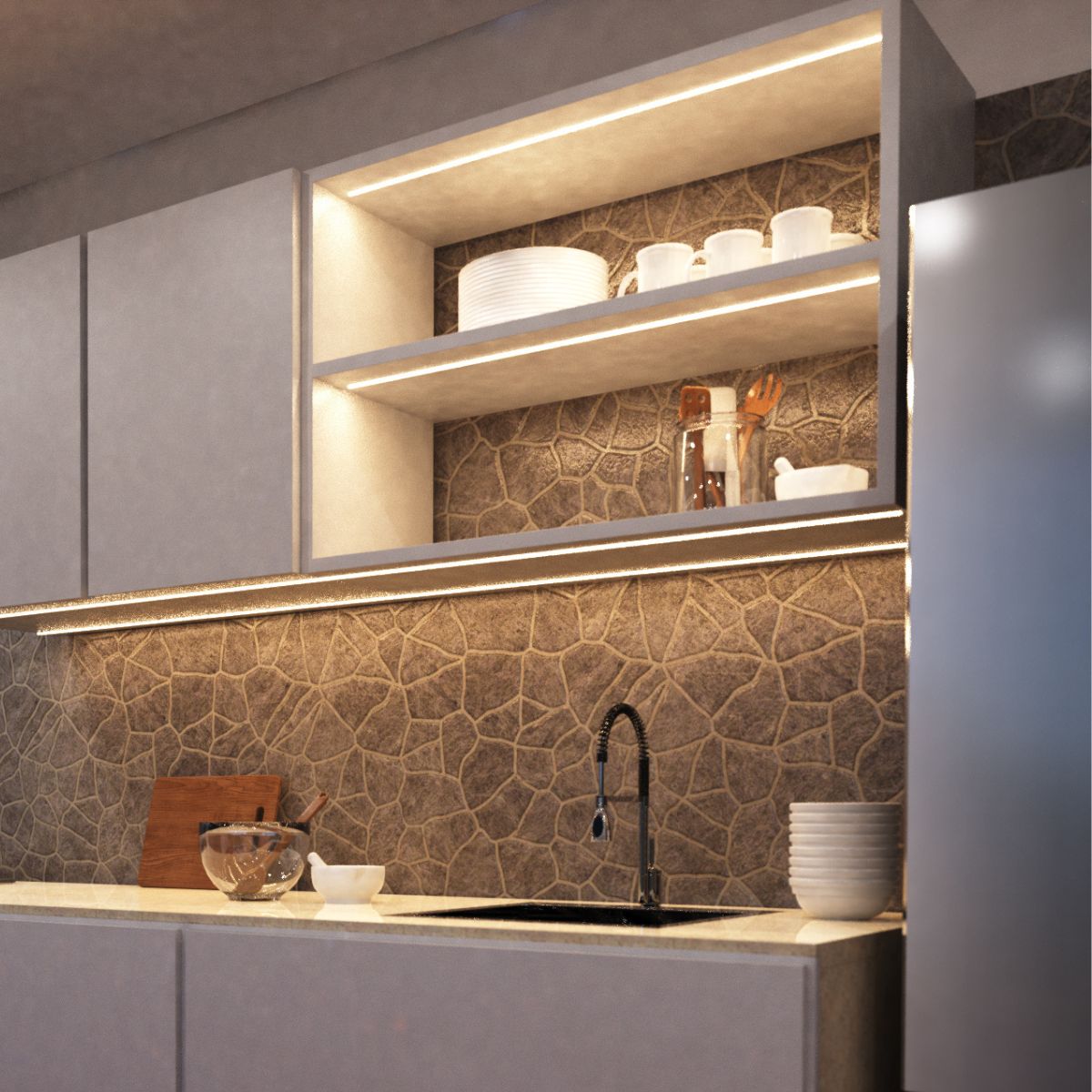
Open shelves that have dark spots make the kitchen feel smaller and claustrophobic. Slap an LED strip inside, and suddenly the space seems to open up.
Lighting your cupboards also enhances kitchen safety.
Use them to spotlight glassware, highlight crockery, or simply improve visibility when you’re reaching for items in darker cupboards.
For an effortless upgrade, consider motion sensor LEDs that automatically switch on when a door opens and off when it closes. No more switches!
Inside cabinet light is a small touch that makes your kitchen feel both smarter and more luxurious.
Along Plinths or Toe-Kicks – A Contemporary Touch
If you love to sneak to the kitchen late at night for a midnight snack, this is for you.
One of the most striking (and often overlooked) applications of LED strips is plinth lighting.
If you’ve ever browsed through Pinterest kitchen ideas, this is the light installed along the baseboards beneath the kitchen’s lower cabinets.
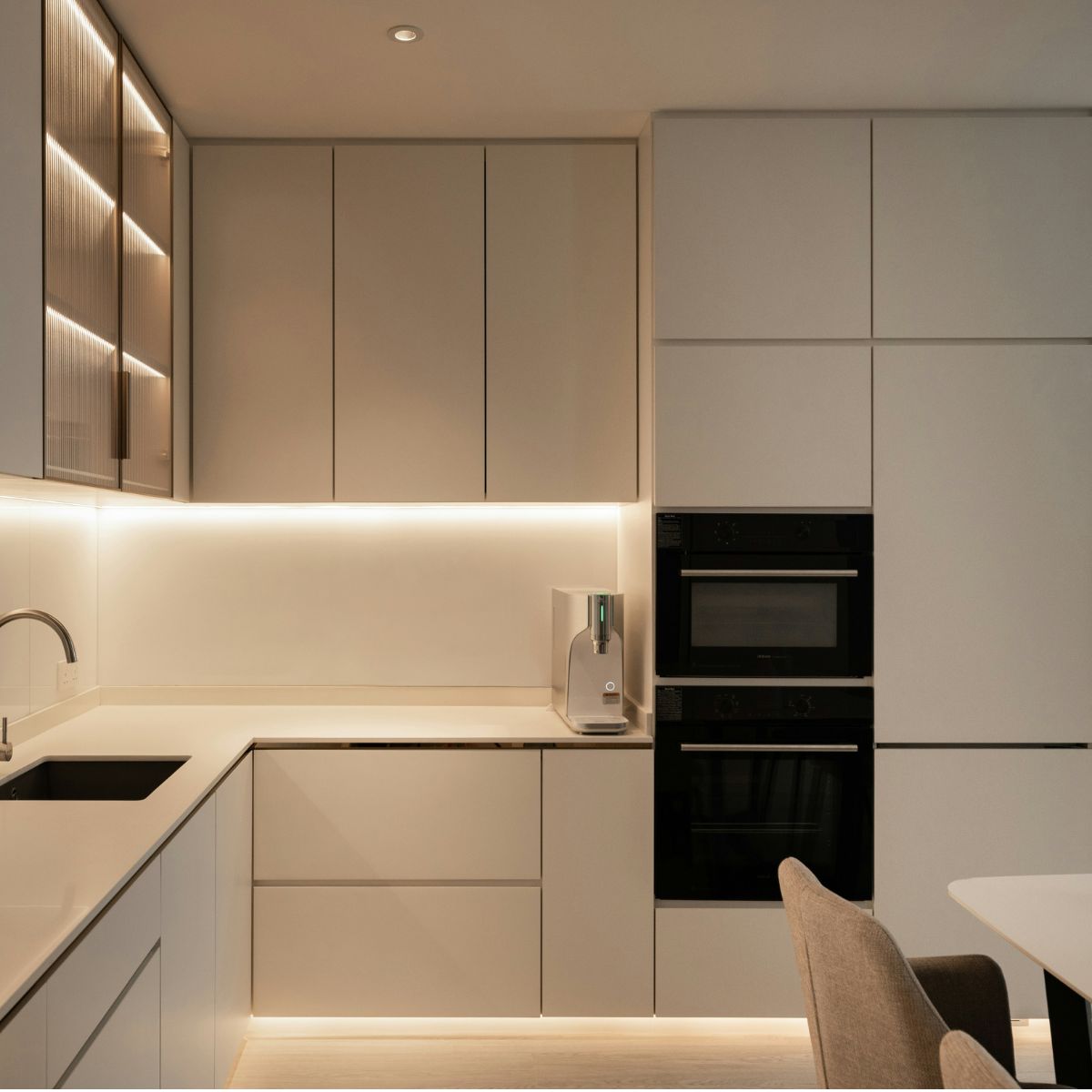
Plinth lighting creates a soft floor-level glow that adds depth to your kitchen and subtly outlines your cabinetry.
At night (on sneak time), it provides gentle ambient lighting, ideal for navigating the space without switching on brighter overheads.
Pro Tip:
Use dimmable warm white strips or low-lumen LEDs for a soothing look. The goal is not to wash the space with bright light.
For extra impact, extend the lighting around corners or beneath kitchen islands for a floating effect that feels effortlessly modern.
Around Kitchen Islands – Defining the Centrepiece
Your kitchen island is the central hub of your kitchen. It’s a spot for cooking, entertaining, and gathering.
How do LED strip lights elevate it from practical to stunning?
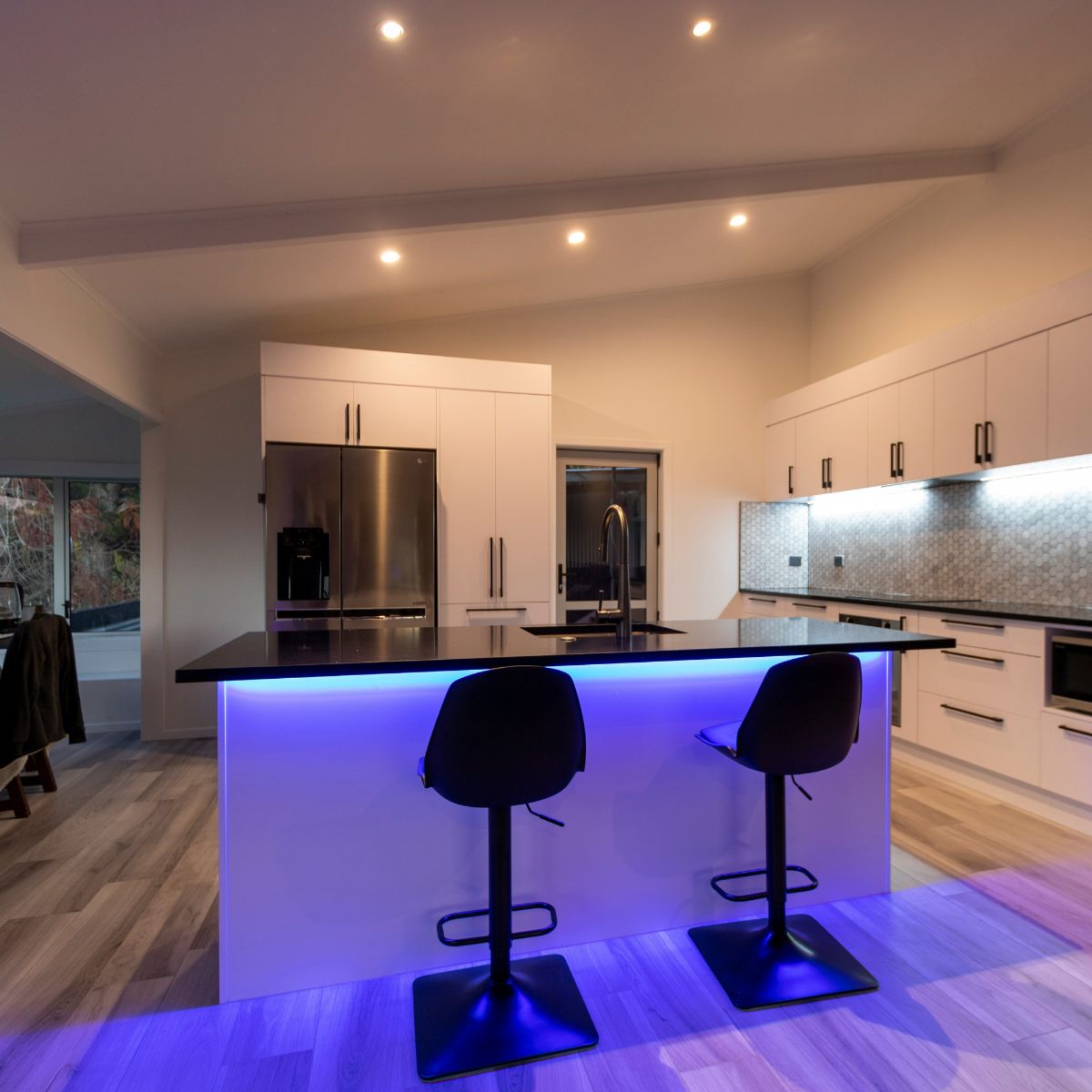
- Under-counter lighting along the island’s perimeter can create a soft halo, making it appear to “float” above the floor.
- If the island has multiple levels, task lighting can be integrated just beneath the taller overhang to brighten breakfast bars or prep areas.
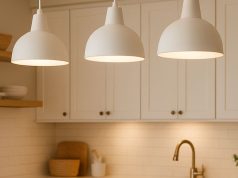
- Combine with pendant lights above for a balanced, layered look. Strips add the subtle glow, while pendant bulbs provide the ambient glow.
Using strip lights, you can turn your island into a statement feature, whether it’s day or night.
Choosing the Right LED Strip for Your Kitchen
There are hundreds—if not thousands—of LED strip lights to choose from.
The perfect choice depends on your layout, mood, and usage.
Here’s what to look for:
1. Brightness (Lumens)
When looking for brightness, you do not look at Watts.
The brightness of an LED strip is measured in lumens per metre. For kitchen task lighting, aim for 1,000–1,500 lumens/m, while accent lighting can be softer at 300–700 lumens/m.
Think about layering: Use brighter strips under cabinets and subtler ones for plinths or shelving.
2. Colour Temperature
The colour or tone of your light has a big impact on the mood and style of your kitchen:
- Warm White (2700K–3000K) – creates a cosy, inviting feel.
- Natural White (3500K–4000K) – crisp and balanced, perfect for general or task lighting.
- Cool White (5000K+) – bright and modern, often used in high-function spaces. Use sparingly in the kitchen if you don’t want it to feel too clinical.
The best option?
Get a tunable LED strip to allow you to switch between warm and cool tones with a single press of a button, tap on the screen, or voice command.
3. Waterproofing (IP Ratings)
Kitchens are humid environments, especially near sinks or cooking areas. Choose LED strips with an appropriate IP rating:
- IP20 for dry zones like shelves or ceilings.
- IP65 or above for splash-prone areas near sinks or cooktops.
4. Smart and Dimmable Options
If you’re looking for total control of your lights (which you should), opt for smart LED strips that work with apps or voice assistants.
You can adjust brightness, colour, and even schedules with a single tap or a simple voice command.
“Alexa, dim the kitchen island lights.”
If you prefer more manual control, dimmable drivers and remote control dimmer switches are an excellent choice
Installation Tips for a Professional Finish
You don’t need to be an interior designer to achieve professional-looking results, but planning does make all the difference.
1. Plan Your Layout
Before sticking or screwing your strip lights in place, sketch your kitchen and mark where each LED strip will go.
This way, you can note power points, lengths, and corners, so that you can anticipate them during installation.
Make sure to account for obstacles and corners when measuring.
There are LED strip light suppliers like Simple Lighting who offer bespoke cutting services, which can help make your installation a breeze.
2. Manage Your Cables
Neat cable management keeps your setup looking sleek. Route wires along cabinet edges, behind panels, or through discreet trunking.
Bulkier parts, such as LED drivers and transformers, can be hidden in cupboards or utility spaces for a clutter-free finish.
3. Prioritise Safety
Always use the correct driver for your LED strips and ensure it matches the voltage (typically 12V or 24V). A 12V LED strip should only be paired with a 12V driver, and a 24V strip with a 24V driver.
Also, avoid overloading circuits and follow manufacturer guidance for safe installation.
If in doubt, hire a qualified electrician, especially when connecting to mains power.
4. Use Aluminium Profiles
Aluminium profiles not only make your LED strip light installation look professional and clean, but they also extend its lifespan.
That’s right. Aluminium profiles act as heat sinks, dissipating heat from your strips and keeping them cool, preventing overheating and burnout.
Creating Mood and Ambience with LED Strips
Your kitchen doesn’t always need to be bright and energetic. There are times when you need it to be soft and serene instead.
To put it into perspective:
- Cool white tones are perfect for tasks, such as cooking, cleaning, or working from home.
- Warm white tones suit evenings, adding comfort and intimacy during dinner or gatherings.
- RGB or tunable white strips give you full creative control, letting you change colours or warmth based on the time or mood.
For instance, a cool white light under your cabinets can keep the space crisp for food prep, while warm uplighting above cupboards creates a golden after-dinner glow.
By blending these effects, you can craft a kitchen that adapts seamlessly from a functional workspace to a relaxed social hub.
Common Mistakes to Avoid
Proper installation is everything when it comes to LED strip lighting. Even the best LED strips can disappoint if installed incorrectly.
Here are a few pitfalls to steer clear of (they’re pretty common, too, so watch out):
1. Visible LED Dots — Prevent harsh spotting by using diffusers or aluminium profiles for a smooth, professional finish.
2. Uneven Spacing — Don’t leave dark patches between sections. Plan continuous runs or overlap connectors slightly for consistent brightness.
3. Mismatched Colour Temperatures — Mixing warm and cool whites can make your kitchen feel disjointed. Stick to one tone per zone.
4. Underpowered Drivers — Always check if your power supply can handle the total wattage of all connected strips. You should always leave at least a 20% safety margin for power surges.
5. Skipping a Test Run — Always test before final installation to confirm brightness, colour, and placement. Regretting later is never an option!
Treat this as your mini troubleshooting checklist. It’s a quick way to ensure your finished result is cohesive, reliable, and stunning.
Stunning Strip Lighting
LED strip lighting gives you the power to redefine your kitchen’s atmosphere and functionality.
There are many other options, but it’s the most versatile lighting available. It’s adaptable to any style, space, or mood (in fact, LED strip lights create it).
Whether you’re renovating or simply upgrading your existing setup, planning your LED strip placement early (and properly) ensures your kitchen looks seamless and performs beautifully.
The goal is to have lighting that doesn’t feel forced, but one that looks like it’s part of the structure and the architecture.
At Simple Lighting, we believe great lighting is all about experience.
With the right LED strips from our vast collection (tapes, kits, controllers, drivers, etc.), you can turn your kitchen from simple and flat to stunning and functional.
Loved this?
Get more lighting insights by clicking on Choosing the Best Lighting for Your Kitchen.