
Admit it. You’ve taken a bathroom selfie or two. We all did at one point. The question is: would you still take one, given how your bathroom looks at home? Dark and dingy with a central light that’s been there since you were a baby.
You might think a complete renovation is needed for you to be able to take bathroom selfies confidently again. But what if we told you there’s a cheaper, faster alternative? That’s right. We’re talking about your bathroom lighting.
More specifically, we want to discuss LED downlights and IP-rated LEDs to achieve a clean, architectural look without compromising your bathroom’s safety compliance or comfort.
When thoughtfully planned, bathroom lighting can create a soft, spa-like experience. This post explores how to design a modern bathroom lighting scheme that balances aesthetics, safety, and everyday usability.
Why Bathroom Lighting Needs a Different Design Approach
Bathrooms are unlike any other room in the house, as they’re more challenging to light for obvious reasons: water and moisture.
The Importance of Layered Lighting and IP-Rated Lights
Unlike living rooms or bedrooms, bathrooms must support precision tasks such as shaving, skincare, and applying makeup. At the same time, they are used as spaces to unwind after a long, stressful day.
What we’re getting at here is that poorly placed lighting will be more problematic than helpful in a bathroom setting. That’s why layered lighting matters more here than almost anywhere else.
Relying on a single ceiling light often results in facial shadows, mirror glare, and flat, uninspiring illumination. A modern bathroom works best when different light sources play distinct roles: task lighting at the mirror, a soft ambient glow from ceiling downlights, and accent lights from wall sconces.
There is also a crucial balance to strike between aesthetics, safety, and practicality. Lighting must comply with UK bathroom regulations and withstand moisture, while also looking great. This is where modern IP-rated LEDs excel: they combine protection with design flexibility.
Modern Bathroom Design Trends Influencing Lighting
Contemporary bathroom design has shifted toward restraint. Clean ceilings, uncluttered surfaces and subtle illumination now define spaces.
People are saying goodbye to decorative pendants and bulky fixtures, and are opting for hidden light sources that enhance the architecture rather than compete with it.
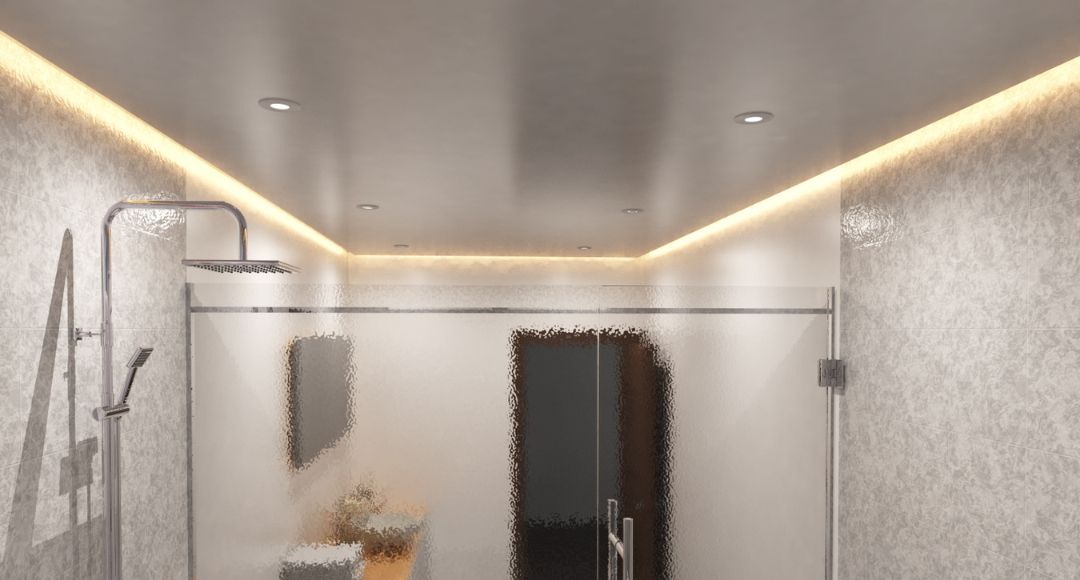
Lighting is increasingly integrated into the room’s structure. Recessed downlights, concealed LED strips and softly lit niches create depth without visual noise. The result is a bathroom that feels calm, intentional and effortlessly modern.
Understanding Bathroom Zones and IP Ratings
Proper bathroom lighting starts with understanding zones and IP ratings. These terms may sound too technical for those unfamiliar, but their principles are actually quite simple.
Basically, different areas of the bathroom are exposed to varying levels of water, so lighting must be selected accordingly.
Bathroom Zones
Bathrooms are divided into four zones.
- Zone 0 is inside the bath or shower itself. Use IP67 lights.
- Zone 1 sits directly above these areas. IP65 and higher-rated lights are essential.
- Zone 2 is the 60cm area around zone 1. Use at least IP44 lights here.
- Outside zones cover the rest of the bathroom. No specific IP rating is required, but we recommend at least IP44, as moisture can still accumulate over time.
Understanding IP Rating
This indicates how well a fitting is protected against moisture and dust. The higher the rating, the greater the protection. IP stands for ingress protection, and the two numbers indicate solid (first) and liquid (second) protection levels. The highest level for solids is 6, and for liquids it’s 8.
This means an IP65-rated downlight provides maximum solid protection and relatively high liquid protection (able to withstand jets of water). In bathrooms, IP ratings are not optional. They are essential for safety and legal compliance.
Choosing the Right IP Rating for Each Area
In showers and wet zones, lighting must be fully protected. At least IP65-rated fittings are commonly used here, providing resistance to water jets and steam.
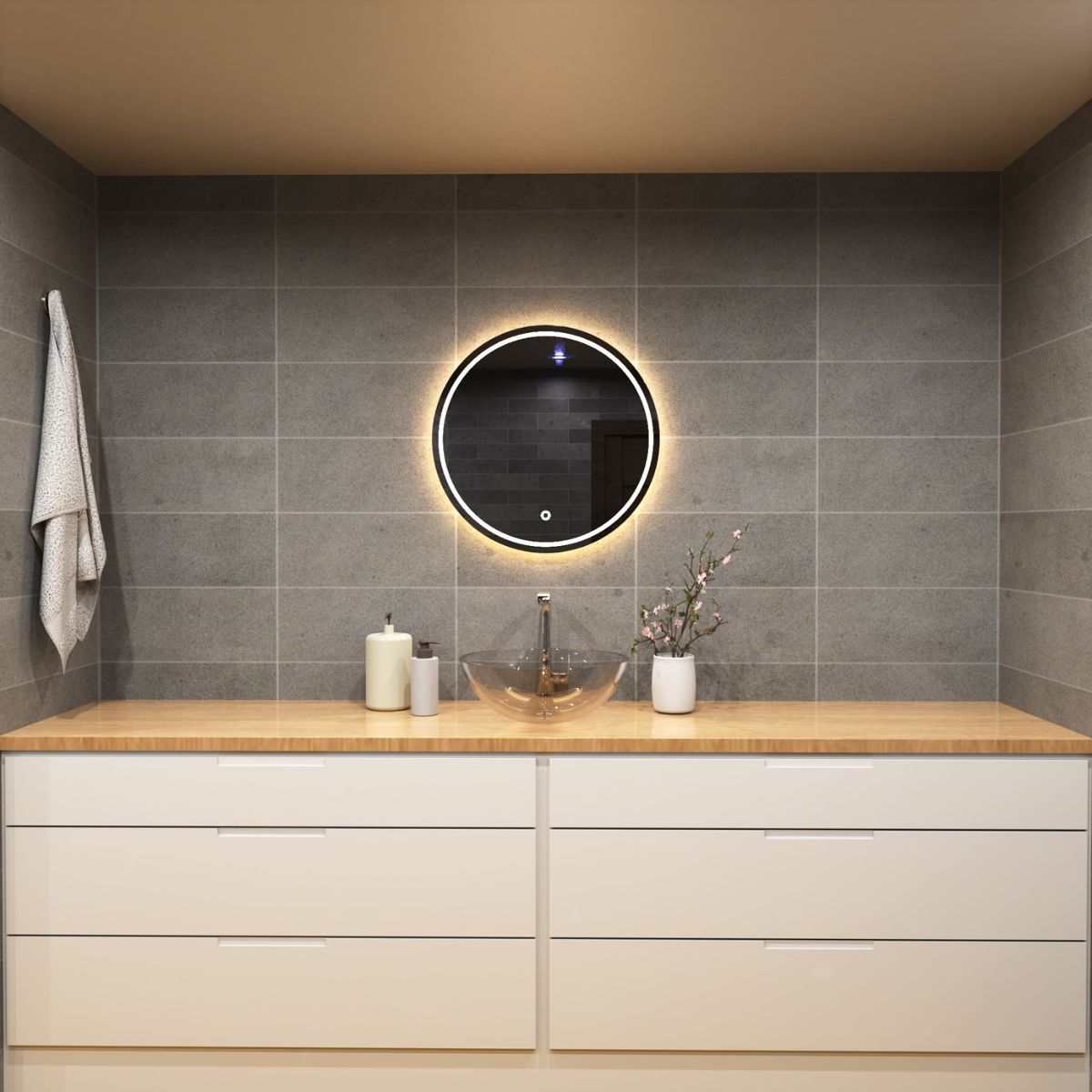
Vanity and basin areas still require protection but offer greater flexibility. IP44-rated LED bathroom mirrors are often suitable, as they are splash-resistant.
For general bathroom lighting outside the main wet zones, lower IP ratings may be acceptable. Still, many homeowners choose IP-rated fittings throughout for consistency and peace of mind (we also recommend this).
Using LED Downlights for Clean, Contemporary Ceilings
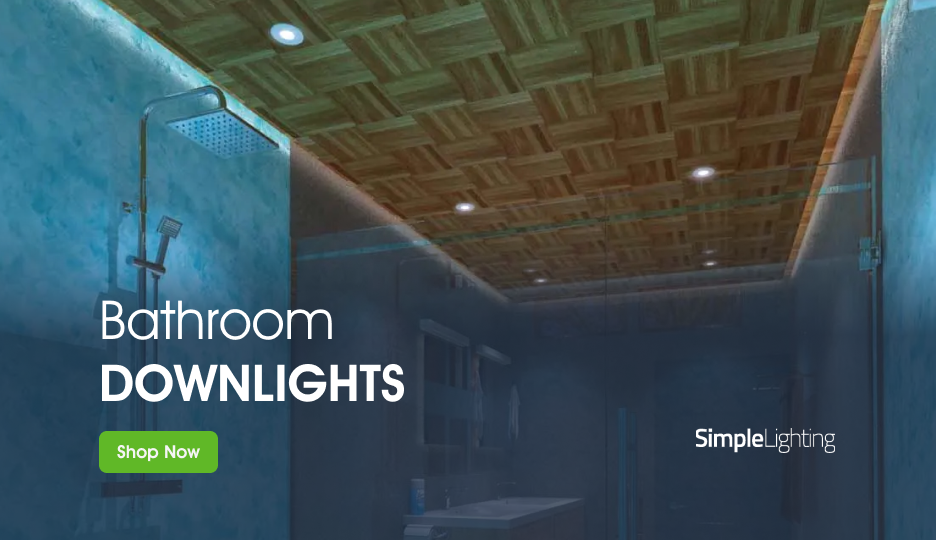
If you’re still using the inefficient single-bulb setup for your bathroom, then this is for you. LED downlights are a natural fit for modern bathrooms. Their recessed design keeps ceilings clean and uncluttered, allowing the architecture and finishes to take centre stage.
When positioned correctly, downlights deliver even illumination without the harsh glare associated with older lighting technologies. LEDs provide instant brightness, excellent colour accuracy, and long-term efficiency, making them ideal for everyday use.
Choosing between fixed and adjustable downlights depends on the layout.
- Fixed downlights work well for general ambient lighting.
- Adjustable versions allow light to be directed towards walls, features, or specific task areas.
Placement Tips for a Balanced Look
Poorly placed bathroom downlights can create unflattering shadows, particularly around mirrors. That’s a no-no, especially if you love doing skincare.
Positioning fittings slightly in front of the vanity rather than directly above helps illuminate the face evenly. Which leads us to the next point…
Spacing is equally essential. Too many downlights can make a bathroom feel clinical, while too few result in uneven brightness. Well-placed fittings create a cleaner, more contemporary finish.
Adding Depth with IP-Rated LED Feature Lighting
While downlights provide structure, feature lighting injects personality into a modern bathroom, giving it “life”. IP-rated LED strips allow light to be woven subtly into the design, adding depth and softness without visual clutter.
The key to achieving a spa-like atmosphere is indirect lighting. Concealed LEDs wash walls and surfaces with gentle light, creating a sense of calm and visual interest without drawing attention to the source (because you can’t see it).
Feature lighting is also an effective way to highlight architectural details, turning shelves, recesses, and textures into quiet focal points.
Popular Feature Lighting Locations
1. Under vanity units, LED strips can create a floating effect that adds elegance while providing practical low-level light.
2. Around baths and niches, they enhance depth and luxury, particularly in the evening.
3. Ceiling coves and ledges benefit from concealed LEDs that bounce light softly across the space, making the room feel taller and more expansive.
Choosing the Right Colour Temperature for Bathrooms
Colour temperature plays a crucial role in how a bathroom feels and functions. Warm white light creates a relaxing atmosphere, while natural white offers clarity and accuracy.
The thing about light is that it can drastically alter skin tone, depending on the colour you’re using. Warm white enhances skin glow, cool white adds paleness, and natural white gives true colours.
Day vs Night Bathroom Lighting
If your bathroom lighting doesn’t change at specific times of day, you need to reconsider upgrading.
In the morning, brighter lighting supports routines that require focus and precision. Clear, well-distributed light around mirrors helps users feel alert and confident.
In the evening, however, softer lighting encourages relaxation. Dimming down overhead lights and relying on feature LEDs transforms the bathroom into a sanctuary rather than a workspace.
Dimmable lighting enhances comfort by allowing the space to adapt effortlessly throughout the day.
Smart and Dimmable Bathroom Lighting for Everyday Comfort
The future of lighting is here, and it’s smart lighting. More modern bathrooms are incorporating smart, dimmable lighting into their designs.
IP-rated LEDs can now be paired with dimmers and smart systems, offering flexibility without compromising safety. Dimming also allows users to fine-tune brightness levels, improving comfort and reducing glare.
Smart controls take this further by enabling lighting scenes tailored to different routines. Think energising mornings versus calming evening baths, all from the same lighting fixtures.
Subtle Automation Ideas
- Low-level late-night lighting provides safe navigation for bathroom visits or midnight snacks without alerting the whole house.
- Timed brightness changes can gently brighten the light in the morning and dim it in the evening to support the circadian rhythm.
- Hands-free convenience, such as motion sensors or voice control, adds a layer of modern comfort while keeping switches clean and uncluttered.
Designing a Bathroom That Feels Modern, Calm and Practical
A well-thought-out bathroom feels effortless, but that ease is the result of careful planning. When lighting is considered early in the design process, it integrates seamlessly with architecture, finishes, and daily routines.
Modern LED downlights and IP-rated LEDs allow homeowners to meet safety standards while achieving a refined, high-end look that’s both practical and stylish.
At Simple Lighting, we believe bathroom lighting should enhance both the aesthetics and functionality of the space.
Explore our massive collection today and start creating a space that supports everyday life while offering moments of quiet luxury, one carefully placed light at a time.
And make sure to check out more posts like this here: Modern Lighting Ideas to Upgrade Your Home in 2026.