
The Rise of Smart Lighting in Modern Home Design
Home design is all about the visuals. And what’s more visual than your lights? Traditionally, homeowners were limited by the scarce lighting options available. But with the rise of LED lighting, wireless connectivity, and IoT (Internet of Things)…
Smart lighting was born and has since become an integral part of home design, offering countless options for lighting different commercial and, most importantly, residential spaces.
It features a powerful blend of benefits that no homeowner can resist:
- Aesthetic and ambience control
- Health and well-being improvements
- Safety and security enhancements
- Energy efficiency and sustainability
- Seamless integration with smart home ecosystems
Smart lighting is a design element that blends functionality and style, making it perfect for home applications.
From Trend to Essential Upgrade
In its early years, smart lighting was considered a novel technology, often viewed as a premium or luxury item, limited only to high-end commercial buildings. Only tech enthusiasts and those who could afford it were keen on getting smart lighting for their homes.
But after its mainstream adoption, smart lighting has rapidly evolved from a “trend” to an essential component of the modern home, highly sought after for its seamless blend of style, flexibility, and energy efficiency.
What once required complex wiring and costly installations can now be achieved with Wi-Fi-enabled LED bulbs, smart downlights, or integrated smart LED strips.
Lighting is no longer a simple utility. Instead, it’s a design tool. One that dramatically affects how a room looks, feels, and functions. And as its popularity grows, smart lighting has moved from “Do I need it?” to “How far can I take it?”
The Shift Toward Personalised Living Spaces
Modern homes place strong emphasis on comfort, ambience, and (most importantly) personalisation. People want spaces they can fully customise, which means they want lights that adapt to them, not the other way around.
Smart lighting satisfies this demand beautifully.
Thanks to LED technology and smart lighting, homeowners can now enjoy options such as adjustable colour temperatures, dimming schedules, scene settings, built-in motion sensors, and voice-activated routines.
Every room can take on multiple moods and functions without the need for multiple light fittings or manual adjustments every time. This is perfect for multipurpose spaces like the living room.
Today’s lighting must be intuitive, responsive, and tailored. Qualities that traditional fittings simply can’t deliver.
How Smart Lighting Elevates the Look and Feel of Any Room
Layered Lighting Made Simple with Smart Controls
Great interior design means great lighting. And we don’t mean adding statement chandeliers, ceiling cove LED strip lights, and intricate wall lights. Those are amazing additions, but good lighting goes beyond just accent lights.
It’s a combination of the three lighting layers: ambient, task, and accent. Achieving this balance used to require several switches and plenty of trial and error. Smart lighting changes that completely.
Introducing: App-based controls. These let you manage every layer of your light simultaneously for a cohesive look. Adjusting intensity? Changing the colour? Shifting the temperature? Do it all in a single app.
Picture these:
- A kitchen can switch from bright, functional task lighting for cooking to warm, ambient tones for evening relaxation with one tap.
- A living room can shift from daily practical lighting to a cosy film-night scene instantly.
Smart systems simplify layered lighting so even beginners can achieve results that feel professionally designed.
Colour-Tunable LEDs for Mood-Centric Design
Modern lighting means utilising different colour temperatures for different moods and functions.
Warm white (2700K-3000K) creates a soft and comfortable atmosphere for relaxation; cool white (5000K–6500K) enhances concentration and visibility; natural white (4000K) is a balance between warm and cool, great for task lighting.
Smart, colour-tunable LEDs let homeowners move between these effects effortlessly. A single room can take on any personality from bright and energising to warm and calming.
RGB smart LED strips are particularly popular in homes, allowing homeowners to customise media walls, coving, shelving, and beds with accent colours, transforming ordinary rooms into remarkable ones.
Clean, Minimalist Interiors with Hidden Smart Fixtures
You won’t hear about modern home design without coming across minimalist interiors. Here’s great news: smart lighting fits this aesthetic perfectly.
Many of the most popular options are discreet or fully integrated:
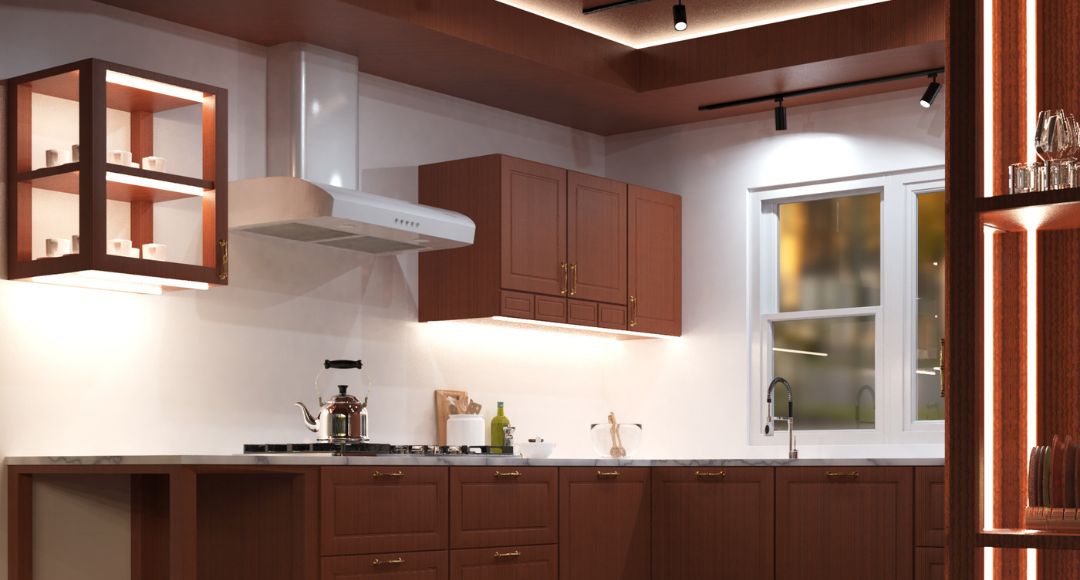
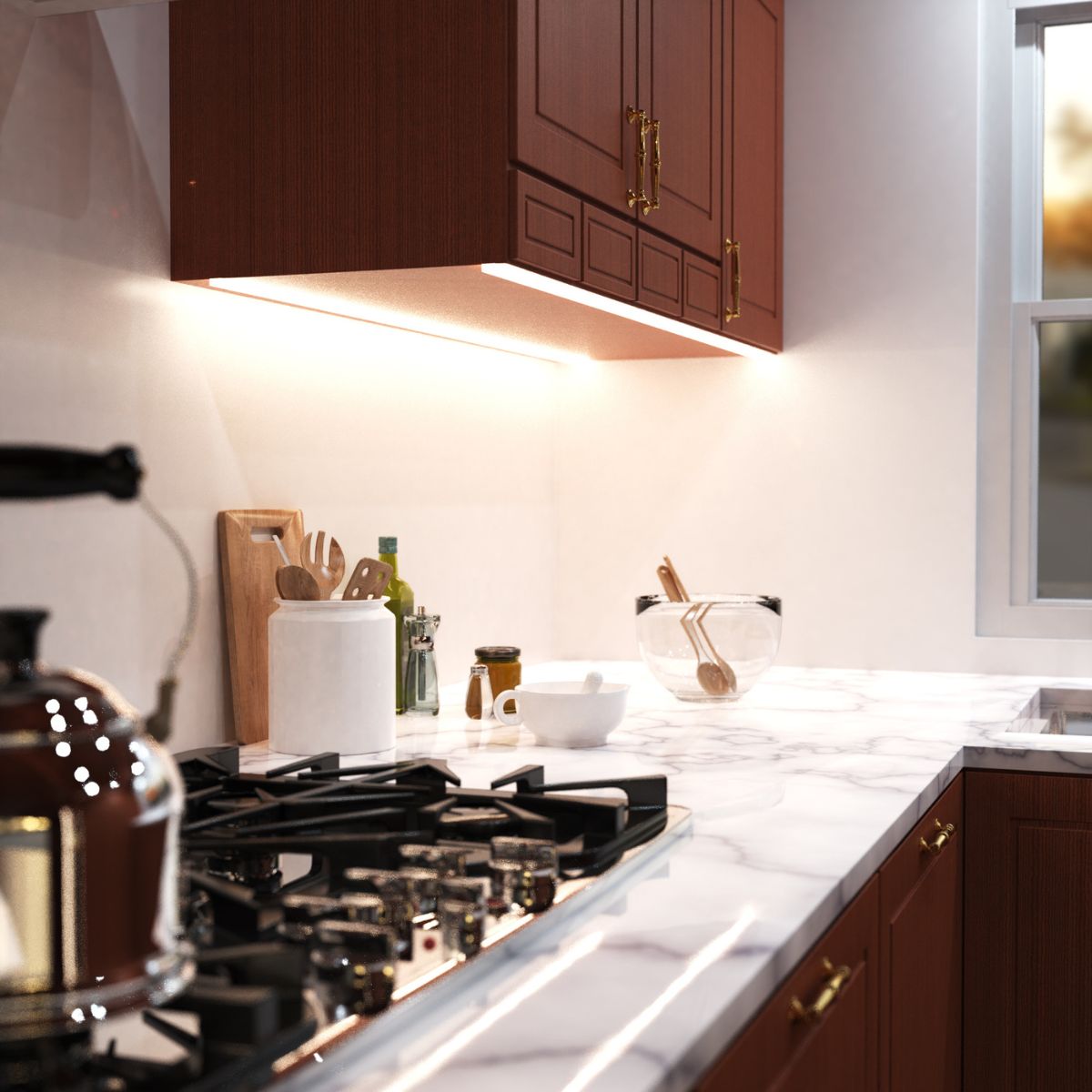
- Under-cabinet LED lighting for kitchens
- Recessed smart downlights that blend into the ceiling
- Concealed smart LED strips for coving, staircases, wardrobes, or bathroom niches
These options (and more) contribute to clean, uncluttered interiors while adding layers of light that elevate the room’s overall decor.
Smart Lighting as a Tool for Energy Efficiency
While smart lighting started off as an aesthetic-centric element (it still does for the most part), its energy-saving potential is just as important, especially in UK homes where efficiency is a key priority.
Automated Dimming and Scheduling
Installing a dimmer means understanding that you don’t need blinding bright light all the time. At the same time, it’s reducing energy consumption without sacrificing comfort. And smart lighting takes this to another level.
Through schedules and routines, homeowners can ensure lights automatically dim in the evening, turn off at bedtime, or operate only during set hours.
Smart scheduling means households waste less energy, especially in rooms frequently left lit, such as hallways, kitchens, or children’s bedrooms.
LED Technology for Long-Term Savings
LEDs already outperform traditional lighting with dramatically lower energy consumption and far longer lifespan. When combined with intelligent controls, the savings multiply.
Accidentally leaving your LED lights running overnight or while you’re on vacation still means a lot of wasted energy. Smart lighting prevents that by automatically turning the lights off when no one’s around, or through set schedules.
This makes smart lighting ideal for households looking to future-proof their energy bills.
Sensors That Eliminate Waste
Smart sensor technology ensures lights are only on when needed. Popular options include:
- PIR (Passive Infrared) sensors – Detect body heat, ideal for bathrooms or corridors
- Microwave sensors – Highly sensitive for larger areas like garages or outdoor spaces
- Daylight (photocell) sensors – Ensure lights remain off when natural light is sufficient
In residential settings, these sensors reduce energy waste by compensating for human error (like forgetting to turn off the lights).
Technology That Enhances Everyday Living
One of the biggest reasons smart lighting is the future of home lighting is its impact on everyday convenience.
Voice Control with Alexa and Google Home
If you don’t have a light yet that grows brighter when you say “Good morning,” then you’re missing out on convenience and, frankly, the cool experience of voice-controlled lighting.
With simple voice commands, you can turn lights on, dim them, adjust colour, or activate preset and saved scenes. No switches and no app, just your voice.
This hands-free convenience is particularly helpful for:
- Busy families
- Those with challenges in mobility
- Anyone juggling tasks in the kitchen
- Homeowners who simply love convenient living
Smart lighting integrates naturally into how people already use technology, making daily routines smoother.
Smart Routines for Different Times of Day
Your smart lighting helps create structure and comfort throughout the day.
Here are some popular routines you can copy:
- Wake-up lighting that slowly brightens like a sunrise
- Evening wind-down modes with warm, low-level lighting
- Work-from-home scenes that improve focus
- Movie or game scenes for a more immersive entertainment experience
- Away routines that turn lights on at set times for security when you’re not home
These tailored experiences transform the home into an adaptive, responsive environment that blends wellness with style.
App Control and Remote Access
Being able to control your lighting from anywhere is convenient and practical. Through app-based systems, homeowners can:
- Check whether they left a light on
- Turn the lights on before arriving home
- Simulate occupancy while away
- Adjust brightness or colour from outside the room
If you’ve got holiday homes or rental properties, remote access is especially valuable for your peace of mind.
Why Smart Lighting Is a Must-Have in New Builds and Renovations
Smart lighting has become a standard feature in modern property development. New homes have, in one way or another, incorporated smart lighting into their build.
Future-Proofing the Home
If there’s one thing that technology does well, it’s evolve rapidly. That’s why homeowners want solutions that will remain relevant for years to come.
Installing smart lighting during a renovation or new build ensures:
- Compatibility with future smart home systems
- A modern living environment ready for technological growth
- Stronger resale appeal
Properties equipped with smart lighting stand out in the housing market. Plus, they won’t get left behind in new technological advances in the years to come.
Design Flexibility for Evolving Needs
Families change, layouts evolve, and design trends shift. Smart lighting adapts to these changes effortlessly, helping you refresh a room’s aesthetic without rewiring or replacing fittings.
Whether turning a spare room into an office or giving the living room a new look, smart lighting remains a great support for evolving lifestyles.
Compatibility with Other Smart Systems
Smart lights can communicate with other smart devices. They can seamlessly integrate with:
- Smart heating
- Security systems
- Doorbells and cameras
- Blinds and shading
- Whole-home automation hubs
This compatibility creates an ecosystem where lighting plays an essential role, providing comfort, convenience, and safety.
Choosing the Right Smart Lighting for a Modern Home
Not all smart lights are made the same. And with so many options available, it can be easy to feel overwhelmed.
Here’s a simple guide to help you:
Smart Bulbs vs Smart Downlights vs LED Strips
Each option has its strengths:
- Quick and easy to install
- Great for lamps and small upgrades
- Perfect for beginners
2. Smart Downlights
- Discreet, modern, ideal for kitchens, bathrooms, and living rooms
- Offer a clean, modern look
- Often includes advanced tunable and dimming features
3. Smart LED Strips
- Extremely versatile and design-led
- Ideal for coving, under cabinets, media walls, stairs, and shelving
- Offer dramatic accent lighting and limitless colour options
Understanding Colour Temperature and Output
Warm vs cool light
Remember this: The colour of your lights will dictate the mood of the space. Here’s what we mean:
- Warm white (2700K–3000K) – creates a relaxing, cosy atmosphere.
- Cool white (4000K–6000K) – bright, energising, great for task areas
Lumens vs watts
One of the biggest misconceptions in lighting is that higher watts mean brighter lights. Not with LED lights. Watts is the measure of energy used by the fitting. Instead, what you want to look for is lumens, the real measurement for brightness.
Choosing the right colour temperature and output ensures each room delivers both function and atmosphere.
Why Quality Matters in Smart Lighting Systems
Not all smart lighting is created equal. Look for high-quality systems. They offer:
- Reliable connectivity
- Smooth dimming
- Accurate colour rendering
- Long lifespan
- Intuitive apps and firmware updates (your smart lighting relies on updated systems)
Quality is crucial for performance, safety, and long-term satisfaction. Another reason to invest in reputable UK lighting suppliers like Simple Lighting.
Smart Lighting Is Here to Stay
Modern Homes Demand Smarter Solutions
Smart lighting is no longer a futuristic concept. It’s a practical, stylish, and energy-efficient approach that enhances modern living. From aesthetics to comfort to daily convenience, smart lighting elevates the home in ways traditional lighting simply can’t match.
Check out Smart Lighting Ideas for a Connected, Convenient Home for more lighting insights.
Small Changes Create Big Design Impact
Even small steps can transform your space. You can start the switch to smart lighting with a single smart bulb or just a single room. Learn and get comfortable with the functions and scenes, and then expand.
With Simple Lighting and our wide range of fittings, switches, and accessories, now is the perfect time to begin your journey into the future of home lighting.