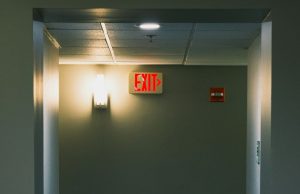


When was the last time you looked at emergency lighting with appreciation?
Nobody bats an eye at emergency lighting until they need it. When it works, nobody notices. When it fails, the consequences are immediate, visible, and often unforgiving.
As we move into 2026, emergency lighting compliance in the UK has taken on new weight. We’re not saying that something has changed, but that enforcement, accountability, and real-world performance are more notable than ever.
In the year 2026, “good enough” will not be good enough. Expectations rise, and standards sharpen. This guide explains what’s changing, what’s not, and what emergency lighting compliance really means in practice today.
Why 2026 Is a Turning Point for UK Emergency Lighting
The core standards governing emergency lighting have been in place for years. Yet something fundamental has shifted. We don’t have any new legislation, but the biggest change is how existing rules are being interpreted, enforced, and applied in buildings.
Post-Grenfell fire safety scrutiny continues to influence enforcement culture across the UK. Fire authorities, insurers, and local councils are less willing to accept theoretical compliance. The emphasis is now firmly on evidence. Does the system work? Is it maintained? Can you prove it?
In other words, compliance should not be just on paper; it should be taken seriously well before an incident occurs.
This has driven a broader shift from reactive fixes to proactive compliance. Instead of upgrading only when an inspection flags a problem, many organisations are reassessing their emergency lighting strategy ahead of audits, refurbishments, or changes in occupancy.
In 2026, emergency lighting is no longer treated as a background technicality. It’s part of the wider fire safety conversation. What this means in practice is simple: Systems that technically met requirements years ago are now being reassessed against how buildings are actually used today.
And this leads to the question: Does your lighting still support safe evacuation under realistic conditions?
Are There New UK Emergency Lighting Laws in 2026?
This is one of the most common questions and misconceptions, and it’s worth addressing clearly.
There are no entirely new UK emergency lighting laws coming into force in 2026. (Or at least that we’ve heard of.) However, that does not mean nothing has changed.
There’s a stronger interpretation and enforcement of existing regulations and standards. Fire risk assessments are increasingly carried out with modern expectations in mind, even in older buildings.
Now, landlords and building owners cannot get away with the phrase “it was compliant when installed” anymore.
Older installations are now being assessed against current guidance, building usage, occupancy levels, and evacuation strategies. If an emergency lighting system no longer adequately supports safe escape, it is deemed insufficient, regardless of its age.
In short, compliance is no longer frozen in time. It is a living requirement that must reflect the building as it exists today, not as it existed when the lights were first fitted.
The Key Standards You Must Meet in 2026
Emergency lighting compliance in the UK is governed by several regulations and standards. That’s why understanding how they work together is crucial.
BS 5266-1: The Core Emergency Lighting Standard
BS 5266-1 remains the backbone of emergency lighting design, installation, and maintenance in the UK.
Its purpose is straightforward. To ensure that, in the event of a power failure, people can safely and quickly evacuate a building without panic, injury, or confusion.
The standard sets out where emergency lighting is (legally) required, including:
- Escape routes and corridors
- Stairways and changes in level
- Open areas used as escape routes
- Fire safety equipment points
- Toilets and plant rooms
The standard also defines performance expectations. Emergency lighting should typically operate for a minimum of three hours in most non-domestic buildings, providing sufficient illumination to guide evacuation.
In practice, BS 5266-1 asks a simple question: If the main power fails at the worst possible moment, can everyone see where to go?
The Regulatory Reform (Fire Safety) Order 2005
The Fire Safety Order is where legal responsibility truly sits.
It places clear duties on the “Responsible Person”. This could be a landlord, employer, managing agent, or building owner, depending on how the premises are occupied and managed.
Their responsibilities include:
- Carrying out and regularly reviewing a fire risk assessment
- Ensuring emergency lighting is appropriate for the premises
- Keeping systems maintained and tested
- Rectifying faults without unreasonable delay
Failure to comply can result in enforcement notices, fines, or prosecution.
In practice, this means that installing emergency lighting alone is not enough. You must demonstrate that it is maintained, tested, and suitable for your building’s current risks.
Remember that emergency lights are only useful when they work.
Building Regulations and Approved Document B
Approved Document B supports the Building Regulations and focuses on fire safety design, including means of escape.
Emergency lighting plays a critical role here as it supports:
- Clearly defined escape routes
- Safe travel distances
- Effective use of fire exit signage
- Integration with the overall fire strategy
Lighting, signage, and layout must work together. A well-lit exit sign will be deemed useless if the route leading to it disappears into darkness during a power cut. (AKA emergency lights did not work.)
In 2026, inspectors are increasingly looking at this relationship holistically rather than treating emergency lighting as a standalone feature.
What’s Being Enforced More Strictly in 2026
In 2026, testing and documentation are under sharper scrutiny than ever.
1. Monthly functional testing is expected to be carried out consistently. This involves briefly simulating a power failure to confirm that emergency luminaires operate correctly.
2. Annual full-duration tests, where systems are run for their full rated duration, are also a firm expectation.
3. Accurate logbooks are critical. Paper records remain acceptable, but digital records are increasingly favoured due to their clarity and audit-readiness.
4. Missing entries, vague notes, or inconsistent testing schedules are common reasons for enforcement action.
5. Another area of increased focus is coverage. Emergency lighting is now routinely expected in spaces previously overlooked, such as:
- Plant and boiler rooms
- Larger toilets and washrooms
- Storage areas forming part of escape routes
- Back-of-house corridors in retail and hospitality
The idea is whether someone unfamiliar with the building could safely exit the premises during a blackout. If the answer is no or unclear, the current lighting setup is likely to be questioned.
Self-Test and Smart Emergency Lighting: The 2026 Compliance Advantage
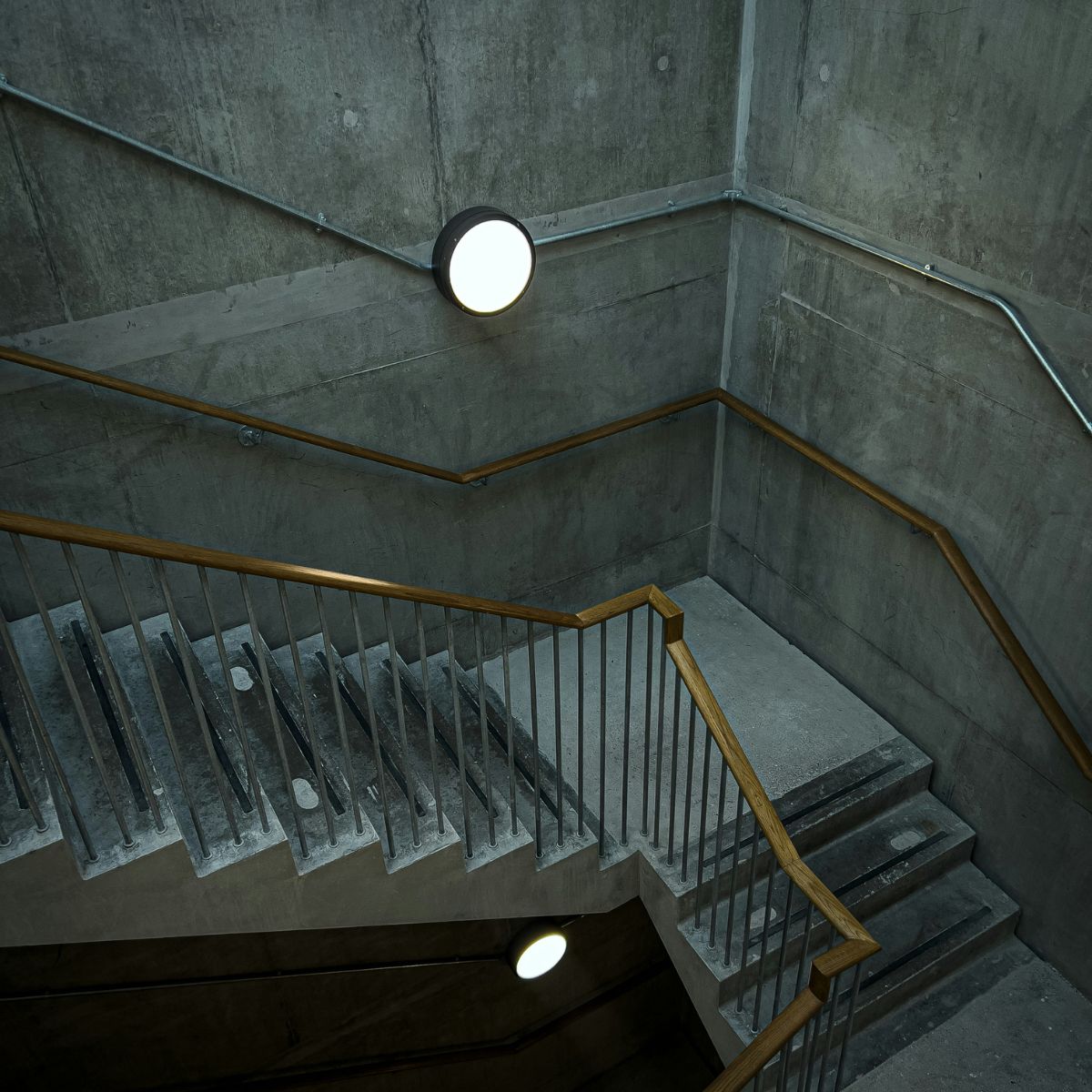
One of the most significant shifts in emergency lighting strategy is the growing preference for self-test and smart systems.
What does that mean?
Traditional (manual) testing relies heavily on human consistency. Missed tests, incomplete records, and forgotten faults are common. Not to mention the cost of running these manual tests.
Modern emergency fixtures feature self-testing, which directly addresses these issues.
These systems automatically run routine functional and duration tests, displaying pass or fail status via LEDs or central monitoring platforms. Some systems generate digital reports that can be accessed instantly during inspections.
The advantages are practical:
- Reduced human error
- Reliable, consistent testing schedules
- Clear evidence for audits and insurers
- Faster fault identification
For landlords, facilities managers, and building owners, self-test systems significantly boost confidence in compliance and reduce administrative burden.
In 2026, self-test emergency lighting is no longer a premium add-on but a basic requirement for buildings seeking to comply with standards.
Common Emergency Lighting Compliance Mistakes Still Caught in 2026
Despite clearer guidance and better technology, the same mistakes continue to appear in inspection reports.
1. Relying on old installations is one of the most common. Emergency lighting that was adequate years ago may no longer meet current layout, occupancy, or use requirements.
2. Missing or incomplete test records. Even a perfectly functioning system can be deemed non-compliant if its compliance cannot be proven.
3. Incorrect luminaire placement. Emergency lights installed too far apart, positioned incorrectly near hazards, or absent at key change-of-level points undermine the system’s purpose.
4. A persistent misconception is that maintained lighting replaces emergency lighting. While maintained fittings can form part of a compliant system, they must still meet emergency lighting performance criteria.
5. Finally, poor battery replacement cycles are often overlooked. Batteries degrade over time, and failure to replace them proactively results in systems that technically exist but functionally fail.
These mistakes are rarely intentional. They are usually the result of assumptions, outdated information, or a lack of ownership. That’s why it’s important to be faithful to maintenance and test schedules.
Who Needs to Act Now?
Emergency lighting compliance in 2026 affects a wide range of people and sectors.
1. Landlords and managing agents carry responsibility for shared and common areas. 2. Commercial property owners must ensure systems suit current tenants and layouts.
3. Facilities managers are expected to maintain consistent testing regimes across portfolios.
Certain sectors that face close scrutiny are the following:
- Retail and hospitality, where public occupancy is high
- Healthcare settings, where evacuation can be complex
- Education buildings, with varied occupancy patterns
- HMOs and multi-occupancy residential buildings
If people sleep, work, or gather in a building, emergency lighting is not optional; it’s required. In 2026, waiting for an inspection to reveal shortcomings is an increasingly risky strategy.
How to Future-Proof Your Emergency Lighting Compliance
Future-proofing emergency lighting is less about predicting new laws and more about building on what’s already set in place.
Here are a few steps to future-proof your compliance:
1. Start with an updated fire risk assessment that reflects how the building is used today. Layout changes, increased occupancy, or altered escape routes all affect lighting needs.
2. Consider upgrading older fittings to modern LED emergency luminaires. LEDs offer improved reliability, lower energy consumption, and better light quality.
3. Self-test systems provide long-term compliance confidence, particularly where manual testing is inconsistent or resource-heavy.
4. Working with lighting specialists ensures designs are practical, compliant, and tailored to real-world use rather than generic assumptions.
5. Most importantly, plan upgrades before inspections force action. Proactive compliance is almost always less disruptive and less costly than reactive fixes.
Emergency Lighting Compliance Checklist for 2026
For a quick reference, here is a practical checklist to help keep emergency lighting compliance on track:
- Confirm emergency lighting is installed along all escape routes.
- Ensure coverage includes plant rooms, toilets, and storage areas where required.
- Carry out and record monthly functional tests.
- Complete annual full-duration tests.
- Keep clear, accurate logbooks or digital records.
- Replace batteries proactively, not reactively.
- Review older installations against the current building use.
- Consider upgrading to LED and self-test emergency lighting.
- Align emergency lighting with your fire risk assessment.
We’ve attached a downloadable PDF of the checklist to make inspections smoother and compliance easier to demonstrate.
Click here: Emergency Lighting Compliance Checklist for 2026
As expectations continue to rise, emergency lighting is no longer just about meeting minimum requirements. It is about protecting people, demonstrating responsibility, and building confidence in your fire safety strategy.
In 2026, exploring compliant emergency lighting options can be a valuable first step toward long-term peace of mind.
Simple Lighting offers a wide range of compliant emergency lighting options to give you and your tenants peace of mind, especially during emergencies.
For more content about lighting compliance this 2026, click on this link: Emergency & Safety Lighting Compliance Guide.