
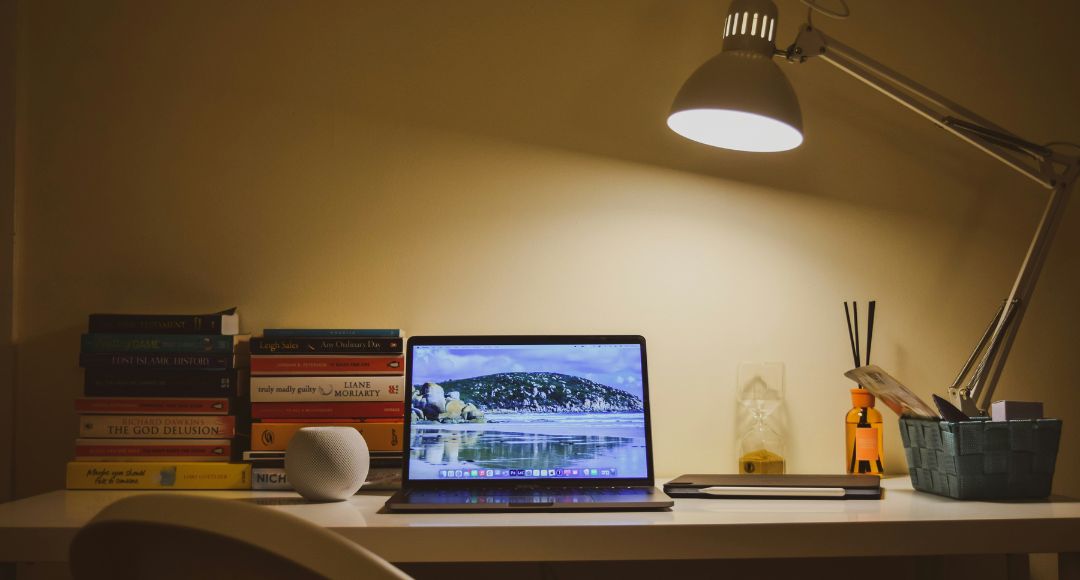
The pandemic was a catalyst for the “boom” of home offices in the UK and around the world. They have arguably become one of the most essential rooms in the house, used for long Zoom calls (that could have been an email), deep-focus work, and late-night bursts of creativity.
Yet lighting is often treated as an afterthought in home offices. A single ceiling light or an old desk lamp simply does not (and will not) cut it anymore. Smart lighting offers a better way forward. This guide will help you achieve that for your home office.
Why Home Office Lighting Matters for Comfort and Productivity
If there’s one thing you need to know about lighting, it’s that is sets the mood and tone of the space. What that means for your home office is that it has a direct and powerful impact on how you feel and perform at your desk.
Poor lighting forces your eyes to work harder, which often leads to eye strain, headaches, dry eyes, and that familiar afternoon slump. That’s just what happens when you spend hours switching between screens, documents, and video calls.
Good lighting, on the other hand, supports focus and well-being. Bright, balanced light helps you stay alert during mentally demanding tasks, while softer light can ease stress during longer sessions.
The proper setup also improves posture and comfort, as you are less likely to lean forward or squint at your screen. A key part of this is finding the right balance between natural and artificial light.
That’s right. When it comes to brightening up your home office, nothing beats daylight. The role of smart artificial lighting? It supplements natural light, which shifts throughout the day and starts to fade as evening approaches.
Common Lighting Problems in Home Offices
If your home office feels uncomfortable, you likely share the same lighting pitfalls as other homeowners.
1. Glare from screens or windows is one of the most common problems. A light source directly in front of your monitor can cause reflections that cover the screen.
2. Harsh overhead lighting is another issue. A single bright ceiling light creates strong shadows and high contrast, which can feel clinical and tiring.
3. Poor colour temperature also plays a role. Warm light can feel cosy but may reduce alertness during focused work, while overly cool light used all day can feel sterile and cause fatigue.
Using Tunable White (CCT) LEDs for Task Lighting
Tunable white, also known as Correlated Colour Temperature (CCT) lighting, is one of the most effective tools for a comfortable home office.
These LEDs allow you to adjust the colour temperature of the light, typically ranging from warm white (2700K) to cool white (6500K), depending on your needs.
The difference?
🔵 Cool white light supports concentration and alertness, making it ideal for focused tasks such as writing, analysing data, or tackling long email sessions.
🟠 Warm white light is gentler on the eyes and works well for reading, planning, or winding down at the end of the day.
Placement is also an essential factor to consider in getting the most out of CCT lighting.
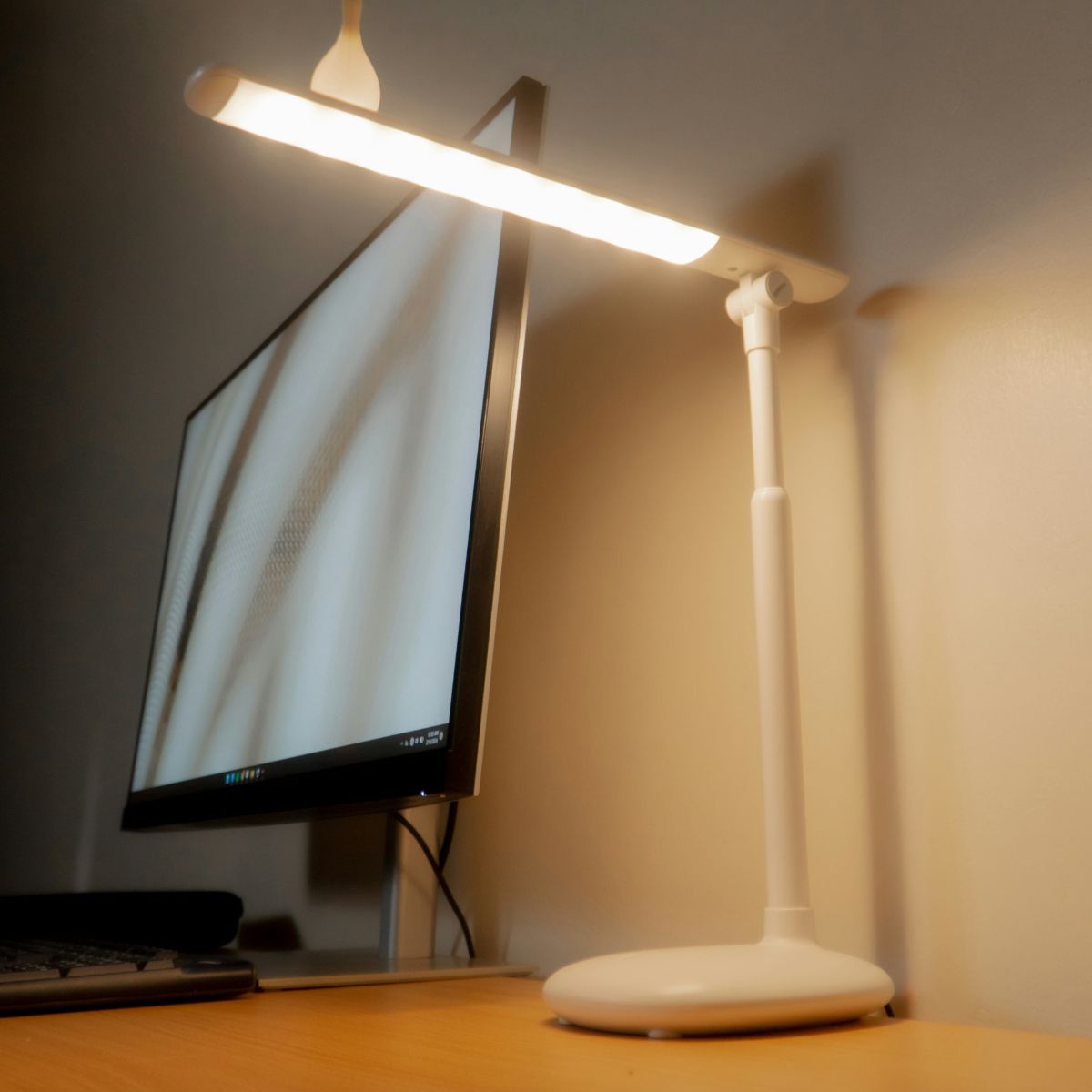
- Desk lamps with adjustable heads are excellent for targeted task lighting, allowing you to direct light exactly where it is needed.
- Under-shelf LED lights can illuminate your workspace without taking up desk space.
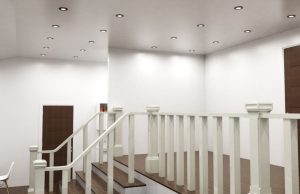
- Ceiling downlights with tunable white technology deliver even ambient light that fills the room without overwhelming it.
Tips for Reducing Eye Strain
Lighting is all about balance. Too much of it, and you get glare. Too little, and your eyes strain and get fatigued.
A few tips to keep in mind:
1. Position lights so they do not reflect directly onto your monitor. Ideally, light should come from the side or slightly behind your work monitor to avoid glare and harsh contrasts.
2. Indirect or diffused lighting is much easier on the eyes than exposed bulbs. Light bounced off walls or ceilings creates a softer, more even glow that reduces fatigue during long sessions.
3. Dimmable lighting gives you control throughout the day. Instead of one fixed brightness level, you can adjust your setup as your tasks change, whether you are editing documents, attending video calls, or reading.
RGB LED Lighting for Mood and Focus Zones
RGB lighting often gets associated with gaming setups or dramatic effects, but when used subtly, it can significantly improve comfort in a home office. The key is restraint and purpose.
One of the most effective uses of RGB LEDs is ambient backlighting behind monitors. This soft glow reduces the contrast between a bright screen and a dark wall, making it easier for your eyes to adapt during long work sessions.
Shelves, bookcases, or wall panels can also benefit from gentle colour accents that add depth without distraction.
Pro Tip: Soft colour accents help break up the visual monotony of a screen-heavy environment. Instead of staring at the same white and grey tones all day, a hint of colour can make the space feel calmer and more engaging.
Colour Psychology in Home Offices
Colour and psychology come in pairs. Different colours influence mood and focus in various ways, and RGB lighting allows you to use this intentionally. Here are some ideas:
Cool blues and greens are known for promoting calm and concentration. Used lightly as accent lighting, they can support focus during demanding tasks.
Warm yellows and soft oranges create a more relaxed atmosphere, ideal for reading, planning, or decompressing after intense work sessions.
The most important rule is subtlety. RGB lighting should complement your main task lighting, not compete with it.
Smart Lighting Controls to Enhance Productivity
This is where things get interesting. Smart controls turn good lighting into great lighting. Instead of manually adjusting switches throughout the day, you can create lighting that adapts automatically to your schedule and tasks.
Dimming, scheduling, and scene presets allow you to switch instantly between different work modes. Picture this: A focused work scene might use bright, cool white light, while a video call scene softens the light and reduces shadows on your face.
Integration with apps and voice assistants helps you adjust your lighting without leaving your chair.
Automation takes this a step further.
- Morning routines can trigger brighter, cooler light to simulate daylight and support alertness.
- In the evening, lighting can gradually dim and warm, helping you transition out of work mode.
Automating Light for Workflows
With automation, you make your lights adjust to how you work, not the other way around. For example, you might use bright, cool white lighting during focused work blocks, then switch to softer warm white for reading documents or attending video calls.
Smart systems make these transitions seamless. Daylight sensors can adjust artificial lighting based on available natural light.
- On bright days, lights dim automatically to reduce glare and save energy.
- On darker days, they increase output to maintain a consistent environment.
Placement and Layering Tips for Effective Home Office Lighting
Layered lighting is the foundation of a comfortable home office. Instead of relying on a single light source, combine multiple layers for balance and flexibility.
Here’s what we mean:
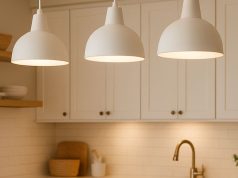
1. Ambient lighting provides general illumination for the room. This could be ceiling downlights or a diffused pendant.
2. Task lighting focuses on your immediate work area. Desk lamps and under-shelf lights ensure clear visibility without straining your eyes.
3. Accent lighting adds depth and comfort. LED strip lights behind monitors, shelves, or along walls soften contrasts and make the space feel more inviting.
A few tips to consider:
- Avoid placing lights directly above or behind your monitor. Side lighting or indirect ceiling lighting works much better for screen-based work.
- Using LED channels, strips, and desk-mounted solutions helps keep your setup tidy. A neat lighting layout reduces visual clutter and supports a more focused mindset.
Small Office Hacks
Small or multi-purpose home offices need smart solutions.
Indirect ceiling lighting helps control reflections in compact rooms. By bouncing light off the ceiling, you create a sense of openness while avoiding glare on screens.
LED strips under shelves maximise space by adding light without bulky fixtures. Adding light to shelves and cabinet tops also widens the space… or at least how it feels.
Adjustable floor lamps can serve multiple purposes, from task lighting during the day to ambient lighting in the evening.
Common Mistakes to Avoid in Home Office Lighting
Here are the mistakes that can undermine your home office lighting setup:
1. Overly harsh overhead lighting creates strong shadows and discomfort over time. It should be balanced with softer, indirect sources.
2. Ignoring colour temperature balance leads to lighting that feels either too dull or too clinical. Adjustable CCT lighting solves this.
3. Poorly positioned task lighting often causes unwanted glare. Placement matters as much as brightness!
4. Using static, single-brightness lights for long work sessions ignores the natural changes in your body’s energy levels. Adjustable, smart lighting helps you regulate your energy throughout the day.
Smart Lighting for Comfort, Focus, and Productivity
Smart lighting transforms the home office from a functional corner into a supportive workspace in different ways:
- Tunable white LEDs reduce eye strain by adapting to your lighting needs.
- Subtle RGB accents improve comfort and add character to your home office.
- Smart controls and automation make it easy to stay focused without constant manual adjustments.
- Layered lighting brings everything together into a balanced, flexible setup.
With a bit of planning and the right smart lighting choices, your home office can become a place where comfort and productivity finally work in harmony. Explore Simple Lighting’s website for high-quality smart lights to start transforming your home office today.
And don’t forget to browse through Smart Lighting Ideas for 2026 and How to Upgrade Your Home for more smart lighting insights you can’t miss out on.