
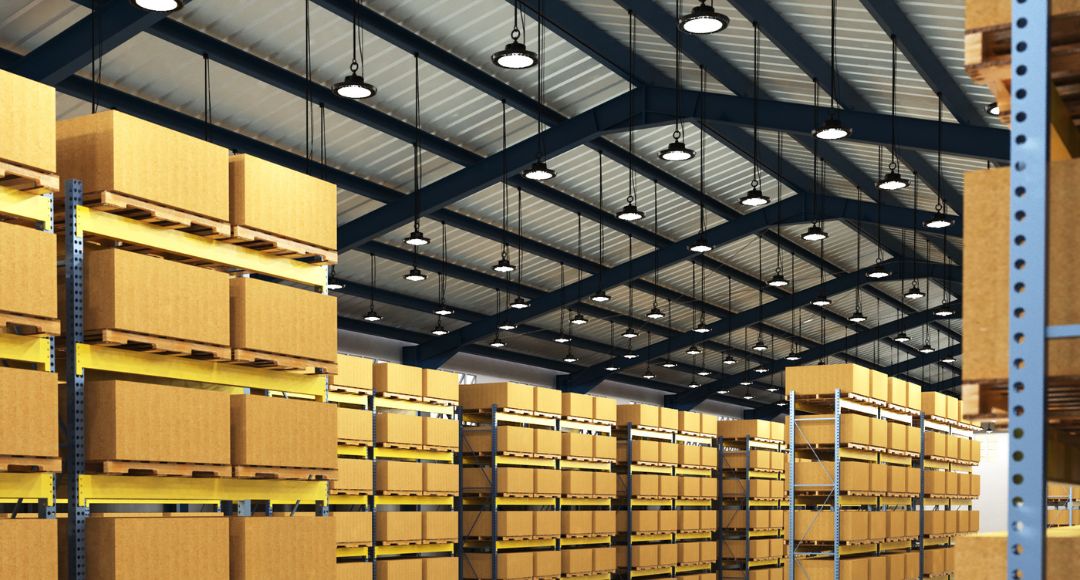
If you’ve ever tried walking into an active warehouse, you’ll notice several things: the space, the lined-up pallet racks, and the astounding number of items or boxes. But one thing you will also notice is that warehouse lighting is not just a background detail.
Light shapes how safely people move, how quickly goods are picked, and how much it costs to run the building every single day. And the light fixture that sits right at the centre of it all? High bay LED lighting.
It’s the two-edged sword of warehouse lighting. Get it right, and the space works smoothly. Get it wrong, and the problems add up fast.
This guide is meant to give clear answers to questions about choosing the right solution for your warehouse lights… without the technical jargon. Here, we will explain what high bay LED lights for warehouses are, why it matters so much in warehouse environments, and how to choose a fixture that will last.
What Is High Bay LED Lighting (And Why It Matters in Warehouses)
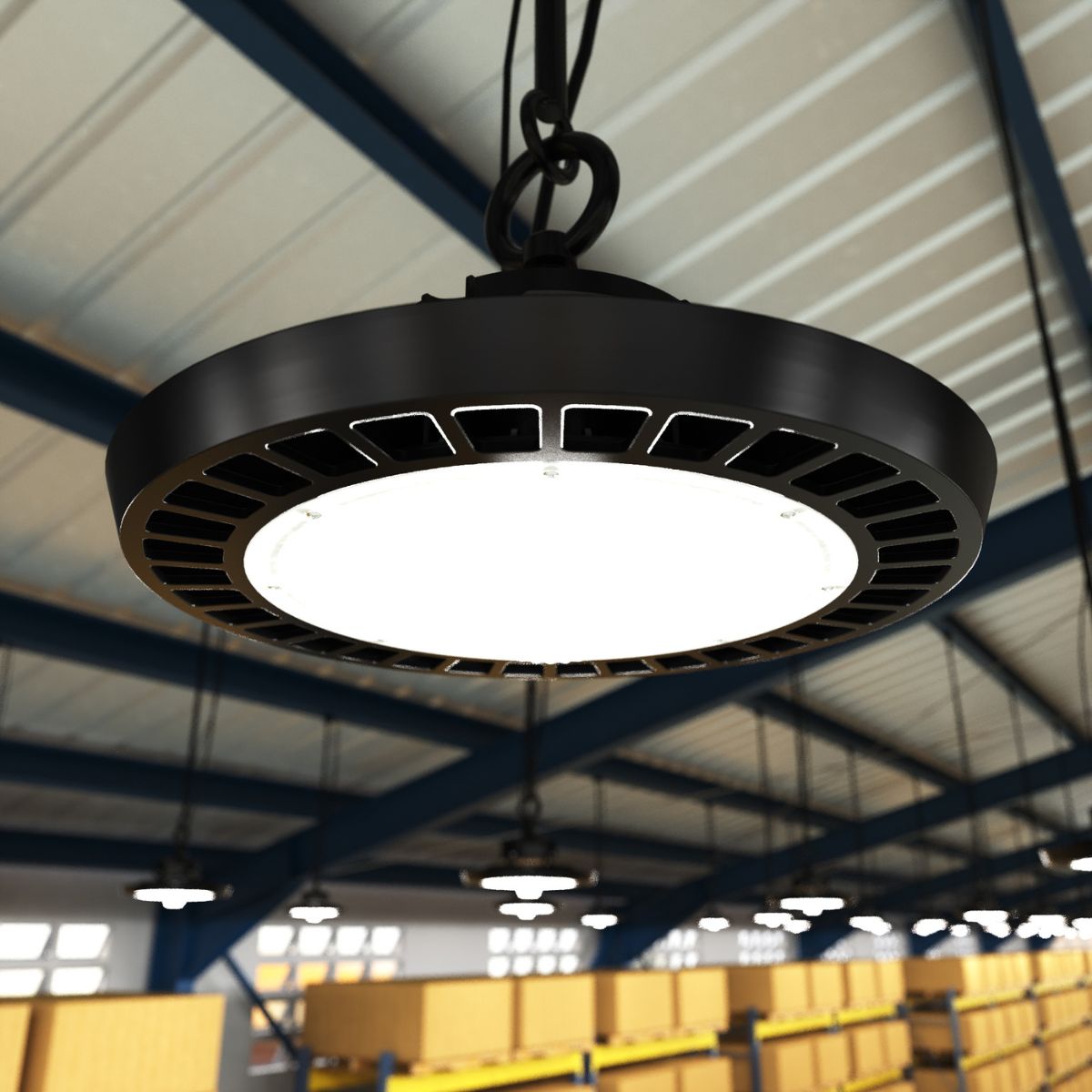
High bay LED lights, as the name suggests, are designed for spaces with high ceilings (such as warehouses) ranging from 6 metres to 12 metres or more. These light fixtures are designed to illuminate large floor areas by evenly spreading light from above.
High bay lights are not to be confused with low bay lights. The latter are used in buildings with lower ceilings (3.6-6 metres). Examples include workshops, retail spaces, or smaller industrial units.
It’s advisable not to use low bay lights in high-ceiling spaces, as they neither have the power nor the optics needed to illuminate large spaces like warehouses properly. Doing so often leads to dark patches, glare, and wasted energy.
Challenges of Warehouse Lighting
Warehouses are demanding environments for lighting.
- Ceilings are high.
- Aisles can be narrow.
- Pallet racks create shadows.
- Activity levels vary throughout the day.
- Lights are often on for long hours, sometimes 24/7.
All of these factors put pressure on the lighting system, and high bay lighting is designed to meet those demands. Modern LED high bay lights are a massive leap from traditional warehouse lighting, delivering strong, controlled light at a far lower energy use.
LED high bays also last much longer, which is good news for warehouses, since changing lights can mean disruption of operations.
The Real Cost of Choosing the Wrong High Bay Lights
The thing about lighting is that problems typically don’t show up on day one. They creep in over time, quietly increasing costs and risks. That’s why installing the right lights is crucial, especially for warehouses and other industrial settings.
Choosing the wrong high bay lights can seem like a minor mistake at the time of purchase, but the long-term impact can be massive.
Energy Waste and Rising Operational Costs
One of the most common causes of rising electricity bills is incorrect wattage. Some buyers still focus on watts rather than light output, assuming higher wattage means better lighting. That couldn’t be further from the truth.
In reality, wattage only tells you how much power a fitting uses, not how much brightness it can produce.
If you install lights that consume more power than what you need, you pay for that extra energy every hour they are switched on. Across a large warehouse, that can quickly add to hundreds or even thousands of wasted pounds a year.
LED high bay lights are already far more efficient than traditional metal halide or fluorescent lights, using up to 70% less energy while delivering the same or even better light levels.
Warning: We’re not saying all LEDs will save you money. Proper lighting specifications still matter. Oversized LEDs can still waste your money
Poor Visibility, Safety Risks and Compliance Issues
Lighting quality has a massive impact on safety.
- Poorly lit aisles increase the risk of trips, collisions, and other accidents.
- Glare can cause eye strain, fatigue, and headaches.
- Uneven lighting creates dark spots where hazards might be hard to spot.
Under health and safety regulations, UK employers have a duty to provide adequate lighting in workspaces, including warehouses. Regulators like the Health and Safety Executive (HSE) expect workplaces to have suitable and sufficient lighting for the tasks being carried out.
The focus is on the outcome (health and safety), such as visibility, comfort, and safety, rather than specific lighting products.
This is why choosing the wrong beam angle, colour temperature, or light level can make it harder to meet those expectations, as these affect productivity. Staff work more efficiently when they can clearly see labels, floor markings, and equipment without a problem.
Maintenance Headaches in High-Ceiling Spaces
One important thing often overlooked is maintenance. In places with high ceilings, like warehouses, changing a light is much harder than changing a light bulb at home. There are many factors to consider: the height, the equipment to be used (like a scissor lift), and the disruption it will cause.
High-quality LED high bay lights may cost more upfront, but you get more of your money’s worth in the long run. Their significantly longer lifespan and better performance reduce maintenance frequencies, costs, and disruption.
How to Choose the Right High Bay LED Lighting for Your Warehouse
There’s no one-size-fits-all high bay light for all warehouses. The secret to great warehouse lighting still lies in properly matching the lighting to how the space works.
Ceiling Height and Mounting Type
The first step is knowing the ceiling height. The higher the fitting is mounted, the more light output is needed to achieve good illumination at floor level.
Here’s a rough guide:
- Warehouses with ceilings around 6 to 8 metres often need lower lumen outputs.
- Medium-height spaces between 8 and 10 metres require higher-output fittings.
- Lofty ceilings above 10 or 12 metres need powerful high bays.
The mounting type is also a consideration. Some high bays are suspended from chains or brackets, while others are surface-mounted directly to the ceiling.
- Suspended high bays bring the light source closer to the working area, which is useful in spaces with towering ceilings.
- Surface-mounted options are simpler and often used where the ceiling height is more moderate.
Lumen Output vs Wattage (Don’t Fall for the Watt Trap)
Choosing a higher wattage to get a brighter light is an outdated idea, especially now that LED lighting has replaced traditional bulbs and changed how brightness is measured. Watts only tell you how much electricity a fixture uses.
Lumens is the most important figure to understand. It tells you how much visible light a light source produces, AKA brightness.
Remember: Two LED high bay lights can both be rated at 150 watts, but produce very different light outputs. Always compare lumens, not watts.
Here’s a simple guide:
- Small warehouses or low high-bay areas may require fittings with a range of 15,000 to 20,000 lumens.
- Medium-sized warehouse lights often fall in the 20,000 to 30,000 lumen range.
- Large distribution centres with high ceilings may require 30,000 lumens or more per fitting.
Again, these numbers are per fitting, not the total for the whole area.
Disclaimer: Lighting levels would still depend on the layout, racking height, and the tasks being carried out in the space.
Beam Angle: Wide vs Narrow Distribution
Beam angle is how wide or narrow the light is spread or distributed in the space.
Wide beam angles spread light over a larger area. They are ideal for open floor spaces, packing areas, and loading zones where even coverage is needed. Wide-angle lighting also means softer light.
Narrow beam angles focus light more tightly. Light is condensed, so they’re sharper and crisper. They are ideal for racking aisles, directing light down between the shelves while reducing spill into nearby aisles.
Careful! Using the wrong beam angle can cause shadowing or uneven lighting. Don’t be afraid to mix angles to fit the different needs of each warehouse zone.
Colour Temperature and CRI for Warehouse Tasks
Colour temperature controls the mood of the space (how it feels) and how well people can see details.
Most warehouses use either 4000K or 5000K lighting. The difference?
- 4000K produces a natural white light that is comfortable for the eyes for long periods. It is often used in general storage and packing areas.
- 5000K is a cooler, brighter white that improves contrast. It can be helpful in areas where accuracy is critical.
The Colour Rendering Index (CRI) measures how accurately colours appear under artificial light. Good colour rendering is important in warehouses, as it helps staff read labels more clearly, accurately identify different packaging, and spot differences between products.
A CRI of 80 or above is usually recommended. (Highest CRI is 100.)
Smart Controls and Sensors: Are They Worth It?
Smart lighting controls are becoming more common in warehouses, but are they necessary? The key is knowing when they add real value.
Motion Sensors for Low-Traffic Zones
Lighting that turns on only when needed is an energy-saving choice. Motion sensors are ideal for areas that are not used constantly, such as storage aisles, loading bays, or secondary spaces.
When no movement is detected, the lights dim or switch off. When movement is detected, the lights return to full output.
This can deliver significant energy savings without affecting safety or productivity.
Daylight Sensors for Roof-Lit Warehouses
Many warehouses have roof lights or skylights that bring in natural daylight. What daylight sensors do is they adjust artificial lighting levels based on how much natural light is available.
This helps keep the lighting levels on the ground level balanced. In other words, no over- or under-lighting.
Smart Lighting ROI: When It Makes Sense
Large warehouses can maximise ROI through massive savings from less energy waste and reduced maintenance.
Small warehouses, on the other hand, often see more immediate results from improvements in safety and productivity.
LED High Bays vs Traditional Warehouse Lighting
Metal halide and fluorescent high bays were the go-to for warehouse lighting solutions until they struggled after the arrival of modern LED.
- Metal halide lights take time to warm up, lose brightness over time, and consume a lot of energy.
- Fluorescent fittings are more efficient but still fall short in terms of lifespan and performance in high ceilings.
LED high bay lights, on the other hand, offer:
- Instant full brightness
- Consistent light output
- Far longer lifespans
Though a bit more costly upfront, when you consider the full life-cycle cost and lower maintenance, LEDs are almost always the most cost-saving option.
Using LED lighting also supports sustainability movements, offering lower carbon emissions, which the UK has been pushing for.
Common Mistakes to Avoid When Buying High Bay LED Lights
You can avoid long-term issues by knowing what simple things to watch out for.
1. Over-lighting “just to be safe” – Too much light wastes energy and can cause glare, negatively affecting production.
2. Ignoring IP ratings can be a problem in dusty or damp environments.
3. Choosing the cheapest option often leads to poor drivers and early failures. Quality matters more than the upfront cost.
4. Failing to plan for future layout changes – Modular, adaptable lighting systems make it easier to adjust as the warehouse evolves.
Final Checklist: Choosing the Right High Bay LED Solution
Here’s a simple checklist to help you make the final decision on which LED high bay light to choose:
- Consider ceiling height and mounting method.
- Focus on lumen output, not wattage.
- Choose beam angles that suit aisles and open areas.
- Select a colour temperature that matches the tasks.
- Think about maintenance (cost and disruption).
- Assess whether sensors or smart controls can add value.
- Plan for future changes to layout or use.
Choosing high bay LED lighting does not have to be complicated. If you’re exploring options or looking for tailored advice, Simple Lighting is here to help. A well-lit warehouse is not just brighter; it’s more efficient, and it works better.
You can find more posts like this here: Industrial & Warehouse Lighting – The Complete UK Guide.