
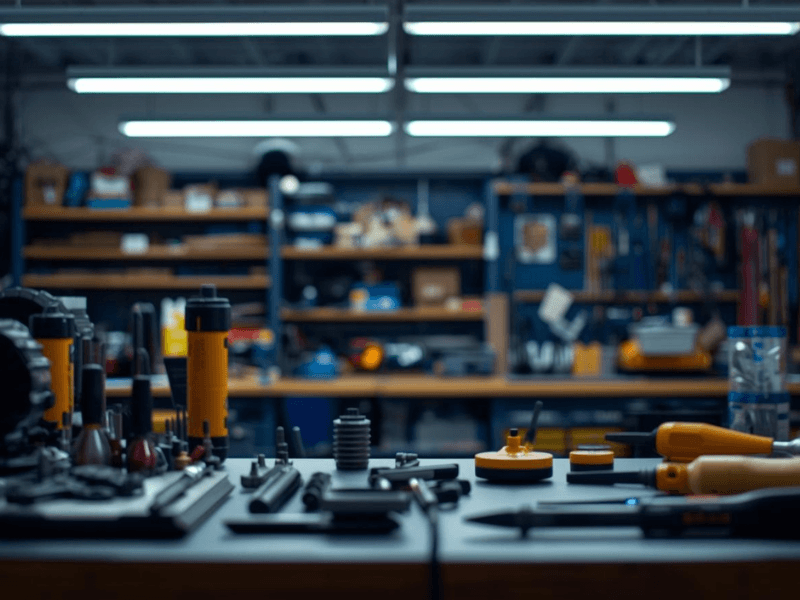



Warehouses are busy, high-risk environments. One bad lighting can mean a safety hazard for everyone inside.
In a warehouse setting, good lighting is not a “nice to have” but a core part of safety, efficiency, and yes, legal compliance.
Despite this, many warehouse sites still rely on old and inefficient fittings, rough brightness estimates, or the “it’s always been fine” mindset. But pit that against today’s regulatory climate, and that approach carries real risk.
In this guide, we’ll go over everything you need to know about UK warehouse lighting standards and the lux level requirements for compliance. We’ll also run through how modern LED lighting is the solution for easier, more cost-effective compliance.
Why Warehouse Lighting Standards Matter More Than Ever
Lighting standards are more than just guidelines on where to mount your high bay lights. They’re part of workplace risk management. In a warehouse, poor lighting increases the chance of slips, trips, collisions, picking errors, and even eye strain and fatigue.
Shadows in a warehouse could mean an unseen tripping hazard. Overly bright light could mean glare. Uneven light makes judging distance and movement harder. All of these issues add up over time.
Warehouse Lighting and Compliance
From a legal perspective, lighting is a key element in workplace safety. If an accident happens and lighting is found to be inadequate, it can quickly become a compliance issue. Investigations, claims, and enforcement actions would often examine whether lighting met recognised standards.
There is also growing scrutiny from the Health and Safety Executive (HSE), Britain’s national regulator for workplace health and safety. With this regulatory board, “It looks bright enough” is no longer a defensible claim.
And non-compliance can be costly through:
- Workplace accidents and lost time
- Injury claims and higher insurance premiums
- Failed inspections and improvement notices
- Unplanned retrofit costs when lighting is required to be upgraded quickly
Good lighting, by contrast, supports safer working, smoother operations, and peace of mind. Simply put: Compliance is not about ticking a box; it is about reducing risk across the whole site.
Who Sets Warehouse Lighting Standards in the UK?
Understanding where lighting requirements come from is key to better compliance. But it’s important to note that there is no single rulebook; rather, two key authorities shape lighting expectations.
HSE (Health and Safety Executive) Requirements
The HSE enforces workplace safety law in the UK. Specifically, under the Health and Safety at Work Act 1974, employers have a duty to provide a safe working environment for their employees and visitors.
Lighting is part of this duty. While HSE does not publish fixed lux numbers for every task, it expects lighting to be:
- Sufficient for the work being done. Detailed work requires higher brightness.
- Maintained in good working order.
- Designed to avoid glare, shadows, and eye strain.
During inspections, HSE often refers to recognised standards to judge whether lighting is suitable. This is where formal lighting standards come in.
BS EN 12464-1: The Key Lighting Standard for Workplaces
BS EN 12464-1 is the primary British and European standard for lighting in indoor workplaces, including warehouses.
The standard sets recommended lux levels for different tasks and areas, along with guidance on:
- Uniform lighting
- Glare control
- Colour rendering index (CRI)
- Visual comfort
This is widely accepted as the benchmark for compliance.
- Lighting designers use it.
- Inspectors refer to it.
- Insurers recognise it.
So, if your warehouse lighting aligns with BS EN 12464-1, you are on solid ground.
UK Warehouse Lux Level Requirements (By Area)
Given that warehouses are usually massive, busy areas, it is a common misconception that all warehouses need to have a consistently bright light throughout.
But modern, efficient warehouse design dictates that not all areas need the same lighting.
General Warehouse Storage Areas
The usual requirement for storage areas is 100-200 lux.
Maintained, uniform lighting is especially important here. Dark patches between aisles or uneven light on racking faces can make navigation harder and even hide hazards.
What you want here is constant visibility on the racks and floor space, not pools of light surrounded by shadows.
Picking, Packing & Sorting Zones
High activity zones like this one have a higher visual demand. Staff need to read labels, identify products, and work accurately for long periods, so lux levels of 300-500 are commonly recommended.
Proper lighting in these areas reduces errors, improves productivity, and enhances safety.
Loading Bays & Dispatch Areas
Loading bays cater to people and vehicles. That’s why good lighting is critical here for proper loading and safety.
The lux requirement here is 300, with careful attention to contrast and glare. Poor lighting can make it difficult for drivers to see pedestrians or judge distances when reversing. Excessive glare can be just as dangerous as low light.
Walkways, Stairwells & Emergency Routes
Walkways and stairs usually require at least 150-200 lux. These areas are often overlooked, yet many accidents happen here.
If the walkways or stairs are also emergency routes, they must be supported by compliant emergency lighting. This ensures safe evacuation in the event of an emergency when the main power supply fails.
Lux Levels Explained (Without the Technical Jargon)
Lux is simply a unit of measurement for how much light falls on a surface. It should not be confused with Lumens, but they’re related since one lux equals one lumen per square metre.
It practically answers the question of: “How much usable light is reaching the working area?”
This is why wattage is no longer the basis for measuring brightness. A powerful fitting mounted too high or badly positioned can still deliver poor lux levels on the floor or work surface.
Lighting Misconceptions
A common misconception is that if a space feels bright, it must be compliant. The problem is that human perception is rarely reliable. Our eyes can adjust quickly, and brightness near the ceiling does not always translate to good task lighting below.
Another misunderstanding is relying on average lux readings. A warehouse might meet the average target but still have deep shadows or overly bright spots. Areas for highly detailed work will need higher lux levels than general storage areas.
Remember: Compliance is about measured performance, not guesswork.
Common Warehouse Lighting Compliance Mistakes
Even well-managed warehouses can fall into these lighting traps:
Relying on Old or Failing Lighting Systems
Older fluorescent or High-Intensity Discharge (HID) systems lose output over time. Lamps dim, ballasts fail, and fittings collect dust. The typical lumen depreciation process: lighting that was once compliant may no longer meet standards.
This change can be slow, creating a false sense of compliance, until the next test, when the problem is noticed, and levels are already far below the requirement.
Not to mention that these old fittings consume much more power than modern LED high bay lights.
Poor Light Distribution and Shadowing
Meeting an average lux target is not the goal (and it’s not enough). A warehouse that meets the target but has poorly spaced fittings, incorrect beam angles, or blocked light paths is still not a safe and productive environment.
Racking aisles are a common problem where the light hits the top of the rack but fails to reach the floor. This makes movement below more hazardous, even if overall readings seem acceptable.
Ignoring Maintenance & Testing
Lighting is not a fit-and-forget system. A blown bulb may go unnoticed in high ceilings, and dirt build-up can significantly reduce output.
Emergency lighting is the same; regular testing and record-keeping are required. Missing documentation or overdue checks can lead to compliance issues during inspections.
How LED Lighting Makes Compliance Easier (and Cheaper)
Modern LED lighting has changed how warehouses approach compliance.
Consistent Lux Levels Over Time
There’s no contest: LEDs maintain their light output better and longer than traditional lights. Instead of sudden lamp failures or rapid dimming, they offer long, predictable performance.
This stability makes it easier to maintain compliant lux levels year after year, reducing the risk of not realising you’ve fallen below standards.
Better Control Over Light Distribution
LED fittings come with precise beam angles designed for warehouse applications. Narrow beams suit high-bay racking aisles. Wider beams work well in open areas.
This means that light goes where it’s needed, reducing wasted light and maximising energy use. It also helps avoid over-lighting, which wastes energy without improving compliance.
Smart Controls for Compliance & Energy Savings
Sensors and smart controls add another layer of support for warehouses. Occupancy (movement) sensors ensure lights are only at max output when actively in use. Daylight sensors prevent over-lighting near doors or roof lights.
From a compliance perspective, controlled systems are easier to audit. They show a clear, intentional approach to maintaining standards while reducing running costs.
How to Assess If Your Warehouse Lighting Is Compliant
If you are unsure about compliance, a structured approach helps.
A professional lux survey (or light assessment) is the most reliable method. This involves measuring light levels across different areas and comparing them against standards. It provides clear evidence for inspections and insurance purposes.
Also, watch out for these warning signs:
- Frequent lamp failures or visibly dim areas.
- Complaints of eye strain or headaches.
- Increased picking errors or near misses.
- Noticeable shadows in aisles or walkways
Upgrading Lights
Replacing or upgrading warehouse lights can be disruptive… but it doesn’t have to be. Retrofitting LEDs can be done in phases or outside peak hours. With proper planning, you can improve compliance without halting operations.
Warehouse Lighting Compliance Checklist
Use this short checklist to review your current setup for compliance:
✅ Each warehouse zone has the correct lux levels.
☑️ There’s even light distribution with minimal shadowing.
✅ Glare is controlled, especially in loading bays.
☑️ Emergency lighting is installed and tested.
✅ Regular cleaning and maintenance plans are in place.
☑️ Documentation is available for inspections.
If any box is hard to tick with confidence, it may be time to review your lighting.
Meeting UK Warehouse Lighting Standards with Simple Lighting
Meeting lighting standards is not complex or costly with the right products and guidance. Secure these two, and compliance becomes a natural part of warehouse management.
Simple Lighting offers compliant LED solutions designed for the UK market. From high-bay fittings for storage areas to targeted lighting for picking zones and loading bays, each solution delivers the right lux levels where they matter most.
Remember that warehouse lighting is not about chasing perfection. All you need is lighting that works harder for safety, efficiency, and peace of mind.
Turn compliance into strength, not worry, with the right warehouse light fixtures from Simple Lighting.
Also check out posts like this by clicking on this link: Industrial & Warehouse Lighting – The Complete UK Guide.


0 comments