
If you didn’t know, fire safety is a legal requirement here in the UK… and lighting plays a big role in that.
Picture this: it’s been three hours since the sun has set. Suddenly, the power cuts and smoke fills the corridor. When panic sets in, what’s the first thing you look for? A source of light.
Fire safety lighting can be the difference between calm evacuation and dangerous confusion… and yet it’s also one of the most misunderstood parts of fire safety.
Many assume they’re only for large buildings or establishments, or that normal lights are enough. But in times of emergency, those are the first ones that give out.
This guide “clears the fog” around fire safety lighting, explaining what it actually is, why it’s legally required in the UK, and what you need to do to stay compliant without overwhelming yourself with the technicalities.
What Is Fire Safety Lighting?
In reality, this is a broad term that applies to more than one type of lighting. Simply, fire safety lighting is any lighting designed to help people escape safely if there’s a fire, especially when power is cut.
Here’s the common misconception: when people hear “fire safety lighting,” they think it only means emergency lighting. It’s a part of it, yes, but it’s not the whole picture.
Here’s what fire safety lighting includes:
Emergency lighting
Obviously. These are lights that automatically switch on when the mains power fails. They are usually battery-backed and designed to provide enough light for people to move safely (typically three hours).
Escape route lighting
You know when they jokingly say, “Don’t go towards the light”? You do exactly the opposite of that during an emergency. These are the lights that you follow towards the exit.
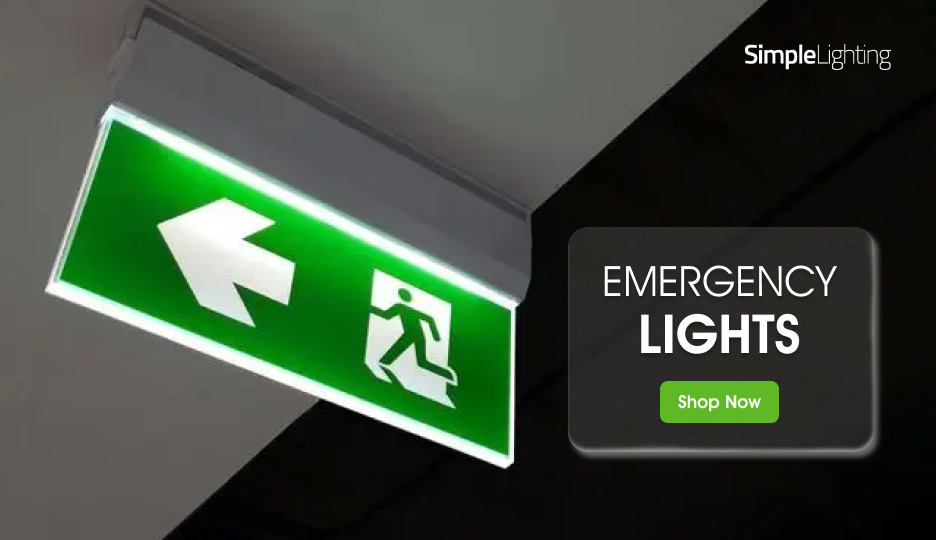
Emergency exit signs
Exit signs literally point you to the exit. You see the arrow, that’s where you go. They are especially important in buildings that are frequented by people who may not know the layout.
Normal vs Fire Safety Lighting
Fire safety lighting and normal lighting serve very different purposes. Normal lighting is for everyday use and focuses on comfort, visibility, and productivity. Fire safety lighting, on the other hand, is about survival. It’s designed for emergencies when things go wrong.
In the event of a fire, a power failure is common. Add smoke that reduces visibility, and people will understandably panic, leading to bad decisions, especially when there are no visual cues to guide them to safety.
Fire safety lighting ensures people can still see escape routes, avoid obstacles, and reach a place of safety.
Is Fire Safety Lighting a Legal Requirement in the UK?
Yes. For most non-domestic buildings in the UK, fire safety lighting is required by law.
What the law requires is for people to escape safely in the event of a fire. And lighting plays a direct role in this. If people cannot see where they are going or find exits during a fire, the building might not be considered safe.
The building owner, landlord, or employer is considered the Responsible Person with the duty to provide safe escape routes. And it’s not in the “We hope you fulfil this role well,” kind of responsibility, but more like “You are legally required to fulfil this role, or else there will be consequences.”
Safety lighting myths
A common misconception is that small buildings don’t need fire safety lights. They’re not. This legal duty is not dependent on building size. If a power failure or fire could make it hard for people to escape safely, then fire safety lighting is required.
Another misconception is that if a building only has a few occupants, lighting isn’t needed. Guess what? Not true. Even a small office, shop, or café may need emergency lighting, especially if there are internal corridors, stairs, or areas without natural light.
The Key UK Regulations Behind Fire Safety Lighting
Fire safety lighting requirements stem from multiple safety standards that work together. You’re not expected to memorise each one, but understanding where the rules come from helps a great deal.
The Regulatory Reform (Fire Safety) Order 2005
This is the primary legislation governing fire safety in non-domestic premises in England and Wales. Non-domestic, meaning they’re not focused on homes or households.
This fire safety order requires a “responsible person” to manage risks and ensure safety. A core requirement is providing a safe means of escape. Lighting is a key part of that.
If the escape route is dark, confusing, and unsafe during a power failure in an emergency, then the responsible person is not being as responsible as they’re required to be.
Non-compliance with the Fire Safety Order can mean penalties or even prosecution in serious cases.
BS 5266 Emergency Lighting Standards
BS 5266 is the British Standard that explains how emergency lighting should be designed, installed, tested, and maintained. They’re basically your benchmark for compliance.
If you follow BS 5266, you are generally considered to be meeting your legal duties under fire safety law.
This standard covers where emergency lighting is required, such as escape routes, open areas, stairways, and rooms without windows. Brightness levels, positioning, and duration requirements are also part of the standard.
Importantly, it highlights the importance of regular testing and maintenance as a core part of compliance.
Building Regulations & Approved Document B
Approved Document B focuses on fire safety, including escape design. Of course, lighting is part of this design. It needs to support clear routes, exit visibility, and safe movement during evacuation.
In existing buildings, Building Regulations link closely with fire risk assessments. And even if a building is old (especially when it is), the Responsible Person must ensure that escape routes remain safe.
Fire safety lighting is often required to bridge gaps between old layouts and modern safety expectations.
What Fire Safety Lighting Is Legally Required?
The exact requirements depend on the building, its use, and the risks identified in the fire risk assessment. However, some types of lighting are commonly required in most non-domestic premises.
Emergency Lighting
These are the light fixtures you barely notice. They’re installed as a backup for when normal lights fail during a power cut.
This is typically installed in:
- Escape routes and corridors
- Stairways and changes in level
- Windowless rooms or areas with little natural light
- Areas where people may be unfamiliar with the layout
Two main types to look out for:
Maintained emergency lighting – These lights stay on during regular operations and stay on during a power cut. They’re often used for exit signs and in public places like cinemas.
Non-maintained emergency lighting – Works differently from its maintained counterpart. These lights only come on when the power fails, staying turned off during normal operations.
Both types are legal, as long as they are suitable for the space and meet the required standards.
Emergency Exit Signs
When your building lacks an obvious escape route, these are legally required. Place these in areas where someone unfamiliar with the building might hesitate, guess, or go the wrong way during an emergency.
Exit signs must be clearly visible, correctly positioned, and most importantly, illuminated. There are options with built-in lighting, like the ones Simple Lighting has. The simpler ones don’t, so they need lighting from another fixture to be perfectly visible.
High-Risk Task Area Lighting (If Applicable)
In dangerous workplaces, such as those with heavy machinery, harmful chemicals, or hot equipment, a sudden power cut can cause serious injury or worse.
High-risk task area lighting provides enough light for people to safely shut down equipment or move away from danger during a power failure.
Take note, though, that this type of lighting is not required in every building. Many offices and shops will not need it, but factories and industrial sites often do.
What Fire Safety Lighting Is Not Legally Required (But Often Confused)
Fire safety lighting can be confusing and, at times, even overwhelming. But when in doubt, just add more lights, right? Wrong! That’s not always true.
Below are some of the other myths of fire safety lighting:
1. Decorative lights are emergency lighting. Feature strips or ambient wall lights might look impressive, but they can’t replace proper emergency and exit lights.
2. Standard or normal everyday lights are enough. During a power cut, these are the first ones to go, leaving you in the dark during an emergency.
3. More lighting equals better compliance. Overlighting doesn’t improve safety. Fire safety lighting is about proper coverage, not brightness for its own sake.
Testing, Maintenance & Record-Keeping Requirements
So you installed your fire safety lights. What’s next?
If you thought you were done just because you have emergency lights and exit signs set up, you’re in for a surprise.
Monthly & Annual Testing Duties
One thing to remember: Emergency lighting must be tested regularly. There are two tests you need to do.
Monthly tests are short functional checks. This test is done to confirm that the lights come on when the power fails. It’s a test to quickly identify apparent issues like lights not turning on or batteries not working.
These tests typically last only 30 seconds to a minute, so they’re not as disruptive as the annual tests.
Annual tests are full-duration tests, usually lasting three hours. As you might know, batteries degrade over time. This test is performed to determine whether the fixture can provide light for its rated duration.
Testing can often be carried out by the “responsible person”, such as trained staff, facilities managers, or maintenance teams.
Fire Safety Lighting Logbooks
All testing, maintenance, and faults must be recorded in a logbook. Inspectors expect to see clear records showing:
- Test dates
- Test results
- Any issues found
- Actions or repairs carried out to address said issues
- Who input the records
Both paper and digital logbooks are acceptable, as long as records are accurate and accessible. Missing or incomplete records are one of the most common compliance failures.
Who Is Responsible for Fire Safety Lighting Compliance?
Responsibility sits with, you guessed it, the Responsible Person, of course. This is usually:
- The employer, for workplaces
- The building owner or landlord
- A managing agent or facilities manager
In rented premises, responsibility may be shared between landlord and tenant, depending on the lease agreement.
In multi-occupancy buildings, responsibility is often divided between common areas and individual units.
This responsibility should be clear to everyone involved, as confusion does not remove legal responsibility.
Common Fire Safety Lighting Compliance Failures
Fire authorities see the same problems time and again. It’s easy to fall victim to the most common failures. Avoid these at all costs:
1. Missing or poorly placed exit signs. Pretty common, especially after layout changes. A corridor that once led straight to an exit may now turn a corner, but signage hasn’t been updated.
2. Untested emergency lights. Batteries fail over time, and without testing, issues go unnoticed, putting lives in danger.
3. Outdated fittings. Older emergency lights may no longer meet current standards or may not provide adequate light levels. It’s like having a false hope installed on your premises.
4. Missing documentation. A major red flag. Even if the system works, missing or inconsistent records can pose a compliance issue, often leading to further investigation.
How to Stay Compliant Without Overcomplicating Things
Fire safety is crucial, but it doesn’t need to be stressful. Here are some things you need to consider:
1. Modern LED emergency lighting is more efficient, long-lasting, and reliable than its traditional counterparts. It reduces energy use and maintenance costs while improving performance.
2. Self-test emergency lights simplify testing by automatically checking themselves and displaying clear status indicators. This reduces human error and saves time.
3. Regularly reviewing your Fire Risk Assessment (FRA) helps ensure lighting remains suitable as building use changes.
4. Working with lighting specialists can also make compliance easier. They understand regulations, product requirements, and practical installation, saving you from long-term headaches.
Fire Safety Lighting Compliance Checklist
Here’s a simple checklist to keep your fire safety lighting compliant.
- Are emergency lights installed where needed?
- Are escape routes clearly lit and signed?
- Are exit signs visible and maintained?
- Are the monthly functional tests completed?
- Are the annual full-duration tests completed?
- Are results recorded in a logbook?
- Are actions taken for issues found?
- Are the actions recorded in the logbook?
- Is the Fire Risk Assessment kept up to date?
Here’s the downloadable PDF: Fire Safety Lighting COMPLIANCE CHECKLIST
Fire safety lighting is about preparation, not panic. When properly designed, installed, and maintained, it quietly does its job, guiding people to safety in emergencies.
Explore compliant fire safety lighting solutions today with Simple Lighting.
Also check out more safety lighting insights from this guide: Emergency & Safety Lighting Compliance Guide.