
UK winter mornings are, for lack of a better word, challenging. Aside from the warm embrace of the bed, making it hard to get up, it can feel like starting the day at midnight.
You know how winter is: the sun rises later, natural light is weaker, and bathrooms often become the darkest, most sluggish-feeling rooms in the house. Have you ever tried to shave, apply makeup, or simply splash water on your face under dull lighting? Not the ideal atmosphere.
In this guide, we’ll explore how bright, well-planned LED lighting can transform gloomy winter mornings into clearer, calmer, and more energising starts to your day.
Why Bright Bathroom Lighting Matters More in Winter
Do you notice how even a spacious bathroom feels cramped and suffocating when it’s poorly lit?
Poor lighting in winter bathrooms can lead to:
- Low visibility when shaving, grooming, or applying makeup
- Slower, groggier start to your day
- A colder, less inviting atmosphere
Bright, well-positioned LED lighting completely changes that experience. It creates clarity, boosts alertness, and makes your morning routine feel smoother and more efficient. A well-lit bathroom is more than a functional space. It becomes a mood-lifter.
The Science Behind Light and Morning Alertness
Light can directly affect your mood and alertness. In other words, it has a direct link to how awake you feel within the space. Specifically, it’s the colour and brightness level of your light.
Bright, cool-toned light tells your brain that it’s time to be alert and active. It gently suppresses melatonin (the sleep hormone) and encourages your body to switch into “day mode.”
Here’s what we mean in simpler terms:
Dull light = sluggish mornings
Bright, cool light = clearer thinking and faster wake-ups
This is why a dimly lit bathroom on an already gloomy winter morning is a recipe for being late for work or school. Upgrading your bathroom lighting in winter can make a noticeable difference in your energy levels, especially on dark, cold days.
Choosing the Right Brightness for a Wake-Up Bathroom
Brightness matters more in winter. You want enough light to eliminate shadows, brighten your reflection, and create an open, airy feeling for your bathroom… without the glare, of course.
It helps to understand a few basics when it comes to lighting:
- Lumens measure brightness (not watts). Higher lumens means brighter light.
- Beam angle affects how wide the light spreads. Wider angles tend to be softer, while narrower angles produce sharper, more “dense” light.
- Layering ensures that your space is not flat and dull.
How Many Lumens Does a Winter Bathroom Need?
Here are practical brightness ranges to aim for during darker months:
Ceiling lighting (general lighting):
- Around 400-600 lumens per square metre. A standard bathroom typically requires 1,500-3,000 lumens, depending on size (2,000 lumens on average for a standard five-square-metre bathroom).
Mirror and vanity lighting:
- Aim for 400-800 lumens directly around the mirror. This ensures clear, shadow-free visibility for grooming tasks.
Task lighting (shower areas, detailed zones):
- Focused fittings or directional downlights rated at 300-600 lumens per fitting work well.
In winter, it’s better to slightly over-light than under-light. Brightness can always be softened with dimmers, aluminium profiles (for LED strip lights) or layered lighting.
Avoiding Shadows and Dark Corners
One central ceiling light isn’t enough and isn’t ideal, especially in winter. Single light sources create:
- Shadows under the eyes and chin
- Dark corners behind doors
- Poor visibility near mirrors or storage units
The solution? Layered lighting placement:
- Ceiling downlights for overall visibility
- Mirror lighting for face and detail work
- Subtle accent or strip lighting to lift darker areas
This simple combination removes harsh shadows and makes the space feel evenly bright.
Best Lighting Types for Clear, Energising Mornings
You don’t install one lighting type in your bathroom and then call it a day. No. Here’s the thing: Mixing lighting types creates a balance of clarity, comfort, and beauty.
Crisp Ceiling Downlights for Full-Room Clarity
Bathroom LED downlights are the backbone of bright winter lighting.
Key tips:
- Choose IP-rated downlights suitable for bathroom use (IP44 to IP65, depending on the bathroom zone you’re lighting)
- Use even spacing across the ceiling to avoid dark patches
- Opt for cool white light for maximum clarity (warm light is best used for evenings)
Downlights give you that instant “lights-on, fully awake” feeling that’s perfect for kickstarting your winter mornings.
LED Mirror & Vanity Lighting for Precision Tasks
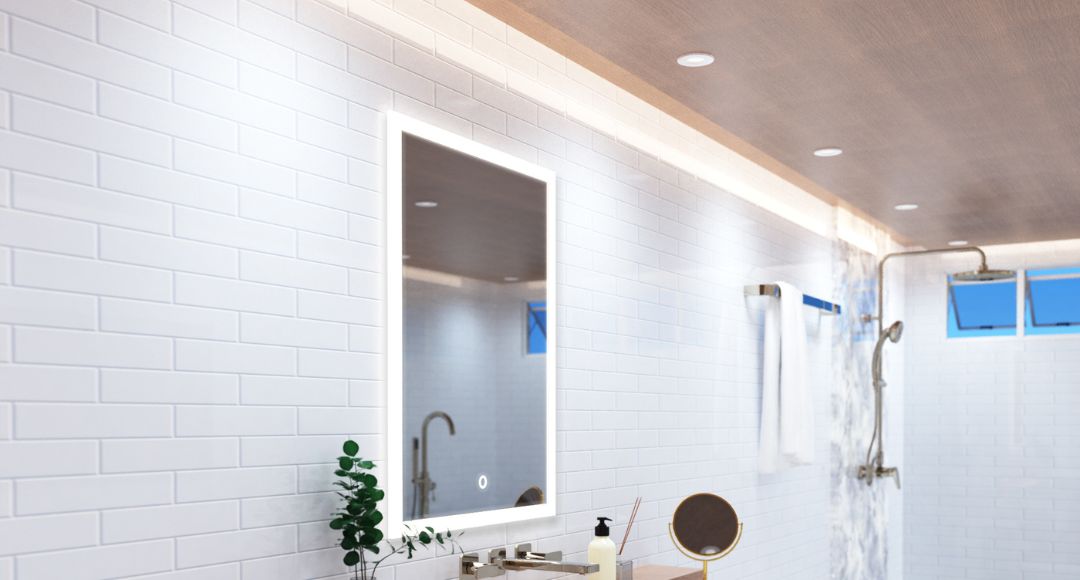
Backlit mirrors and dedicated vanity lights are the best task-lighting options for a modern bathroom. They provide:
- Clear visibility for shaving, applying makeup, and skincare routine
- Even facial lighting without harsh top-down shadows
- Better control in foggy, steamy conditions
Features that you’ll be looking for, especially in winter:
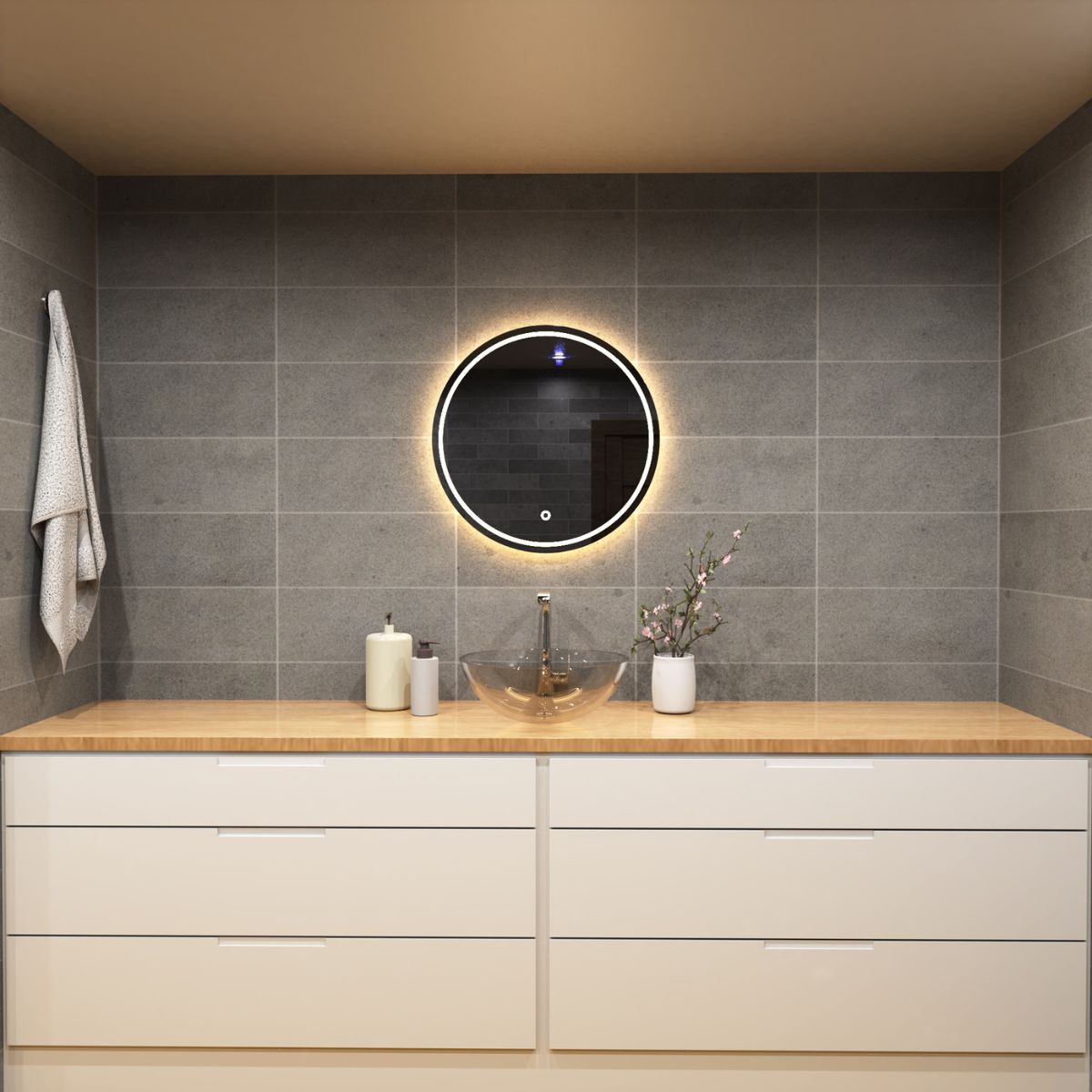
- LED illuminated mirrors
- Built-in demisters to prevent fogging
- Vertical lights on either side of mirrors
This kind of lighting turns frustrating, shadowy grooming into a smooth, confident routine.
Wall Washers & Indirect LEDs for a Spa-Like Lift
Not all bright light needs to feel harsh. Think: LED strips under shelves, behind mirrors, or along recesses. Indirect lighting adds a soft glow that:
- Lifts the overall brightness of the room
- Softens hard edges and corners
- Helps you wake up without getting blinded by your lights
In winter, this gentle background brightness makes the bathroom feel warmer, calmer, and more inviting.
Colour Temperature Tips for Winter Bathroom Brightness
Brightness and colour temperature work together. Even a very bright light can feel dull or clinical if the colour tone isn’t right.
Cool White (4000–5000K): Best for Waking Up
Cool white light mimics crisp daylight. It’s the best choice for winter mornings because it boosts alertness, improves visibility, and makes the room feel fresh and clean.
For most winter bathrooms, 4000K to 5000K is ideal for ceiling and mirror lighting. Cool white light provides clear, bright morning energy that’s perfect for your wake-up routine.
When Warm White Still Works (Even in Winter)
Warm white lighting isn’t useless in winter; it simply works better in specific situations. It’s ideal for evening baths, relaxing night-time routines, and creating a clear boundary with secondary zones such as feature shelves or niches.
If you want flexibility, use what is called dual-zone lighting:
- Cool white for morning tasks
- Warm white or dimmed lighting for evening comfort
This gives you a bathroom that works all day beautifully.
Layout Tricks to Maximise Brightness without More Fittings
The solution to a brighter bathroom isn’t more lights. You often just need more thoughtful placement. Small design tweaks can dramatically increase how bright your bathroom feels.
Reflective Surfaces & Mirrors
Mirrors don’t just show your reflection; they bounce light around the room.
To maximise this:
- Use larger mirrors where possible
- Pair mirrors with integrated LED lighting
- Position LED strip lights or LED neon flex along the edges of mirrors or shelves
In winter, reflective surfaces can almost double the perceived brightness of your space without increasing energy use. (Also, no renovations or extensions!)
Vertical Lighting Placement to Brighten the Face
Overhead lighting alone creates shadows under the eyes and chin. Vertical lighting solves this. Place lighting on both sides of mirrors, at face height, and evenly spaced for balanced illumination.
Vertical light sources reduce unflattering shadows and make morning grooming much easier and more comfortable.
Essential Safety Considerations for Bathroom Lighting
If there’s one thing a bathroom is always going to be, it’s wet. They’re what we like to call “naturally high-moisture zones,” and winter makes this worse. Cold weather, hot showers, and poor ventilation equal increased condensation and dampness in the bathroom.
That’s why safe, reliable lighting is essential. Enter: IP-rated LED fittings (IP65 or higher). They’re what you’d call bathroom-rated lights.
IP44 vs IP65 – What You Need Where
IP ratings aren’t there just for show. They indicate how well a light is protected against moisture and dust. The first number indicates the solid/dust protection level, and the second number indicates the liquid/water protection level.
The lowest number is 1 for both, while the highest number for solids is 6, and for liquids is 8.
Two most common IP ratings for bathroom lighting are IP44 and IP65.
IP44 — Suitable for general bathroom areas and zones away from direct water spray. Ideal for most ceiling lights and mirror fittings.
IP65 — Designed for high-moisture areas like inside showers or directly above baths. Perfect where water exposure is likely.
In winter, selecting the appropriate IP rating improves safety and helps your lights last longer, despite the steam and condensation. For added protection, you can also use fire rated downlights to keep your ceiling’s integrity intact.
Start Winter Days Brighter and Better
Winter mornings may be dark, but they don’t have to feel slow and gloomy. The right lighting can transform your bathroom into a bright, energising space that helps you wake up faster and feel more in control of your day.
With Simple Lighting, you can create a bathroom that delivers clarity, comfort, and confidence every morning. Explore modern LED bathroom lighting options today and make every winter morning feel lighter, clearer, and better.
More winter lighting insights are waiting for you at Winter Home Lighting Ideas for a Warm, Cosy and Efficient Home.