

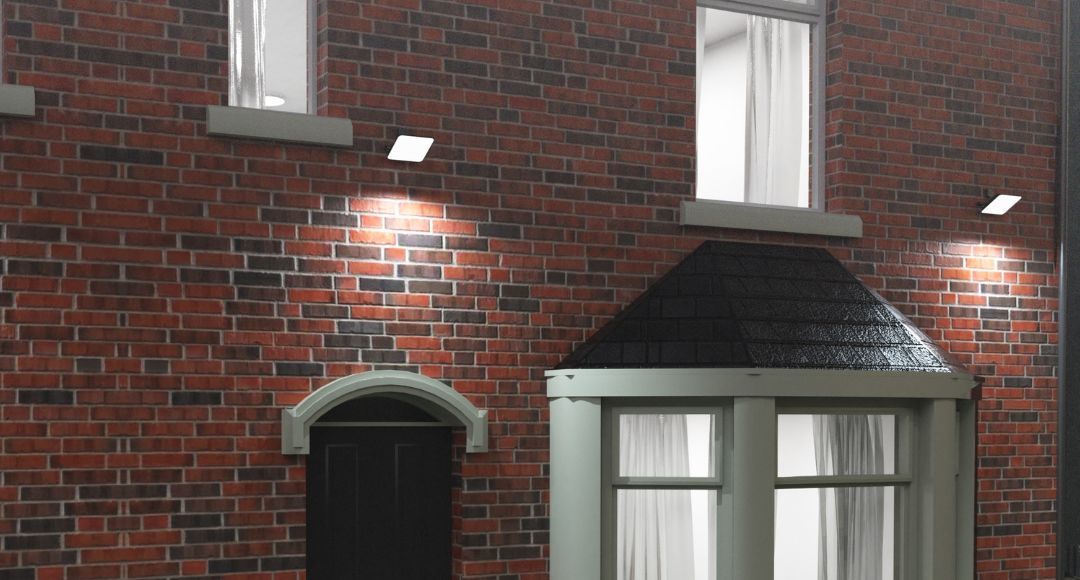
When talking about bolstering home security, one might consider adding expensive cameras, sirens, or steel shutters. But did you know there’s a simpler (and way cheaper) alternative?
You probably have guessed it already, but it’s lights. Because home security does not always need to be loud.
Sometimes all you need is one that works quietly in the background, turning on at just the right moment and sending a clear message that this home is alert, occupied and cared for. A subtle “Back off.”
Pair that with smart lighting and Passive Infrared (PIR) sensors, and you have one of the most practical and approachable ways to boost security without turning your property into a steel fortress. And that’s what we’ll explore below:
How smart lighting fits into modern home security, how PIR sensors actually work, and how LED floodlights can be planned and positioned to protect outdoor spaces with confidence and efficiency. Sounds like something you want for your home?
Why Smart Lighting is Key to Home Security
Light has always been a powerful deterrent to burglars and intruders. A burglar under a bright light is like a scared cat. A well-lit exterior:
- Removes hiding spots
- Increases visibility, and
- Instantly changes the psychology of a space (a well-lit outdoors is not just bright but also good to look at)
For potential intruders, darkness offers anonymity. Light removes it. In other words, people with bad intentions are less likely to approach a property when they know they can be seen.
Smart lighting takes this one step further by adding intelligence and automation. Having security lights doesn’t mean they have to run non-stop all night. Instead, smart systems respond to activity.
With PIR sensors, motion triggers light to turn on, creating a sudden, unmistakable signal that movement has been detected. Picture these:
- A quiet driveway becomes visible in an instant.
- A shadowed garden lights up before anyone reaches the back door.
- A motion-triggered floodlight activates as someone steps onto the driveway.
Most would-be intruders turn away at this point, long before testing locks or doors. But smart home security lighting isn’t just about deterrence. It also improves everyday safety.
It helps you see paths clearly at night, avoids fumbling for keys in the dark, and ensures entrances are always visible when someone arrives home late.
The Advantages of Combining Smart LEDs with Sensors
Pairing smart LED lighting with PIR sensors is where security lighting really shines.
Motion-triggered illumination vs always-on lights: A security light that’s left running all night wastes energy and has no element of surprise for the unsuspecting intruder. Motion-triggered lighting restores that. When lights only come on in response to movement, they draw immediate attention.
Energy efficiency benefits: Older halogen floodlights were energy hogs. With LED lighting, you get better energy efficiency. Combine that with sensors, and energy usage drops even further.
Added convenience for homeowners: Motion-activated lighting eliminates the need to find switches or apps just to turn on the lights. Hands full of shopping? Walking the dog late at night? Automatic lighting got you.
Understanding PIR Sensors and How They Work
PIR or Passive Infrared sensors are the brains behind most motion-activated security lighting. But despite the technical name, the concept is refreshingly simple.
The sensor detects movement by sensing changes in infrared radiation. All warm objects, including people and animals, emit heat. When a warm body moves across the sensor’s detection zones, it registers a change and triggers the connected light.
Because PIR sensors respond to heat rather than motion alone, they produce fewer false triggers than microwave sensor lights.
There are several common PIR sensor configurations used in home lighting:
- Stand-alone PIR sensors that control one or more lights
- Integrated PIR lights, where the sensor and light are built into a single unit
- Hub-connected PIR sensors that communicate with smart home systems for advanced automation
Each option has its place, depending on how complex or flexible you want the system to be.
Key PIR Features for Effective Security
Not all PIR sensors are created equal. The following features make a real difference in security performance.
Adjustable sensitivity and range
Sensitivity settings allow fine-tuning how easily the sensor triggers. False activations from small animals or passing traffic undermine the sensor’s purpose. Range adjustment ensures the sensor covers the intended area without spilling into neighbouring spaces.
Dusk-to-dawn operation
Many PIR sensors only activate after dark. This prevents unnecessary daytime triggers and keeps the system focused on nighttime security.
Timer settings for automatic switch-off
Timers control how long the light stays on after motion is detected. Short durations save energy, while longer settings are useful for entrances or areas where people linger.
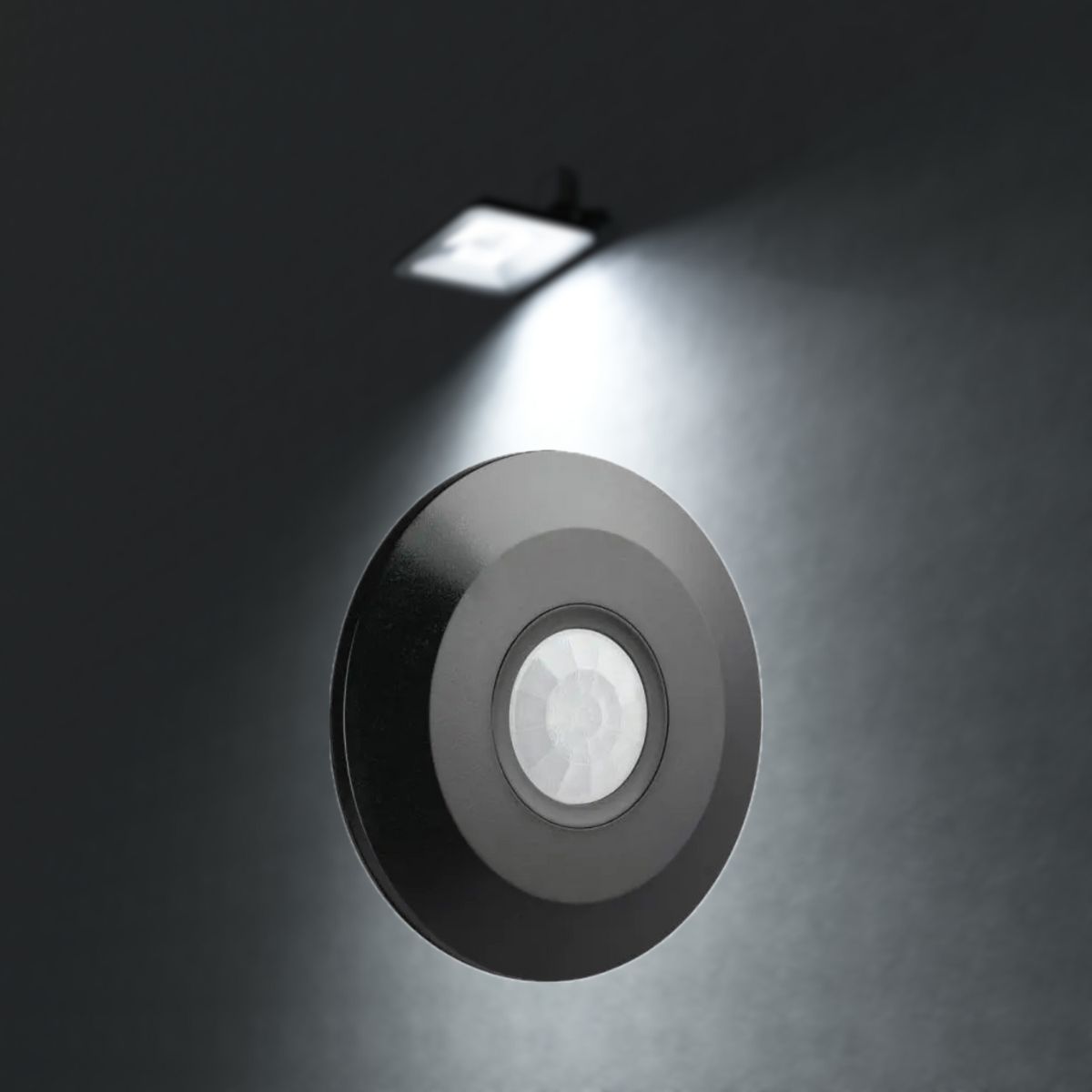
LED Floodlights for Maximum Outdoor Coverage
When it comes to outdoor security, few fixtures are as effective as LED floodlights. They provide powerful, wide-angle illumination that transforms dark exterior spaces into clear, visible zones.
High-lumen output for large areas: Ensures outdoor space is evenly lit, reducing shadows and blind spots. Floodlights are ideal for driveways, gardens, side passages, garages, and rear access points.
Long lifespan and energy efficiency: Longer lifespan (25,000 to 50,000 hours) means fewer replacements and lower maintenance over time, especially useful for fixtures mounted at height.
IP ratings for outdoor durability: Outdoor lighting must withstand rain, wind, and sudden temperature changes. An IP65 rating or higher is recommended for floodlights exposed to the elements.
Choosing the Right Floodlight for Your Home
Single vs dual-head floodlights
Single-head floodlights are well-suited for focused areas, such as side entrances. Dual-head models provide broader coverage and are ideal for driveways or wide gardens where multiple angles are needed.
Colour temperature for clarity and visibility
Cool white light enhances clarity and detail, making it easier to identify objects and people. Natural white offers a softer look while still providing good visibility. Warm white is generally less effective in security-focused areas but is excellent for adding depth and personality.
Motion vs continuous lighting options
There are two types of sensor light. First, it is completely off; then it turns on at maximum brightness after detecting movement. The second one has a continuous dim light that switches to maximum brightness upon motion detection.
Smart Home Integration for Enhanced Security
The true power of smart lighting becomes more apparent when floodlights and PIR sensors are integrated into a broader smart home ecosystem.
Connecting to hubs
Depending on the system, devices may connect via Wi-Fi, Zigbee, or Bluetooth. Hub-based systems often offer greater reliability and more advanced automation options.
Voice control with smart assistants
Integration with Alexa, Google Home, or Apple HomeKit allows homeowners to control lighting with simple voice commands. Turning on all outdoor lights before bedtime becomes effortless.
Creating automation rules
Automation transforms lighting into an active security partner. Rules can be layered for time, location, or activity.
Advanced Features to Consider
Modern smart lighting systems go beyond simple on/off functions.
Notifications to your phone: Some systems send alerts when motion is detected, offering peace of mind when away from home.
Scheduling to simulate presence: Lights can be scheduled to turn on and off at varied times, creating the impression that someone is home even when the property is empty.
Grouping lights for coordinated coverage: Multiple floodlights can be grouped so that motion in one zone triggers lighting across several areas, removing escape routes and increasing visibility.
Installation Tips for Optimal Security Lighting
Thoughtful installation is just as important as choosing the right equipment.
Ideal height and angle for PIR sensors: Most PIR sensors perform best when installed between two and three metres above floor level. Angling the sensor slightly downward improves detection accuracy.
Avoiding false triggers: Position sensors away from swaying trees, reflective surfaces, and heat sources such as vents. If pets are present, adjust sensitivity and angle accordingly.
Neat floodlight placement: Using suitable housings or brackets helps floodlights blend neatly into exterior walls while ensuring proper heat dissipation and weather protection.
Weatherproof connections: Outdoor wiring must be adequately sealed. Weatherproof junction boxes and rated connectors protect both performance and safety.
Common Mistakes to Avoid
Don’t be the homeowner who overlooks these common pitfalls:
1. Over-lighting an area can create glare and spill light into neighbouring properties, which may cause complaints and reduce effectiveness. Security lighting should illuminate spaces, not blind people in them.
2. Poor sensor placement is another frequent issue. Sensors mounted too high or too low may miss movement entirely or trigger inconsistently and falsely.
3. Choosing floodlights with insufficient IP ratings can lead to premature failure. Outdoor conditions demand outdoor protection.
4. Finally, neglecting smart integration limits the system’s potential. Without automation or hub connectivity, many of the convenience and security benefits remain untapped.
Smart Lighting as a Home Security Game-Changer
Smart lighting has quietly reshaped home security. By combining PIR sensors with LED floodlights, homeowners gain a proactive, visible, and powerful solution that is not intrusive.
The benefits are clear:
- Improved safety through visibility.
- Reduced energy consumption through efficient LEDs.
- Added convenience through automation.
- A strong deterrent effect before an intruder even reaches the door.
With thoughtful placement and smart controls, lighting becomes more than illumination. It becomes reassurance. Ultimately, the best security often looks simple. A light turns on, a space becomes visible, and the message is unmistakable: “Back off. This home is paying attention.”
For related guides and deeper insights, check out Smart Lighting Ideas for 2026 and How to Upgrade Your Home.