

You have probably heard about bulkhead lights and seen various applications for both indoor and outdoor use. However, if this has just confused you about which bulkhead to get, you’re in the right place.
Bulkhead lights are durable, energy-efficient, and versatile. But not all bulkheads are built the same. The first thing you should know is that indoor and outdoor LED bulkheads are designed for very different environments.
And choosing the wrong type? It can lead to poor performance, safety issues or unnecessary costs.
So, good job on taking the first step into choosing the right bulkhead light: knowing the difference between the types. This guide explains these key differences and helps you select the right bulkhead for your home or business.
Ready? Let’s jump in.
What Are LED Bulkheads and Why Are They Popular?
Let’s start from the top. LED bulkhead lights are compact, enclosed light fittings designed for strength, reliability and long service life.
What may be the most outstanding feature of bulkhead lights is their tough casing, which effectively protects their internal LED components, making them suitable for high-traffic, high-use or high-moisture areas.
These lights are sought after in both domestic and commercial settings because they provide bright, uniform illumination while being extremely low-maintenance.
Durable, Efficient and Built to Last
Bulkheads are known for their tough housing, which protects the internal LED board from dust, moisture and, most importantly, impact. Many models use strong polycarbonate diffusers and frames designed to withstand everyday wear.
Once installed, LED bulkheads require minimal maintenance. Their bulbs don’t need to be frequently replaced, and the tightly closed design prevents dirt and insects from getting inside and causing issues.
Additionally, LED bulkheads typically last 25,000 hours, with some models even reaching 50,000 hours of operation. This reduces downtime and ensures consistent brightness over a long period.
Ideal for Homes and Commercial Spaces
- Garages – Their durability and bright output make bulkheads ideal for garage ceilings and walls.
- Shops, storage rooms and corridors – Bulkheads offer reliable lighting in areas where lights are either frequently switched on/off or operate for long periods.
- Gardens and pathways – Outdoor-rated versions provide safe and weatherproof illumination for exterior spaces.
The Key Differences Between Indoor & Outdoor LED Bulkheads
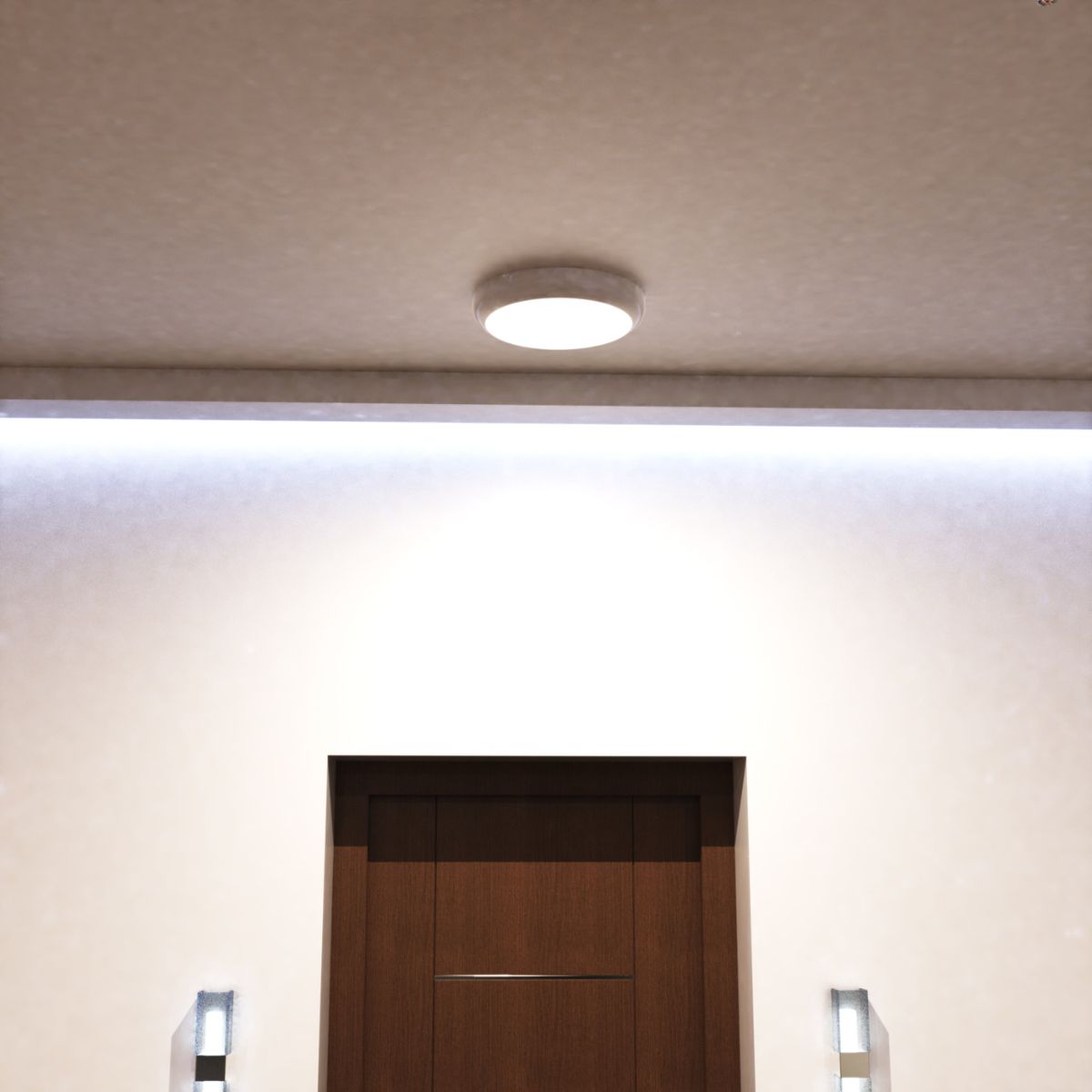
So, what’s the difference between an indoor and an outdoor bulkhead light? They may look similar, but their construction and performance specifications differ significantly.
Understanding these differences ensures you purchase a light that lasts and performs safely, especially when installing lights outdoors where the fixture will be exposed to the elements.
IP Ratings & Weather Protection
One important thing to look out for is the Ingress Protection (IP) rating. For outdoor models, you typically want at least an IP65-rated bulkhead light. This rating typically indicates that the light is fully protected against dust and strong water jets.
It makes them suitable for rain, humidity, splashes and outdoor debris.
On the other hand, indoor models typically only need IP20-rated bulkhead lights. (IP44 if you’re installing in a covered, semi-outdoor area.) These bulkheads cannot withstand harsh weather. Lower IP ratings are perfectly adequate for dry areas, such as hallways or communal stairwells.
Why do dust and water protection matter?
It’s essential that you know these ratings to avoid using indoor bulkhead fixtures for your outdoor lighting. Using an indoor-only bulkhead outdoors risks short circuits, corrosion, and premature failure.
Materials & Durability
Outdoor bulkheads
Outdoor units typically use tough polycarbonate or die-cast aluminium, combined with UV-stable coatings to prevent yellowing or tarnishing. Many are designed to be vandal-resistant with impact-resistant housings.
Indoor bulkheads
Indoor units use lighter materials because they don’t face rain, strong sunlight, or temperature fluctuations. This often makes them slimmer, cheaper, and easier to install compared to their outdoor counterparts.
Brightness & Beam Angle
Outdoor bulkheads
These usually provide a wide beam angle to cover large exterior areas such as car parks, gardens or walkways. They are designed to deliver brighter levels of illumination, enhancing visibility and security.
Pair them with motion sensors and smart control, and they become the perfect outdoor lights.
Indoor bulkheads
For homes and indoor commercial spaces, illumination tends to be softer and more controlled. Indoor models are designed to be bright while preventing glare in compact rooms and corridors.
Style & Design
Outdoor bulkheads
Most outdoor models lean towards practicality, featuring reinforced bodies, bulkier housings, and robust finishes.
Indoor bulkheads
Indoor lights, on the other hand, are not limited by the need for protection from the elements, and therefore often come with more design variation. You can find ones with slimline shapes, decorative trims, colour-changing features and minimalistic round or oval designs.
When to Use OUTDOOR LED Bulkheads
Outdoor bulkheads are built for harsh environments and are ideal for areas where brightness, resilience, and weatherproof protection are essential: AKA the outdoors.
Security & Safety Lighting
Many outdoor models include PIR or microwave sensors, which activate the light when movement is detected. It can either be switching from off to on, or from dim to bright.
The automatic lighting greatly helps with energy efficiency, only using the bright light when needed. This feature also helps deter intruders, creating the illusion that someone is inside the premises. Also, no burglar wants bright lights when they’re up to no good.
Lighting Gardens, Yards, Entrances & Pathways
Outdoor bulkheads offer bright and uniform light across wide spaces.
Their IP65 weatherproof design ensures they withstand rain and temperature changes year-round, providing reliable illumination for different things like:
- Garden walls
- Building entrances
- Side paths
- Driveways
- Bin stores
Industrial & Commercial Exteriors
Think car parks, loading bays, stairwells, perimeter walls, and warehouses. Outdoor bulkheads perform exceptionally well in demanding non-residential settings. Their strong build and wide beam angle make them suitable for 24/7 use.
When to Use INDOOR LED Bulkheads
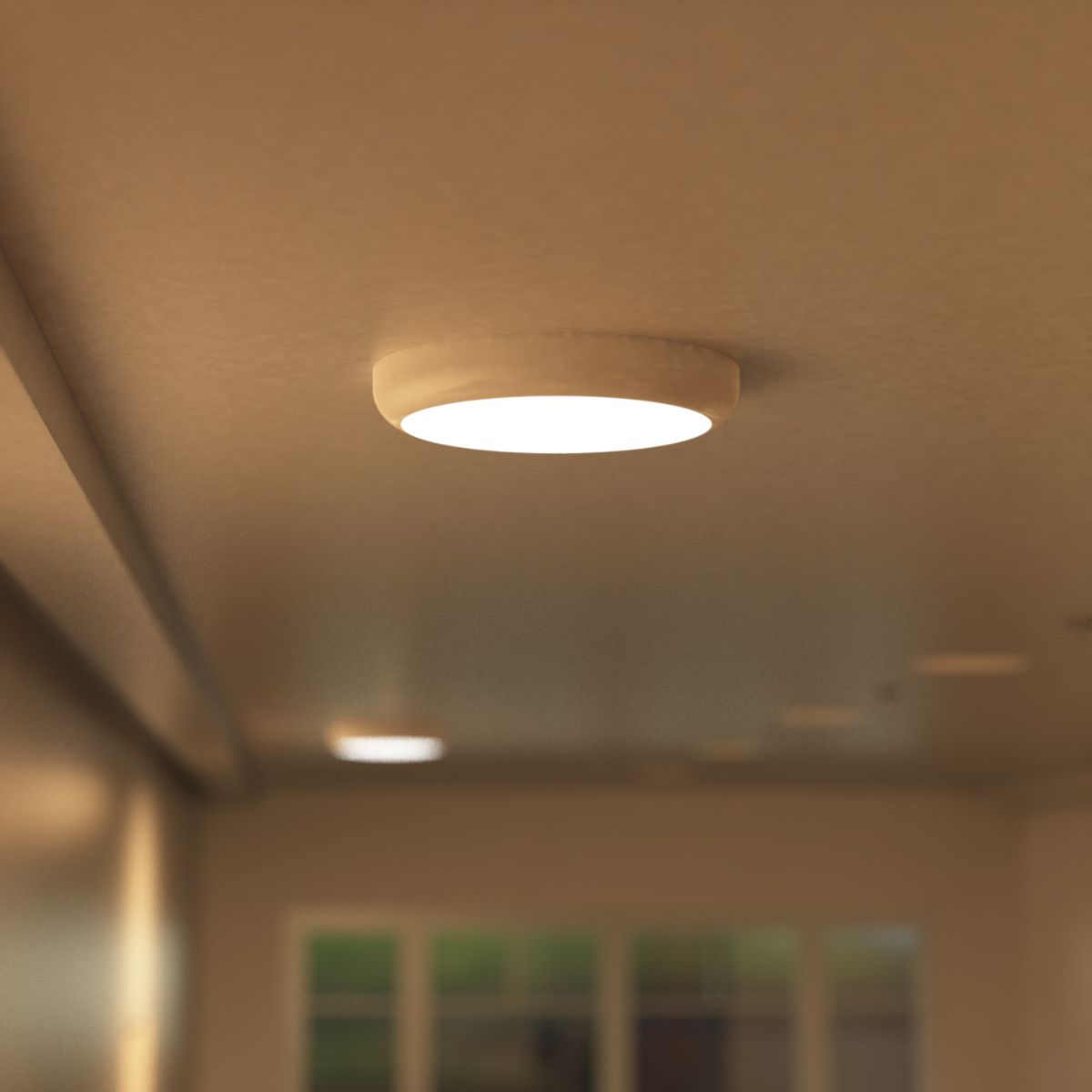
As we’ve established above, indoor bulkheads are perfect for enclosed, dry environments where weather protection is not required.
Hallways, Utility Rooms & Communal Areas
In apartment blocks, hallways, and shared stairwells, bulkheads provide bright, even lighting without taking up excessive ceiling space. Slim, flush-mounted designs help keep walkways clear and tidy.
Garages & Workshops
While garages don’t require outdoor-level weatherproofing, they do benefit from durable lighting that can handle dust and occasional bumps. Indoor bulkheads provide sufficient protection without adding unnecessary costs.
Decorative Indoor Options
Indoor bulkheads often include features focused on comfort and design:
- Bulkhead lights with colour temperature control enable you to adjust the tone of your lights to match your activities.
- Slimline round or oval designs complement modern decor
- Frosted diffusers produce soft, even illumination
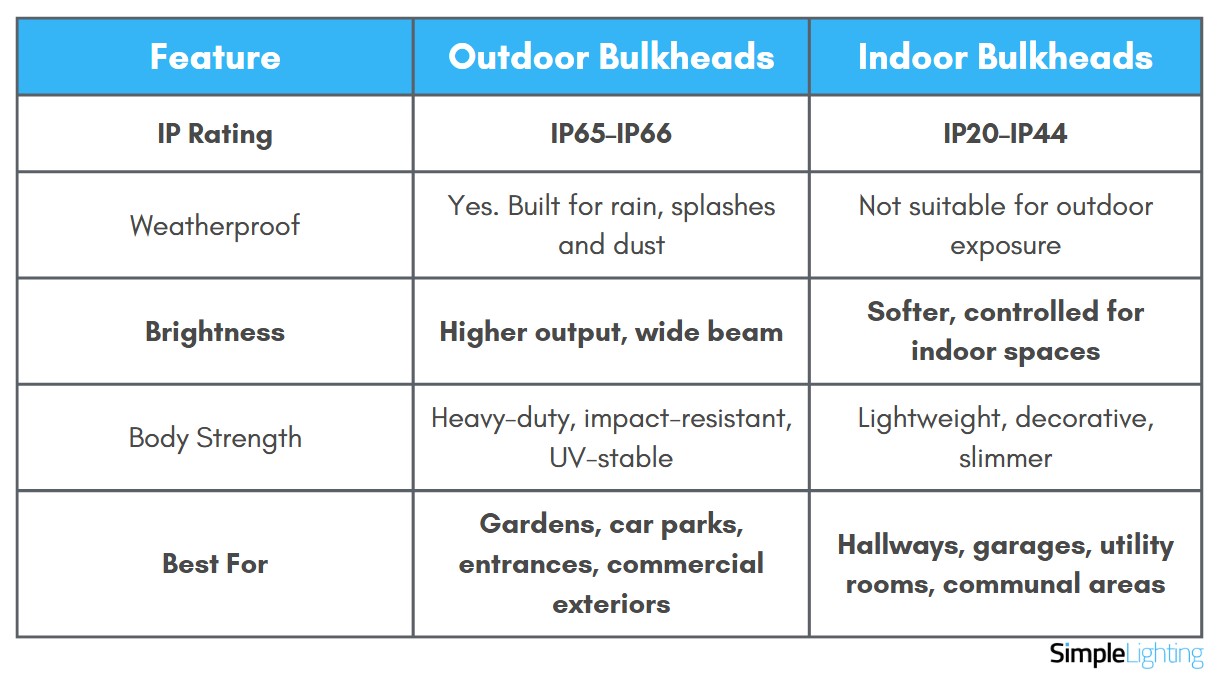
Feature Comparison: Indoor vs Outdoor LED Bulkheads
Here’s a quick “decision table” to help you:
Which One Should You Choose?
It should have been obvious from the start, but your choice depends entirely on where the bulkhead will be installed and what you need the light to achieve.
Choose Outdoor If…
- The light will be exposed to rain, moisture, and the outdoor elements
- You require motion detection for security
- The area is public, commercial, or high-risk
- You need reinforced, vandal-resistant housing
- Bright, wide coverage is essential
Choose Indoor If…
- The bulkhead is for a dry, enclosed room
- You want slim or modern decorative styles
- You need colour temperature control or softer light
- You prefer a budget-friendly solution
- Garages, workshops, or corridors need simple, bright lighting without weatherproofing
Recommended Bulkhead Lights from Simple Lighting
The good news is that Simple Lighting offers a wide range of LED bulkhead lights to help you kickstart your indoor or outdoor lighting.
Below are example categories and product types to guide your decision.
- Outdoor IP65 Round Bulkhead – Designed for durability and weather protection without compromising aesthetics, this type of bulkhead is suitable for gardens, entrances, and commercial exteriors.
- Microwave Sensor Bulkhead – Ideal for security lighting, this light activates automatically when motion is detected, helping improve safety and reduce energy consumption.
- CCT Changeable Indoor Bulkhead – Provides adjustable colour temperature for indoor environments such as hallways or offices, offering flexibility for comfort and ambience.
- Emergency Bulkhead for Commercial Interiors – Essential for public buildings, stairwells, and workplaces where emergency lighting is required to meet safety regulations.
Finding the Perfect Fit
Choosing between indoor and outdoor LED bulkheads becomes much easier once you understand their differences. Although the decision may seem easy and straightforward, making the wrong choice unknowingly can still be costly and dangerous.
Remember: Indoor bulkheads prioritise style, comfort, and cost efficiency, while Outdoor bulkheads focus on weather protection, durability, and reliable brightness.
Explore Simple Lighting’s full range of indoor and outdoor LED bulkheads to find the safest and most efficient choice for your space.
Also check out more posts like this one at Where to Use LED Bulkheads: Indoors, Outdoors, and Commercial Spaces.