


Why LED Battens Are Ideal for Garages
Everyone talks about having a good garage space, but few mention giving it good lighting.
Poor lighting (AKA dim bulbs, patchy coverage, or harsh glare) makes it difficult to see what you’re doing. It doesn’t matter if you use your garage for parking, DIY projects, storage, or as a workshop; inadequate lighting can make the space unsafe and impractical.
Traditional fluorescent tubes and single overhead bulbs are still common, but they come with clear downsides: flickering and buzzing, slow warm-up times, and uneven light that leaves dark corners and shadowed work areas. And did we mention the high energy costs? Introducing: LED batten lights.
Bright, energy-efficient, and easy to install, LED battens provide wide, even illumination across large areas. In other words, they’re ideal for garages. This guide will explain exactly how to choose the best one for your garage.
We’ll also discuss key features to look for, smart upgrades worth considering, and practical installation tips to get the most out of your garage lighting. Your garage won’t fix its own lighting, so let’s dive in.
Key Features to Consider When Choosing LED Batten Lights
When selecting LED battens for your garage, a few core features make all the difference in performance, comfort, and durability. Let’s explore each one in detail.
Brightness & Lumen Output
Don’t mistake watts as a measurement of your light’s brightness. It’s an indication of how much power your lights use. You want to look at lumens instead. It represents how much light the fixture produces.
For garages, you’ll want enough brightness to see clearly without creating glare or harsh reflections. The right lumen level depends on your garage’s size and how you use it.
Here’s a quick guide:
- Single-car garage: Aim for around 13,000 to 14,000 lumens total.
- Double garage: Go for around 20,000 lumens
Pro Tip: It’s best to install multiple lights to reach the total target lumens rather than just one. This ensures shadows are eliminated. For a single-car garage, get 2 to 4 fixtures; for a double-car garage, get 4 to 6 fixtures.
Colour Temperature & CRI
Colour temperature, measured in Kelvin (K), affects the look and feel of your lighting:
- Warm white (2700K–3500K): Cosy and inviting, and is great for living spaces, but maybe a little too yellow for garages.
- Natural white (4000K): Clean and clear, which is perfect for garages, workshops, and task areas.
- Cool white / Daylight (5000K–6500K): Crisp and bright, ideal for detailed work or when maximum clarity is needed.
For most garages, 4000K–5000K is the sweet spot. It delivers excellent visibility without the sterile blue tone of daylight lamps.
Another factor to consider is the Colour Rendering Index (CRI), which measures how accurately a light reveals colours compared to natural daylight. A higher CRI (80+) means better colour accuracy and is what you want to go for.
This is crucial if you’re checking car paint finishes, sorting tools, or working with coloured materials. If your garage doubles as a hobby or detailing area, look for CRI 90+ battens for “true-to-life” colour clarity.
IP Rating & Durability
Garages can be dusty, damp, or even partially exposed to the elements, so durability matters. That’s where Ingress Protection (IP) ratings come in. This two-digit code indicates a light’s resistance to dust and water. The first digit indicates dust protection (max is 6), and the second indicates water protection (max is 8).
Here are some common IP ratings:
- IP20: Suitable for clean, dry indoor areas.
- IP44: Protects against splashes and dust, and is good for most enclosed garages.
- IP65: Fully dust-tight and water-resistant (able to withstand jets of water), and is ideal for semi-open or damp garages.
- IP67 and IP68: Completely dust and water-proof, ideal for lighting outside your garage.
If your garage experiences moisture, condensation, or fluctuating temperatures, always opt for IP65-rated LED battens. Also, choose battens with impact-resistant (IK-rated) casings (made from polycarbonate or aluminium). These are more durable, protect against accidental knocks, and maintain their appearance over time.
Size, Shape & Mounting Options
LED battens come in various lengths and profiles, allowing you to tailor lighting to your garage layout.
Common lengths include:
- 600mm: Compact, which is suitable for small or narrow garages.
- 1200mm: A balanced option for most single garages.
- 1500mm: Provides broad coverage for double garages or long workshops.
If you have a low ceiling, look for slimline batten designs. These offer the same light output but take up less vertical space, preventing your garage from feeling cramped.
Another advantage of LED batten lights is their mounting flexibility. Most LED battens can be ceiling-mounted for general lighting, but some models also allow wall or under-shelf mounting, making them perfect for illuminating workbenches, tool racks, or storage areas.
Energy Efficiency & Lifespan
One of the biggest advantages of LED battens is their exceptional energy efficiency. Simple Lighting LED battens deliver up to 120 lumens per watt, providing more light for less power. A 40W LED batten, for example, can easily replace an 80W fluorescent fitting, cutting energy costs in half without sacrificing brightness.
Lifespan is another strong point. Quality LED battens typically last 30,000–50,000 hours, meaning years of reliable performance before needing replacement. Okay, great. But what does it mean for you?
- Lower maintenance (no more frequent bulb changes)
- Reduced waste (environmentally friendly)
- Significant long-term savings on electricity and replacement costs
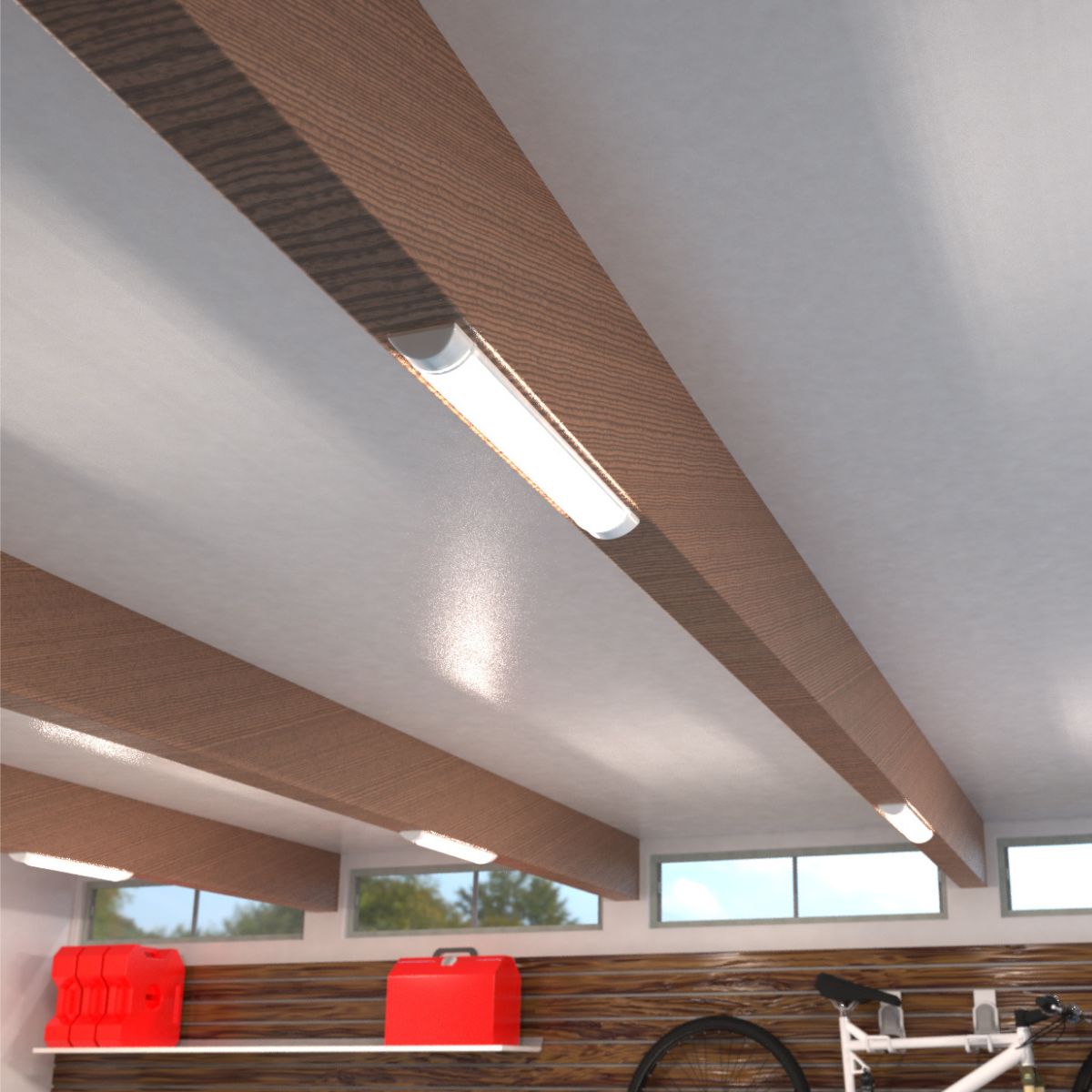
Advanced Features & Smart Options
Not all LED battens are made equal. Some are made better than the rest. While basic LED battens offer excellent illumination, advanced models can make your garage even more efficient, convenient, and secure. Here’s how:
Motion Sensors
LED battens plus motion sensors equal hands-free operation. Hands full with heavy groceries? Just getting back home from work and about to park the car inside? The lights automatically switch on when movement is detected, giving you the freedom to navigate the space without having to find the light switch.
Oh, and the lights turn off after a period of inactivity, helping save energy without effort.
Dimmable Options
For general-purpose garages (think car parking, DIY projects, and relaxing), dimmable LED battens let you adjust brightness to suit the task at hand. Not all the activities you do in your garage need maximum illumination from your lights. You can enjoy full brightness for projects or tone it down for ambient lighting when entertaining or exercising.
Smart Control Compatibility
Many modern battens are compatible with smart home systems. With Wi-Fi or Bluetooth connectivity, you can:
- Control lighting from your smartphone app or voice assistant
- Set timers or automation schedules
- Integrate battens with security systems or door sensors
Smart controls make garage lighting easier and more convenient. Also, how cool is it to say, “Alexa, turn on the garage lights” as you pull into the driveway?
Installation Tips for Garage LED Battens
Installing LED battens is typically straightforward, but good planning ensures optimal performance and longevity. You’ll also thank yourself later, knowing you’re getting the most from your lights.
Placement for Even Lighting
Position battens to achieve even light distribution across your garage.
- Mount them parallel to your car bays or aligned with your workbench.
- Avoid placing a single fixture directly in the centre of the room as this often leaves walls and corners dim.
- For large garages with ceilings up to three metres, use multiple battens evenly spaced (around 1–1.5 metres apart).
Avoiding Glare
Angle or position your fixtures to minimise glare on shiny surfaces, such as car bonnets or metal tools. If possible, mount battens slightly offset from direct line-of-sight areas.
Wiring & Safety
You can wire multiple battens to a single switch circuit or, better yet, use independent circuits for different zones (e.g., workbench, workout, and parking area).
A few safety reminders:
- Always switch off the power before installing batten lights.
- Use the correct IP-rated fittings for your environment.
- Follow the manufacturer’s instructions carefully.
- If unsure, consult a qualified electrician, especially for complex wiring or smart integrations.
Common Mistakes to Avoid
Even the best LED battens won’t perform well if installed or selected incorrectly. Here are the most common pitfalls to watch out for:
1. Undersizing Lumens
Garages need more brightness than typical rooms. So, choosing a light that’s too dim is one of the mortal sins in garage lighting. Always calculate lumens based on size and purpose, and lean toward slightly brighter rather than dimmer. Because when it comes to lighting, a little bit more is better than a little bit less.
2. Ignoring Shadows
Unevenly positioned lights can create dark spots, especially behind vehicles or shelving. Plan lighting placement to eliminate shadows where you work or move most frequently.
3. Choosing the Wrong IP Rating
Garages often experience humidity, dust, or occasional water exposure. This means that using IP20-rated lights in these conditions is a no-no, unless you want to risk damage and reduced lifespan on your fixtures. Always go for IP44 or IP65 battens for better protection (and peace of mind).
4. Overlooking Smart or Sensor Features
Skipping motion sensors or smart controls might save a few pounds upfront, but can cost more in energy and convenience long term. Don’t be that kind of homeowner. Automation helps maintain efficiency while adding to your energy savings. And that’s apart from enhancing your daily experience.
5. Forgetting About Colour & CRI
Lighting that’s too warm can make it hard to distinguish colours or spot detail. For garages and workshops, natural white (4000K–5000K) with a high CRI (90+) is always the smarter choice.

That’s a (Bright) Wrap
The right lighting can completely transform your garage from a dim, underused space into a bright, practical, and welcoming environment. Yes, you can turn your garage into a space that you actually want to spend time in.
Just remember that when choosing LED batten lights, focus on the essentials:
- Brightness & lumen output — ensure full, even coverage.
- Colour temperature & CRI — for clear, accurate visibility.
- IP rating & durability — to withstand dust and moisture.
- Size & mounting — match fixtures to your layout.
- Energy efficiency & smart features — for long-term savings and convenience.
LED battens are the perfect upgrade your garage can hope for. Ready to transform your garage lighting? Explore our full range of LED batten lights at Simple Lighting today!
And don’t forget to visit How to Choose the Best Lighting for Your Garage for more garage lighting insights.